
Temnothorax silvestrii
- Sci. Name
- Temnothorax silvestrii
- Tribe
- Crematogastrini
- Subfamily
- Myrmicinae
- Author
- Santschi, 1911
- Distribution
- Found in 2 countries
Introduction
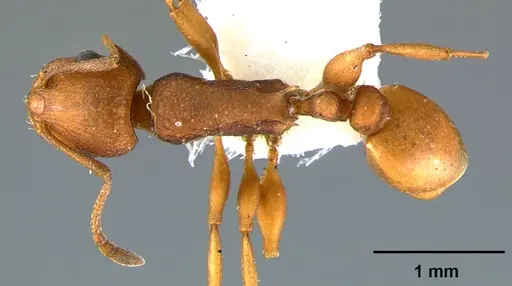
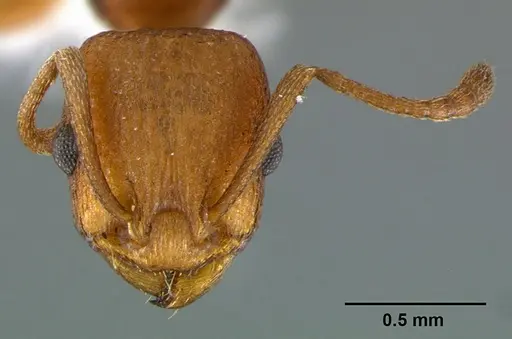
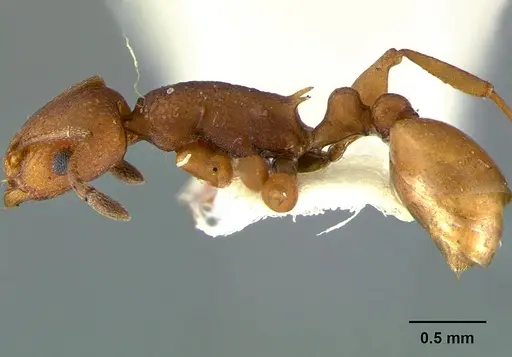
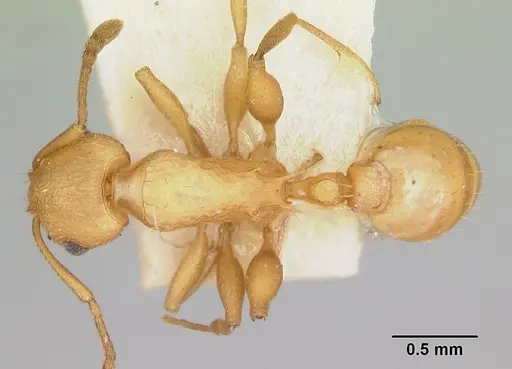
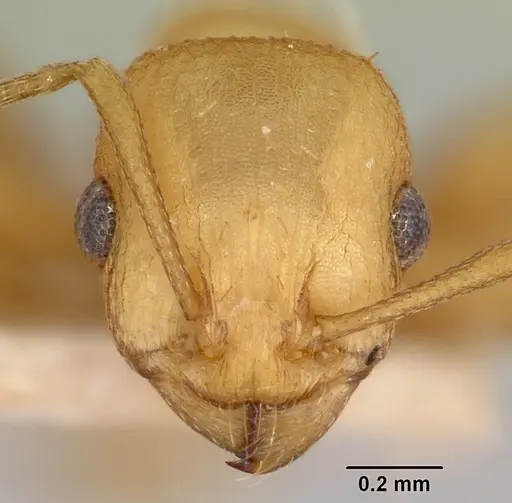
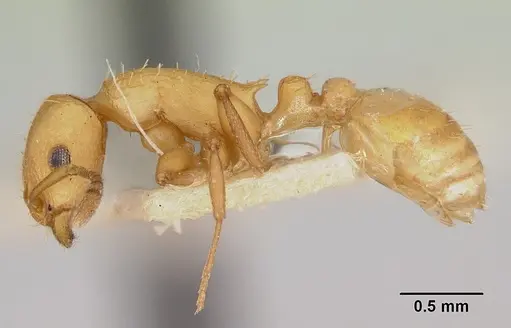
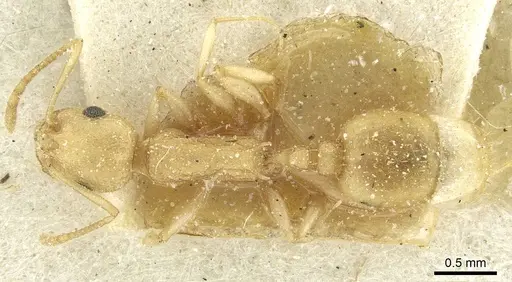
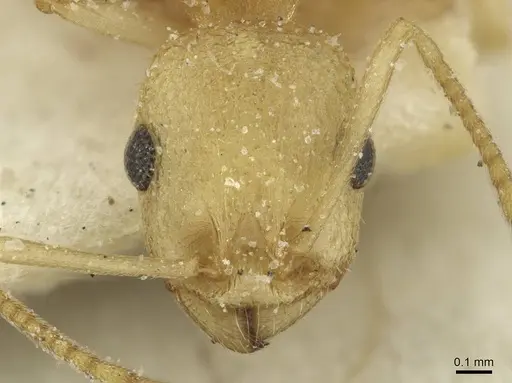
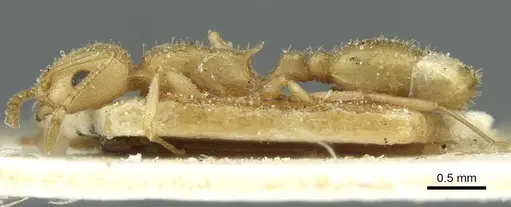
Temnothorax silvestrii is a small, yellow-brown arboreal ant from the American Southwest and northern Mexico. Workers measure 3.2-3.4mm and have a 12-segmented antenna, a coarsely punctured head, and well-developed propodeal spines. These ants nest exclusively in larger limbs of evergreen oaks, especially Quercus emory, at elevations of 3,500 ft or more. Colonies are small - typically up to 70 workers with a single queen. The species is known only from a few collections in southern Arizona, Sonora, and Baja California Sur . This species is part of the Temnothorax sallei clade and is distinguished from close relatives like T. smithi and T. bradleyi by its rough sculpturing on the gaster and its western distribution. It was originally described as Tetramorium silvestrii and has been moved through Leptothorax before settling in Temnothorax .
Quick Summary
- Difficulty: Medium
- Origin & Habitat: Southern Arizona (United States) and northern Mexico (Sonora, Baja California Sur). Nests in larger limbs of evergreen oaks, particularly Quercus emory, in oak forests at elevations of 3,500 ft or more [1][2][3][4].
- Colony Type: Single-queen colonies (monogyne) with up to 70 workers [4].
- Size & Growth:
- Queen: Exact size not reported in literature, queens are slightly larger than workers (~3.2-3.4mm) based on congeneric species.
- Worker: 3.2-3.4mm [4]
- Colony: Up to 70 workers [4]
- Growth: Moderate
- Development: Likely 6-10 weeks under optimal conditions (inferred from related Temnothorax species) (Development time not directly studied for this species.)
- Antkeeping:
- Temperature: Based on its oak forest habitat in Arizona and Mexico, maintain 22-26°C. Provide a temperature gradient so workers can self-regulate. Avoid extreme heat or cold [1].
- Humidity: Keep the nest substrate slightly moist but not waterlogged. Good ventilation is essential to prevent mold. Natural habitat: oak forests with moderate moisture levels.
- Diapause: Likely yes. Temperate origin suggests a winter dormancy period is beneficial. Cool to 10-15°C for 2-3 months (November-February) and keep nest slightly damp. Skip feeding during this period.
- Nesting: Arboreal nester that prefers tight, enclosed spaces. In captivity, Y-tong (AAC) or plaster nests with narrow chambers work well. Provide small twigs or wood pieces for enrichment. Avoid large, open formicaria [4].
- Behavior: Generally peaceful and non-aggressive. Workers are active diurnal foragers that may use tandem-running recruitment. When threatened, they may employ a venom-smearing defense typical of Crematogastrini (without citation). Escape risk is moderate due to their small size, use fine mesh and tight lids. They are shy and may flee rather than fight.
- Common Issues: slow colony growth due to naturally small colony size, requires patience, escape risk, use fine mesh on all openings as workers can squeeze through tiny gaps, overfeeding protein can cause mold, offer small amounts and remove leftovers, winter dormancy may be needed, skipping hibernation could weaken colonies over time, colonies may fail if nest is too wet or poorly ventilated, maintain moderate humidity
Housing and Nest Setup
Temnothorax silvestrii is an arboreal species that naturally nests in larger limbs of evergreen oaks, especially Quercus emory [1][4]. In captivity, Y-tong (AAC) nests or plaster nests with narrow, tight chambers work well because they mimic the enclosed spaces these ants prefer. Avoid large, open formicaria. A small outworld (e.g.,20x15 cm) is enough for a colony of this size. Use fine mesh on all ventilation holes, workers are small but not tiny enough to pass through standard ant mesh if properly installed. Provide small twigs or bark pieces as enrichment. Since colonies stay under 100 workers, a small nest chamber is sufficient.
Feeding and Diet
Like most Temnothorax, T. silvestrii is omnivorous. In nature they likely tend aphids for honeydew and scavenge small insects. In captivity, offer a constant supply of sugar water or honey water. For protein, give small prey such as fruit flies, pinhead crickets, or tiny mealworm pieces. Feed protein 2-3 times per week, remove any uneaten prey after 24 hours to prevent mold. Their appetites are modest, a single fruit fly may feed several workers. Avoid overfeeding, which can attract mites or cause mold growth. [4]
Temperature and Seasonal Care
Maintain 22-26°C during the active season. This species comes from Arizona and northern Mexico at elevations above 3,500 ft, so it experiences warm summers and cooler winters [1]. A heating cable on one side of the nest creates a useful gradient. During winter (November-February), reduce temperature to 10-15°C for a dormancy period. This hibernation mimics their natural cycle. Keep the nest substrate slightly moist during this time but do not offer food. A cool basement or garage works well. Skipping hibernation may weaken the colony over time.
Colony Development
Colony founding has not been reported in the literature. Based on typical Temnothorax biology, the queen likely raises the first workers without outside help (claustral founding), but this is not confirmed. Once the first nanitic workers emerge, they take over foraging and brood care. Growth is slow, expect several months to reach 20-30 workers, and a mature colony of up to 70 workers may take a year or more. Do not rush: small colony size is natural for this species. Patience and minimal disturbance are key. [4]
Behavior and Observation
Workers are diurnal, active foragers. They may use tandem-running to recruit nestmates to food, a behavior seen in many Temnothorax species. Their defense mechanism is typical of Crematogastrini: they smear venom rather than sting deeply, but they are non-aggressive and prefer to flee. Use a red film or dark cloth over the nest if you want to observe without disturbing them. Their small size makes them fascinating to watch, but they will retreat into the nest if startled. [4]
Frequently Asked Questions
How long does it take for Temnothorax silvestrii to produce first workers?
Exact timing is unknown, but likely 6-10 weeks from egg to worker under optimal conditions (22-26°C). This estimate is based on related Temnothorax species.
How big do Temnothorax silvestrii colonies get?
Colonies remain small, typically up to 70 workers at maturity. This is natural for the species and not a sign of poor care.
Do Temnothorax silvestrii ants sting?
They have a stinger but are not aggressive and rarely use it to pierce. Instead, they smear venom, a defense typical of Crematogastrini. They will usually flee when threatened.
What temperature do Temnothorax silvestrii need?
Keep them at 22-26°C during the active season, based on their habitat in Arizona and Mexico oak forests [1]. A gradient allows self-regulation.
Do Temnothorax silvestrii need hibernation?
Yes, a winter dormancy period is recommended. Keep them at 10-15°C for 2-3 months (roughly November-February). This mimics their natural elevation habitat [1].
Can I keep multiple Temnothorax silvestrii queens together?
No. This species is monogyne, colonies have a single queen. Combining unrelated queens will likely result in fighting [4].
What do Temnothorax silvestrii eat?
They are omnivorous. Offer sugar water or honey constantly, and protein (small insects like fruit flies, pinhead crickets) 2-3 times weekly. Remove uneaten prey after 24 hours.
Are Temnothorax silvestrii good for beginners?
They are medium difficulty. Their small size requires careful housing, and their slow growth and need for winter dormancy demand patience. Not the easiest species for absolute beginners, but doable with research.
When should I move Temnothorax silvestrii to a formicarium?
Wait until the colony has at least 20-30 workers. Test tube setups work fine for founding and small colonies. Move when the test tube becomes crowded or the water source is depleted.
Why is my Temnothorax silvestrii colony not growing?
Growth is naturally slow. Check temperature (22-26°C), provide adequate protein, and ensure a proper winter dormancy. Avoid frequent disturbances. Reaching 50-70 workers can take a year or more.
What type of nest is best for Temnothorax silvestrii?
Y-tong (AAC) or plaster nests with narrow chambers work best. These arboreal ants prefer tight, enclosed spaces scaled to their small size. Avoid large, open formicaria.
Report an Issue
The current care sheet is based fully on literature. See inconsistencies, or something that's incorrect? Please , it will be resolved after review from an admin. Contributing to the blogs tab also helps providing information, to make us be able to further improve the caresheets. Thank you for your support!
References

This caresheet is licensed under CC BY-SA 4.0 .
Community Blogs
Literature
Loading distribution map...Loading products...