
Temnothorax serviculus
- Sci. Name
- Temnothorax serviculus
- Tribe
- Crematogastrini
- Subfamily
- Myrmicinae
- Author
- Ruzsky, 1902
- Distribution
- Found in 1 countries
Introduction
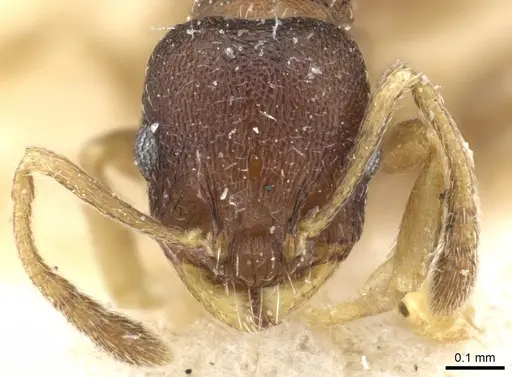
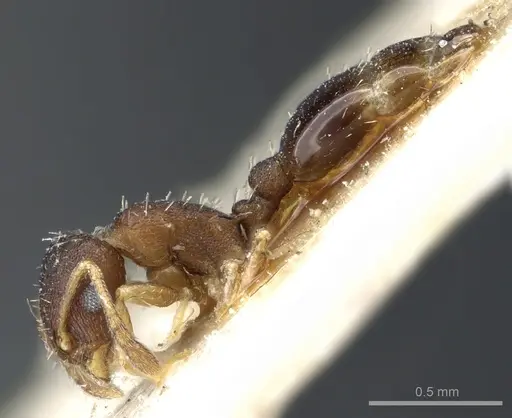
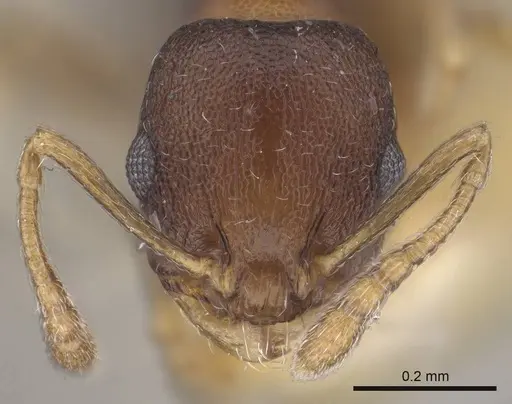
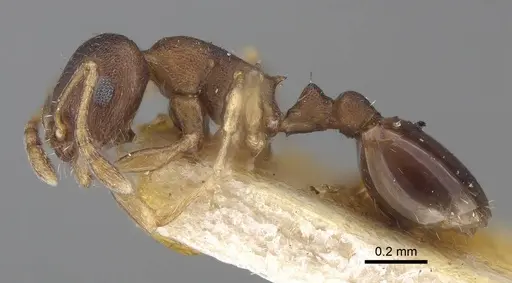
Temnothorax serviculus is a tiny ant species native to the Palaearctic region, found in southern Siberia, the Russian Far East, northern Kazakhstan, the southern Trans-Urals, Mongolia, Korea, and Albania . It is a steppe specialist, restricted to dry grassland habitats where it nests in small, inconspicuous colonies . These ants inhabit rocky, very dry and sunny slopes . Workers are small and dark, with a dark head and gaster and broad spines - exact size has not been published, but they are typical of the genus Temnothorax. Queens and males have been described . This species is known as a host for the slave-making ant Myrmoxenus gordiagini .
Quick Summary
- Difficulty: Medium
- Origin & Habitat: Palaearctic steppe regions: southern Siberia, Russian Far East, northern Kazakhstan, southern Trans-Urals, Mongolia, Korea, and Albania [1][2]. Found on dry, rocky, sunny slopes in steppe habitats [5][3].
- Colony Type: Likely monogyne (single queen) based on typical Temnothorax patterns. Colonies are small and inconspicuous with few individuals [4]. Known as a host for the slave-making ant Temnothorax gordiagini [8].
- Size & Growth:
- Queen: Size data unavailable from literature. Queens in Temnothorax are typically slightly larger than workers, estimated at ~4-5 mm (inferred from genus).
- Worker: Size data unavailable from literature. Workers are tiny, typical for Temnothorax (inferred genus size ~2-4 mm).
- Colony: Small colonies, likely under 100 workers based on inconspicuous nesting [4] and typical Temnothorax behavior (estimated).
- Growth: Moderate (inferred from genus)
- Development: Not directly studied. Based on related Temnothorax species, estimated 6-10 weeks at optimal temperature (inferred). (Specific development timing for Temnothorax serviculus is unknown, information is inferred from genus patterns.)
- Antkeeping:
- Temperature: Keep at room temperature,20-24°C. They come from steppe habitats with dry sunny slopes [5][3], so they can tolerate warmth but avoid extreme heat. No specific optimal temperature has been published.
- Humidity: Low humidity. Their natural habitat is very dry and sunny [5]. Provide a dry nest with a small water source. Avoid dampness.
- Diapause: Yes, as a temperate species, they require a winter diapause. Keep at 5-10°C for 2-3 months (inferred from genus and region).
- Nesting: Use Y-tong (AAC), plaster, or soil nests with small, narrow chambers scaled to their tiny workers. Test tubes are suitable for founding. Avoid large open spaces.
- Behavior: Peaceful and non-aggressive. They defend by smearing venom (subfamily trait). Workers forage individually. Escape prevention is critical due to tiny size, use fine mesh barriers and tight-fitting lids. They may tend aphids for honeydew in some regions [9].
- Common Issues: tiny size makes escape likely without fine mesh barriers., colonies are small and slow-growing, requiring patience., hard to find in the wild due to inconspicuous nests, purchasing may be the only option., may be difficult to establish in captivity if wild-caught due to stress., can be parasitized by the slave-making ant Temnothorax gordiagini [8].
Housing and Nest Setup
Temnothorax serviculus is a tiny ant, so housing must be scaled down. Y-tong (AAC) nests with narrow, tight chambers work well, chambers should be just a few millimeters tall to accommodate their small workers. Test tube setups are also suitable for founding colonies. These ants prefer dry conditions, reflecting their steppe habitat origins [5]. Provide a small water chamber or cotton ball for moisture, but keep the nest mostly dry. Because of their tiny size, escape prevention is critical: use fine mesh (0.5 mm or smaller) on ventilation holes and ensure all connections are tight. Avoid large open spaces that can stress the colony.
Feeding and Diet
Like most Temnothorax, T. serviculus is omnivorous. Offer small protein sources such as fruit flies, pinhead crickets, or tiny mealworms. They will also accept sugar water, honey, or diluted maple syrup. In the wild, they forage individually for small prey and may engage in trophobiosis with aphids [9]. Feed founding colonies small amounts every few days, removing uneaten food to prevent mold. Established colonies can be fed 2-3 times per week. Keep a constant sugar source (e.g., a cotton ball with sugar water) available between protein feedings.
Temperature and Seasonal Care
Keep Temnothorax serviculus at room temperature (20-24°C). This reflects their adaptation to temperate steppe environments [3]. They can tolerate slight fluctuations but should be kept away from direct heat sources or cold drafts. During winter, they require a diapause (hibernation) period of 2-3 months at 5-10°C, mimicking the harsh winters of their native Siberian and Mongolian ranges (inferred from genus and region). Reduce feeding during diapause and place the colony in a cool location like an unheated garage or refrigerator (not freezer). Resume normal care in spring when temperatures rise.
Colony Dynamics and Behavior
Temnothorax serviculus forms small, inconspicuous colonies with relatively few workers [4]. They are likely monogyne (single queen). Workers are active foragers that search individually for food rather than using chemical recruitment trails. Their primary defense is smearing venom rather than stinging (subfamily Myrmicinae, tribe Crematogastrini). This species is known to be parasitized by the slave-making ant Temnothorax gordiagini, which invades nests and forces workers to raise parasite brood [8]. If you acquire a wild colony, check for signs of parasitism, unusual worker behavior or mixed brood sizes may indicate infestation. The ants are peaceful and pose no danger to humans.
Frequently Asked Questions
How long does it take for Temnothorax serviculus to produce first workers?
Not directly studied. Based on related Temnothorax species, expect first workers (nanitics) approximately 6-10 weeks after the queen lays eggs at room temperature (20-24°C).
Can I keep multiple queens of Temnothorax serviculus together?
Not recommended. This species is likely monogyne (single queen), and combining unrelated queens would probably lead to fighting. Stick with one queen per colony.
Do Temnothorax serviculus ants sting?
They have a small stinger but their primary defense is smearing venom rather than piercing. Their tiny size means any sting would be negligible to humans. They are not considered dangerous.
What size colony does Temnothorax serviculus reach?
Colonies remain small, typically under 100 workers even at maturity. This is based on field observations of inconspicuous nests [4] and typical Temnothorax behavior.
Do Temnothorax serviculus need hibernation?
Yes. As a species from temperate regions with harsh winters (Siberia, Mongolia), they require a winter diapause of 2-3 months at 5-10°C. Skip hibernation only if the colony is very weak, but expect health issues the following year.
Are Temnothorax serviculus good for beginners?
They are intermediate in difficulty. Their small size requires careful escape prevention, and their slow growth requires patience. They are also harder to find for sale due to inconspicuous nesting habits.
What should I feed my Temnothorax serviculus colony?
Offer small protein sources like fruit flies, tiny mealworms, or small crickets 2-3 times per week. Keep a constant sugar source available like sugar water or diluted honey. Remove uneaten food promptly to prevent mold.
Why is my Temnothorax serviculus colony dying?
Common causes include: escape through tiny gaps (use fine mesh), excessive humidity (they prefer dry conditions), stress from overhandling, or poor feeding. Also check for parasites, they are a known host for Temnothorax gordiagini [8]. Wild-caught colonies often struggle to adapt to captivity.
Report an Issue
The current care sheet is based fully on literature. See inconsistencies, or something that's incorrect? Please , it will be resolved after review from an admin. Contributing to the blogs tab also helps providing information, to make us be able to further improve the caresheets. Thank you for your support!
References

This caresheet is licensed under CC BY-SA 4.0 .
Community Blogs
CASENT0904759
View on AntWeb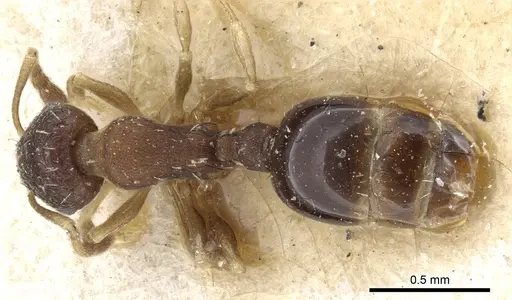
CASENT0919743
View on AntWeb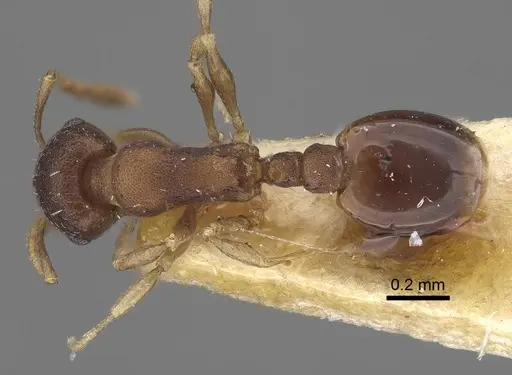
Literature
Loading distribution map...Loading products...