
Temnothorax schoedli
- Sci. Name
- Temnothorax schoedli
- Tribe
- Crematogastrini
- Subfamily
- Myrmicinae
- Author
- Seifert, 2006
- Distribution
- Found in 1 countries
Introduction
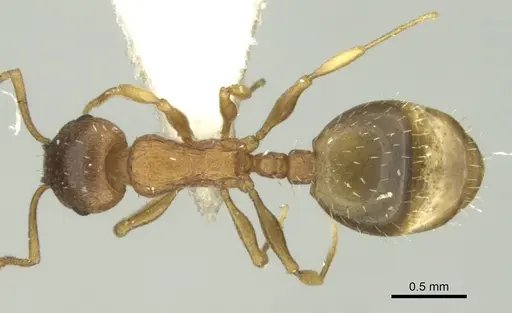
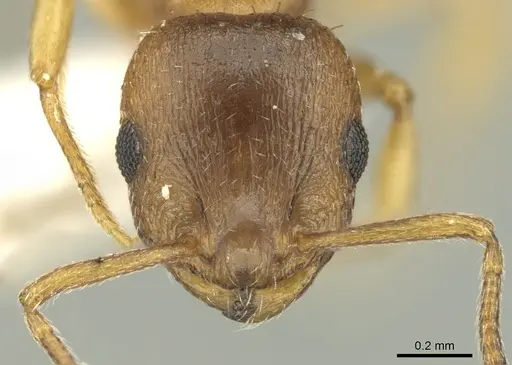
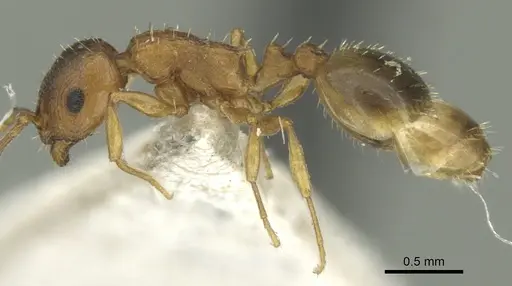
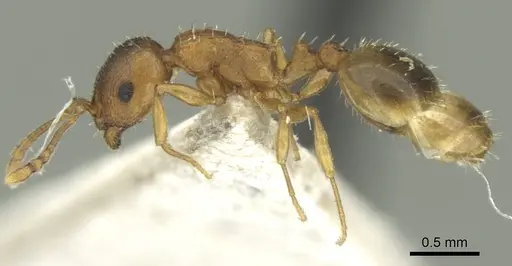
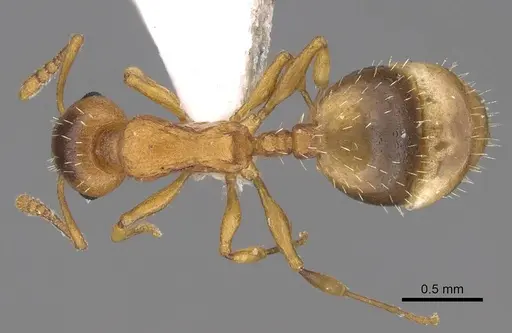
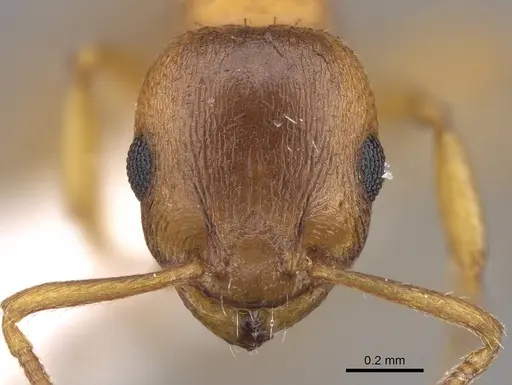
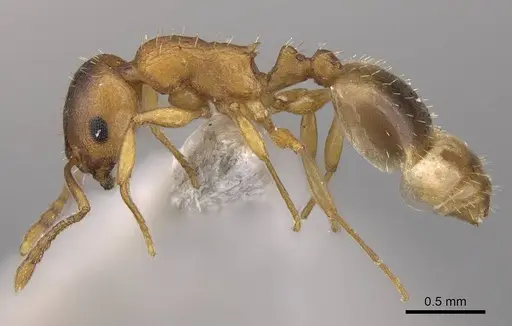
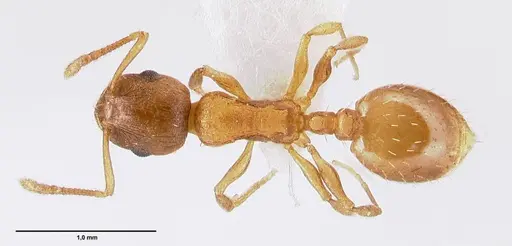
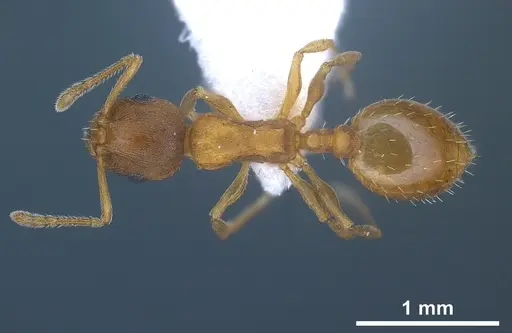
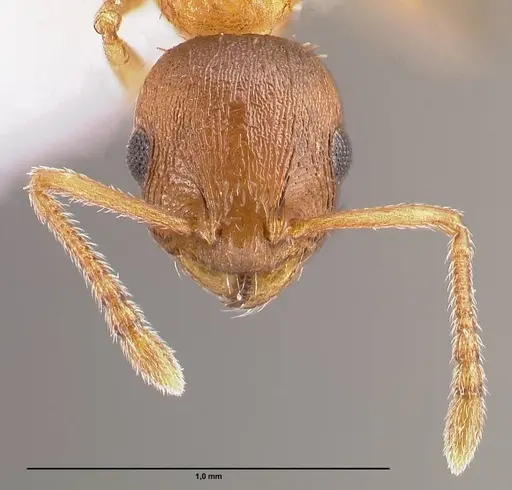
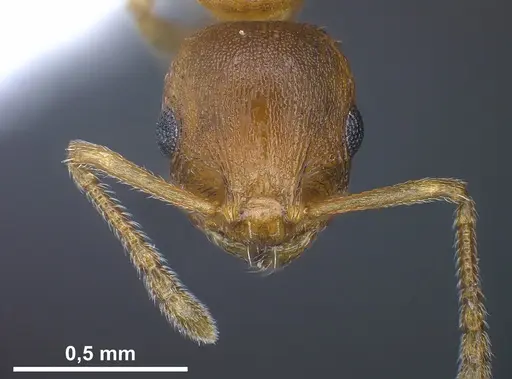
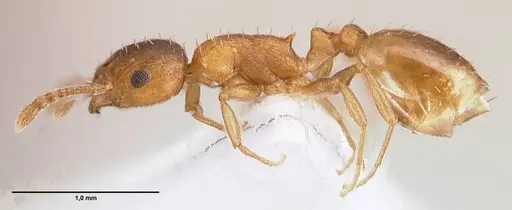
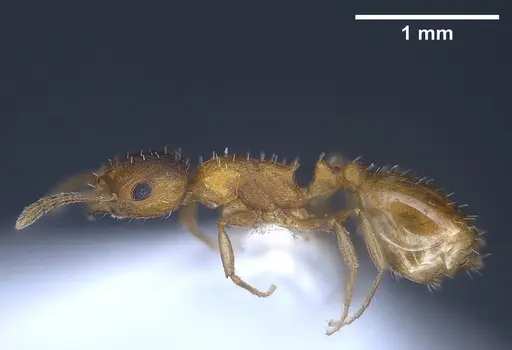
Temnothorax schoedli is a tiny brown ant from southern Turkey. Workers are small, estimated around 2-3 mm based on related Temnothorax species. They have a distinctive color pattern: the mesosoma, antennae, legs, and front part of the gaster are lighter than the darker head and rear of the abdomen . This species is the lightest-colored member of the sordidulus complex . Almost nothing is known about their biology. They are endemic to the southern Taurus Mountains in Turkey, found at elevations around 1600 m near Hassa . Like other Temnothorax, they likely nest in small cavities under stones or in dead wood, but specific nesting data is unavailable.
Quick Summary
- Difficulty: Easy
- Origin & Habitat: Endemic to the southern Taurus Mountains in southeastern Turkey, specifically the South-Eastern Turkish Lowlands. Found at around 1600 m elevation near Hassa in the Nur Dağları range [1][3]. Habitat is rocky Mediterranean terrain with warm, dry summers and cool, wet winters.
- Colony Type: Unconfirmed, most related Temnothorax are monogyne (single-queen), but this is not documented for this species.
- Size & Growth:
- Queen: Size data unavailable, estimated ~4-5 mm based on related Temnothorax
- Worker: ~2-3 mm (inferred from Temnothorax genus)
- Colony: Unknown, likely up to a few hundred workers based on related species
- Growth: Moderate
- Development: Estimated 6-10 weeks at optimal temperature (inferred from related Temnothorax) (Temperature-dependent, warmer conditions speed development.)
- Antkeeping:
- Temperature: Keep at 20-24°C (inferred from Mediterranean habitat). A thermal gradient is beneficial. Winter diapause at 10-15°C for 2-3 months is likely.
- Humidity: Provide a humidity gradient, moisten part of the nest substrate but keep some areas dry. Not waterlogged.
- Diapause: Yes, likely required due to temperate origin. Cool to 10-15°C for 2-3 months in winter.
- Nesting: Small cavities in Y-tong (AAC), plaster, or test tubes. Chambers should be tight. Excellent escape-proofing is essential due to tiny size.
- Behavior: Peaceful and non-aggressive to humans. They have a modified, spatulate stinger used to smear venom rather than pierce, not harmful to people. Their tiny size makes them excellent escape artists, fine mesh and sealed connections are required.
- Common Issues: escape prevention is critical due to their very small size, they squeeze through standard barriers, slow colony growth may test patience, winter diapause is likely essential but often overlooked, large test tube reservoirs can flood tiny nests, use appropriately sized water sources, limited availability, rarely kept in the hobby
Housing and Nest Setup
Temnothorax schoedli needs appropriately scaled housing. Test tubes work for starting colonies, use a small water reservoir that won't flood the tiny space. For established colonies, Y-tong (AAC) or plaster nests with narrow chambers are ideal. These ants prefer snug, dark spaces. A small outworld allows feeding. Because of their minute size, escape prevention is vital: use fine mesh on ventilation and seal all connections. A thin layer of substrate in the outworld helps regulate humidity. [1]
Feeding and Diet
Like other Temnothorax, T. schoedli likely accepts small insects and sugary liquids. Offer tiny protein sources such as fruit flies, pinhead crickets, or small pieces of mealworm. Provide sugar water, diluted honey, or a small drop of honey. In nature, they probably tend aphids for honeydew. Feed small amounts 2-3 times per week, remove uneaten prey after 24 hours to prevent mold. Diet is inferred from related species, no specific studies exist.
Temperature and Seasonal Care
Maintain 20-24°C for colony activity, this suits their Mediterranean origin [1]. A heating cable on one side can create a useful temperature gradient. Winter diapause is likely essential: reduce to 10-15°C for 2-3 months to mimic their natural seasonal cycle. Skipping hibernation may weaken colonies over time. These recommendations are based on habitat inference, not direct study.
Colony Growth and Development
Colony growth is probably slow, as typical for small Temnothorax. The founding method is unconfirmed, queens may raise the first brood alone using stored reserves, but this is speculative. First nanitics likely emerge after 6-10 weeks at optimal temperature (estimated from related species) [1]. Colonies likely remain modest, possibly reaching a few hundred workers at maturity, similar to related Temnothorax.
Behavior and Temperament
These are peaceful ants that avoid confrontation. Workers forage actively but are not bold. Their defense is a modified spatulate stinger used to smear venom, they cannot pierce human skin and are completely safe. The main behavioral concern is their climbing ability and tiny size: they can slip through gaps that stop larger species. Use fine mesh barriers and check seals regularly. [1]
Frequently Asked Questions
How long does it take for Temnothorax schoedli to produce first workers?
The development time is unknown for this species. Based on related Temnothorax, expect about 6-10 weeks from egg to worker at 20-24°C. This is an estimate, actual times may vary.
What size colony does Temnothorax schoedli reach?
Colony size is unstudied. By comparison with related Temnothorax, colonies may reach up to a few hundred workers. Growth is gradual over months to years.
Do Temnothorax schoedli ants sting?
They have a modified stinger used for smearing venom, but it is not functional as a piercing weapon against humans. They pose no stinging danger.
What temperature do Temnothorax schoedli need?
Aim for 20-24°C for active growth. They come from a warm Mediterranean climate, so they handle warmer temperatures as well. For winter, cool to 10-15°C for a 2-3 month rest period. These recommendations are based on habitat inference.
Can I keep multiple queens together?
Not recommended without data. Most related Temnothorax are monogyne, so combining queens likely leads to aggression. Start with one queen per colony.
Why are my Temnothorax schoedli escaping?
Their tiny size (~2-3 mm) allows them to pass through gaps that would stop larger ants. Use fine-mesh barriers and seal all connections tightly. Check for gaps regularly.
Do Temnothorax schoedli need hibernation?
Yes, a 2-3 month winter diapause at 10-15°C is likely essential because they come from a temperate region with distinct seasons. Skipping may weaken colonies over time.
What do Temnothorax schoedli eat?
Offer small protein sources (fruit flies, tiny crickets) and sugar water or honey. Remove uneaten food after 24 hours. Their natural diet is unknown, but related species are generalist feeders.
Are Temnothorax schoedli good for beginners?
They are easy in terms of temperature and temperament, but escape prevention due to their tiny size requires care. Colony growth is slow, which may test patience. With proper setup, they can suit a motivated beginner.
When should I move my colony to a formicarium?
Wait until the colony has at least 20-30 workers before moving to a larger nest. Connect the test tube to the new nest and let them relocate on their own to reduce stress.
Report an Issue
The current care sheet is based fully on literature. See inconsistencies, or something that's incorrect? Please , it will be resolved after review from an admin. Contributing to the blogs tab also helps providing information, to make us be able to further improve the caresheets. Thank you for your support!
References

This caresheet is licensed under CC BY-SA 4.0 .
Community Blogs
Literature
Loading distribution map...Loading products...