
Temnothorax sardous
- Sci. Name
- Temnothorax sardous
- Tribe
- Crematogastrini
- Subfamily
- Myrmicinae
- Author
- Santschi, 1909
- Distribution
- Found in 1 countries
Introduction
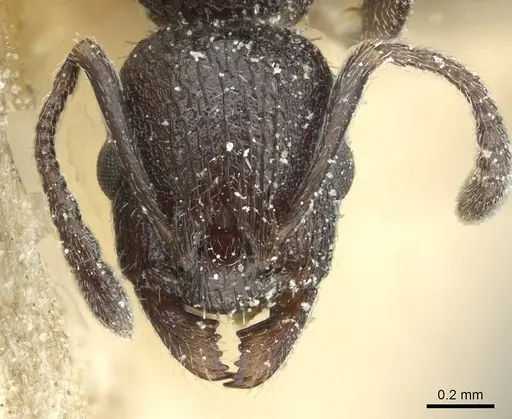
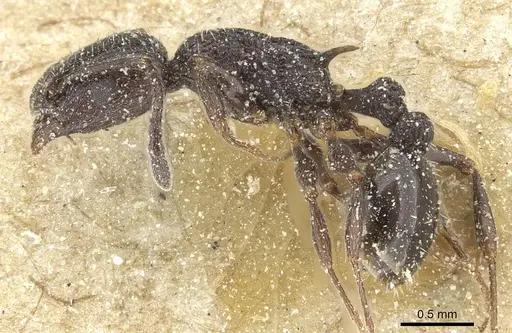
Temnothorax sardous is a tiny ant found only on the Italian island of Sardinia – a true island endemic . Workers are small and slender, as is typical for the genus. This species has had a complicated history: some experts treat it as a full species, while others consider it a subspecies of Temnothorax rottenbergii . Like other members of the tribe Crematogastrini, it uses a smear defense – workers wipe venom onto enemies with a flattened stinger rather than stinging. Its small size and peaceful nature make it an interesting species for keepers who can manage its escape risks.
Quick Summary
- Difficulty: Medium
- Origin & Habitat: Sardinia, Italy – a Mediterranean island with warm, dry summers and mild, wet winters [1]. The species likely inhabits rocky coastal areas and inland scrubland, but its exact microhabitat preferences are unrecorded.
- Colony Type: Unconfirmed – colony structure has not been studied. Most Temnothorax species are monogyne (single queen), but some can have multiple queens. The related T. rottenbergii group typically forms small colonies.
- Size & Growth:
- Queen: Size data unavailable.
- Worker: Size data unavailable.
- Colony: Unknown – typical for the genus, probably under a few hundred workers.
- Growth: Moderate (estimated based on related Temnothorax species).
- Development: Unknown – likely several weeks at optimal temperature based on related Mediterranean species. (Development times are not recorded for this species.)
- Antkeeping:
- Temperature: Likely 20–24°C based on Mediterranean climate. Room temperature is usually suitable. Avoid prolonged temperatures above 28°C.
- Humidity: Keep the nest substrate slightly moist but not waterlogged. Let the surface dry between waterings. Mediterranean species tolerate drier conditions than tropical ants.
- Diapause: Likely yes – as a temperate Mediterranean species, a winter rest period is probably needed. Reduce temperature to around 10°C for 3–4 months during winter.
- Nesting: In nature, likely nests in small cavities under stones, in rotting wood, or in rock crevices. Y-tong (AAC) nests or small test tube setups work well for their tiny size.
- Behavior: Peaceful and non‑aggressive – Temnothorax workers rarely sting and prefer to flee. They move quickly and forage individually. Escape prevention is critical: these tiny ants can squeeze through gaps smaller than 1 mm. Their main defense is the smear tactic typical of Crematogastrini.
- Common Issues: escape prevention is critical due to tiny size – use fine mesh and fluon barriers, wild‑caught colonies are difficult to obtain because the species is endemic to Sardinia, slow colony growth may test keeper patience, diapause requirements are not confirmed for this exact species, most care advice is inferred from related species, not direct study
Housing and Nest Setup
Because of their tiny size, Temnothorax sardous needs carefully sealed housing. A small test tube setup works well for founding colonies – use a test tube with a water reservoir held back by a cotton plug. For established colonies, a Y‑tong (AAC) nest with narrow chambers works excellently. The chambers should be sized for small workers – large chambers may make the colony feel insecure. A small outworld area allows for feeding. Escape prevention is critical: use fluon on container rims and fine mesh for any ventilation. A naturalistic setup with small rocks and moss can also work, but monitor for mold.
Feeding and Diet
Temnothorax sardous is likely omnivorous, like most members of the genus. In the wild, it probably feeds on honeydew from aphids and scale insects, plus small arthropods. In captivity, offer diluted honey or sugar water (50/50) as a constant energy source. For protein, provide small live prey such as fruit flies, pinhead crickets, or tiny mealworms. Offer protein two to three times per week. Remove uneaten prey after 24–48 hours to prevent mold.
Temperature and Seasonal Care
As a Sardinian endemic, this species prefers temperatures around 20–24°C. Room temperature is usually suitable. Avoid prolonged heat above 28°C. During winter, a diapause period is likely necessary – reduce temperature to approximately 10°C for 2–3 months to simulate the island’s winter. You can achieve this by moving the colony to an unheated garage or basement. Do not feed during diapause but ensure some moisture remains available. Return to normal temperatures gradually in spring.
Colony Development and Growth
Temnothorax colonies tend to grow more slowly than many common ant species. A newly mated queen will likely seal herself into a small chamber and lay her first eggs, raising the first brood on her own body reserves (claustral founding is typical for the genus but not confirmed). The first workers are usually smaller than mature workers. Colony growth is gradual – expect several weeks from egg to first worker at optimal temperature. A mature colony probably reaches only a few hundred workers. Patience is key: overfeeding does not speed up development and can cause mold.
Behavior and Observation
Temnothorax sardous is a peaceful, non‑aggressive species. Workers are active and quick‑moving, often foraging alone. They do not sting in the usual sense, instead they use a smear defense (typical of Crematogastrini) – applying venom with a flattened stinger. They pose no danger to keepers. Their small size makes them fascinating to watch as they navigate their environment. They do not exhibit slave‑making or other social parasitism. The species is not known for being territorial toward other colonies.
Frequently Asked Questions
How long does it take for Temnothorax sardous to get first workers?
It is unknown exactly, but based on related Mediterranean Temnothorax species, it likely takes several weeks at optimal temperature (around 20–24°C).
Do Temnothorax sardous ants sting?
They do not sting in the typical way. They belong to the tribe Crematogastrini, which uses a smear defense – workers apply venom by wiping with a flattened stinger. This is harmless to humans.
What size colony does Temnothorax sardous reach?
The maximum colony size is unknown. Most Temnothorax species form small colonies, likely under a few hundred workers.
Can I keep multiple queens together?
It is not recommended without specific study. Some Temnothorax can be polygynous, but combining queens of this species has not been documented and could cause fighting.
Do Temnothorax sardous need hibernation?
Likely yes – as a temperate Mediterranean species, a winter rest period is probably needed. Reduce temperature to around 10°C for 2–3 months during winter.
What do Temnothorax sardous eat?
They are omnivorous. Offer diluted honey or sugar water as a constant energy source, and small live prey like fruit flies or small mealworms for protein two to three times weekly.
Are Temnothorax sardous good for beginners?
They are moderate difficulty. Their tiny size makes escape prevention crucial, but they are peaceful and have simple care needs. Not the easiest choice, but manageable for attentive keepers.
When should I move my colony to a formicarium?
Wait until the test tube is noticeably crowded – typically when the colony has more than 20–30 workers. Y‑tong (AAC) nests or other small formicaria work well.
Why are my Temnothorax sardous dying?
Common causes include escape (check for tiny gaps), improper humidity (too wet or too dry), temperature stress (too hot or too cold), and mold from overfeeding. Review each parameter.
Where is Temnothorax sardous found?
Only on the island of Sardinia, Italy – it is a Sardinian endemic found nowhere else [1].
Report an Issue
The current care sheet is based fully on literature. See inconsistencies, or something that's incorrect? Please , it will be resolved after review from an admin. Contributing to the blogs tab also helps providing information, to make us be able to further improve the caresheets. Thank you for your support!
References

This caresheet is licensed under CC BY-SA 4.0 .
Community Blogs
CASENT0912994
View on AntWeb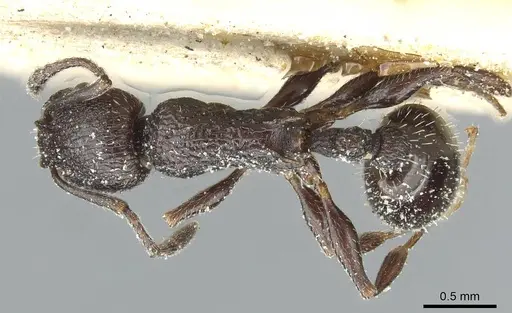
Literature
Loading distribution map...Loading products...