
Temnothorax pulchellus
- Sci. Name
- Temnothorax pulchellus
- Tribe
- Crematogastrini
- Subfamily
- Myrmicinae
- Author
- Emery, 1894
- Distribution
- Found in 2 countries
Introduction
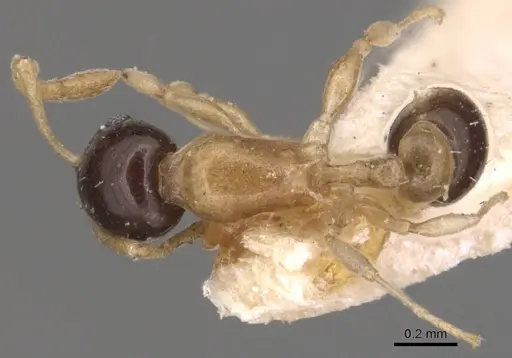
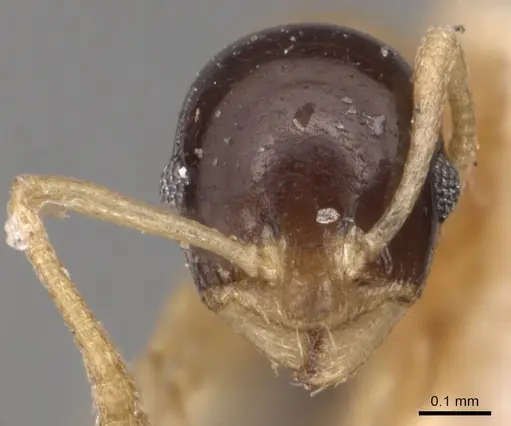
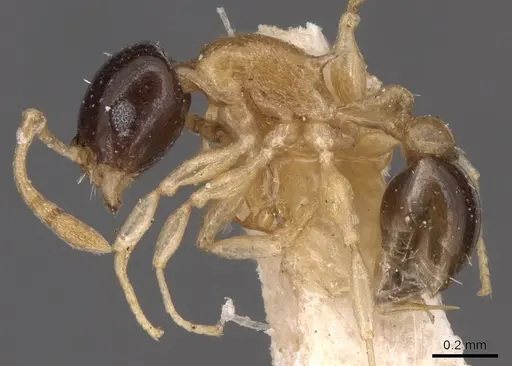
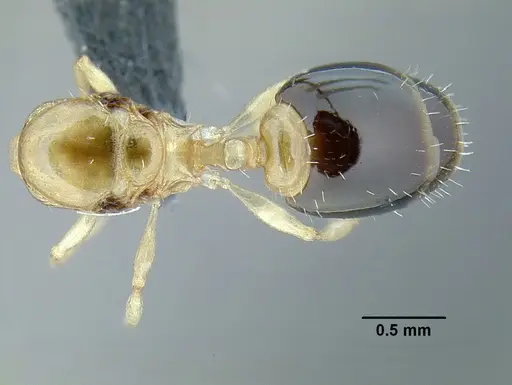
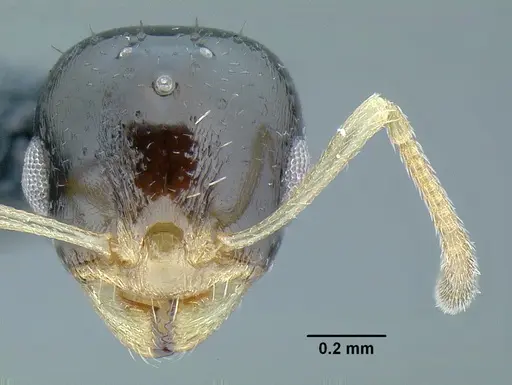
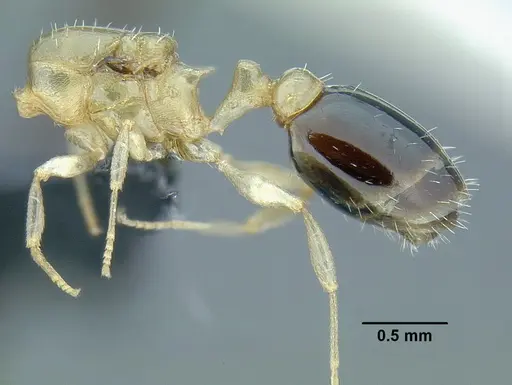
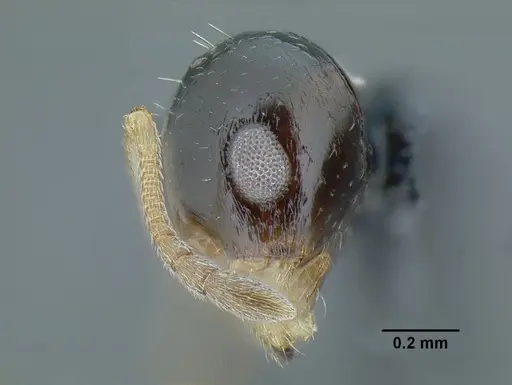
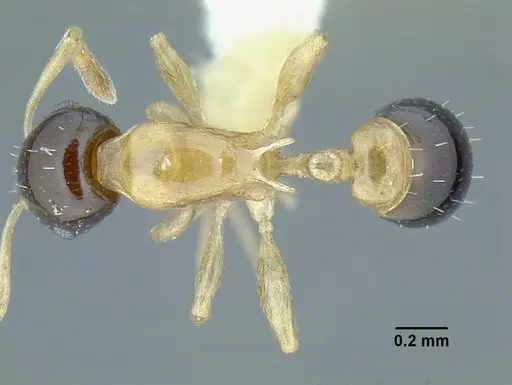
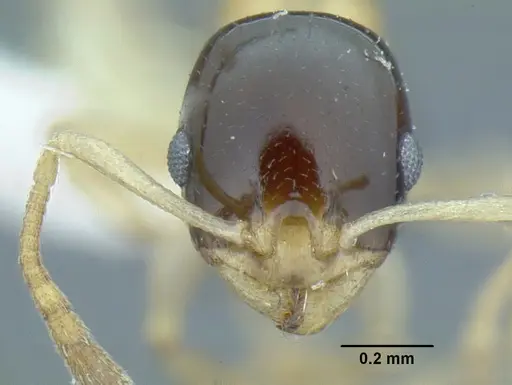
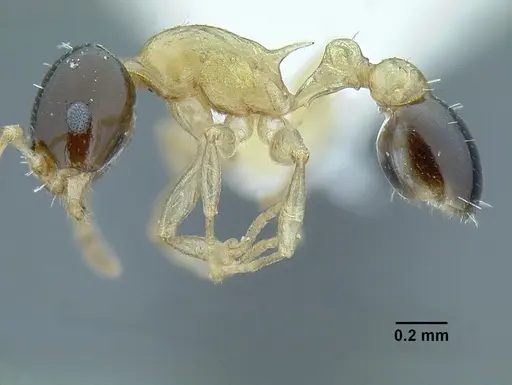
Temnothorax pulchellus is a tiny, bicolored ant known only from the British and U.S. Virgin Islands (Guana and St. John) . Workers have a dark brown head and gaster, while the rest of the body is pale yellow, giving them a striking two-tone look. They belong to the pulchellus group of the Temnothorax salvini clade and are closely related to other Antillean ground-nesting species . The biology of this species is almost completely unstudied, so all care advice is inferred from what we know about related members of the group .
Quick Summary
- Difficulty: Medium
- Origin & Habitat: Found only on the islands of Guana (British Virgin Islands) and St. John (U.S. Virgin Islands), in a mix of tropical xeric scrubland and tropical moist forest [1].
- Colony Type: Colony structure is unconfirmed, but based on related Antillean species in the pulchellus group, they likely form single-queen colonies [1]. They are terricolous (ground-nesting) in natural habitats [1].
- Size & Growth:
- Queen: Very small, size data unavailable [1].
- Worker: Very small, size data unavailable [1].
- Colony: Unknown, colonies of related species are small, probably under a few hundred workers [1].
- Growth: Unknown, likely moderate based on related Temnothorax.
- Development: Unconfirmed for this species. Related Antillean Temnothorax take about 6-10 weeks under warm, humid conditions. (Keep temperature stable at 24-28°C for best development.)
- Antkeeping:
- Temperature: 24-28°C (inferred from Caribbean tropical habitat), avoid drops below 20°C.
- Humidity: High humidity, keep the nest substrate consistently moist but not waterlogged, and add a dry area for choice.
- Diapause: Unlikely, as a tropical species, they probably do not require a true diapause. A slight winter temperature drop may be optional.
- Nesting: Terricolous ground-nesters. Use a Y-tong (AAC) or plaster nest with small, tight chambers. A test tube setup works for founding. Avoid large open spaces.
- Behavior: Peaceful and non-aggressive. They flee rather than fight. Their primary defense is smear venom, they wipe venom onto enemies with a modified spatulate stinger (typical of Crematogastrini). Due to their tiny size, escape prevention is critical, they can slip through micro-gaps. Foragers may use tandem running in related species.
- Common Issues: escape prevention is the top priority, use fine mesh and tight seals to stop them squeezing through tiny gaps., this tropical species cannot tolerate temperatures below 20°C for long., humidity must be kept high, dry conditions rapidly kill colonies., colony growth is likely slow, don't overfeed or disturb them too often., wild-caught queens or colonies may carry mites or other parasites.
Housing and Nest Setup
Start your colony in a test tube with a water reservoir. Because these ants are tiny, even small open spaces can be impossible for them to navigate. Once the colony has a small worker force, move them to a Y-tong (AAC) or plaster nest with chambers no larger than a few centimeters across. The nest must stay dark and humid. For ventilation, cover all openings with very fine mesh (they can walk through standard ant mesh). Use a small outworld, too much open space makes it hard for workers to find food. Only introduce a heat cable if the room stays below 22°C, avoid direct heat on the nest. [1]
Feeding and Diet
Offer small live prey like fruit flies, pinhead crickets, or springtails. The prey must be smaller than the workers. Also provide a sugar source, a tiny drop of 1:1 honey-water or sugar water is perfect. Feed twice a week and remove leftovers within 24 hours to prevent mold. Start with very small portions and adjust based on how fast they eat. [1]
Temperature and Seasonal Care
These Caribbean ants need stable warmth around 24-28°C. Keep them away from drafts and avoid temperatures below 20°C. A gentle heat mat on half the nest provides a useful gradient. Since they come from a tropical environment, they almost certainly do not require a winter diapause. A slight seasonal temperature drop (a few degrees) is fine but not needed. [1]
Humidity Requirements
High humidity is essential. Keep the nest substrate damp but not waterlogged. You can spray the outworld lightly every few days, but avoid standing water. The nest should have one slightly drier chamber so workers can self-regulate. Good air exchange is important to stop mold, but avoid strong air currents that dry out the nest. [1]
Colony Growth and Development
The biology of T. pulchellus is unknown, so everything here is estimated from related species. Queens are very small but likely have enough reserves for claustral founding. The first workers probably emerge after several weeks of warm, stable conditions. Growth will be slow at first, don't worry if the colony seems tiny for months. Mature colonies are thought to remain small (probably under a few hundred workers). Be patient and avoid disturbing the nest except for feeding. [1]
Defense and Behavior
T. pulchellus belongs to the tribe Crematogastrini, which uses a smear defense: they wipe venom onto enemies with a flattened, spatulate stinger instead of stabbing. Because they are so small, their sting is nearly imperceptible to humans. They are docile and prefer to flee. Escape prevention is key, they can pass through gaps that seem sealed. Use tight-fitting lids and fine mesh on all vents. [1]
Frequently Asked Questions
How long does it take for Temnothorax pulchellus to produce first workers?
The exact time is unknown because the species is unstudied, but from related Antillean Temnothorax, expect about 6-10 weeks under warm, humid conditions.
What do Temnothorax pulchellus ants eat?
They likely eat small live insects (fruit flies, springtails, tiny crickets) and sugar water or honey water. Prey must be very small, no bigger than a worker.
Do Temnothorax pulchellus ants sting?
Like all Myrmicinae, they have a stinger, but their attack is a smear of venom rather than a stab. It is harmless to humans.
How big do Temnothorax pulchellus colonies get?
Colony size is unknown, but related species in the same group stay small, likely under a few hundred workers at maturity.
What temperature do Temnothorax pulchellus ants need?
Keep them warm at 24-28°C. They cannot handle temperatures below 20°C for long.
Do Temnothorax pulchellus ants need hibernation?
No, they are tropical and likely do not need a cold diapause. A slight winter temperature drop is optional.
Are Temnothorax pulchellus good for beginners?
They are rated medium difficulty because of their tiny size (easy to escape) and high humidity needs. The lack of specific research also means some trial-and-error is required.
Can I keep multiple queens together?
Colony type is unconfirmed. Based on related species, they likely have single queens. Do not combine unrelated queens without evidence.
Why are my Temnothorax pulchellus dying?
Most likely because of low temperature (below 20°C) or dry air. Check your setup immediately. Also look for tiny escape holes.
When should I move Temnothorax pulchellus to a formicarium?
Start them in a test tube. Move them to a small Y-tong or plaster nest once you see around 5-10 workers and plenty of brood. Keep the new nest very small to prevent them from getting lost.
Report an Issue
The current care sheet is based fully on literature. See inconsistencies, or something that's incorrect? Please , it will be resolved after review from an admin. Contributing to the blogs tab also helps providing information, to make us be able to further improve the caresheets. Thank you for your support!
References

This caresheet is licensed under CC BY-SA 4.0 .
Community Blogs
Literature
Loading distribution map...Loading products...