
Temnothorax pseudandrei
- Sci. Name
- Temnothorax pseudandrei
- Tribe
- Crematogastrini
- Subfamily
- Myrmicinae
- Author
- Snelling <i>et al.</i>, 2014
- Distribution
- Found in 1 countries
Introduction
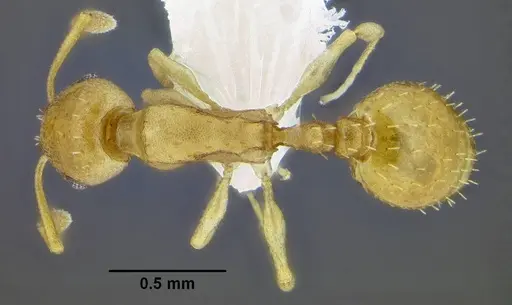
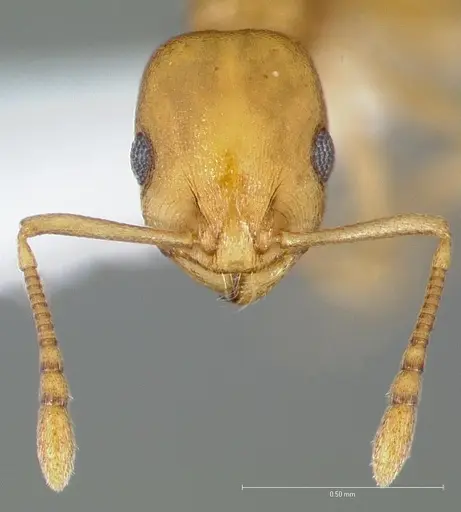
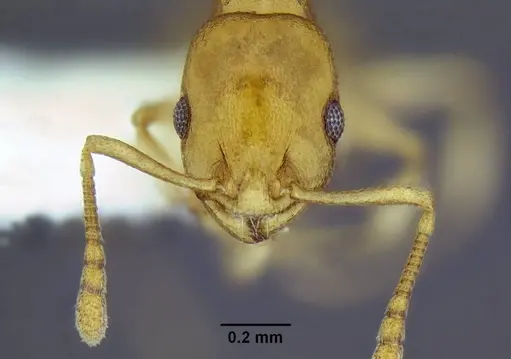
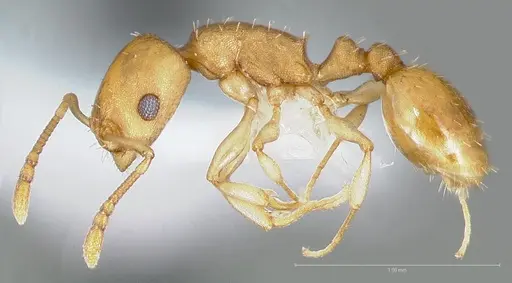
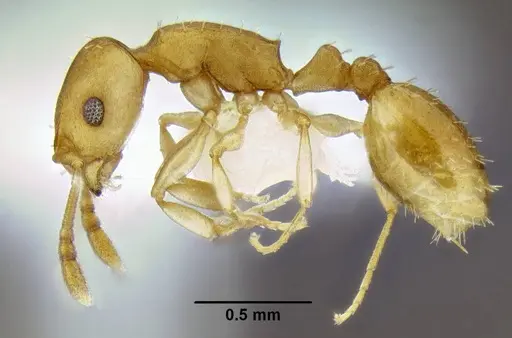
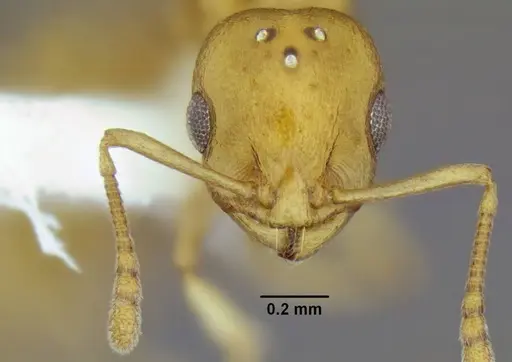
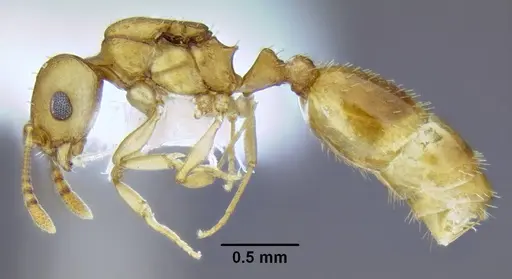
Temnothorax pseudandrei is a tiny, arboreal ant from the southwestern United States, found only in Arizona and California . Workers are about 2-3 mm long (inferred from the *Temnothorax* genus) and are uniformly pale yellow to reddish yellow, with a slightly darker gaster . Queens are slightly larger, around 3.5-4 mm. This species was only scientifically described in 2014,and its name comes from its close resemblance to the ground-dwelling *Temnothorax andrei* - “pseudandrei” means “false andrei.” Unlike its cousin, *T. pseudandrei* lives under the bark of trees like Fremont cottonwood and desert willow in riverine gallery forests and desert washes . Its natural history is still largely unknown, making it a challenging but interesting species for experienced antkeepers.
Quick Summary
- Difficulty: Hard
- Origin & Habitat: Southwestern United States: Arizona and California. It nests under the bark of Fremont cottonwood (*Populus fremontii*) and desert willow (*Chilopsis linearis*) in riverine gallery forests and desert habitats [1][2].
- Colony Type: Colony structure is not well-documented. It is likely monogyne (single queen), based on related *Temnothorax* species, but this has not been confirmed.
- Size & Growth:
- Queen: ~3.5-4 mm (inferred from *Temnothorax* genus) [1].
- Worker: ~2-3 mm (inferred from *Temnothorax* genus) [1][2].
- Colony: Not documented. Typical *Temnothorax* colonies reach dozens to a few hundred workers (inferred from genus patterns).
- Growth: Moderate (inferred from genus patterns).
- Development: 6-10 weeks (estimated from related *Temnothorax* species) [1]. (Development time is estimated based on related *Temnothorax* species. Specific data for *T. pseudandrei* is not available.)
- Antkeeping:
- Temperature: Room temperature (20-24°C) during the active season. In winter, provide a diapause period at 10-15°C for 2-3 months. This species comes from a temperate region with seasonal variation [1].
- Humidity: Moderate. As an arboreal bark nester, they prefer slightly dry conditions. Keep the nest material barely moist, mist occasionally but allow it to dry out between waterings. Avoid constant dampness [1].
- Diapause: Yes. Native to temperate Arizona and California. Reduce temperature to 10-15°C for 2-3 months (e.g., November-February). Do not feed during diapause, keep minimal moisture available [1].
- Nesting: Arboreal nester, they live under tree bark. Use a vertical setup with pieces of cork bark, twigs, or a Y‑tong (AAC) nest with narrow chambers. Avoid large, open chambers, they prefer tight crevices. A naturalistic bark setup works best [1].
- Behavior: Peaceful and non‑aggressive, typical of small *Temnothorax*. They are active foragers. Escape prevention is critical, at 2-3 mm they can slip through tiny gaps. Use fine mesh (≤0.5 mm) and seal all connections.
- Common Issues: escape prevention is absolutely critical, they are tiny and will find any gap, slow colony growth may tempt overfeeding, stick to small, regular portions, wild‑caught colonies may carry parasites, quarantine new colonies, arboreal setup may be unfamiliar, bark or vertical Y‑tong nests work best, limited care information, much is inferred from related species and may not be precise
Housing and Nest Setup
Because Temnothorax pseudandrei is arboreal, your setup should mimic tree bark [1]. The easiest option is a vertical piece of cork bark with small crevices, or a Y‑tong (AAC) nest with narrow chambers. They dislike large, open spaces, tight, dark chambers make them feel secure. Connect a small outworld with fine ventilation mesh (≤0.5 mm). If using a natural bark setup, moisten it slightly but never soak it. A vertical orientation helps them settle, as they naturally nest off the ground.
Feeding and Diet
Like most Temnothorax, T. pseudandrei is omnivorous. In the wild they likely eat small insects, honeydew, and nectar. In captivity, offer protein 2-3 times per week (fruit flies, pinhead crickets, or springtails) and keep a constant supply of sugar water, diluted honey, or small drops of honey. Remove uneaten prey after 24 hours to prevent mold. Portion sizes should be tiny, a drop of sugar water and a few fruit flies is plenty for a small colony.
Temperature and Seasonal Care
Keep the colony at room temperature (20-24°C) during spring through fall [1]. This species lives in a region with mild winters but distinct seasons, so a winter diapause is needed. From late fall to early spring, lower the temperature to 10-15°C for 2-3 months. You can achieve this by moving the nest to an unheated garage, basement, or a wine cooler. Do not feed during diapause, only provide minimal moisture (e.g., a damp cotton ball). Return to room temperature in early spring to resume activity.
Handling and Escape Prevention
Escape prevention is the number‑one priority. T. pseudandrei workers are only 2-3 mm and can squeeze through gaps that larger ants ignore [2]. Use fine stainless steel mesh (≤0.5 mm) on all ventilation holes. Seal every connection with fluon or a similar barrier. When observing or moving the colony, work over a white tray or paper to spot escapees. Although they are relatively slow, never underestimate their ability to find an exit. Excellent containment is non‑negotiable.
Colony Establishment
Founding behavior for T. pseudandrei is not documented. If you acquire a queen, assume she is claustral (the norm for Temnothorax) and seal her in a small, dark chamber. Do not disturb her for at least 6 weeks, the first workers typically emerge after 6-10 weeks at room temperature (estimated from related species). Once you see workers, connect a tiny outworld with food. Colony growth is gradual: you may reach up to 30 workers in 6-12 months. If you obtain an established colony, transfer it gently into an arboreal nest and let it settle for a few days before feeding.
Frequently Asked Questions
How long does it take for Temnothorax pseudandrei to raise first workers?
Not documented for this species, but based on related Temnothorax, expect the first workers (nanitics) to appear 6-10 weeks after the queen starts laying, assuming claustral founding. Do not disturb the queen during this time.
What do Temnothorax pseudandrei ants eat?
They are omnivorous. Offer small live prey (fruit flies, springtails, tiny crickets) for protein 2-3 times per week, and keep sugar water or honey available at all times. Remove uneaten food after 24 hours.
Do Temnothorax pseudandrei ants sting?
Like all Temnothorax, they have a stinger, but they are not aggressive and rarely use it. Their primary defense is smearing venom (a smear defense typical of Crematogastrini). Even if they sting, it is negligible to humans. Handle them gently to avoid stress.
Can I keep multiple queens together?
This species is likely monogyne (single queen), though it has not been confirmed. Combining unrelated queens is not recommended because they will likely fight. Only keep one queen per colony.
Do Temnothorax pseudandrei need hibernation?
Yes. Based on their native range (temperate Arizona and California), a winter diapause (hibernation) is needed. Reduce the temperature to 10-15°C for 2-3 months, typically November through February. Do not feed during this time, but keep minimal moisture available [1].
What is the best nest type for Temnothorax pseudandrei?
A naturalistic setup with vertical cork bark or a Y‑tong (AAC) nest with narrow chambers works best. They are arboreal and prefer tight, dark crevices, avoid large, open acrylic nests. A small outworld with fine mesh completes the setup [1].
How big do Temnothorax pseudandrei colonies get?
Colony size is not well documented for this species. Typical Temnothorax colonies reach dozens to a few hundred workers. Growth is relatively slow, taking a year or more to establish.
Are Temnothorax pseudandrei good for beginners?
No. This species is rated Hard. The main challenges are escape prevention (critical due to tiny size) and providing appropriate arboreal housing. Beginners should start with larger, more forgiving species first.
Why are my Temnothorax pseudandrei escaping?
Escape prevention must be excellent. These ants are only 2-3 mm and can squeeze through tiny gaps. Check all ventilation holes (use fine mesh, ≤0.5 mm), seal all connection points with fluon, and ensure lids fit tightly. Even a small gap is an escape route [2].
When should I move my colony to a formicarium?
Wait until the colony has at least 20-30 workers and is actively foraging in an outworld. For this tiny species, you can start with a naturalistic bark setup or a small Y‑tong nest from the very beginning, just keep the chambers small.
Report an Issue
The current care sheet is based fully on literature. See inconsistencies, or something that's incorrect? Please , it will be resolved after review from an admin. Contributing to the blogs tab also helps providing information, to make us be able to further improve the caresheets. Thank you for your support!
References

This caresheet is licensed under CC BY-SA 4.0 .
Community Blogs
CASENT0005693
View on AntWeb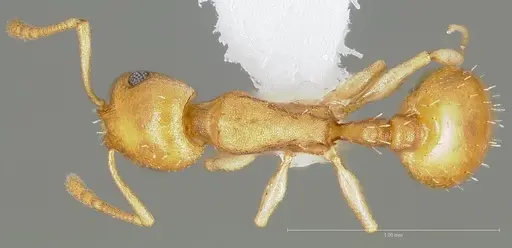
CASENT0339311
View on AntWeb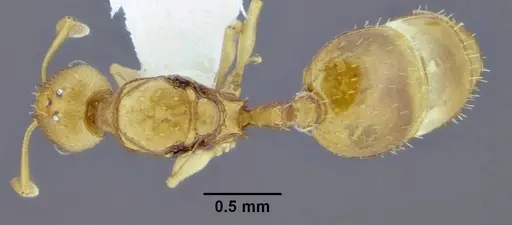
Literature
Loading distribution map...Loading products...