
Temnothorax productus
- Sci. Name
- Temnothorax productus
- Tribe
- Crematogastrini
- Subfamily
- Myrmicinae
- Author
- Santschi, 1918
- Distribution
- Found in 1 countries
Introduction
Temnothorax productus is a tiny ant from the rottenbergii group, notable for having some of the shortest spines among its relatives. This species is known only from a handful of type specimens collected in coastal Morocco and the Canary Islands, making it one of the least-studied ants in the genus . Originally described as a subspecies of Temnothorax cabrerae by Santschi in 1918,it was raised to full species status by Cagniant and Espadaler in 1997 . Its small size, limited distribution, and lack of documented colonies mean that almost all care advice must be inferred from related species.
Quick Summary
- Difficulty: Unknown, very limited data available
- Origin & Habitat: Endemic to Morocco (Essaouira, Agadir, Mirleft) and the Canary Islands in the Palaearctic region [2][1]. Natural habitat consists of dry to semi-arid Mediterranean scrubland typical of coastal areas.
- Colony Type: Unconfirmed, only type specimens known, no colony observations documented
- Size & Growth:
- Queen: Unconfirmed, inferred from Temnothorax genus patterns, queens likely ~4-6 mm
- Worker: Unconfirmed, inferred from Temnothorax genus patterns, workers likely ~2-4 mm
- Colony: Unknown, no data available for this species
- Growth: Unknown
- Development: Unconfirmed, based on typical Temnothorax genus patterns,6-10 weeks at optimal temperature (Development timeline is inferred from related rottenbergii-group species, not directly observed for this species)
- Antkeeping:
- Temperature: Start around 20-24°C and observe colony activity. Based on Moroccan and Canary Islands distribution, they likely tolerate warmer conditions than northern European Temnothorax. Provide a temperature gradient if possible.
- Humidity: Keep nest substrate moderately dry-leaning, matching their Mediterranean origin. Allow portions to dry between waterings. Avoid keeping the nest constantly wet.
- Diapause: Diapause requirements are unconfirmed. Their native range has mild winters, so a cooling period may be less critical. If attempted, a few weeks at 10-15°C could be tried, but it's experimental.
- Nesting: Based on rottenbergii-group preferences, likely nests in small cavities under stones or in decaying wood. In captivity, a small Y-tong nest or test tube setup with tight chambers works well. Avoid large open spaces.
- Behavior: Temperament is unconfirmed, but rottenbergii-group species are typically docile and non-aggressive. Foraging style is likely opportunistic scavenging. Escape prevention is critical due to their tiny size, use fine mesh barriers. As a member of the tribe Crematogastrini, their defense likely involves smearing venom with a modified stinger rather than piercing, though this has not been confirmed for this species specifically.
- Common Issues: very limited species-specific data makes care recommendations uncertain, only type specimens exist, no captive colony experience documented, tiny size requires excellent escape prevention, winter rest requirements are inferred, not confirmed, no information on diet acceptance in captivity
Species Overview and Identification
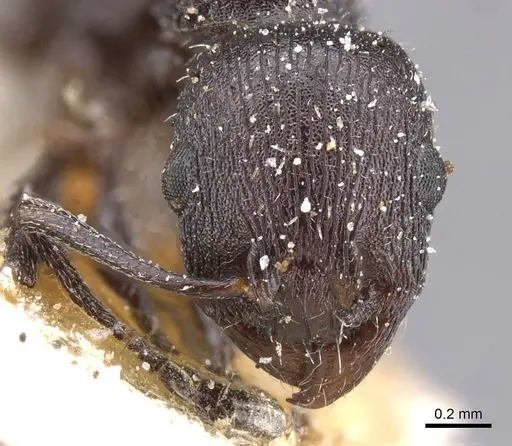
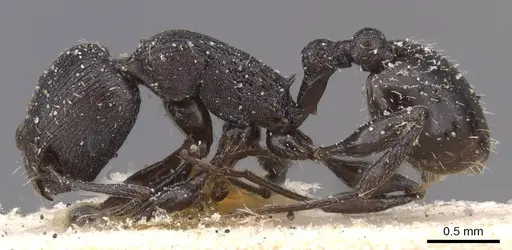
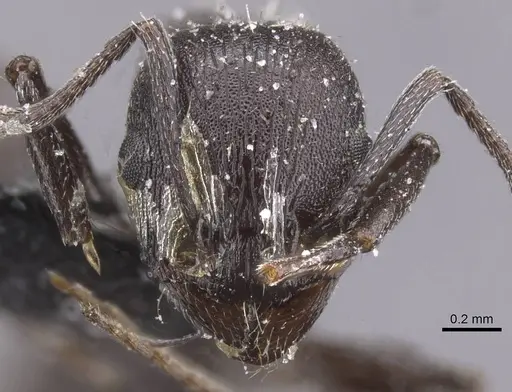
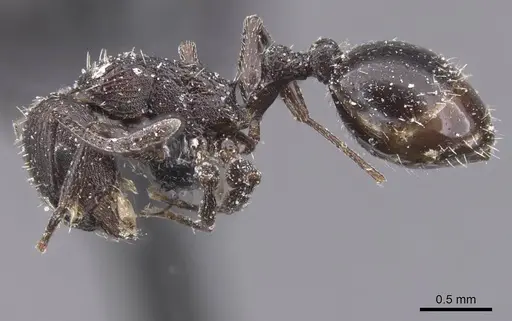
Temnothorax productus is a member of the rottenbergii species group, a clade of small ants that vary in spine length. What makes this species stand out is having some of the shortest spines in the group, along with a notably narrow postpetiole and a relatively short mesosoma compared to the head. These features separate it from most other spined species in North Africa and the Mediterranean, except for Temnothorax cabrerae and Temnothorax mauritanicus. The species was originally described by Santschi in 1918 as a subspecies of T. cabrerae, then elevated to full species by Cagniant and Espadaler in 1997,who also described the male [1]. Only the holotype worker and a few paratypes are known, so identification relies heavily on those museum specimens.
Distribution and Habitat
This species has a very restricted distribution centered on coastal Morocco and the Canary Islands. In Morocco, confirmed locations include Essaouira, Agadir, and Mirleft, all along the Atlantic coast [2]. The Canary Islands population suggests adaptation to island environments [1]. The habitat is typical Mediterranean scrubland with dry to semi-arid conditions, mild winters, and warm summers. This distribution indicates the species is well-adapted to drier conditions than many other Temnothorax species.
Housing and Nesting
While no specific nesting data exists for T. productus, rottenbergii-group species typically nest in small cavities under stones, in decaying wood, or in rock crevices. For captive care, provide a small nest with tight chambers scaled to their tiny size. A Y-tong (AAC) nest with narrow passages or a small test tube setup works well. Avoid large, open spaces which can stress small colonies. Keep the nest mostly dry with a slightly moist area, their Mediterranean origin suggests they prefer drier conditions than typical forest-floor Temnothorax. Escape prevention is critical due to their very small size, use fine mesh and tight-fitting lids.
Temperature and Seasonal Care
Based on the species' distribution in Morocco and the Canary Islands, they likely prefer warmer conditions than many northern Temnothorax species. Start around 20-24°C and monitor colony behavior, if workers are consistently clustered near the warmer side of a gradient, slightly increase temperature. A heating cable on one side of the nest can create an appropriate gradient. For winter rest, if you choose to provide one, a mild cooling period of a few weeks at 10-15°C could be tried, but it's experimental. Their native range has mild winters, so they may not require a strong diapause. Observe your colony and adjust accordingly.
Feeding and Diet
Diet acceptance in captivity is unconfirmed for this species. Based on typical Temnothorax behavior, they likely are omnivorous, accepting small insects, honeydew, and sugar sources. Offer small live prey items like fruit flies, pinhead crickets, or similar-sized insects. Sugar water or honey can be offered occasionally. Start with small portions and observe what the colony accepts. Remove uneaten food promptly to prevent mold. Given their tiny size, prey items should be appropriately scaled, springtails or very small insects work well for founding colonies.
Defense Mechanism
As a member of the subfamily Myrmicinae and tribe Crematogastrini, Temnothorax productus likely uses a smear-type defense. Their stinger is modified into a flattened, spatulate form used to wipe or smear venom onto enemies rather than piercing. This is typical for the tribe and has not been confirmed for this specific species due to lack of study, but it's a reliable inference from its taxonomic group.
Challenges and Limitations
This is one of the least-studied ant species in the hobby, with essentially no captive colony data available. Only a few type specimens exist in museum collections, meaning virtually nothing is known about their colony structure, founding behavior, development timeline, or specific care requirements. All recommendations are based on inference from related species in the rottenbergii group and general Temnothorax genus patterns. Keepers should approach this species with experimental care, documenting their observations to help build knowledge for the antkeeping community. This species would be most suitable for advanced keepers interested in contributing to species knowledge rather than following established care guides.
Frequently Asked Questions
How do I keep Temnothorax productus ants?
Care is largely experimental since only type specimens exist. Provide a small nest with tight chambers, moderate warmth (20-24°C), and moderately dry conditions. Offer small insects and sugar sources. Document your observations as this species has no established captive care protocol.
What do Temnothorax productus ants eat?
Diet is unconfirmed for this species. Based on related Temnothorax, they likely accept small insects, honeydew, and sugar water. Start with appropriately-sized live prey and sugar sources, observing what your colony accepts.
How big do Temnothorax productus colonies get?
Colony size is unknown, no wild colony data exists for this species. Related rottenbergii-group species typically reach several hundred workers. Expect moderate-sized colonies based on genus patterns.
Do Temnothorax productus ants need hibernation?
Winter rest requirements are unconfirmed. Their native range has mild winters, so a strong diapause may not be necessary. If you want to provide a cooling period, try a few weeks at 10-15°C and observe colony response.
Are Temnothorax productus good for beginners?
No, this species has essentially no captive care data and would be challenging even for experienced keepers. The complete lack of documented captive colonies means all care is experimental. Consider more established Temnothorax species with known requirements.
How long does it take for Temnothorax productus to develop from egg to worker?
Development timeline is unconfirmed. Based on typical Temnothorax genus patterns, expect 6-10 weeks from egg to first worker at optimal temperature. This is an estimate only, as no direct observations exist for this species.
Can I keep multiple Temnothorax productus queens together?
Colony structure is unconfirmed. No data exists on whether this species is single-queen or multi-queen. Combining unrelated queens is not recommended given the lack of documented behavior.
What is the best nest type for Temnothorax productus?
A small Y-tong (AAC) nest with narrow chambers or a test tube setup works well. The nest should have tight passages scaled to their tiny size. Avoid large open spaces. Keep the nest mostly dry with a slightly moist area.
Do Temnothorax productus ants sting?
Stinging ability is unconfirmed for this specific species. As Myrmicinae, they have a functional stinger, but Temnothorax are generally docile and rarely sting. Any sting would be mild given their tiny size.
Where is Temnothorax productus found?
This species is endemic to coastal Morocco (Essaouira, Agadir, Mirleft) and the Canary Islands [2][1].
Report an Issue
The current care sheet is based fully on literature. See inconsistencies, or something that's incorrect? Please , it will be resolved after review from an admin. Contributing to the blogs tab also helps providing information, to make us be able to further improve the caresheets. Thank you for your support!
References

This caresheet is licensed under CC BY-SA 4.0 .
Community Blogs
CASENT0912915
View on AntWeb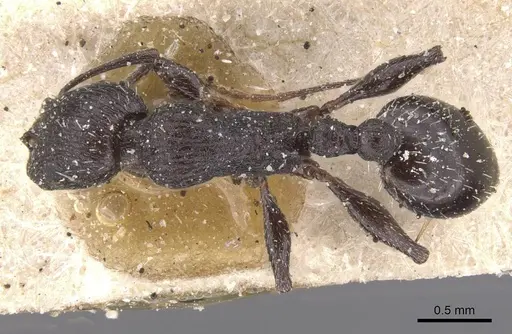
CASENT0912916
View on AntWeb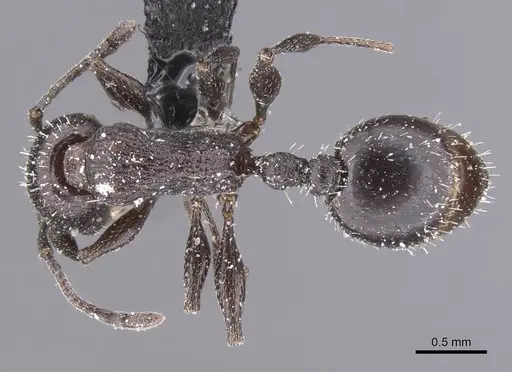
Literature
Loading distribution map...Loading products...