
Pergande's Acorn Ant
Temnothorax pergandei
- Sci. Name
- Temnothorax pergandei
- Tribe
- Crematogastrini
- Subfamily
- Myrmicinae
- Author
- Emery, 1895
- Common Name
- Pergande's Acorn Ant
- Distribution
- Found in 1 countries
Introduction
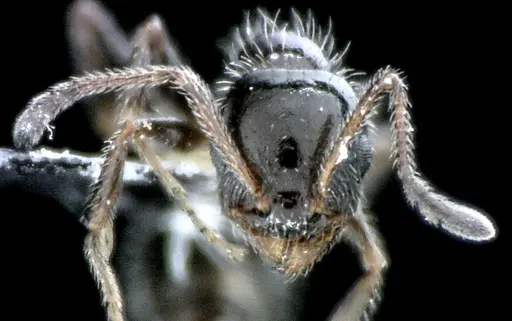
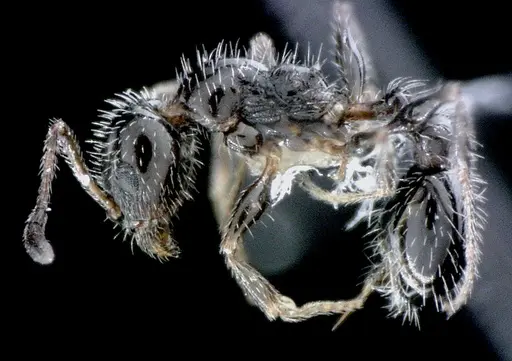
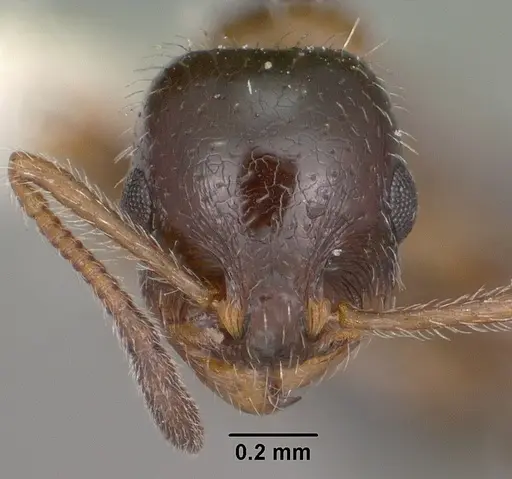
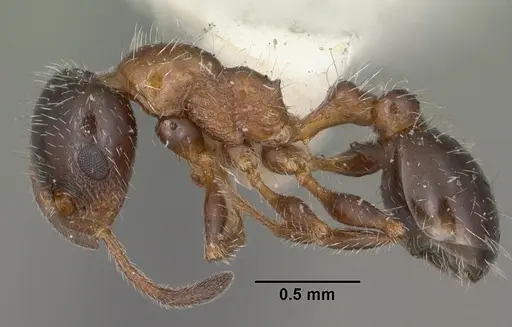
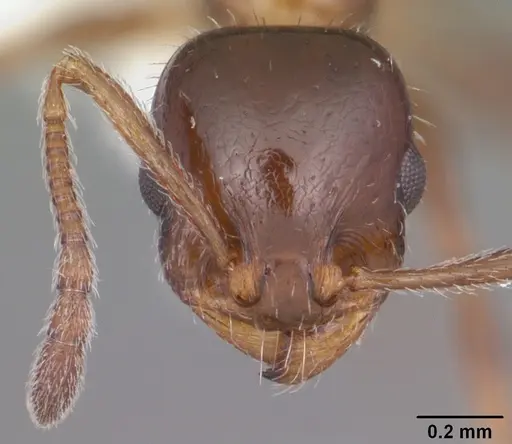
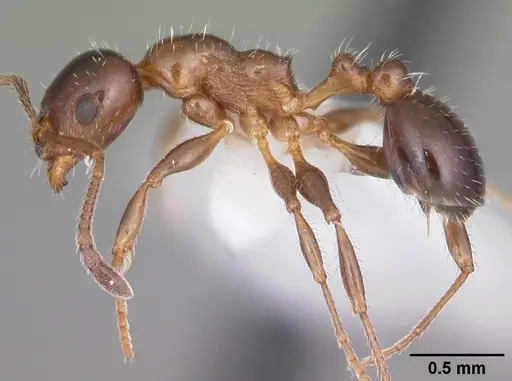
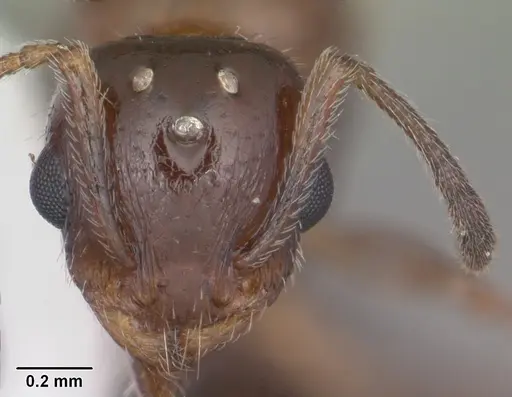
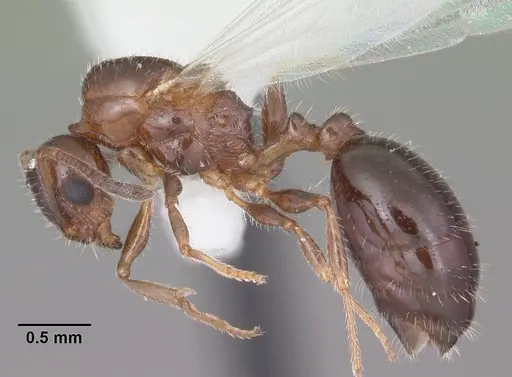
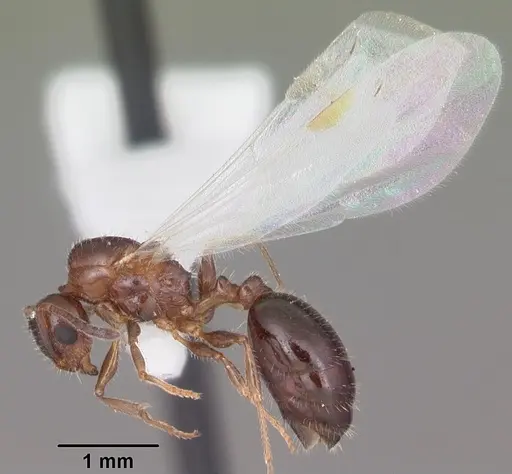
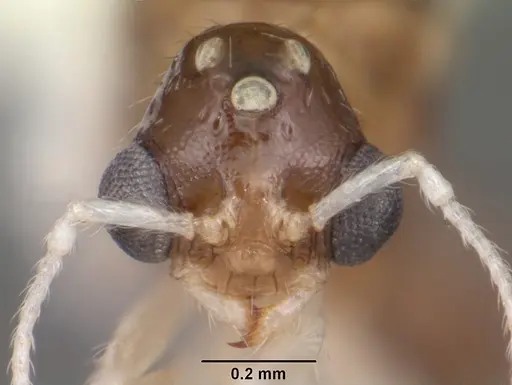
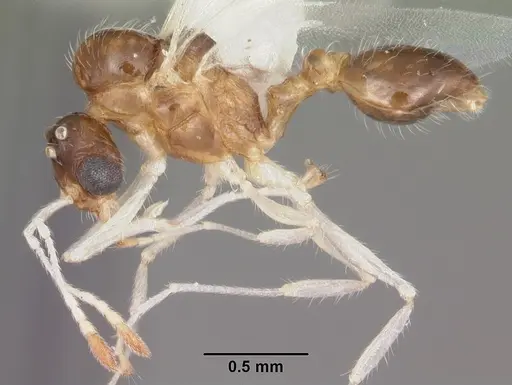
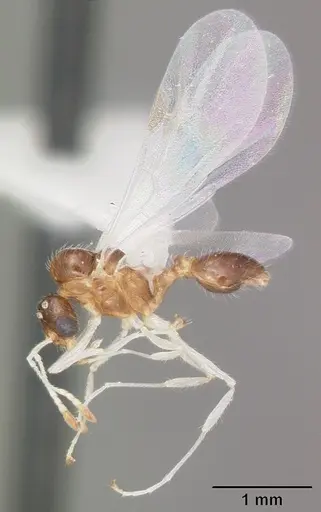
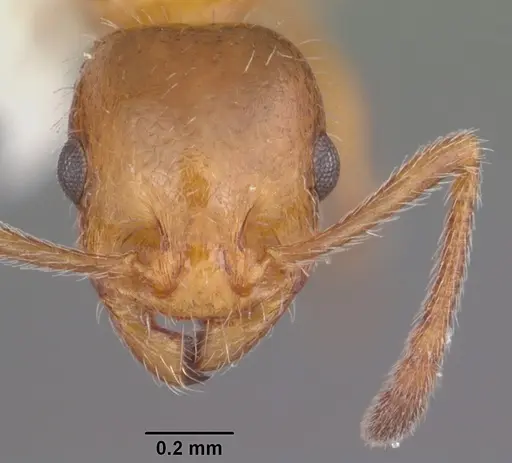
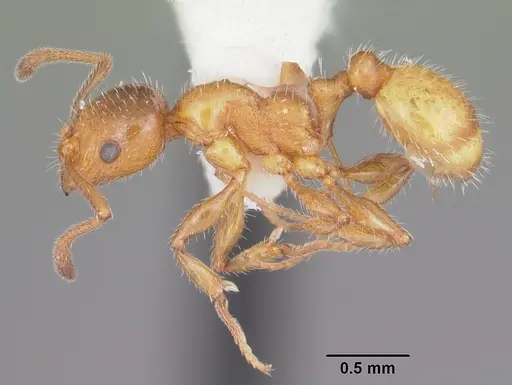
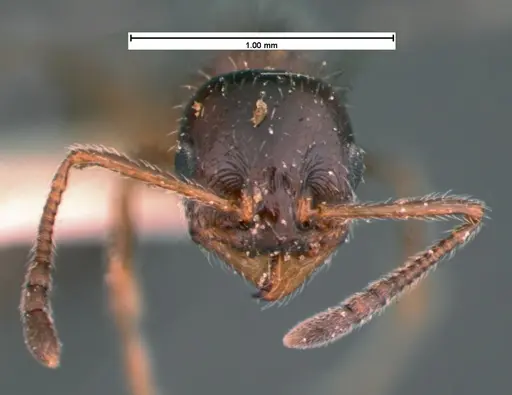
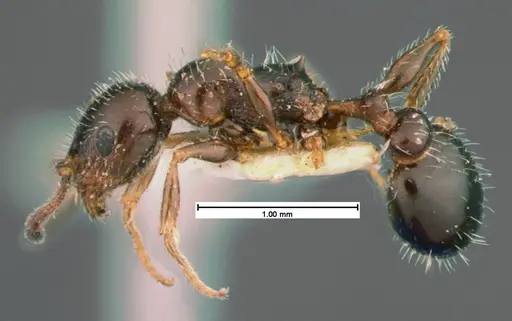
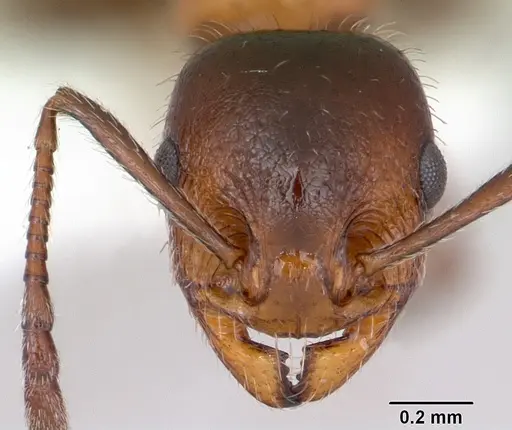
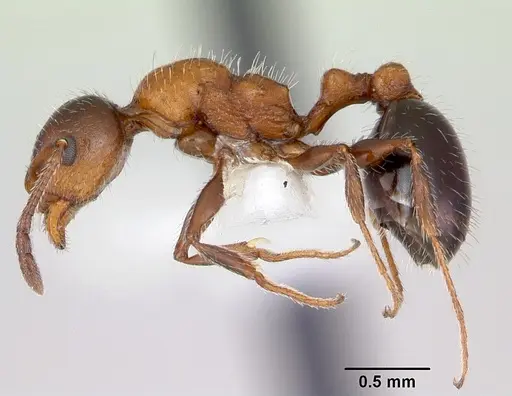
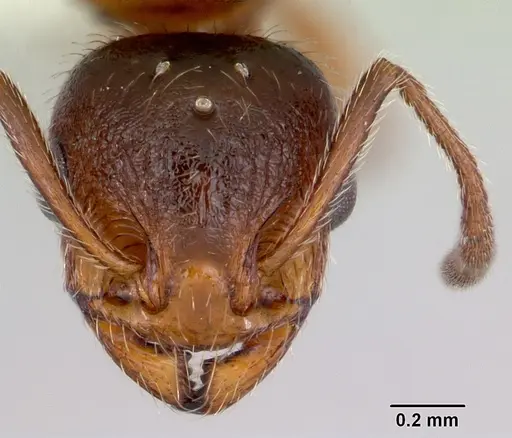
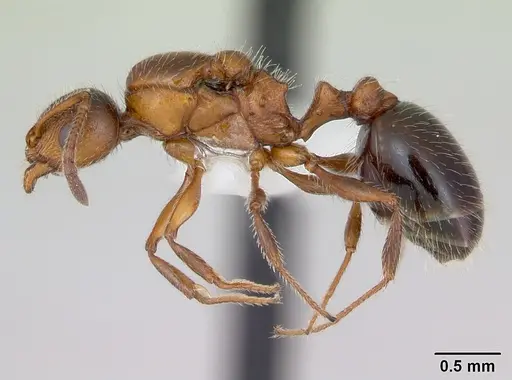
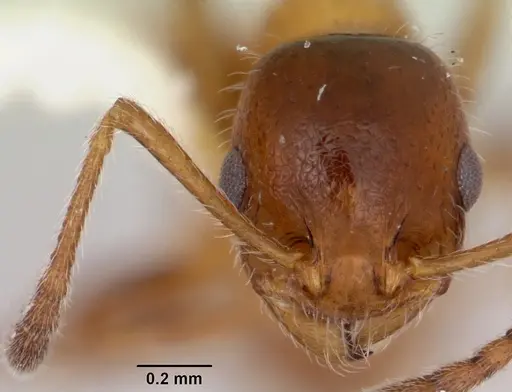
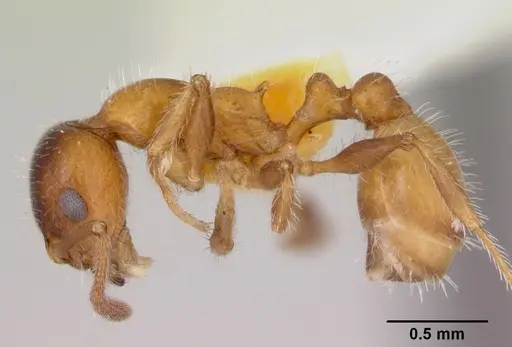
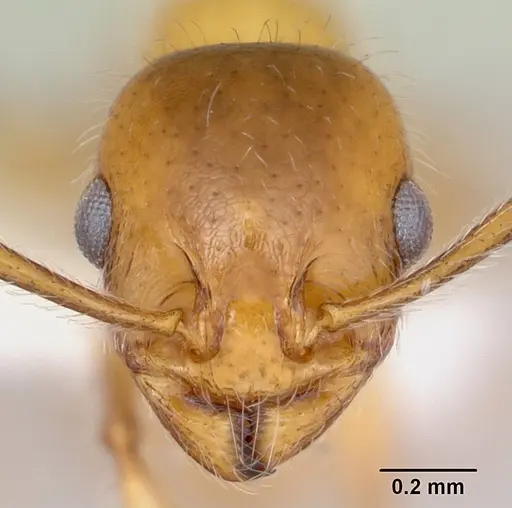
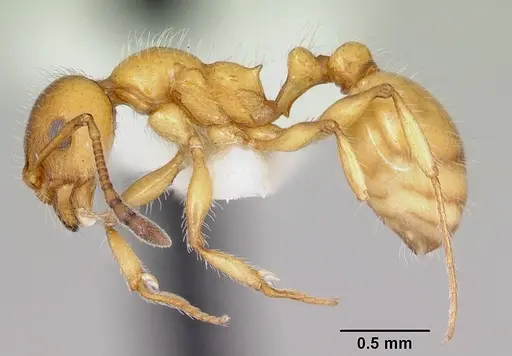
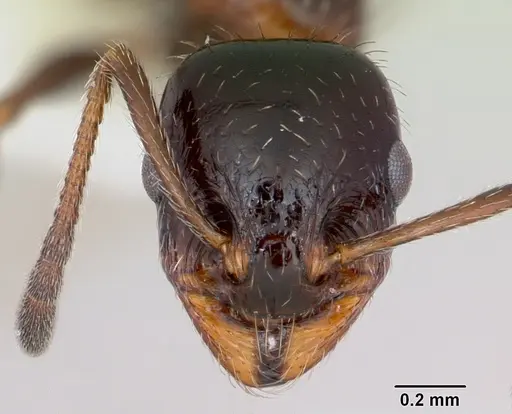
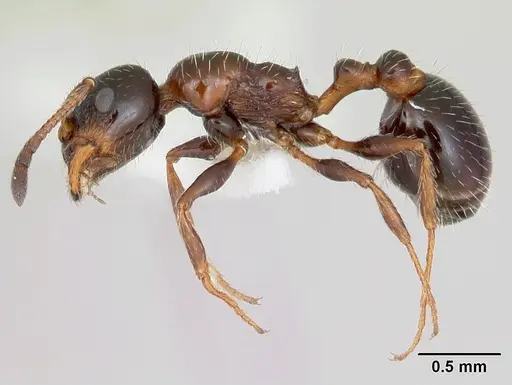
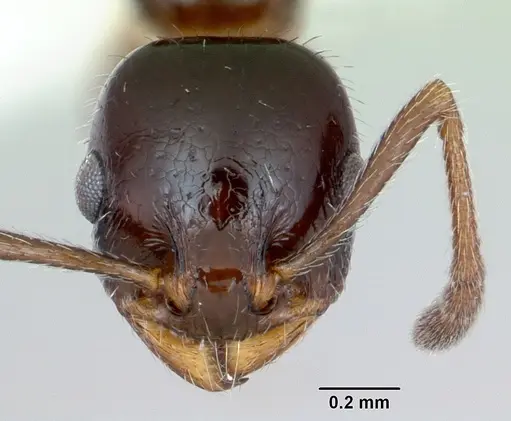
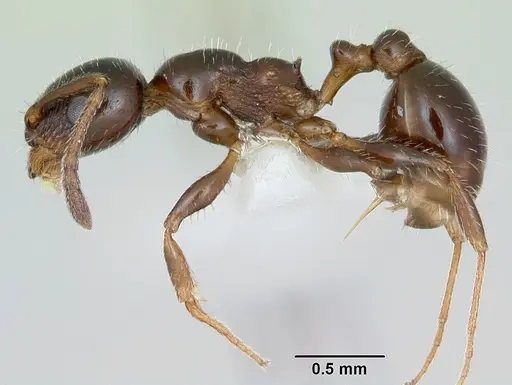
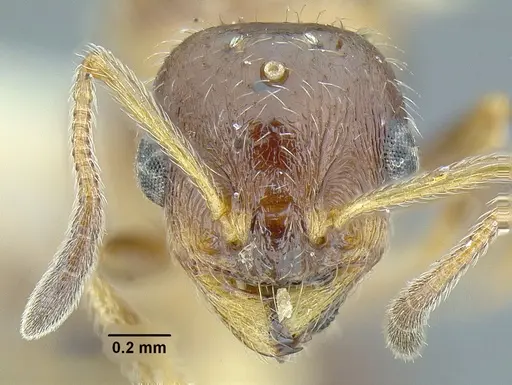
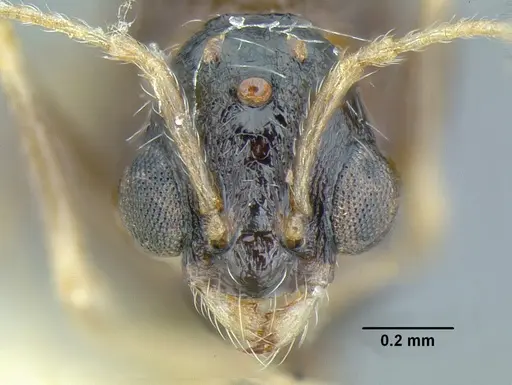
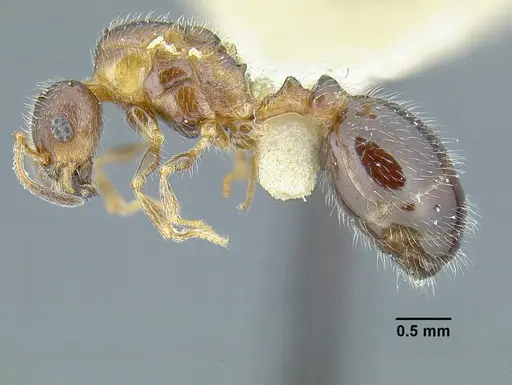
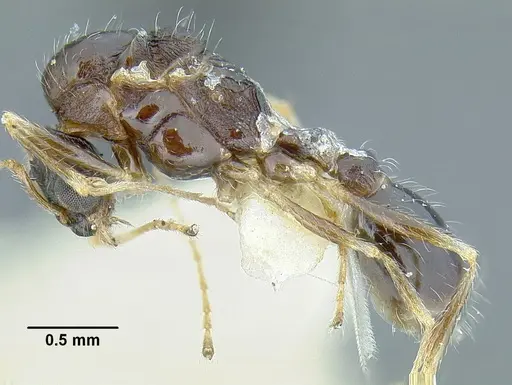
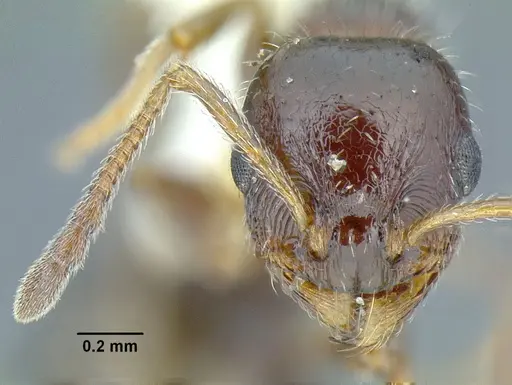
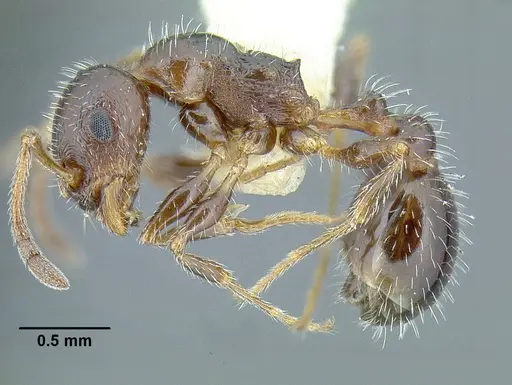
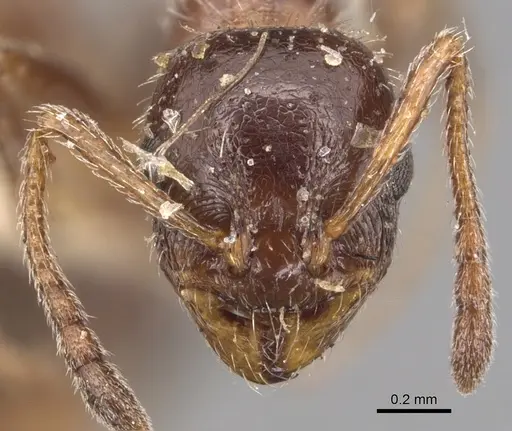
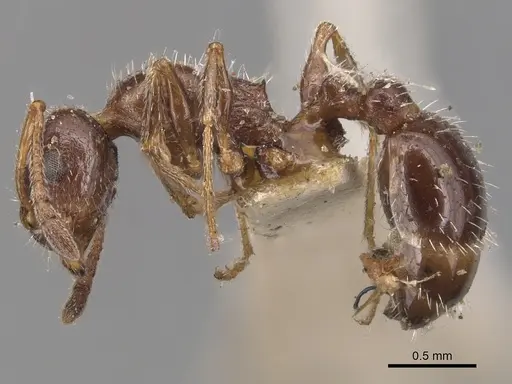
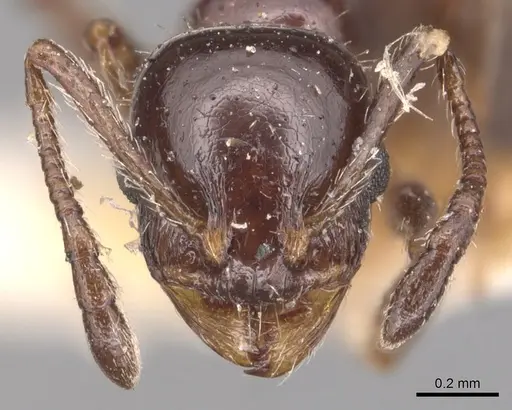
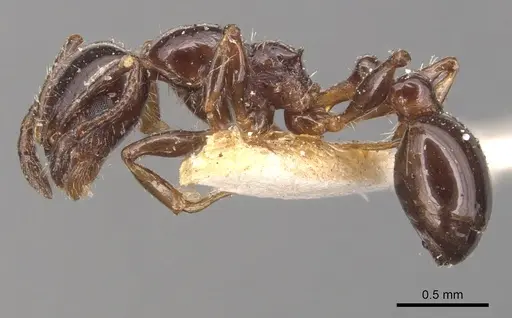
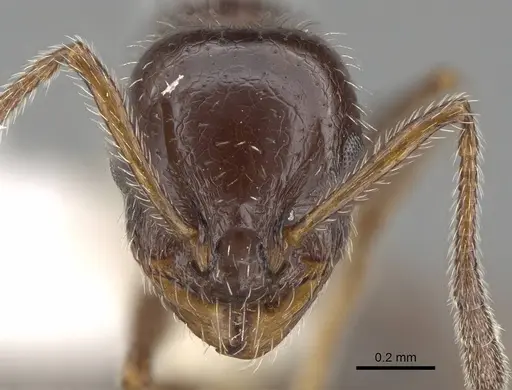
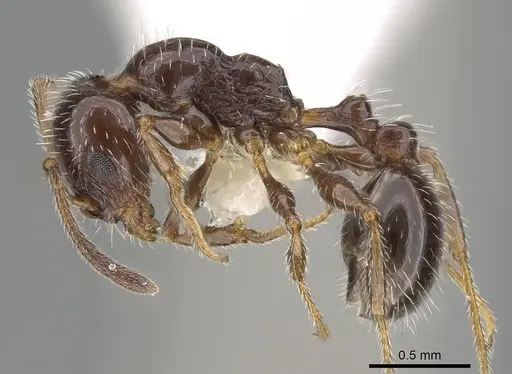
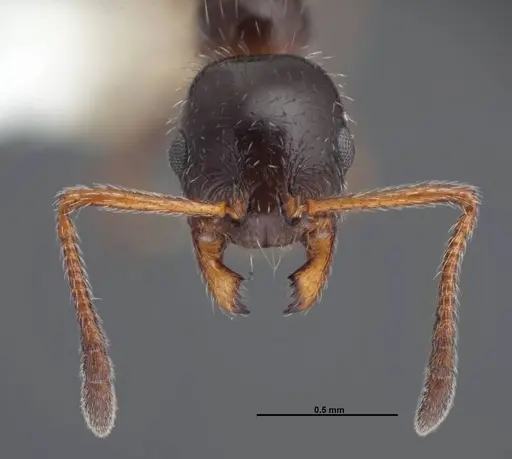
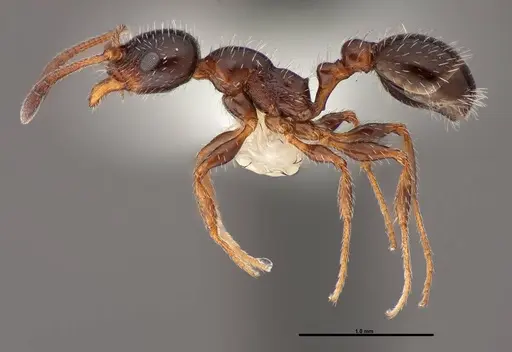
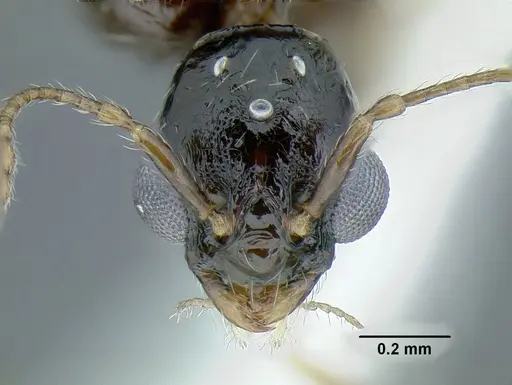
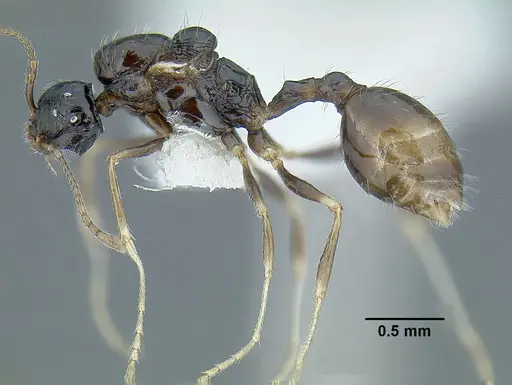
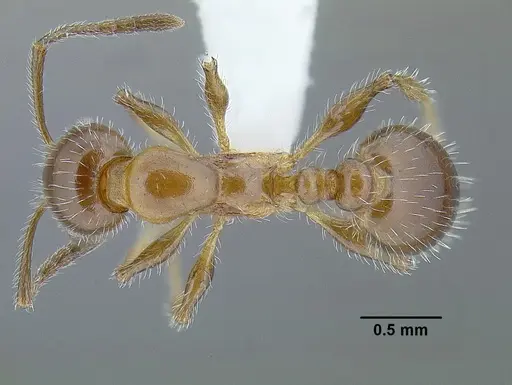
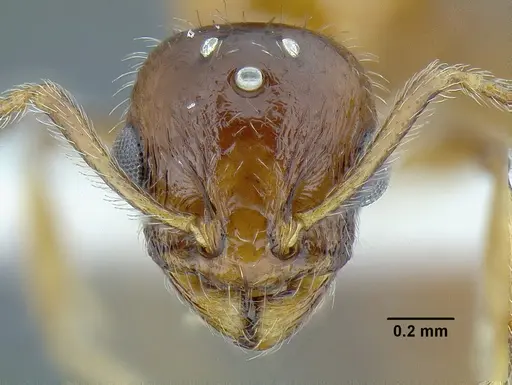
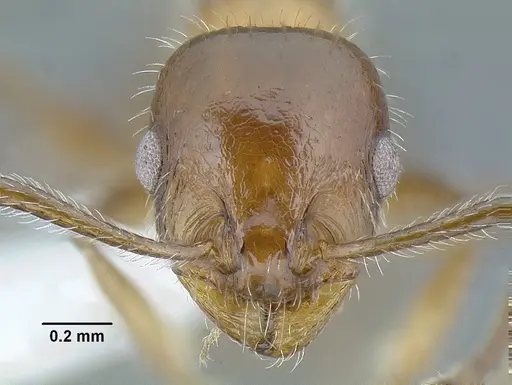
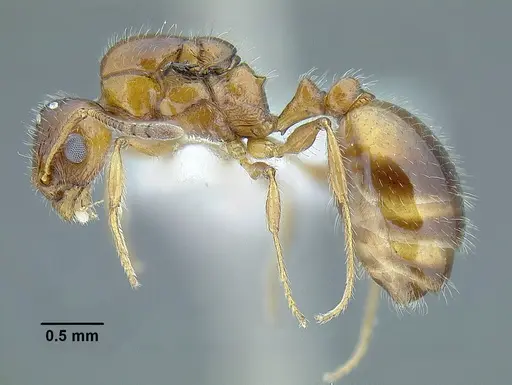
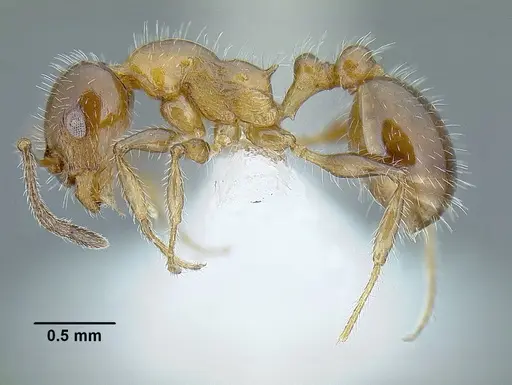
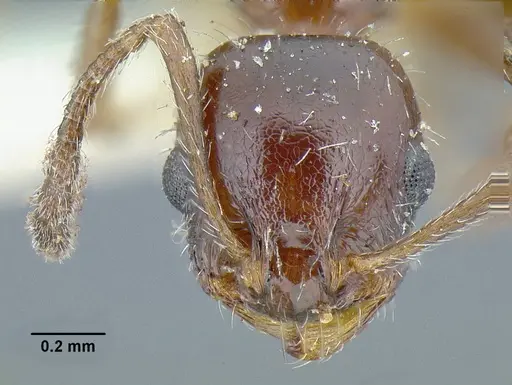
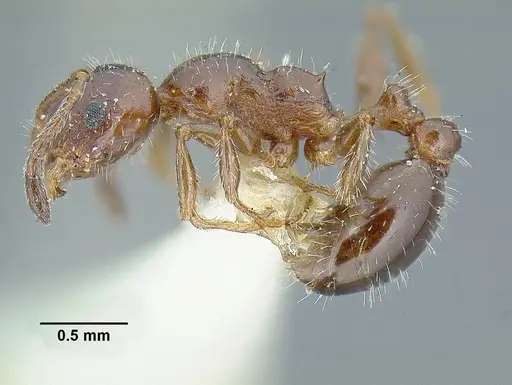
Temnothorax pergandei is a small, highly variable ant native to eastern North America. Workers measure 2.5–3.3 mm and come in a range of colors from deep yellow to dark brown or black, sometimes bicolored . The species has a distinctive appearance with a strongly convex promesonotum, a deeply impressed metanotal groove, and a long petiole that gives them an elongated look compared to many other Temnothorax . Queens are larger at 3.5–4 mm . This species nests in a remarkable variety of microhabitats, including hollow twigs, acorns, hickory nuts, rotten logs, under rocks, and directly in soil . Colonies are small, typically containing 75–250 workers with a single queen .
Quick Summary
- Difficulty: Easy
- Origin & Habitat: Eastern United States from New York south to Florida, west to Michigan, Nebraska, and Arizona, with populations south into Hidalgo, Mexico [1][2]. Found in diverse habitats from dry, sunny fields and meadows to shaded deciduous forests and prairie sites [2].
- Colony Type: Monogynous (single-queen) colonies with 75–250 workers [1]. Each colony has one queen that lays eggs.
- Size & Growth:
- Antkeeping:
- Temperature: Room temperature (20–24 °C) suits them well. This species tolerates a range of conditions from cool to warm [1][2].
- Humidity: Moderate humidity preferred. Keep the nest substrate slightly moist but not waterlogged. They nest in both dry and moderately damp locations in the wild [2][1].
- Diapause: Yes – colonies in northern parts of the range likely require a winter rest period. In Florida they remain active year‑round [2].
- Nesting: Highly adaptable nesters. In captivity they readily accept test tubes, Y‑tong (AAC) nests, or naturalistic setups with hollow twigs, acorns, or small chambers. Provide chambers scaled to their tiny size [3][4].
- Behavior: Workers are active, fierce hunters that forage individually on the ground in open areas during daylight [2]. They run about in the hot sun, hunting small arthropods like aphids and true bugs. They are territorial and aggressive toward workers from other colonies [2]. Their defense is a modified stinger that smears venom rather than piercing – harmless to humans. Escape risk is high due to their tiny size, ensure all connections are tight and use fine mesh or tightly packed cotton.
- Common Issues: colonies are small and grow slowly – beginners may lose patience and overfeed, leading to mold., tiny workers can escape through standard test tube cotton if not properly sealed., they are aggressive toward other ant colonies – keep isolated from other species., wild-caught colonies may carry parasites that can cause colony failure., slow founding phase – queens may take months before first workers appear.
Housing and Nest Setup
Temnothorax pergandei is adaptable when it comes to nesting. In the wild they nest in hollow twigs, acorns, hickory nuts, rotten logs, under rocks, and directly in soil [3][4][2]. For captivity, a simple test tube setup works well for founding colonies. Once established, they do well in Y‑tong (AAC) nests or small naturalistic setups. The key is providing chambers scaled to their tiny 2.5–3 mm workers – avoid large, open spaces. If using a naturalistic setup, include small hollow twigs or nut shells as nesting sites. They do not require high humidity like some tropical species, but the nest chamber should not dry out completely. A water tube connected to the nest helps maintain stable humidity [1].
Feeding and Diet
These ants are primarily predators, hunting small arthropods like aphids and true bugs (heteropterans) in the wild [2]. Workers actively forage on the ground surface during daylight hours and will also carry back shortbread crumbs [6]. In captivity, offer small live prey such as fruit flies, pinhead crickets, or tiny mealworms. They can accept protein‑based foods readily. Occasional sugar water or honey can be offered, though they are not strongly attracted to sweets [1]. Feed small amounts 2–3 times per week, adjusting based on colony size. Remove uneaten prey after 24 hours to prevent mold.
Temperature and Seasonal Care
Temnothorax pergandei tolerates a wide temperature range. Room temperature (20–24 °C) is ideal for keeping them active and healthy. In the wild they are found across varied climates from the northern US into Mexico, suggesting good temperature tolerance. Colonies in northern parts of their range likely experience natural dormancy in winter, though specific diapause requirements are not well documented. If your colony shows reduced activity in winter, allow a cool period around 10–15 °C for 2–3 months. Florida populations remain active year‑round [2]. Observe your colony’s behavior to determine if they need a winter rest period.
Colony Founding
Like most Temnothorax, T. pergandei is claustral – the queen seals herself in a small chamber and raises her first workers entirely on stored body fat reserves without foraging [5]. Provide a founding queen with a small test tube setup with water reserved via cotton. Place her in darkness and do not disturb for 4–6 weeks. The first workers (nanitics) will be smaller than full‑grown workers but will begin foraging once they emerge. Colony growth is moderate – expect 6–10 weeks from egg to first worker based on related species. Colonies reach 75–250 workers at maturity [1].
Reproduction and Nuptial Flights
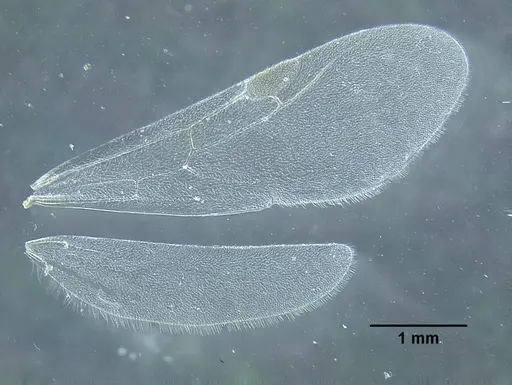
Mating flights occur in late spring in Texas (last week of April to first week of May) and early summer in Arizona (June–July) [2]. Winged reproductives have also been collected in nests during early July in Ohio [1]. Queens mate with a single male during swarming flights, attracted by secretions from the poison gland [2]. After mating, the queen sheds her wings and founds a new colony claustrally.
Behavior and Temperament
These ants are notably territorial and aggressive toward workers from other colonies of the same species [2]. Workers are active, fierce hunters that run about on the soil in the hot sun, hunting small insects individually. Their rapid movements and constricted waist give them a distinctly Pheidole‑like appearance in the field [2]. Despite being small, they are bold hunters. Their defense is a modified stinger that smears venom onto enemies rather than piercing – harmless to humans. Escape risk is high: their tiny size means standard test tube stoppers should be checked regularly, and all connections must be tight [1].
Frequently Asked Questions
How long does it take for Temnothorax pergandei to produce first workers?
Expect 6–10 weeks from egg to first worker at room temperature. This is based on related Temnothorax species as specific development data for T. pergandei is not available. The claustral queen seals herself in and raises the first brood without leaving the nest.
Can I keep multiple Temnothorax pergandei queens together?
No. This species is monogynous – colonies have a single queen. Multiple queens will fight. Only combine unrelated foundresses if you want to attempt pleometrosis (multiple‑queen founding), but this is not recommended as they typically establish solo.
What do Temnothorax pergandei ants eat?
They are primarily predators on small arthropods like aphids and true bugs. In captivity, offer small live prey such as fruit flies, small crickets, or tiny mealworms. They may occasionally accept sugar water or honey but are not strongly attracted to sweets.
Do Temnothorax pergandei ants need hibernation?
It depends on your location. Northern colonies likely need a winter rest period at cool temperatures (10–15 °C) for 2–3 months. Florida populations remain active year‑round. If your colony becomes less active in winter, provide a cool period.
Are Temnothorax pergandei good for beginners?
Yes, they are considered easy to keep. They are adaptable to various nest setups, tolerate room temperature, and are not demanding in their care. The main challenges are their small size (escape prevention) and slow colony growth compared to faster‑growing species.
How big do Temnothorax pergandei colonies get?
Mature colonies reach 75–250 workers. This is relatively small compared to many common ant species, but colonies are long‑lived and sustainable. Growth rate is moderate – expect several months to reach 50+ workers.
Do Temnothorax pergandei ants sting?
They do not sting in the traditional sense. Instead, they use a modified stinger to smear venom onto enemies. This venom is not harmful to humans, so they are safe to keep. They rarely react defensively toward people – more likely to flee or hide when disturbed.
What size nest do I need for Temnothorax pergandei?
Start with a simple test tube setup for founding colonies. Once established (50+ workers), a small Y‑tong nest or naturalistic setup with small chambers works well. The key is providing appropriately scaled chambers – these tiny ants need tight spaces, not large open areas.
Why are my Temnothorax pergandei dying?
Common causes include: too much moisture causing mold, disturbance during founding (queens are sensitive), lack of live prey (they need protein), or parasites from wild‑caught colonies. Check that the nest is not too wet and that you are providing appropriate prey. Wild‑caught colonies may carry parasites that can wipe out the colony.
Report an Issue
The current care sheet is based fully on literature. See inconsistencies, or something that's incorrect? Please , it will be resolved after review from an admin. Contributing to the blogs tab also helps providing information, to make us be able to further improve the caresheets. Thank you for your support!
References

This caresheet is licensed under CC BY-SA 4.0 .
Community Blogs
ANTWEB1041516
View on AntWeb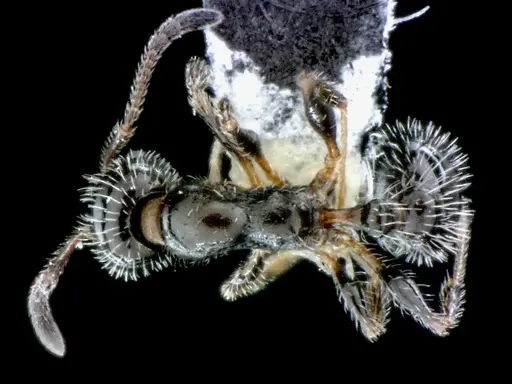
CASENT0102842
View on AntWeb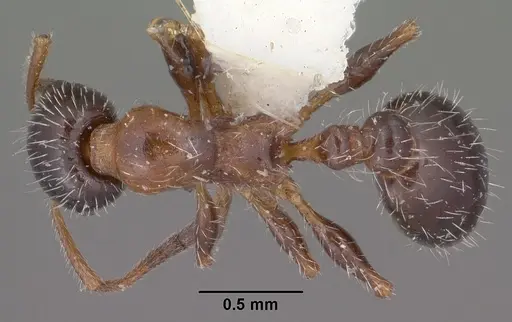
CASENT0104016
View on AntWeb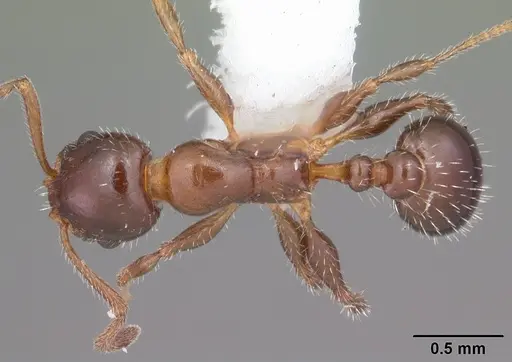
CASENT0104017
View on AntWeb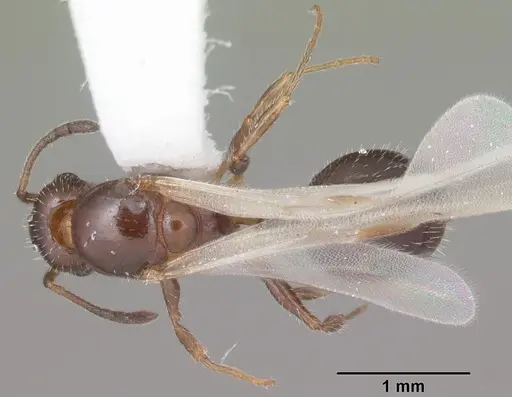
CASENT0104020
View on AntWeb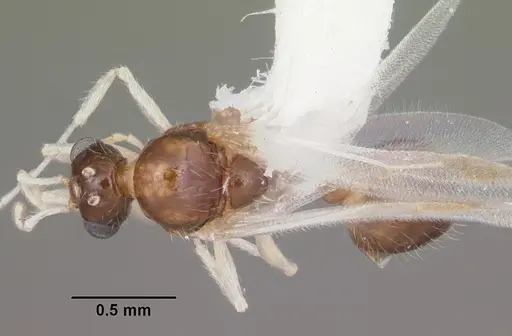
CASENT0104027
View on AntWeb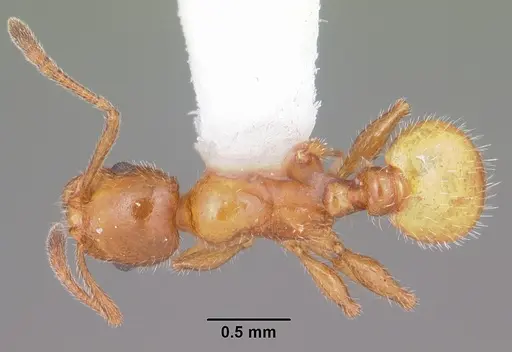
CASENT0105541
View on AntWeb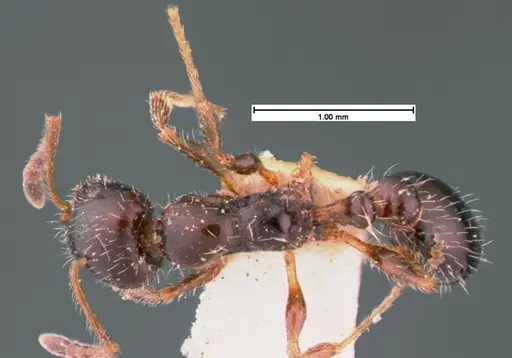
CASENT0172989
View on AntWeb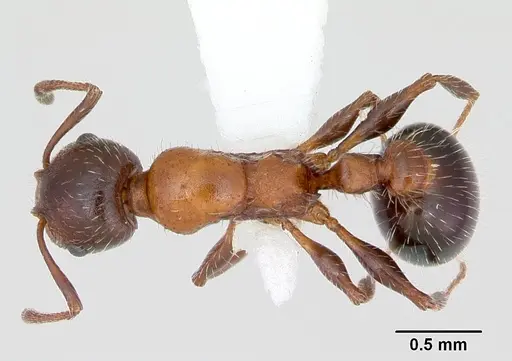
CASENT0172990
View on AntWeb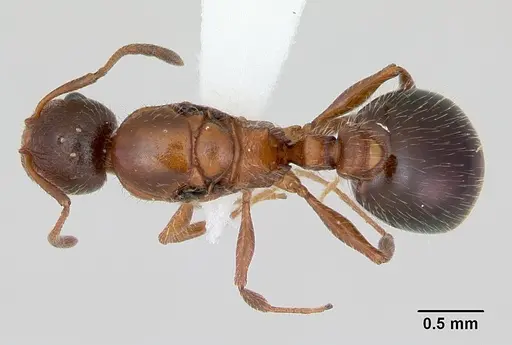
CASENT0172991
View on AntWeb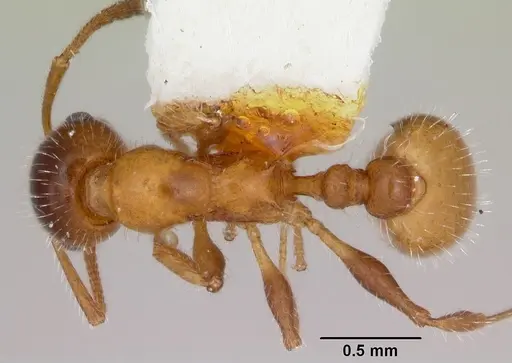
CASENT0172992
View on AntWeb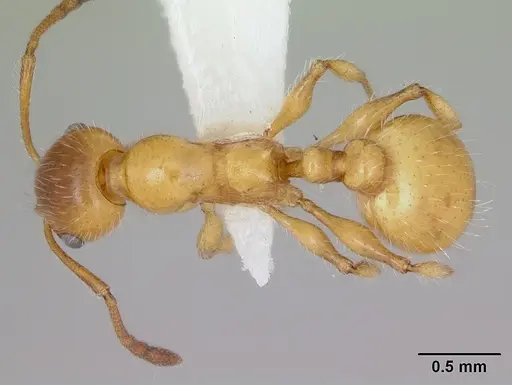
CASENT0172993
View on AntWeb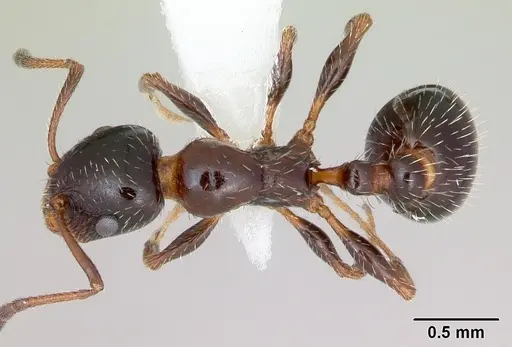
CASENT0172994
View on AntWeb
CASENT0758229
View on AntWeb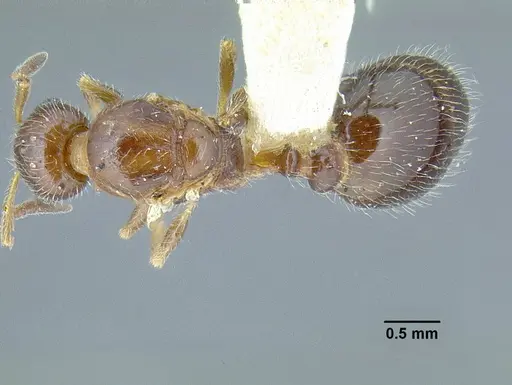
CASENT0758291
View on AntWeb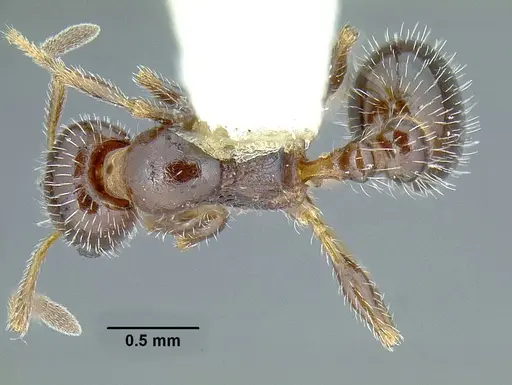
CASENT0904767
View on AntWeb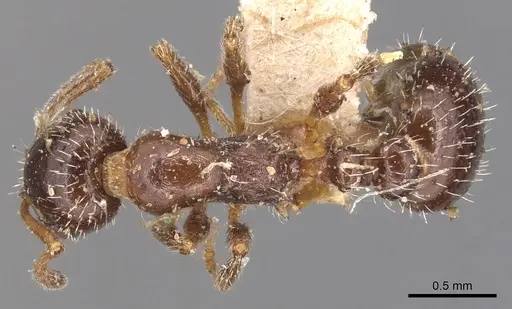
CASENT0904768
View on AntWeb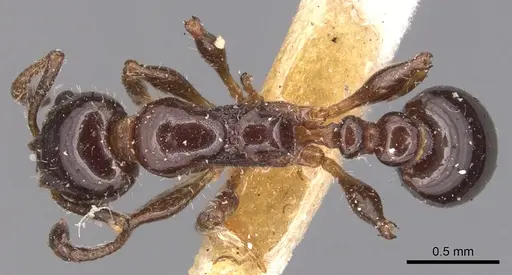
CASENT0915983
View on AntWeb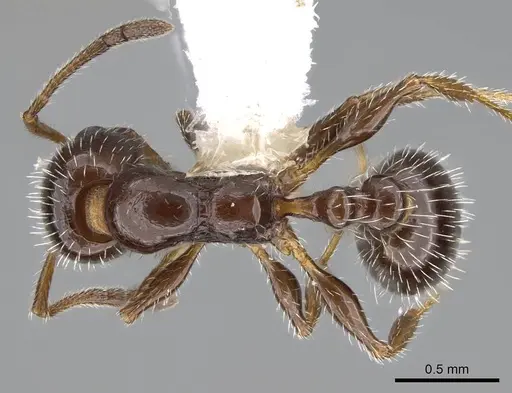
FMNHINS0000088653
View on AntWeb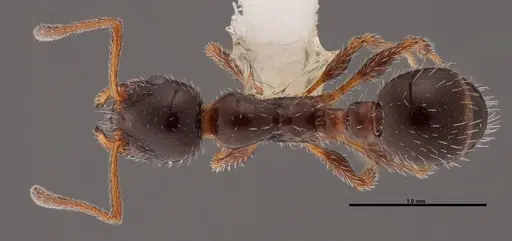
MCZENT00583595
View on AntWeb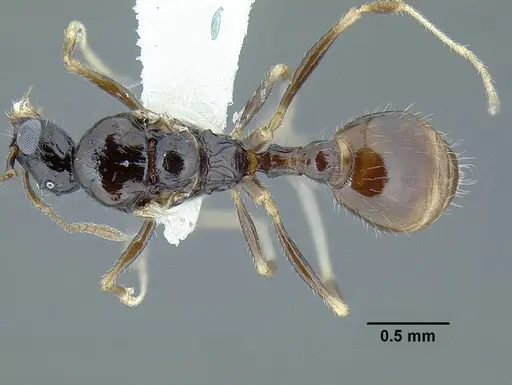
MCZENT00583596
View on AntWeb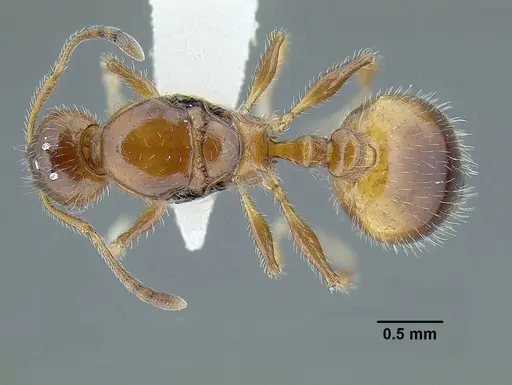
USNMENT00532780
View on AntWeb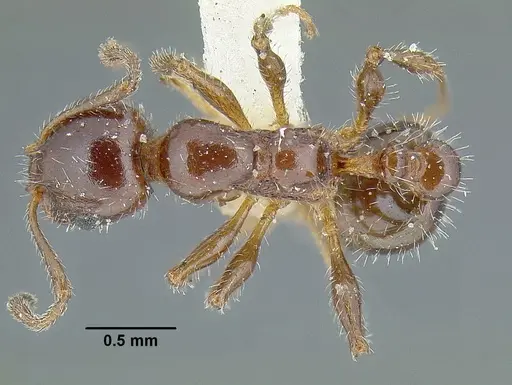
Literature
Loading distribution map...Loading products...