
Temnothorax pan
- Sci. Name
- Temnothorax pan
- Tribe
- Crematogastrini
- Subfamily
- Myrmicinae
- Author
- Santschi, 1936
- Distribution
- Found in 1 countries
Introduction
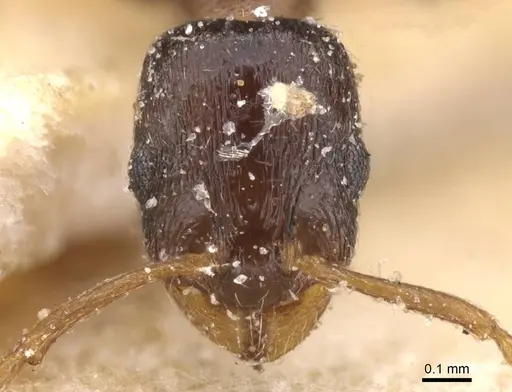
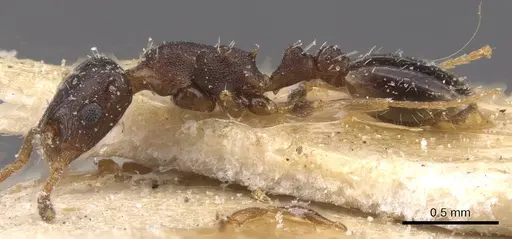
Temnothorax pan is a tiny ant species native to Morocco, where it lives in the Middle and High Atlas mountain regions. Workers are small, similar to other Temnothorax; queen and male were described later by Cagniant and Espadaler (1997) . This species belongs to the exilis group and is endemic to Morocco, found nowhere else in the world . They nest under stones in mountainous areas with grass, bushes, and scattered trees . What makes T. pan interesting is its limited, endemic distribution in the Atlas Mountains and how rarely it is collected. This is a specialty species for ant keepers interested in North African fauna. Like most Temnothorax, they are peaceful and rely on chemical defense rather than stinging (they belong to the Crematogastrini tribe, which uses a modified spatulate stinger to smear venom on enemies).
Quick Summary
- Difficulty: Hard
- Origin & Habitat: Morocco, endemic to the Middle Atlas and High Atlas mountain regions. Found under stones in grassy, bushy areas with scattered large trees [3][4][5].
- Colony Type: Social structure unconfirmed. Only a single worker and a gyne (queen) have been collected in the wild, but colony organization is unknown [3].
- Size & Growth:
- Queen: Size data unavailable, females are noted as having some characteristics of small size similar to workers [2].
- Worker: Size data unavailable, workers are small, typical of the exilis group [2].
- Colony: Unknown, collection data is extremely limited (only a single worker and queen from one site) [3].
- Growth: Unknown, no documented colony growth data. Based on related Temnothorax species, growth is likely slow and modest.
- Development: Unknown for this species. Based on typical Temnothorax patterns, egg‑to‑worker takes roughly 6-10 weeks at moderate temperatures, but this is unconfirmed. (All development timeline estimates are inferred from genus patterns, not species‑specific data.)
- Antkeeping:
- Temperature: No species‑specific data. As a mountain species from a temperate climate, room temperature (20-24°C) is a reasonable starting point. Avoid overheating, above 28°C may cause stress. Monitor and adjust based on colony activity.
- Humidity: No reliable data. Likely prefers moderate moisture, keep the nest substrate damp but not waterlogged, allowing some drying between waterings. Provide a humidity gradient if possible.
- Diapause: Likely yes, as a temperate mountain species. A winter rest period of 2-3 months at 10-15°C is inferred from its geographic origin, but not confirmed by research.
- Nesting: Y-tong (AAC), plaster, or test tubes are suitable. They naturally nest under stones, so tight, dark chambers are preferred. Avoid large open spaces. Test tubes work well for founding colonies.
- Behavior: Peaceful temperament, typical of Temnothorax. They rarely sting, their primary defense is smearing venom (common to Crematogastrini). Due to their tiny size, excellent escape prevention is critical, use fine mesh and fluon barriers. They likely use tandem running to recruit nestmates.
- Common Issues: tiny size, escapes are very likely without fine mesh barriers (workers can fit through gaps that hold larger species), very rare in the hobby, colonies are almost impossible to find, even for experienced collectors, no reliable care data exists, almost all advice is inferred from the genus, so success is uncertain, slow or stalled colony growth is possible, and may disappoint keepers expecting fast expansion, overheating can quickly kill them, keep below 25°C and away from direct heat sources, wild‑caught colonies may be stressed from transport, give them time to settle without disturbance
Housing and Nest Setup
Temnothorax pan is tiny, so housing must be scaled accordingly. For founding colonies, a standard test tube setup with a water reservoir works well, cover the tube to keep it dark. For established colonies, a small Y‑tong (AAC) or plaster nest with narrow chambers is ideal, mimicking the tight spaces under stones they naturally occupy [1].
Avoid large, open foraging areas, these ants can feel exposed in oversized enclosures. Connect a small outworld via a short tube. Use fine mesh on all ventilation holes and a fluon barrier on the outworld walls to prevent escapes. Keep the nest area dark with a cloth or by placing it in a shaded spot.
Feeding and Diet
As with other Temnothorax, T. pan likely accepts small insects and sugary liquids. Offer tiny prey such as fruit flies (Drosophila), pinhead crickets, or small mealworm pieces. They are not aggressive hunters, so prey should be easy to subdue. A drop of honey water or sugar water can be offered occasionally [1].
Feed every 2-3 days and remove uneaten prey after 24 hours to prevent mold. During the founding stage, the queen will not eat much, offer a single small prey item every week. Once workers arrive, increase feeding frequency. These ants are foragers and scavengers rather than active hunters.
Temperature and Seasonal Care
No species‑specific data exists. Being a mountain species from a temperate climate, room temperature (20-24°C) is a safe starting point. Avoid excessive heat, above 28°C may stress or kill the colony. Direct sunlight and heat sources should be avoided.
Seasonal cooling may be beneficial. If you want to attempt diapause, gradually lower the temperature to 10-15°C for 2-3 months in winter, then slowly warm up in spring. However, this is inferred from its origin, no confirmed data supports it. Monitor the colony closely and adjust based on behavior. [1]
Behavior and Colony Dynamics
Temnothorax pan is believed to be peaceful, like most genus members. Workers are tiny but active, foraging individually or in small groups. Tandem running (a leader guiding a follower to a food source) is a common recruitment method in Temnothorax and likely used here [1].
They do not possess a functional, aggressive sting. Their primary chemical defense, typical of the Crematogastrini tribe, involves smearing a sticky venom, this is more a curiosity than a hazard to keepers. Their small size makes them notorious escape artists: always use fine mesh and avoid any gaps. Colonies are expected to be small and slow‑growing, requiring patience.
Frequently Asked Questions
How long does it take for Temnothorax pan to raise first workers?
This is unknown for T. pan. In related Temnothorax species, egg‑to‑worker typically takes 6-10 weeks at moderate temperatures. You should expect at least several weeks, but the exact timing may vary. Be patient during the founding stage.
Do Temnothorax pan ants sting?
No, they do not have a functional stinger that can pierce human skin. Their defense is chemical: they smear a sticky venom from a modified sting, typical of the Crematogastrini tribe. This poses no danger to keepers.
Can I keep multiple queens together?
Not recommended. There is no evidence that T. pan is polygyne. Given the very limited collection data (only single queens found), it is safest to assume they are monogyne. Keeping multiple queens together would likely lead to aggression.
What do Temnothorax pan ants eat?
They likely accept small insects (fruit flies, pinhead crickets, small mealworms) and sugary liquids (honey water). Offer a varied diet and remove uneaten food after 24 hours. Their natural diet is undocumented.
Do they need hibernation?
Probably yes, as a mountain species from a temperate climate, they likely require a winter diapause of 2-3 months at 10-15°C. This is inferred from geography, not confirmed by research. Without a rest period, colony health may decline over time. Reduce temperature gradually in autumn and resume normal care in spring.
Are Temnothorax pan good for beginners?
No, they are expert level due to extreme rarity in the hobby, almost complete lack of husbandry data, and tiny size which makes escape prevention challenging. Beginners should start with more documented species (e.g., Lasius niger, Camponotus).
How big do colonies get?
Unknown. Only a single worker and queen have been collected in the wild, natural colony size has never been documented. Based on other Temnothorax, colonies probably stay under a few hundred workers, but this is speculation.
When should I move them to a formicarium?
Keep them in a test tube during the founding stage. A move to a small formicarium (e.g., Y‑tong, plaster) can be considered when the colony has at least 10-20 workers and the test tube appears crowded. There are no species‑specific guidelines, use general good practice.
Why are my ants dying?
Common causes with tiny Temnothorax: overheating (keep below 25°C), escapes through tiny gaps, mold from excessive moisture, starvation (offer tiny prey even when queen is alone), or stress from handling. Ensure the nest is dark, humidity moderate, and temperature stable.
Where is Temnothorax pan found?
Only in Morocco, specifically the Middle Atlas and High Atlas mountain regions. It is endemic to the country, known from about 8 localities (5 in Moyen Atlas,3 in Haut Atlas). One record exists from the Rif territory (Talassemtane National Park) [3][4]. It has never been found outside Morocco.
Report an Issue
The current care sheet is based fully on literature. See inconsistencies, or something that's incorrect? Please , it will be resolved after review from an admin. Contributing to the blogs tab also helps providing information, to make us be able to further improve the caresheets. Thank you for your support!
References

This caresheet is licensed under CC BY-SA 4.0 .
Community Blogs
CASENT0912980
View on AntWeb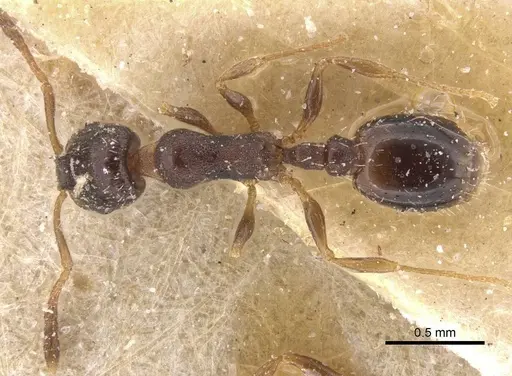
Literature
Loading distribution map...Loading products...