
Temnothorax palustris
- Sci. Name
- Temnothorax palustris
- Tribe
- Crematogastrini
- Subfamily
- Myrmicinae
- Author
- Cover & Deyrup, 2004
- Distribution
- Found in 1 countries
Introduction
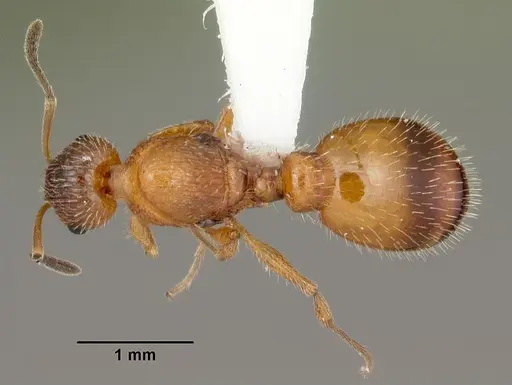
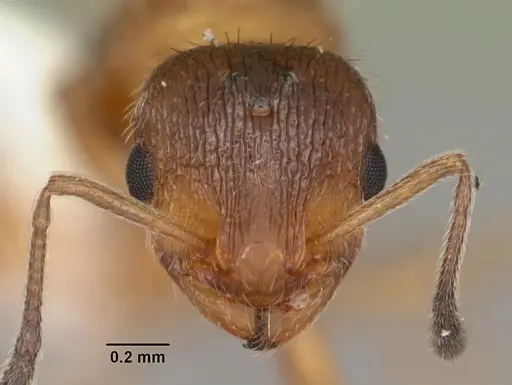
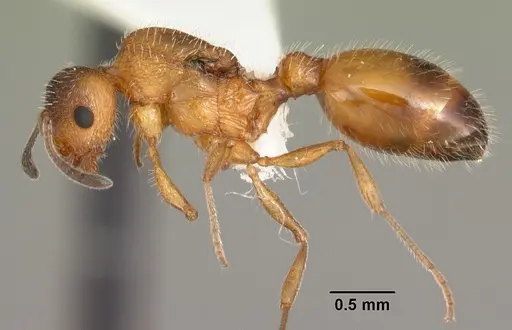
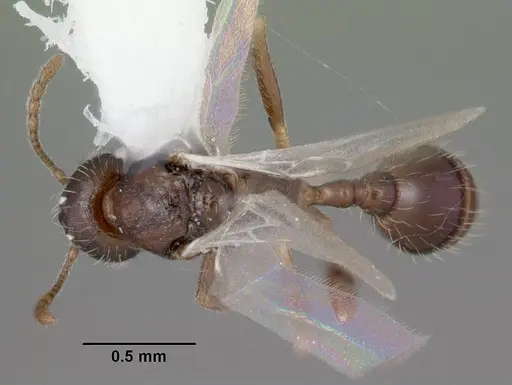
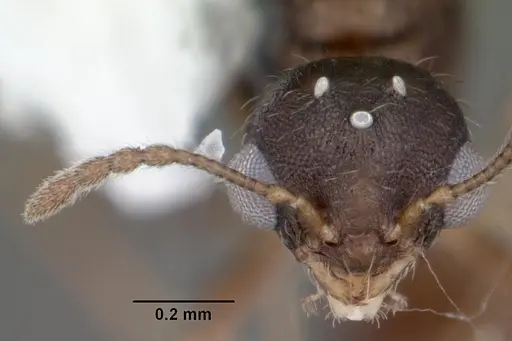
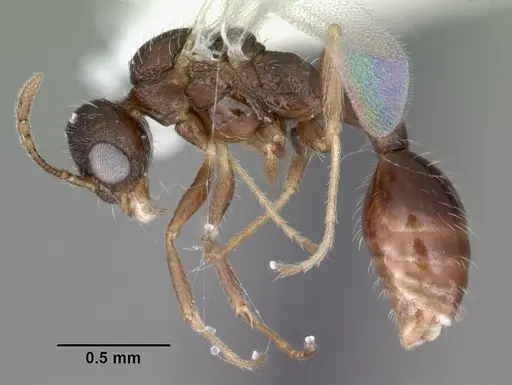
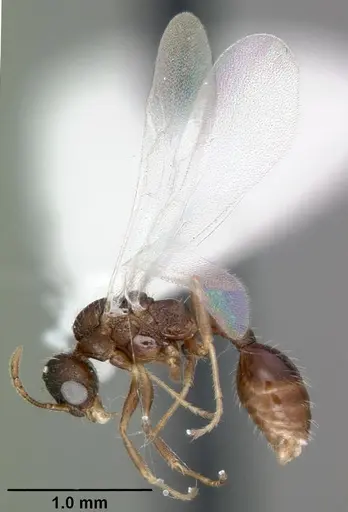
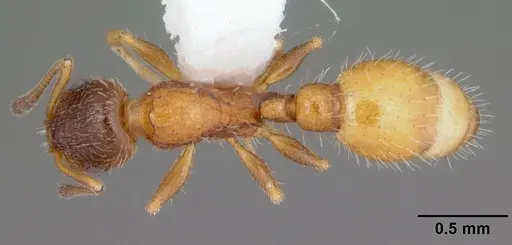
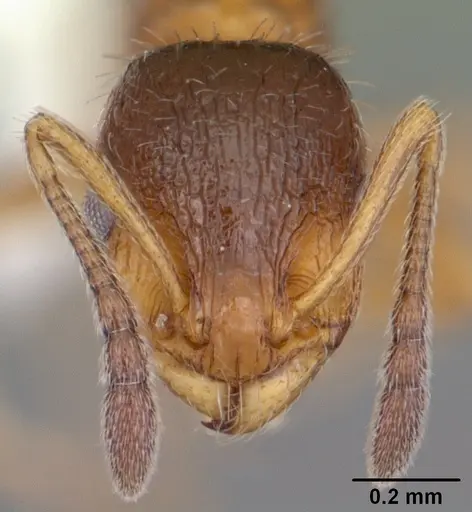
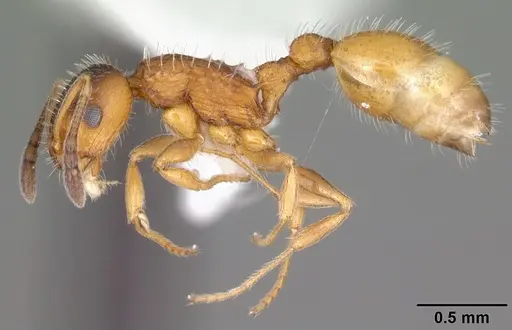
Temnothorax palustris is a tiny ant native to the southeastern United States, specifically Florida's pine flatwoods and marsh areas. Workers measure 2.9 mm and are yellowish with a yellowish‑brown head, easily identified by fine longitudinal carinae (ridges) on head and mesosoma, and slender upward‑pointing propodeal spines . The postpetiole is notably wide - almost twice as wide as the petiole - giving them a distinctive look. Queens are larger at nearly 5 mm, while males are around 3.3 mm and distinctly black . Described only in 2004,it remains one of the less studied North American Temnothorax. What makes T. palustris unusual is its marsh‑loving nature - the name 'palustris' means 'of the marsh' in Latin . Unlike most ants that avoid water, it thrives in frequently flooded pine forests and builds nests just below the surface in root mats on sandy hummocks. It forages under loose pine needles and leaves, and accepts cookie crumbs with an enthusiasm not often seen in Temnothorax . This makes it relatively easy to locate in the wild.
Quick Summary
- Difficulty: Medium
- Origin & Habitat: Southeast United States, Florida panhandle (Liberty County, Columbia County), possibly Georgia and Alabama. Inhabits frequently flooded and burned pine forests, seasonally flooded shrub marsh, and low flatwoods [1][2].
- Colony Type: Unconfirmed. Based on typical Temnothorax patterns, likely single‑queen (monogyne). No documented evidence of polygyny or ergatoid reproductives.
- Size & Growth:
- Queen: 4.96 mm total length [1]
- Worker: 2.90 mm total length [1]
- Colony: Unknown, likely small, consistent with related species.
- Growth: Moderate
- Development: Estimated 6-10 weeks at optimal temperature based on genus‑level data for similar small Myrmicinae. (Not specifically documented for this species.)
- Antkeeping:
- Temperature: 20-24 °C, inferred from Florida habitat. A gentle gradient is beneficial.
- Humidity: High, keep nest substrate consistently moist but not waterlogged. Natural habitat is seasonally flooded marsh [1][2].
- Diapause: Unconfirmed. As a subtropical species, a mild winter rest may be beneficial but is not mandatory. Inferred from habitat.
- Nesting: Ground‑nesting in sandy soil within root mats [1]. In captivity use a test tube or small formicarium with fine, moist substrate.
- Behavior: Small but active foragers. Readily accept cookie crumbs and jelly baits [2]. Forage under leaf litter [1]. Not aggressive. Their defense mechanism involves smearing venom using a specialized stinger (typical of Crematogastrini). Escape prevention is critical due to tiny size.
- Common Issues: escape prevention is critical due to tiny 3 mm worker size, use fine mesh barriers, high humidity requirements mean mold can be a problem if ventilation is poor, slow colony growth may frustrate beginners expecting rapid development, wild‑caught colonies may be hard to find because nest entrances are tiny and unmarked, marsh habitat means they need more moisture than typical dry‑nesting ants
Housing and Nest Setup
Temnothorax palustris is a tiny ground‑nesting ant that needs careful housing. In the wild they nest in shallow chambers less than 2 inches deep in fine white sand, within root mats extending into small sandy hummocks [1]. The nest entrance is a tiny hole only about 2 mm in diameter, so small it's practically invisible [2].
For captivity, a small test tube setup works well for founding colonies. Use a test tube with a water reservoir that keeps the cotton consistently moist, these ants need high humidity. Once the colony grows to 20+ workers, you can move them to a small Y‑tong (AAC) nest or a naturalistic setup with moist sandy substrate. Keep nest chambers small and tight, these tiny ants feel exposed in large spaces. A layer of moist sand or soil in the outworld helps maintain humidity while letting them forage naturally.
Escape prevention is critical. At only 2.9 mm, workers can squeeze through gaps that seem impossible. Use fluon on test tube rims and ensure any formicarium has tight‑fitting connections and fine mesh on ventilation holes.
Feeding and Diet
Temnothorax palustris shows unusually enthusiastic acceptance of carbohydrate baits compared to most Temnothorax species. In the wild they readily accept shortbread cookie crumbs and jelly baits, immediately carrying food back to the nest [2]. This makes them easy to bait and observe.
In captivity offer a varied diet: sugar water or honey as a constant carbohydrate source, and protein sources like small insects (fruit flies, pinhead crickets, mealworms) 2-3 times per week. Their small size means prey must be appropriately sized, tiny fruit flies and springtails are ideal. The cookie preference suggests they may accept many sweet substances, so experiment with diluted honey or sugar water.
Feed small amounts and remove uneaten food within 24-48 hours to prevent mold in the humid setup. Given their marsh habitat, they likely have moderate moisture needs, a shallow water dish in the outworld helps.
Temperature and Humidity
As a species from the Florida panhandle, T. palustris prefers warm conditions. Keep the nest area at 20-24 °C, which is typical room temperature. They inhabit frequently flooded pine forests and marshes [1], so they tolerate higher humidity than many ant species.
Humidity is perhaps the most critical factor for success. The natural habitat is seasonally flooded shrub marsh, these ants are adapted to wet conditions. Keep the nest substrate consistently moist but not waterlogged. A test tube with a water reservoir provides a self‑maintaining humid environment. If using a formicarium, check that the substrate never fully dries out.
Finding and Collecting
If you're in the Florida panhandle and want to find this species, the best method is baiting. Unlike many ants that require digging or searching decayed wood, T. palustris can be attracted with shortbread cookie crumbs, they accept these with remarkable enthusiasm [2]. Place small pieces of cookie near appropriate habitat: frequently flooded pine flatwoods, areas with sandy soil and root mats.
Look for tiny 2 mm diameter holes in sandy hummocks rising above the marshy ground. The nest entrances are completely unmarked and easy to miss [2]. The species has also been collected in pitfall traps, so ground‑level sampling works.
The best time to search is during warmer months when foragers are active. Remember that this is a recently described species (2004) and is known from relatively few collections, so it may not be abundant even in suitable habitat.
Frequently Asked Questions
Can I keep Temnothorax palustris in a test tube?
Yes, test tubes work well for founding colonies. Use a small test tube with a water reservoir to maintain high humidity, critical for this marsh species. Ensure excellent escape prevention since workers are only 2.9 mm and can squeeze through tiny gaps. Apply fluon to the rim and use fine mesh on any ventilation.
Do Temnothorax palustris ants sting?
As a member of the subfamily Myrmicinae they have a stinger, but given their tiny size (workers just 2.9 mm), any sting would be mild. They are not aggressive and will likely flee rather than attack if threatened.
What do Temnothorax palustris eat?
They accept a varied diet including sugar sources (honey, sugar water) and protein (small insects). Uniquely, they show strong attraction to cookie crumbs in the wild, shortbread cookies work particularly well [2]. Feed small insects like fruit flies or pinhead crickets as protein 2-3 times weekly, with constant access to sugar water.
Are Temnothorax palustris good for beginners?
This species is of medium difficulty. Their small size and high humidity requirements make them slightly more challenging than common beginner species like Lasius or Camponotus. However, their enthusiastic acceptance of various foods and calm temperament make them manageable for intermediate antkeepers willing to pay attention to humidity levels.
Do Temnothorax palustris need hibernation?
Diapause requirements are unconfirmed. As a Florida species from a subtropical climate, they likely need only a mild winter rest period (a few weeks at 15-18 °C) if any. If your colony remains active through winter, occasional cooling is likely sufficient.
Why are my Temnothorax palustris dying?
Common causes include: low humidity (they need consistently moist substrate), escape through tiny gaps (check all barriers), mold from overwatering or poor ventilation, and stress from disturbance during founding. Their marsh habitat means they struggle in dry conditions. Ensure the nest never fully dries out.
Where does Temnothorax palustris live in the wild?
This species is endemic to the Florida panhandle, specifically the Apalachicola National Forest and Osceola National Forest areas. It lives in frequently flooded pine flatwoods and marshes with sandy soil. Nests are built in root mats just below the surface of small sandy hummocks [1].
How do I find Temnothorax palustris nests in the wild?
The most effective method is baiting with cookie crumbs, they accept these with unusual enthusiasm [2]. Look in appropriate habitat: sandy areas in frequently flooded pine forests. Search for tiny 2 mm holes in sandy hummocks, though nest entrances are often completely unmarked and very difficult to spot [2].
Report an Issue
The current care sheet is based fully on literature. See inconsistencies, or something that's incorrect? Please , it will be resolved after review from an admin. Contributing to the blogs tab also helps providing information, to make us be able to further improve the caresheets. Thank you for your support!
References

This caresheet is licensed under CC BY-SA 4.0 .
Community Blogs
Literature
Loading distribution map...Loading products...