
Temnothorax obscurior
- Sci. Name
- Temnothorax obscurior
- Tribe
- Crematogastrini
- Subfamily
- Myrmicinae
- Author
- Dalla Torre, 1893
- Distribution
- Found in 2 countries
Introduction
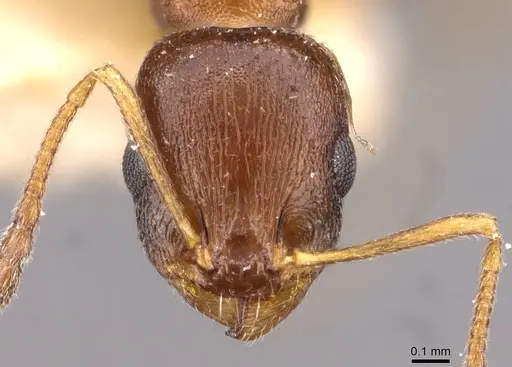
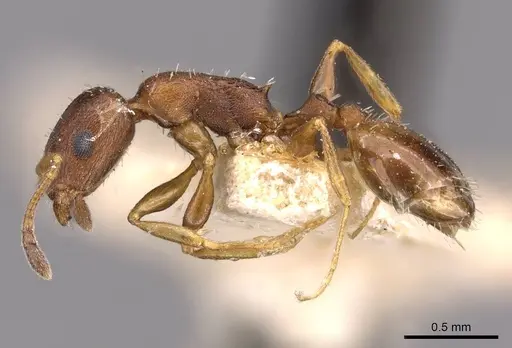
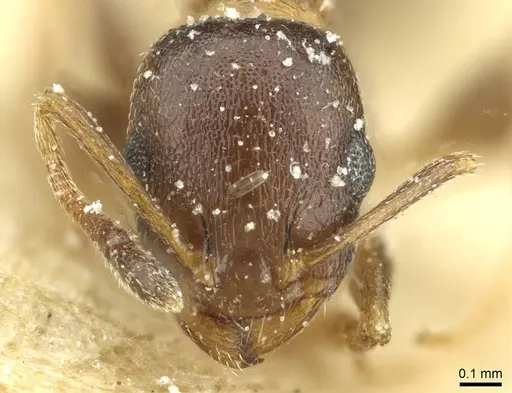
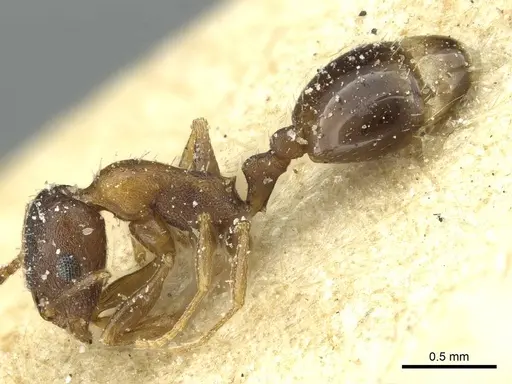
Temnothorax obscurior is a tiny Myrmicinae ant native to North Africa, found in Algeria and Morocco . Workers are small, dark, and estimated at 2-4mm based on related Temnothorax species. They were originally described as a variety of Leptothorax tuberum and later raised to full species status by Cagniant in 1970 . These ants nest in small cavities, often under stones or in rotting wood, in warm, dry habitats across the Maghreb region.
Quick Summary
- Difficulty: Easy
- Origin & Habitat: North Africa, Algeria and Morocco, particularly in coastal areas and forest regions [1][2]. They inhabit warm, dry to moderately humid Mediterranean habitats.
- Colony Type: Likely monogyne (single queen) based on typical Temnothorax patterns.
- Size & Growth:
- Queen: Estimated 5-6mm, inferred from Temnothorax genus patterns.
- Worker: Estimated 2-4mm, inferred from Temnothorax genus patterns.
- Colony: Likely under 200 workers, inferred from typical Temnothorax colony sizes.
- Growth: Slow
- Development: Estimated 6-10 weeks based on related Temnothorax species. (Development time is temperature-dependent, warmer conditions within safe ranges accelerate development.)
- Antkeeping:
- Temperature: Keep at room temperature, roughly 20-24°C. They tolerate 18-28°C. Provide a gentle heat gradient so ants can self-regulate.
- Humidity: Provide a dry to moderately damp nest substrate. Keep one small area slightly moist, but avoid saturation. Their natural habitat is dry Mediterranean.
- Diapause: Yes, likely requires a winter rest period of 2-3 months at 10-15°C, inferred from their North African temperate origins.
- Nesting: Small nests work best, test tubes, Y-tong (AAC) nests, or 3D-printed formicaria with narrow chambers scaled to their tiny size.
- Behavior: Generally peaceful and non-aggressive. Workers are small and active, foraging for small prey and honeydew. Their primary defense is smearing venom using a modified stinger. They can sting but rarely do. Escape prevention is critical due to their tiny size, use fine mesh and tight seals.
- Common Issues: escape prevention is critical due to their tiny size, use fine mesh and tight-fitting lids., colonies are slow to grow, requiring patience., humidity management, they prefer dry conditions, so avoid overwatering the nest., wild-caught colonies may carry parasites that can devastate captive colonies.
Housing and Nest Setup
Temnothorax obscurior is tiny and needs appropriately scaled housing. Test tube setups work well for founding colonies, use a small test tube with a water reservoir separated by a cotton plug. Keep the tube dark to mimic natural nesting cavities. Once the colony reaches 20+ workers, you can move them to a small Y-tong (AAC) nest or a 3D-printed formicarium. The key is tight chambers and narrow passages that match their small size. Avoid large, open spaces that can stress them. A small outworld connected to the nest allows for feeding space.
Feeding and Diet
Like most Temnothorax, these ants are omnivorous but lean toward protein. Offer small live prey such as fruit flies, pinhead crickets, and small mealworms. They also accept sugar sources, a drop of honey water or sugar water should be available, but change it frequently. In nature, they forage for small insects and tend aphids for honeydew. Feed them 2-3 times per week, offering small amounts that can be consumed within a day. Remove uneaten prey to prevent mold. A varied diet helps maintain colony health.
Temperature and Seasonal Care
Temnothorax obscurior comes from North Africa, so they prefer warm conditions. Keep the nest area at 20-24°C. A heating cable on one side of the nest can create a temperature gradient, allowing ants to move between warmer and cooler areas. They can tolerate 18-28°C but avoid extremes. During winter, they benefit from a diapause period, reduce temperature to 10-15°C for 2-3 months to simulate winter. This rest period helps regulate their biological clock and promotes healthy colony development in spring.
Colony Founding
Founding behavior is unconfirmed for this species. Based on typical Temnothorax patterns, the queen may seal herself in a small chamber and survive on stored fat reserves while raising the first brood. However, this has not been verified. If you have a foundress queen, provide a dark test tube setup and do not offer food unless she is seen foraging (which would indicate she is not claustral). The first workers, called nanitics, are typically smaller than normal workers and emerge after an estimated 6-10 weeks. Be patient, founding can take time.
Behavior and Temperament
These are peaceful, non-aggressive ants that pose no threat to keepers. Workers are small and active, constantly moving through the nest and outworld. Their primary defense is smearing venom using a modified stinger, rather than piercing flesh. They have a functional stinger but rarely use it, their small size makes stinging impractical. They are not territorial or aggressive toward other colonies. The main behavioral concern is escape, their tiny size means they can squeeze through remarkably small gaps. Excellent escape prevention is essential: use fluon on test tube rims, fine mesh on outworlds, and ensure all connections are secure.
Frequently Asked Questions
How long does it take for Temnothorax obscurior to raise first workers?
From egg to first worker typically takes an estimated 6-10 weeks, depending on temperature. Warmer conditions within the safe range (20-24°C) speed up development. The queen may seal herself in during founding, but this is unconfirmed, do not feed her unless she forages.
What do Temnothorax obscurior ants eat?
They eat small live prey like fruit flies and pinhead crickets, plus sugar sources such as honey water or sugar water. Feed them protein prey 2-3 times per week and keep a sugar source available. Remove uneaten food promptly to prevent mold.
Can I keep multiple Temnothorax obscurior queens together?
This species is likely monogyne (single queen) based on typical Temnothorax patterns. Combining unrelated queens is not recommended as they will likely fight. In the wild, colonies typically have one queen that lays all the eggs.
Do Temnothorax obscurior ants need hibernation?
Yes, they likely need a winter rest period. Reduce temperatures to 10-15°C for 2-3 months during winter. This diapause helps regulate their biological cycle. Do not keep them warm year-round as this can weaken the colony over time.
How big do Temnothorax obscurior colonies get?
Colonies remain relatively small, likely under 200 workers. This is typical for Temnothorax, they are small ants with compact colonies rather than large supercolonies.
Are Temnothorax obscurior ants good for beginners?
Yes, they are considered easy to keep. They are small, peaceful, and have modest space requirements. The main challenges are their slow growth (requiring patience) and escape prevention due to their tiny size. They adapt well to captive conditions.
What size nest do I need for Temnothorax obscurior?
Start with a small test tube for founding. Once the colony reaches up to 30 workers, a small Y-tong (AAC) nest or 3D-printed formicarium works well. The key is tight chambers scaled to their tiny 2-4mm worker size.
Do Temnothorax obscurior ants sting?
They have a functional stinger but rarely use it. Their primary defense is smearing venom rather than piercing. They are not dangerous to humans and are peaceful toward keepers.
Why are my Temnothorax obscurior ants dying?
Common causes include: parasites from wild-caught colonies, drowning in test tube water reservoirs, mold from uneaten food, temperatures too cold for development, or stress from oversized housing. Also, over-wetting the nest can be fatal since they prefer dry conditions. Check each of these factors and adjust care accordingly.
When should I move my colony to a formicarium?
Move to a larger nest when the test tube becomes crowded or the water reservoir runs low, typically around 20-30 workers. A Y-tong (AAC) or 3D-printed nest provides more space while maintaining appropriate humidity.
Report an Issue
The current care sheet is based fully on literature. See inconsistencies, or something that's incorrect? Please , it will be resolved after review from an admin. Contributing to the blogs tab also helps providing information, to make us be able to further improve the caresheets. Thank you for your support!
References

This caresheet is licensed under CC BY-SA 4.0 .
Community Blogs
CASENT0909026
View on AntWeb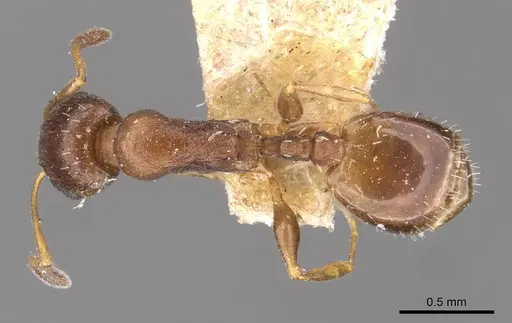
CASENT0912927
View on AntWeb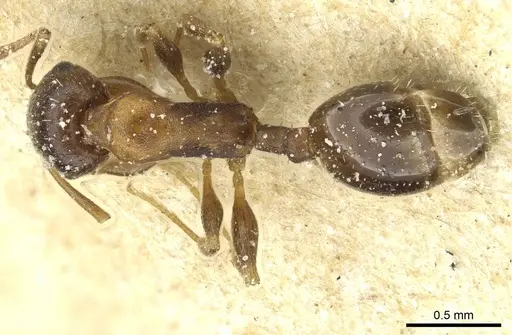
Literature
Loading distribution map...Loading products...