
Temnothorax obliquicanthus
- Sci. Name
- Temnothorax obliquicanthus
- Tribe
- Crematogastrini
- Subfamily
- Myrmicinae
- Author
- Cole, 1953
- Distribution
- Found in 2 countries
Introduction
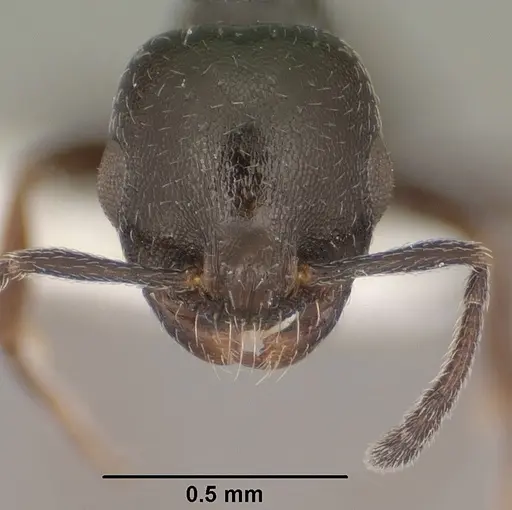
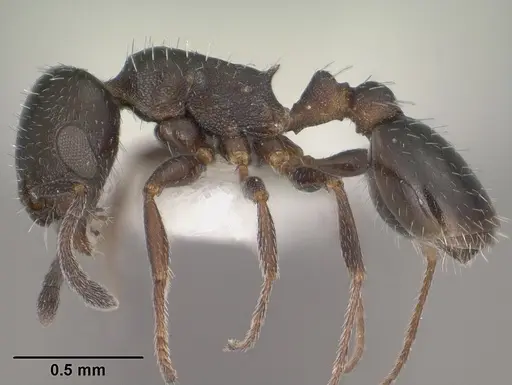
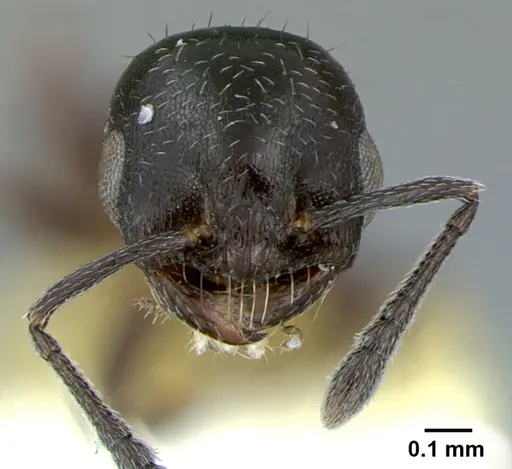
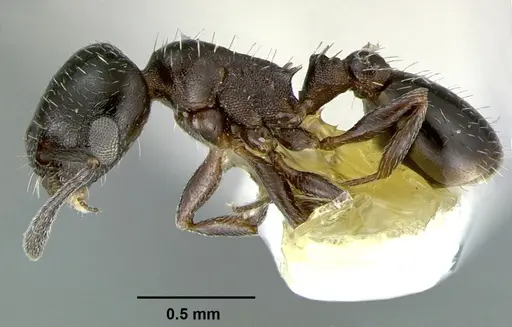
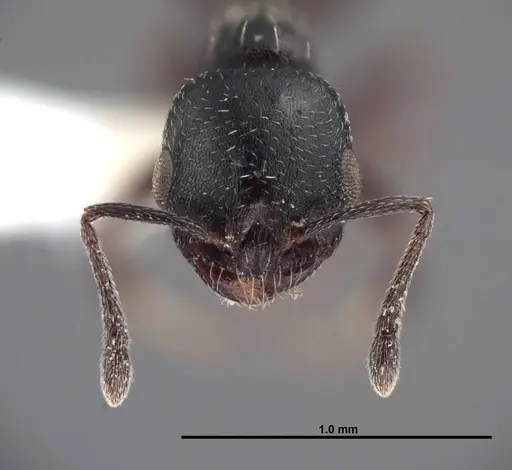
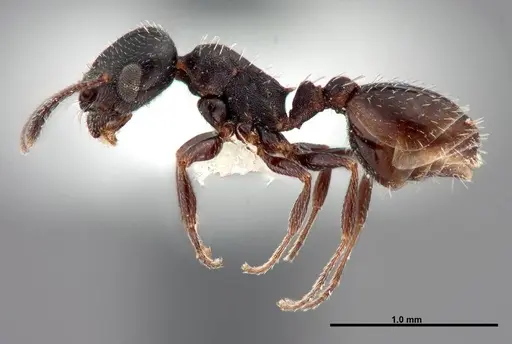
Temnothorax obliquicanthus is a small, dark ant native to the southwestern United States and northern Mexico. Workers measure 2.6mm and are easily recognized by their remarkably large, kidney-shaped eyes, among the largest relative to head size of any North American Temnothorax . Their entire body is densely punctate (covered in tiny pits), giving a matte, textured look. The head, thorax, and petiole are opaque, while the gaster and legs are slightly shiny. They are nearly black, appearing very dark brown under magnification, with brown leg joints and mandible tips . This species belongs to the tricarinatus-group and is found in dry to semi-moist grassy areas across Colorado, New Mexico, Nevada, Texas, and Baja California . What makes T. obliquicanthus stand out is its huge eyes, an adaptation to its diurnal, open-habitat lifestyle. Workers scan the area before exiting the nest, which helps protect them in exposed nesting sites . They are generalist foragers, scavenging and hunting small soil arthropods . This species is rarely collected, so captive care info is limited, but they follow typical Temnothorax patterns: small colonies, pre-existing cavity nests, and peaceful behavior.
Quick Summary
- Difficulty: Medium
- Origin & Habitat: Southwestern United States (Colorado, New Mexico, Nevada, Texas) and northern Mexico (Baja California, Sonora). Found in dry grassy areas to semi-moist meadows, sagebrush, and high dry short-grass plains [1]. In the Mojave National Preserve, they inhabit Joshua Tree and Pinyon/Juniper Woodland between 4400–5700 ft elevation [5].
- Colony Type: Monogyne – each colony has a single queen [1]. Colonies are small, typical of the genus.
- Size & Growth:
- Queen: Unknown – no data available. Based on genus patterns, likely ~4–5mm (inferred).
- Worker: 2.6mm [1]
- Colony: Under 100 workers (inferred from typical Temnothorax colonies)
- Growth: Moderate
- Development: 6–10 weeks (estimated from genus patterns – exact timing unconfirmed) (Inferred from Temnothorax genus, actual development for this species is unknown.)
- Antkeeping:
- Temperature: Cool to moderate – aim for 18–22°C. They are a cold-climate specialist from high-elevation Mojave habitats (4400–5700 ft) and prefer cooler conditions [5]. Room temperature is usually suitable. Avoid anything above 25°C.
- Humidity: Low to moderate. They come from dry to semi-moist grassy areas. Keep the nest substrate lightly moist but allow parts to dry out. Overly damp conditions are risky.
- Diapause: Yes – likely required. Activity from March–September suggests a winter rest period [5]. Provide 2–3 months at 10–15°C.
- Nesting: Y‑tong (AAC) or plaster nests with small chambers work well. In nature they nest in exposed soil, often in pre‑existing cavities [5][1]. They do not dig their own tunnels, so provide formed chambers.
- Behavior: Peaceful and non‑aggressive. Workers are diurnal foragers, active during the day thanks to their large eyes. Their defense mechanism is a modified stinger that smears venom rather than piercing, so they are harmless to humans. Escape risk is moderate: they are tiny (2.6mm) but not fast runners. Use standard escape prevention (Fluon on test tube rims, fine mesh on outworlds).
- Common Issues: colonies are rarely collected and may suffer stress from wild capture, slow population growth – patience required for such a small colony species, cold‑climate specialist means they may struggle in warm rooms above 25°C, overwatering is more dangerous than under‑watering due to dry habitat preference, tiny size makes them easy to lose – secure all openings
Housing and Nest Setup
Temnothorax obliquicanthus is tiny and needs appropriately sized housing. A test tube setup works for founding – use a small tube with a cotton ball separating the water reservoir from the ants. The tube should be small enough that the queen can easily reach the water. For established colonies, a Y‑tong (AAC) nest with small chambers is ideal. These ants do not excavate, they use pre‑existing cavities, so give them chambers that are already formed [1]. Keep the nest substrate lightly moist but not wet. Connect a small outworld for foraging. Because they come from dry to semi‑moist habitats, avoid over‑humid conditions.
Feeding and Diet
In the wild, T. obliquicanthus is a generalist forager that scavenges and preys on soil microarthropods [5]. In captivity, offer a varied diet. Protein sources should include small live prey like fruit flies, pinhead crickets, or mealworm pieces. They will also accept dead insects. Sugar is important – offer diluted honey, sugar water, or ant jelly regularly. Because they are tiny, food items must be appropriately sized. Feed small amounts every 2–3 days and remove uneaten food to prevent mold. Keep a constant sugar source available.
Temperature and Seasonal Care
This species is a cold‑climate specialist from high‑elevation Mojave habitats (4400–5700 ft) [5]. Aim for 18–22°C. They are active from March to September in the wild, which suggests they tolerate and may require cool conditions [5]. Overheating (above 25°C) is likely stressful. For winter, provide a diapause period of 2–3 months at 10–15°C. You can use a refrigerator (not freezer) or a cool basement. During diapause, reduce feeding but ensure water is always available. Do not feed during the deep cold period.
Colony Development
Temnothorax colonies grow slowly compared to many common ants. A founding colony will take several months to produce its first workers (nanitics), and many more months to reach even 20–30 workers. The queen is likely claustral (based on genus patterns), but this is unconfirmed for this species. If she is claustral, she will seal herself in a small chamber and raise the first brood on stored reserves. Do not disturb a founding colony for the first 4–6 weeks. Once workers appear, they are tiny (~2.6mm) and the colony can start foraging. Patience is essential – it may take 1–2 years to reach 50+ workers. [1]
Behavior and Observation
Workers are diurnal – active during the day. Their large eyes are an adaptation for scanning for predators before exiting the nest [1]. They move deliberately rather than frantically, which makes them interesting to watch. They are not aggressive and use a smearing venom defense that is harmless to humans. When threatened, they may flee or play dead. Colonies are small and peaceful, you can keep multiple colonies in close proximity without issues. Their dark color and huge eyes make them visually distinctive among small ants.
Frequently Asked Questions
How long does it take for Temnothorax obliquicanthus to produce first workers?
Expect 6–10 weeks from egg to first worker at optimal temperature (around 20°C). This is typical for the genus, though exact timing is unknown for this species. The queen may be claustral, but this is unconfirmed.
What do Temnothorax obliquicanthus ants eat?
They are generalist foragers. Offer small live or dead insects (fruit flies, pinhead crickets, mealworm pieces) for protein, and constant access to sugar sources (honey water, sugar water, or ant jelly). Food must be tiny to match their size.
Do Temnothorax obliquicanthus ants sting?
No, they are completely harmless to humans. Their stinger is modified to smear venom, not pierce. If threatened, they will flee or play dead.
What temperature do they need?
Keep them cool – 18–22°C is ideal. They are a cold‑climate specialist from high‑elevation Mojave habitats. Avoid temperatures above 25°C. Room temperature is usually suitable.
Do they need hibernation?
Yes, likely required. Based on their activity from March–September and cold‑climate status, give 2–3 months of winter rest at 10–15°C. Reduce feeding during this period.
How big do colonies get?
Colonies remain relatively small – likely under 100 workers. This is typical for the genus Temnothorax, which uses pre‑existing cavities like acorns and hollow stems.
Are they good for beginners?
Moderate difficulty. They are small and need careful temperature control (cool conditions) and escape prevention. Their slow growth and rarity make them a bit challenging for complete beginners, but they are peaceful and manageable once established.
Can I keep multiple queens together?
No – this species is monogyne, meaning each colony has only one queen [1]. Multiple queens will fight.
When should I move them to a formicarium?
Wait until the colony has at least 20–30 workers before moving to a formicarium. Test tube setups are fine for smaller colonies. Gently connect the test tube to the formicarium and let the ants explore and move on their own.
Why are my ants dying?
Common causes: temperatures too warm (above 25°C), excessive humidity (they prefer dry conditions), mold from overfeeding, or stress from wild collection. This species is rarely collected and may be fragile initially. Ensure cool, dry conditions and appropriately sized food.
Report an Issue
The current care sheet is based fully on literature. See inconsistencies, or something that's incorrect? Please , it will be resolved after review from an admin. Contributing to the blogs tab also helps providing information, to make us be able to further improve the caresheets. Thank you for your support!
References

This caresheet is licensed under CC BY-SA 4.0 .
Community Blogs
CASENT0102841
View on AntWeb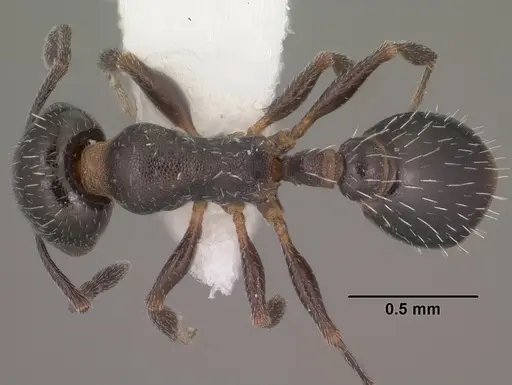
CASENT0105859
View on AntWeb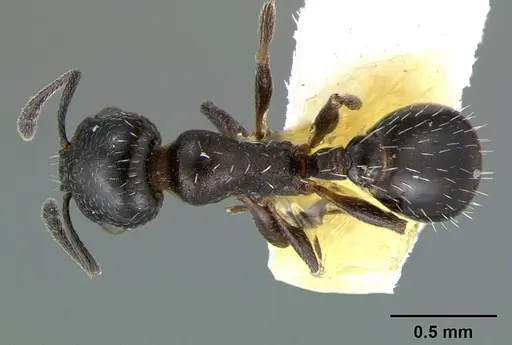
CASENT0923601
View on AntWeb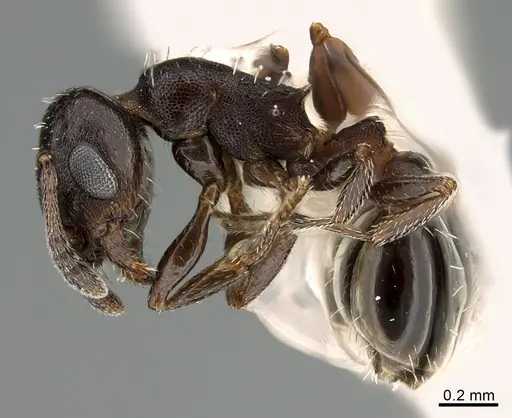
FMNHINS0000062742
View on AntWeb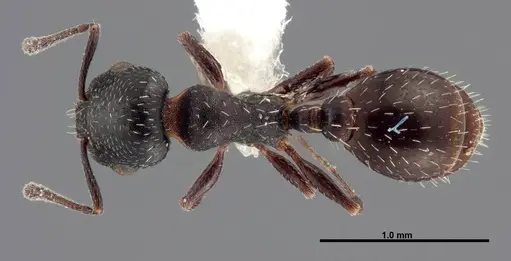
Literature
Loading distribution map...Loading products...