
Temnothorax nitidiceps
- Sci. Name
- Temnothorax nitidiceps
- Tribe
- Crematogastrini
- Subfamily
- Myrmicinae
- Author
- Emery, 1891
- Distribution
- Found in 1 countries
Introduction
Temnothorax nitidiceps is a small ant native to North Africa, occurring in Algeria, Morocco, and Tunisia . It belongs to the Temnothorax interruptus group and is distinguished by a short petiole peduncle, relatively long propodeal spines, and the absence of a mesopropodeal depression . The species was originally described from Algeria, and an unconfirmed record from the Greek Ionian Islands needs verification . Like many Temnothorax, they likely nest in small cavities under stones or in rotting wood. Their tiny size and docile nature make them suitable for observation, but escape prevention is critical.
Quick Summary
- Difficulty: Medium
- Origin & Habitat: North Africa (Algeria, Morocco, Tunisia) in Mediterranean climates [1]. Inferred to nest under stones or in small cavities in the ground, typical of the genus.
- Colony Type: Likely monogyne (single queen) based on typical Temnothorax patterns. Ergatoid (wingless) replacement queens may occur.
- Size & Growth:
- Queen: Estimated 4-5 mm inferred from genus patterns [2]
- Worker: Estimated 2-4 mm inferred from genus patterns [2]
- Colony: Up to 300 workers at maturity (estimated from genus patterns)
- Growth: Moderate
- Development: Estimated 6-10 weeks at optimal temperature, based on related species (Development time inferred from genus-level data, specific timing for this species is not documented.)
- Antkeeping:
- Temperature: Keep at 20-24°C. Mediterranean origin suggests tolerance for warmer conditions, but avoid overheating. Provide a gentle thermal gradient.
- Humidity: Moderate humidity, around 50-70%. Keep the nest substrate moist but not waterlogged. A small water tube provides a moisture source.
- Diapause: Likely requires 8-12 weeks of winter rest at 10-15°C, consistent with Mediterranean temperate species. Reduce feeding during this period.
- Nesting: Small cavities suit them best: Y-tong (AAC) nests with narrow chambers, small test tube setups, or naturalistic setups with flat stones. Avoid large open spaces.
- Behavior: Docile and non-aggressive. Workers are active foragers and may use tandem running, as many Temnothorax do. Their primary defense is fleeing or using a smear defense (modified stinger that wipes venom onto enemies), typical of the Crematogastrini tribe. Escape prevention is critical due to their tiny size, use fine mesh (≤0.5 mm) and tight lids.
- Common Issues: escape prevention is critical, tiny ants can squeeze through standard mesh and small gaps, slow colony growth may frustrate beginners who expect rapid development, winter dormancy is necessary but colonies may weaken if conditions are unstable, limited natural history data means care is based on genus patterns, not species-specific research, wild-caught colonies may carry parasites that can devastate captive colonies
Housing and Nest Setup
Temnothorax nitidiceps is tiny and needs appropriately scaled housing. Y-tong (AAC) nests with narrow chambers or small test tube setups work well, these ants prefer tight spaces where they can touch all sides. A naturalistic setup with flat stones on moist substrate also mimics their natural cavities. The outworld can be small. Use excellent escape prevention: fine mesh (≤0.5 mm) or fluon-coated barriers are essential. Large open areas stress the colony.
Feeding and Diet
Like most Temnothorax, these ants are omnivorous with a sweet tooth. Offer sugar water, honey, or diluted syrup as a constant carbohydrate source. For protein, provide small live prey such as fruit flies, pinhead crickets, or mealworm pieces. They are not aggressive hunters, so prey should be small and easy to handle. Feed small amounts every 2-3 days and remove uneaten food to prevent mold. Overfeeding is a common mistake.
Temperature and Seasonal Care
Keep the nest area at 20-24°C. A heating cable on one side creates a thermal gradient that workers use to regulate their temperature. During winter (October-March in the Northern Hemisphere), reduce the temperature to 10-15°C for 8-12 weeks to mimic their natural cycle. Reduce feeding during this dormancy, the colony will be less active. Do not skip winter rest, as it supports colony health and queen reproduction [1].
Colony Dynamics and Growth
Based on typical Temnothorax patterns, colonies start with a single claustral queen who raises the first workers on her own. Initial growth is slow, the first workers (nanitics) may emerge after 6-10 weeks. Once the colony reaches 10-20 workers, growth accelerates. Mature colonies likely reach up to 300 workers. Alates (winged reproductives) may be produced in summer. Ergatoid (wingless) replacement queens can take over if the primary queen dies.
Behavior and Observation
Temnothorax nitidiceps is docile and active. Workers readily explore their environment and may use tandem running to lead nestmates to food. Their primary defense is fleeing, if cornered, they may use a smear defense, a modified stinger that wipes venom onto enemies, typical of the Crematogastrini tribe. They are not dangerous to humans. Their small size makes them intriguing to watch, but escape prevention is paramount.
Frequently Asked Questions
How long does it take for Temnothorax nitidiceps to raise first workers?
Expect 6-10 weeks from egg to first worker at 20-24°C. This is inferred from related Temnothorax species, specific timing for T. nitidiceps is not documented.
What do Temnothorax nitidiceps ants eat?
They are omnivorous. Offer sugar water, honey, or diluted syrup as a carbohydrate source. For protein, provide small live prey such as fruit flies, small crickets, or mealworm pieces. Remove uneaten food promptly to prevent mold.
Do Temnothorax nitidiceps ants sting?
They have a modified stinger used for smearing venom rather than piercing, a defense typical of the Crematogastrini tribe. They are not dangerous to humans.
How big do Temnothorax nitidiceps colonies get?
Based on genus patterns, colonies likely reach up to 300 workers at maturity.
Can I keep multiple Temnothorax nitidiceps queens together?
This species is likely monogyne (single queen). Combining unrelated queens is not recommended as they may fight. Pleometrosis (cooperative founding) is unconfirmed for this species.
Do Temnothorax nitidiceps need hibernation?
Yes, a winter rest period of 8-12 weeks at 10-15°C is recommended to mimic their Mediterranean climate cycle and support colony health.
What is the best nest type for Temnothorax nitidiceps?
Y-tong (AAC) nests with narrow chambers or small test tube setups work best. These ants prefer tight spaces. A naturalistic setup with flat stones on moist substrate is also suitable.
Are Temnothorax nitidiceps good for beginners?
Rated medium difficulty. Their small size and escape risk make them challenging for complete beginners, but their docile nature and moderate care requirements suit those with some experience.
Why are my Temnothorax nitidiceps escaping?
Their tiny size lets them squeeze through standard mesh and small gaps. Use fine mesh (≤0.5 mm), tight lids, and fluon barriers. Check all connection points.
What temperature should I keep Temnothorax nitidiceps at?
Keep nest temperatures at 20-24°C. Provide a thermal gradient. Avoid prolonged temperatures above 28°C or below 15°C.
Report an Issue
The current care sheet is based fully on literature. See inconsistencies, or something that's incorrect? Please , it will be resolved after review from an admin. Contributing to the blogs tab also helps providing information, to make us be able to further improve the caresheets. Thank you for your support!
References

This caresheet is licensed under CC BY-SA 4.0 .
Community Blogs
CASENT0909042
View on AntWeb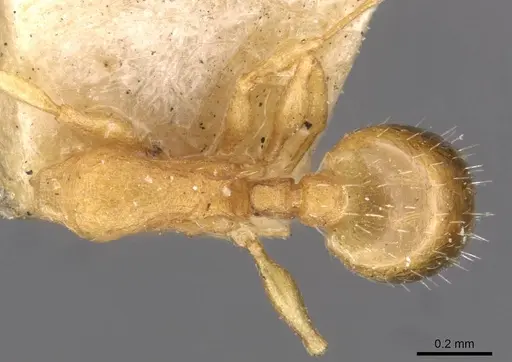
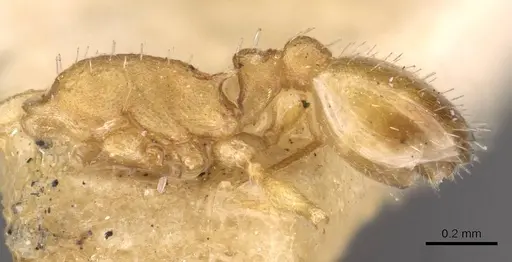
Literature
Loading distribution map...Loading products...