
Nevada Acorn Ant
Temnothorax nevadensis
- Sci. Name
- Temnothorax nevadensis
- Tribe
- Crematogastrini
- Subfamily
- Myrmicinae
- Author
- Wheeler, 1903
- Common Name
- Nevada Acorn Ant
- Distribution
- Found in 2 countries
Introduction
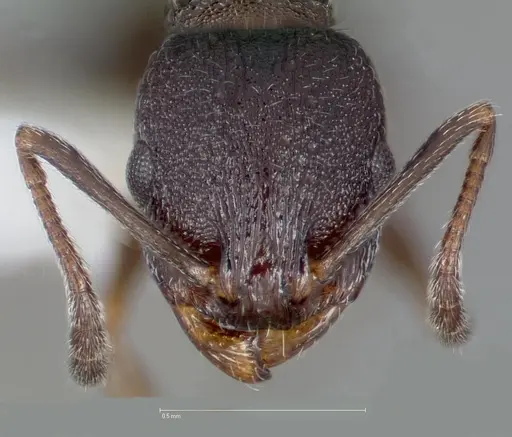
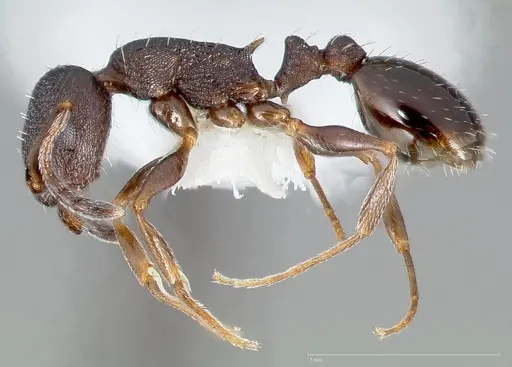
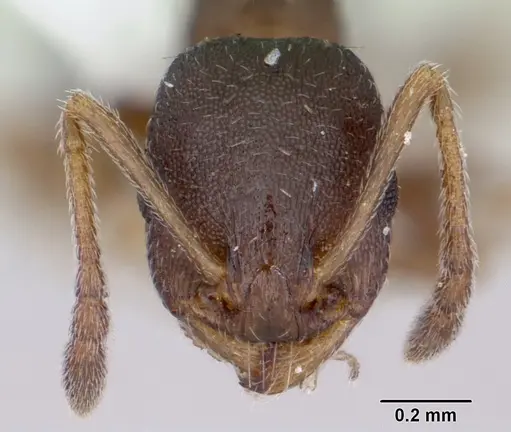
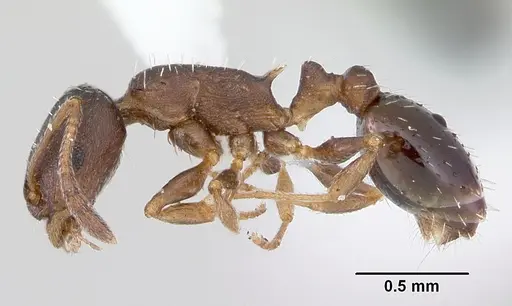
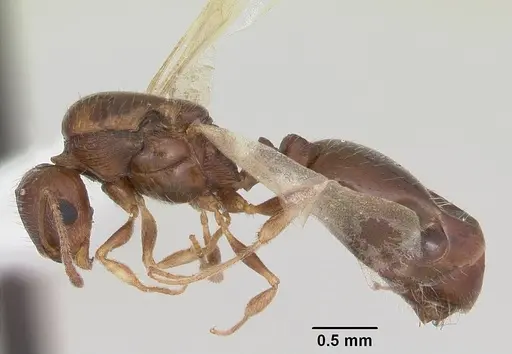
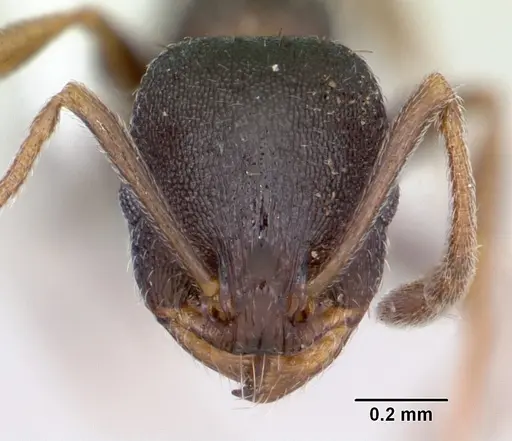
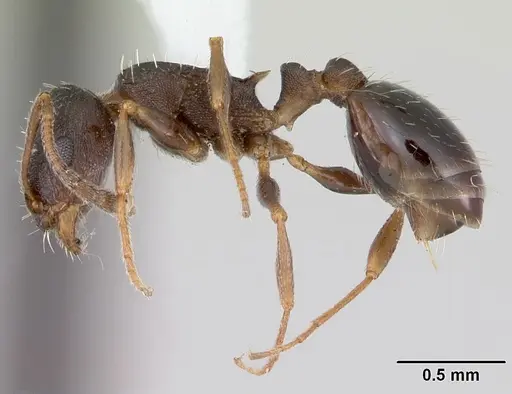
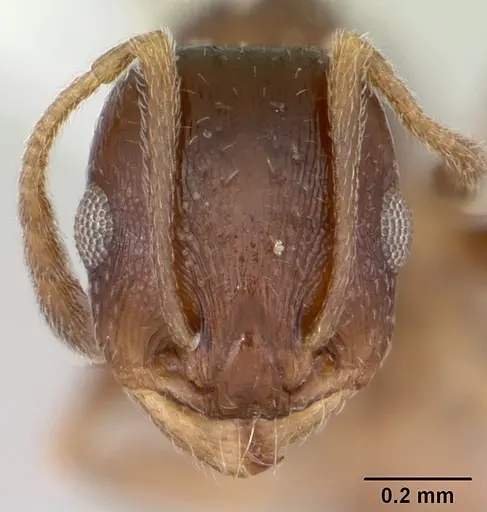
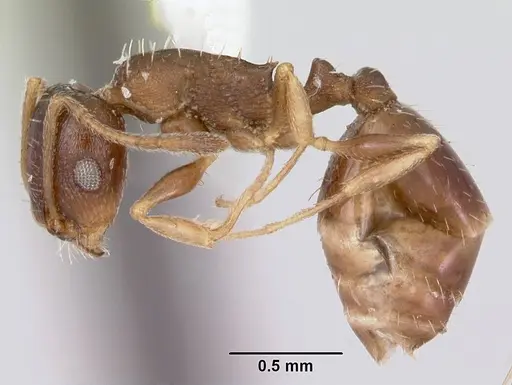
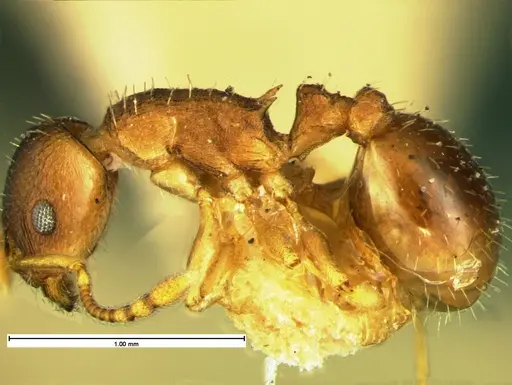
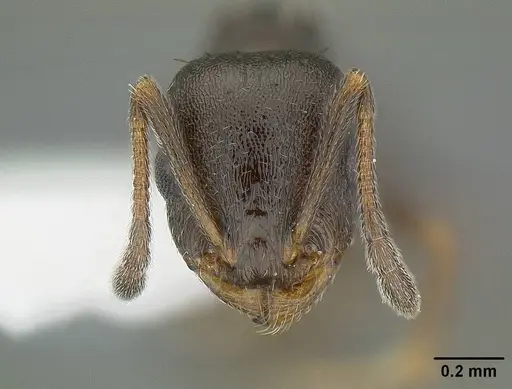
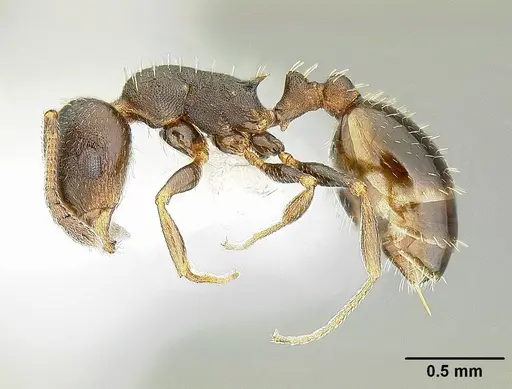
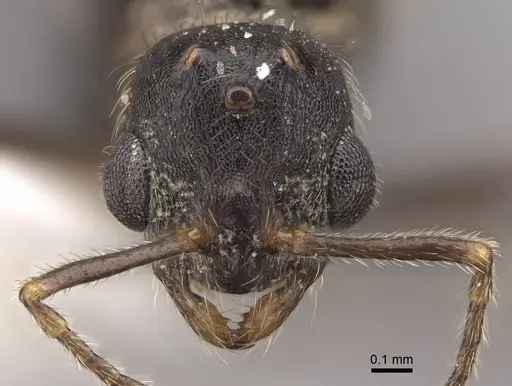
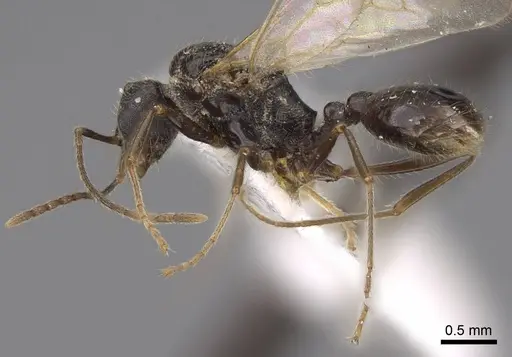
Temnothorax nevadensis is a tiny ant species native to western North America, with workers measuring 2.5-3mm and queens reaching 4.5mm . Workers are dark brown to black with relatively long, slender hairs, and distinctive propodeal spines that are always longer than the small tooth on the underside of the petiole . The head is opaque with longitudinal wrinkle-like sculpture and small pits, while the middle body section has dense pit-like sculpture overlaid with weak ridges . This species occupies a broad range of habitats across the western United States, from coastal scrub and chaparral to sagebrush desert, pinyon-juniper forest, and even alpine areas . A notable survival strategy is its 'insinuator' behavior: when Temnothorax nevadensis encounters larger ant species while foraging, it freezes, brings its antennae close to its head, and sometimes lies on its side . Larger ants typically ignore it, allowing it to resume foraging minutes later and collect small food pieces from the larger ants' shredding activity . This low-risk approach helps them avoid conflicts with more dominant species.
Quick Summary
- Difficulty: Easy
- Origin & Habitat: Western North America, found throughout the western United States (Washington, Idaho, Montana, Wyoming, California, Nevada, Colorado, Arizona, Utah), Baja California and Baja California Sur in Mexico, and southwestern British Columbia in Canada [2][5]. Inhabits diverse environments including coastal scrub, chaparral, oak woodland, open coniferous forest, sagebrush desert, cool desert, pinyon-juniper forest, and alpine areas [2][3].
- Colony Type: Colony structure is not well-documented. Most Temnothorax species have a single queen, but this is unconfirmed for Temnothorax nevadensis.
- Size & Growth:
- Queen: 4.5mm [1]
- Worker: 2.5-3mm [1]
- Colony: Unconfirmed, based on related Temnothorax species, colonies may reach several hundred workers.
- Growth: Moderate
- Development: Approximately 6-10 weeks (Development time is estimated from related species. Small colony size means growth will be slower than in larger ant species.)
- Antkeeping:
- Temperature: Keep at room temperature, around 20-24°C. This species is documented as a cold-climate specialist found at elevations between 3700-5500 feet [3]. They tolerate cooler conditions than many ants, making them adaptable to typical room temperatures. Avoid sustained heat above 26-27°C.
- Humidity: Moderate humidity preferred. In the wild, they nest in moist soil under stones or in rotten wood [1]. Keep the nest substrate lightly moist but not waterlogged, with some drier areas available for the ants to regulate their own humidity.
- Diapause: Yes, as a temperate species with cold winters, they likely require a winter rest period. Reduce temperatures to around 10-15°C for 2-3 months during winter.
- Nesting: They naturally nest in soil under stones or in rotten wood in moist areas [1]. For captivity, a small test tube works well for founding colonies. Once established, a small Y-tong (AAC) nest or plaster nest with tight chambers (scaled to their tiny size) works best. Avoid large open spaces.
- Behavior: Docile and non-aggressive. Workers are slow-moving and generally peaceful [6]. They are generalist scavengers and use an 'insinuator' freezing posture when encountering larger ants to avoid conflict [4]. Escape prevention is critical, their tiny size (2.5-3mm) means they can squeeze through very small gaps. Use fine mesh barriers and tight-fitting lids. They have a modified stinger used for smearing venom rather than piercing, but they are very unlikely to sting humans.
- Common Issues: escape prevention is critical due to their tiny size, they can slip through gaps that larger ants cannot., slow growth can frustrate beginners who expect rapid colony expansion., if kept too warm, colonies may struggle, they prefer cooler conditions than tropical species., wild-caught colonies may carry parasites that can harm the colony in captivity., they are negatively affected by invasive Argentine ants in their native range, so keep them well-separated from such species [6].
Housing and Nest Setup
Because Temnothorax nevadensis is tiny, you need appropriately scaled housing. For founding colonies, a standard test tube setup works well, the narrow diameter mimics the tight spaces they use in rotten wood or under stones. Once the colony reaches 20-30 workers, you can connect the test tube to a small formicarium. A Y-tong (AAC) nest or plaster nest with narrow chambers is ideal, chambers should be so low that workers can touch the ceiling when standing. These ants feel exposed in large open spaces. Escape prevention is crucial: use fine mesh (under 0.5mm) on any ventilation, tight-fitting lids, and a fluon barrier on container rims. A small outworld connected to the nest gives them room to forage. [3][1]
Feeding and Diet
As generalist scavengers, they accept a wide variety of foods. Offer small protein sources like fruit flies, small mealworms, or cricket pieces twice weekly. Provide constant access to sugar, a small drop of diluted honey or sugar water works well. In the wild, they scavenge small food pieces created by larger foragers [4], so keep portions appropriately sized. Remove uneaten prey after 24-48 hours to prevent mold. Fresh water should always be available, though most moisture comes from food and sugar water.
Temperature and Seasonal Care
This species is a cold-climate specialist [3], so keep the nest at room temperature (20-24°C). They come from higher elevations in the Mojave and other mountain areas, so they handle cooler conditions well. During winter, give them a diapause period: lower the temperature to 10-15°C for 2-3 months. This rest period mimics natural winter and helps maintain colony health. Avoid keeping them warm year-round, constant heat can stress the colony and shorten worker lifespan.
Behavior and Colony Dynamics
Workers are docile and slow-moving compared to many ants [6]. Their most interesting trait is the 'insinuator' behavior: when encountering another ant species, they freeze, pull in their antennae, and sometimes lie on their side [4]. Larger ants ignore them, allowing them to later collect tiny food scraps left behind. This strategy lets them coexist with aggressive species. They also tend to avoid areas dominated by mass-recruiting ants like Crematogaster coarctata and Tapinoma sessile [4]. Colonies grow moderately, expect several months to reach noticeable numbers. Worker lifespan is several months, with new broods appearing gradually.
Handling and Observation
These ants are a pleasure to watch because of their interesting behaviors, but their tiny size requires careful handling. When moving colonies or cleaning nests, work slowly and gently. Use a soft brush to guide workers if needed. They are not aggressive and very rarely bite, so you can observe them closely, but always make sure escape prevention is in place. Their small size makes them sensitive to vibrations and sudden light changes, so place them in a calm area. Under magnification, you can see the intricate body sculpture. Their 'insinuator' behavior and general docility make them rewarding for antkeepers who enjoy detailed observation. [1]
Frequently Asked Questions
How long does it take for Temnothorax nevadensis to raise their first workers?
Based on typical Temnothorax development, expect about 6-10 weeks from egg to first worker. The queen will raise the first brood alone in a sealed chamber. The initial workers (nanitics) will be even smaller than normal. Be patient, small ant species develop more slowly.
Can I keep Temnothorax nevadensis in a test tube?
Yes, test tubes work perfectly for founding colonies. These tiny ants naturally nest in narrow spaces like rotten wood cavities. A standard test tube with a water reservoir and cotton plug provides ideal conditions. Once the colony grows beyond 30-50 workers, you can connect the test tube to a small formicarium or outworld.
Do Temnothorax nevadensis ants sting?
They have a modified stinger used for smearing venom, not for piercing. They are docile and non-aggressive [6], and their sting is effectively harmless to humans. Their main defense is the 'insinuator' freezing behavior rather than attacking.
What temperature do Temnothorax nevadensis need?
Keep them at room temperature, ideally 20-24°C. They are a cold-climate specialist [3] and prefer cooler conditions than many ants. They tolerate temperatures down to roughly 15°C and need a winter rest period of 2-3 months at 10-15°C. Avoid keeping them warm year-round.
Are Temnothorax nevadensis good for beginners?
Yes, they are a good choice for beginners who want a small, docile species. They are easy to care for, no high temperatures needed, they accept a variety of foods, and colony size stays manageable. The main challenges are slow growth (requires patience) and the need for excellent escape prevention due to their tiny size. Their interesting 'insinuator' behavior adds enjoyment.
How big do Temnothorax nevadensis colonies get?
Documented colony sizes are not available. Based on other Temnothorax species, mature colonies may reach several hundred workers. Growth is moderate, expect several months to reach 50 workers, and a year or more for larger numbers.
Do Temnothorax nevadensis need hibernation?
Yes, they likely need a winter diapause. As a temperate species with cold winters, reduce temperatures to 10-15°C for 2-3 months each year. This rest period helps maintain colony health and may trigger spring reproduction. Skip hibernation only if you keep the colony consistently cool year-round.
Why is escape prevention important for Temnothorax nevadensis?
Their tiny 2.5-3mm worker size means they can squeeze through gaps that larger ants cannot. Standard barriers may not work, you need fine mesh (at least 0.5mm) and tight-fitting lids. Check all connections and seams regularly. A fluon barrier on container rims provides extra security.
What do Temnothorax nevadensis eat?
They are generalist scavengers. Offer small protein sources like fruit flies, small mealworm pieces, or cricket pieces twice weekly. They also need constant access to sugar, a small drop of diluted honey or sugar water works well. They are clever scavengers that collect small food pieces, so keep portions appropriately sized.
Can I keep multiple queens together?
Probably not, most Temnothorax are monogyne, but this has not been confirmed for Temnothorax nevadensis. Until data shows otherwise, assume each colony has a single queen. If you catch a founding queen, house her alone.
Report an Issue
The current care sheet is based fully on literature. See inconsistencies, or something that's incorrect? Please , it will be resolved after review from an admin. Contributing to the blogs tab also helps providing information, to make us be able to further improve the caresheets. Thank you for your support!
References

This caresheet is licensed under CC BY-SA 4.0 .
Community Blogs
CASENT0005685
View on AntWeb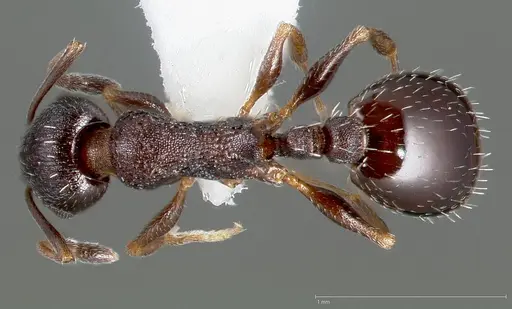
CASENT0103165
View on AntWeb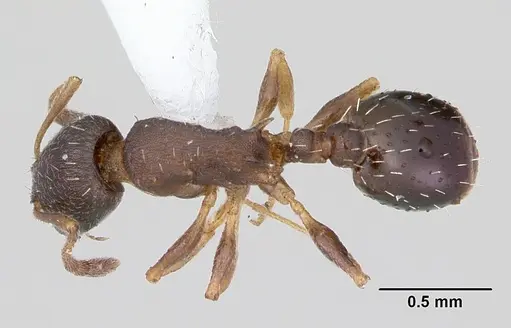
CASENT0103166
View on AntWeb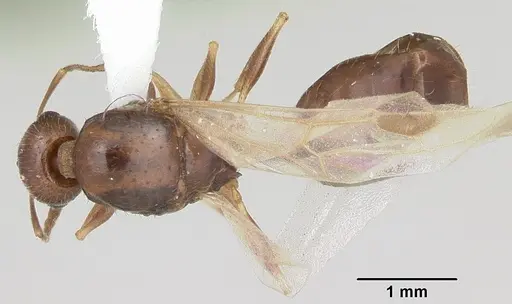
CASENT0103385
View on AntWeb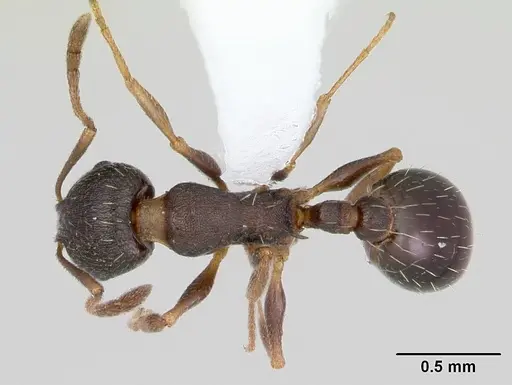
CASENT0103389
View on AntWeb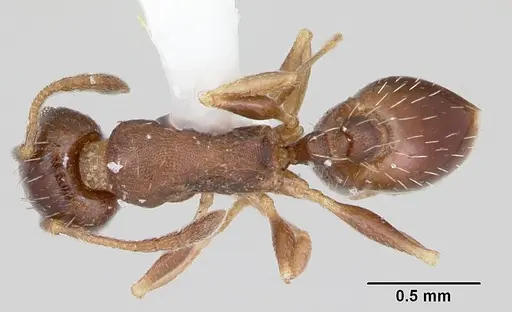
CASENT0103390
View on AntWeb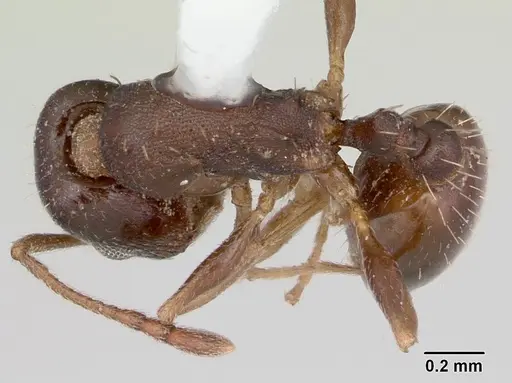
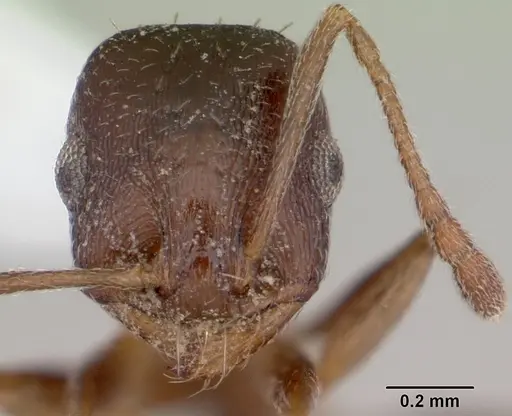
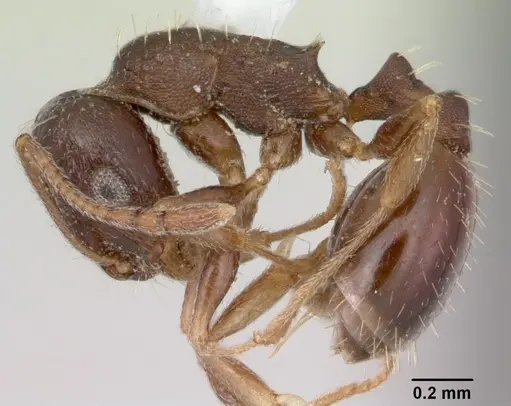
CASENT0105627
View on AntWeb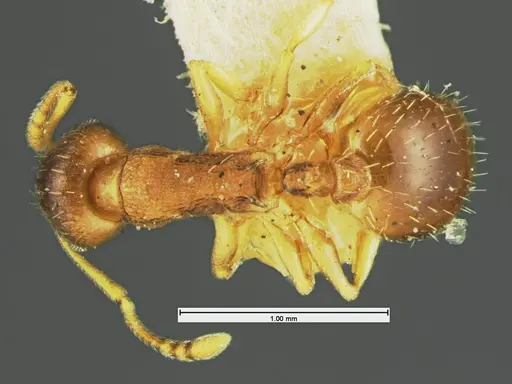
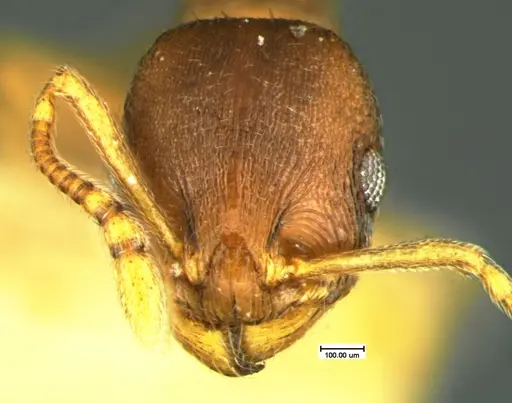
CASENT0221903
View on AntWeb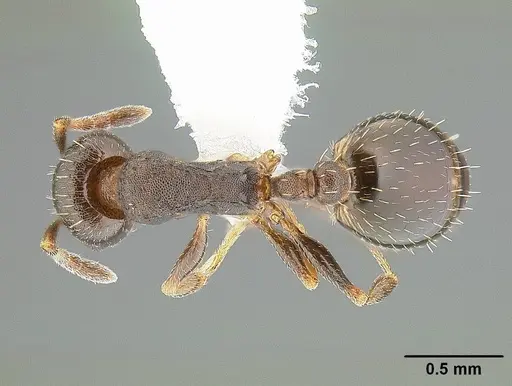
CASENT0923082
View on AntWeb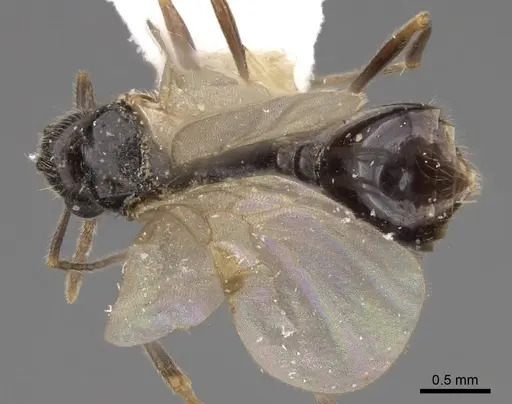
Literature
Loading distribution map...Loading products...