
Temnothorax naeviventris
- Sci. Name
- Temnothorax naeviventris
- Tribe
- Crematogastrini
- Subfamily
- Myrmicinae
- Author
- Santschi, 1910
- Distribution
- Found in 0 countries
Introduction
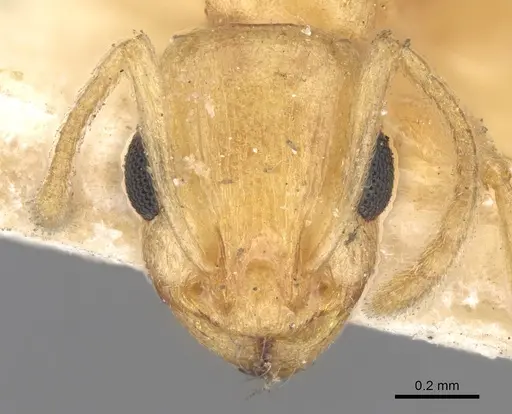
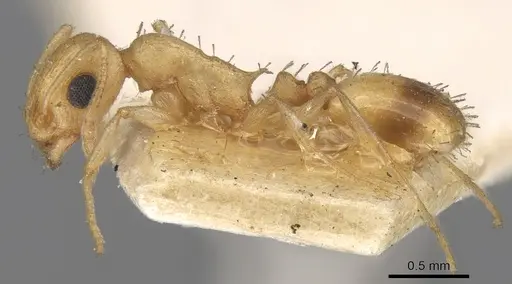
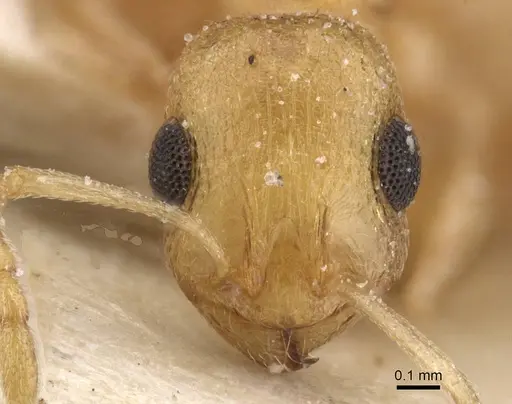
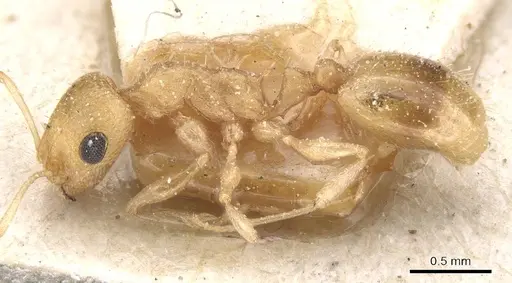
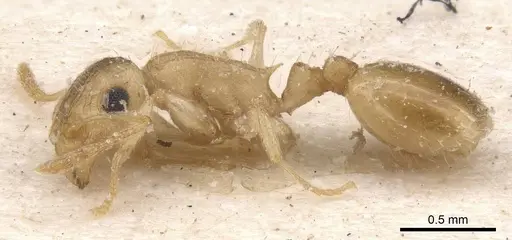
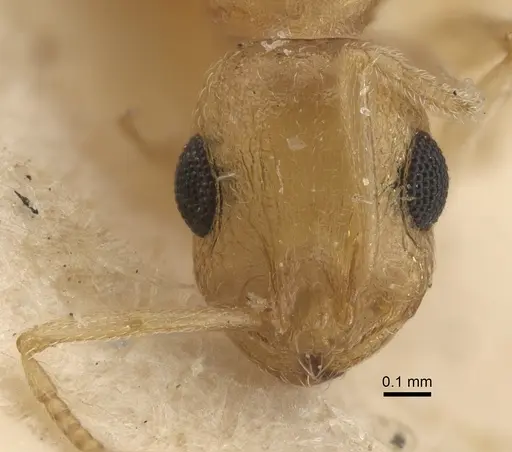
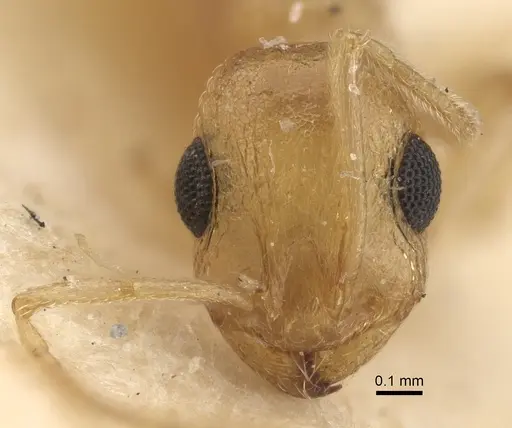
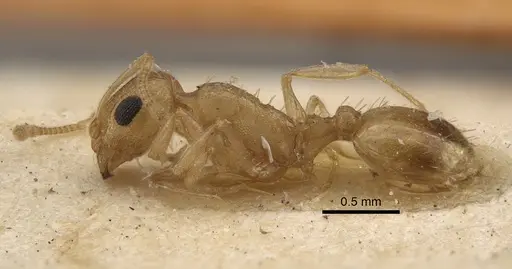
Temnothorax naeviventris is a tiny, pale ant belonging to the laurae species group, which is typical of desert and sandy environments . Workers are light yellow and have relatively large eyes for their size, indicating they are likely active during lower light conditions . This species was first described from Tunisia and later recorded in the Iberian Peninsula (Spain), but it remains rare . In Doñana National Park, it has only been found near human dwellings, suggesting an association with built-up areas . Like other members of the Crematogastrini tribe, it uses a unique defense mechanism: workers smear venom onto enemies with a flattened stinger instead of piercing them.
Quick Summary
- Difficulty: Medium
- Origin & Habitat: Native to Tunisia and the Iberian Peninsula (Spain). Adapted to open, sandy habitats in desert and Mediterranean environments [1][2]. In Europe, known only from very limited locations in southern Spain [5].
- Colony Type: Likely monogyne (single queen) based on typical Temnothorax patterns, but social structure is unconfirmed. Colony size unknown due to lack of research.
- Size & Growth:
- Queen: Size data unavailable, no measurements found for this species.
- Worker: Size data unavailable, no worker measurements found in the available research.
- Colony: Unknown.
- Growth: Unknown.
- Development: Unknown, no data available for this species. (Development times are not documented. Based on related species, it likely takes several weeks at warm temperatures, but this is speculation.)
- Antkeeping:
- Temperature: Unknown. As a Mediterranean-desert species, start at room temperature (20-25°C) and provide a slight gradient. Avoid extremes.
- Humidity: Provide a dry nest with a small moist area. This species comes from arid environments, so keep the nest substrate mostly dry, with a damp section for the queen and brood [1][2][3].
- Diapause: Likely yes, based on Mediterranean origin. Provide a winter rest period at 10-15°C for 2-3 months if the colony shows seasonal slowing. Not confirmed in research.
- Nesting: Prefers small, dry nests with tight spaces. Y-tong (AAC) or plaster nests work well. Keep chambers small and avoid overwatering.
- Behavior: Generally peaceful and non-aggressive, typical of most Temnothorax. Their tiny size means escape prevention is critical, use fine mesh barriers. They are not known to sting keepers, but like all Myrmicinae, they have a smear-type stinger for defense. Their activity is likely highest during cooler hours.
- Common Issues: very small size means escapes are likely without fine mesh barriers, habitat requirements are poorly understood, making optimal care uncertain, dry nest conditions are essential, overwatering can quickly kill colonies, rarity in the wild means wild-caught colonies are extremely difficult to obtain
Housing and Nest Setup
Temnothorax naeviventris is tiny, so your nest must have small chambers and narrow passages. Y-tong (AAC) nests work well because they provide the tight spaces these ants prefer. Plaster nests are also fine, but keep the substrate dry, these are desert-adapted ants [1][2]. A small water reservoir in one area provides enough humidity without wetting the whole nest. Because of their small size, escape prevention is critical. Use test tube setups for founding, then move to small formicaria with fine mesh barriers. A temperature gradient (one side slightly warmer, around 25°C, the other at 20°C) helps the colony choose its preferred spot.
Feeding and Diet
Like most Temnothorax, these ants are omnivorous. Offer small protein sources such as fruit flies or tiny mealworms. Sugar water or honey should always be available. In the wild, laurae group species forage for small insects and honeydew [3]. Feed small amounts every 2-3 days and remove uneaten prey after 24 hours. A single drop of sugar water the size of a pinhead is enough for a small colony.
Temperature and Seasonal Care
Keep the nest at around 20-25°C during the active season. This species comes from warm Mediterranean and North African areas, so they can handle some heat, but avoid extreme temperatures above 30°C [1][2]. A slight gradient lets them regulate. Their large eyes and pale color suggest activity during cooler hours, so avoid direct bright light [4]. For winter, provide a rest period at 10-15°C for about 2-3 months. This matches their natural cycle, even if not confirmed by specific studies.
Behavior and Colony Dynamics
Temnothorax naeviventris colonies are small and peaceful. Workers are methodical foragers and not aggressive. They use a smear-type defense (flattened stinger to wipe venom) typical of their tribe, but they pose no danger to keepers. The colony has a single queen (likely monogyne, though not confirmed) and grows slowly. Their small size means they can slip through standard barriers, always use fine mesh or fluon. Wild colonies have been found near human buildings [5], suggesting some tolerance of disturbance.
Finding and Acquiring
This is one of the rarer Temnothorax species. It has been found in only a few locations in Tunisia and southern Spain [1][2]. In Doñana National Park, only a single specimen was recorded [1][2]. If purchasing from a breeder, verify the identification, as confusion with other laurae group species is possible. Wild collection is not recommended due to the species' rarity and limited distribution.
Frequently Asked Questions
How long does it take for Temnothorax naeviventris to have first workers?
Unknown. No data exists for this species. Based on related Temnothorax, it may take 6-10 weeks at warm temperatures, but this is only a guess.
Can I keep multiple queens together in one colony?
Probably not. Social structure is unconfirmed, but most Temnothorax are monogyne. Do not attempt to keep multiple queens unless you have reliable information otherwise.
Do Temnothorax naeviventris ants sting?
They have a stinger, but they are not aggressive and rarely use it on keepers. Their defense strategy is to smear venom rather than pierce skin, so they are safe to handle.
What is the best nest type for Temnothorax naeviventris?
Y-tong (AAC) or plaster nests with small chambers work best. Keep the nest dry with only a small moist area. Avoid large spaces or high humidity.
Are Temnothorax naeviventris good for beginners?
They are rated Medium difficulty. Their tiny size requires good escape prevention, and their specific care needs are poorly known. Better suited to experienced keepers who can handle uncertainty.
Do they need hibernation or diapause?
Likely yes, based on their Mediterranean origin. Provide a 2-3 month winter rest at 10-15°C if the colony slows down. This is not confirmed by research, but it's a safe practice.
Why are my ants escaping?
Their tiny size lets them slip through very small gaps. Use fine mesh (0.5mm or smaller) on all openings, apply fluon or barrier gel, and check seals regularly.
What do Temnothorax naeviventris eat?
They accept small insects (fruit flies, tiny mealworms) and sugar water or honey. Offer protein 2-3 times per week and keep sugar water available. Remove uneaten food after 24 hours.
How big do colonies get?
Unknown. Related Temnothorax species reach a few hundred workers, but there is no data for this species.
Report an Issue
The current care sheet is based fully on literature. See inconsistencies, or something that's incorrect? Please , it will be resolved after review from an admin. Contributing to the blogs tab also helps providing information, to make us be able to further improve the caresheets. Thank you for your support!
References

This caresheet is licensed under CC BY-SA 4.0 .
Community Blogs
CASENT0906167
View on AntWeb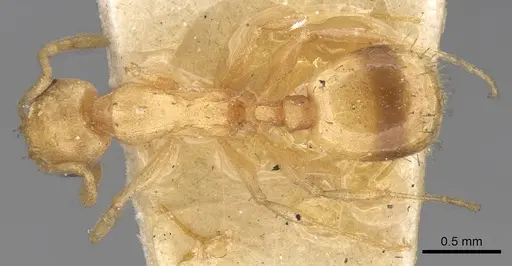
CASENT0912967
View on AntWeb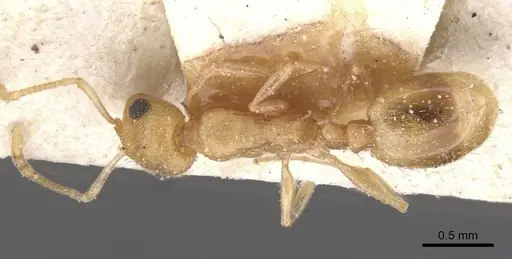
CASENT0912968
View on AntWeb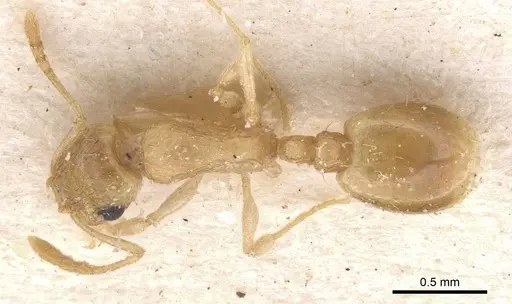
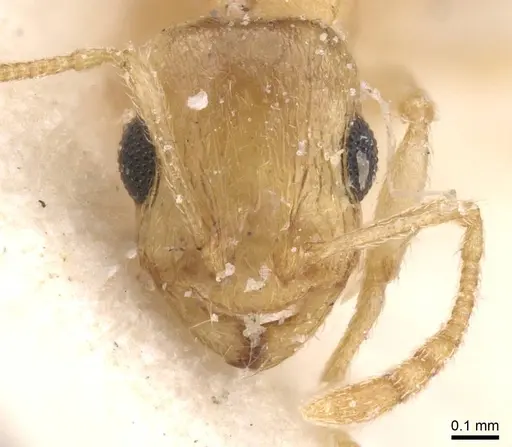
CASENT0917824
View on AntWeb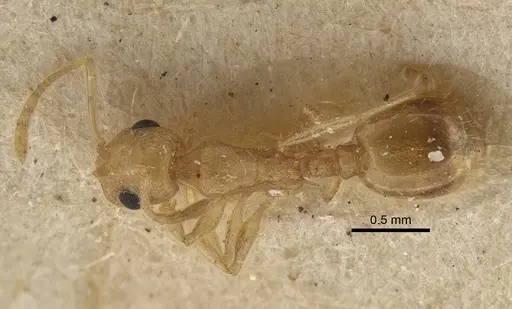
Literature
Loading distribution map...Loading products...