
Temnothorax myrmiciformis
- Sci. Name
- Temnothorax myrmiciformis
- Tribe
- Crematogastrini
- Subfamily
- Myrmicinae
- Author
- Snelling <i>et al.</i>, 2014
- Distribution
- Found in 2 countries
Introduction
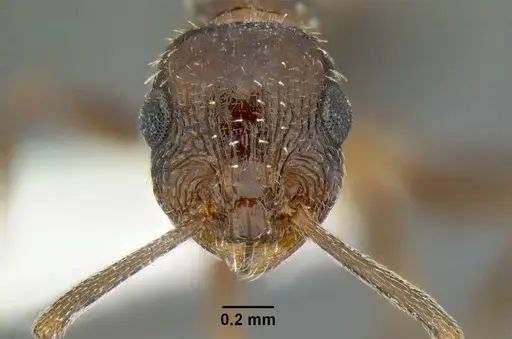
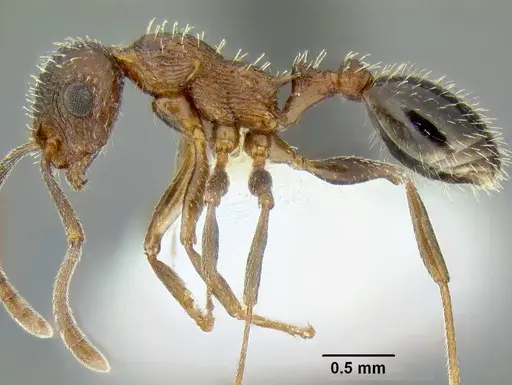
This is a large, slender ant from California and Baja California. Workers are dark brown with a distinctly elongated body and large eyes. The species gets its name from its resemblance to the unrelated genus Myrmica. They can be identified by their long antennae that extend well past the back of the head, and the evenly sloping profile of their mesosoma . These ants live in dry to arid habitats including oak woodland, coastal sage scrub, chaparral, and Sonoran desert . Only the worker caste has been described in the scientific literature, no queens or males are known . While this species itself has very limited documentation, it belongs to the andrei-clade, which contains several California Temnothorax that are better studied in the hobby.
Quick Summary
- Difficulty: Medium
- Origin & Habitat: Native to California (Riverside, Orange, Ventura, San Diego counties) and Baja California, Mexico. Found in oak woodland, coastal sage scrub, chaparral, and Sonoran desert habitats [1][2].
- Colony Type: Unconfirmed – based on genus patterns, likely single-queen (monogyne) colonies. Only the worker caste has been formally described [1].
- Size & Growth:
- Queen: Size unknown, only the worker caste has been described [1]. Estimated ~5-7mm based on genus patterns (inferred).
- Worker: Total length data not available. Workers are described as 'large' for a western Temnothorax, with documented head length 0.77-0.90mm and mesosoma length 1.01-1.18mm [1] – approximate total length would be greater.
- Colony: Unknown for this species. Based on related Temnothorax, colonies may reach 100-500 workers (estimated).
- Growth: Moderate (inferred from related species in the andrei-clade).
- Development: Estimated 6-10 weeks at optimal temperature based on genus patterns – actual timing unconfirmed. (Development time inferred from related species, no direct data available.)
- Antkeeping:
- Temperature: Keep at 20-24°C. This species comes from Mediterranean climates with warm summers and mild winters – room temperature is typically suitable [1] (based on habitat inference).
- Humidity: Low to moderate – they come from dry chaparral and desert habitats. Keep nest substrate slightly moist but allow some drying between waterings. Avoid soggy conditions.
- Diapause: Yes – these ants are native to temperate California and will benefit from a winter rest period of 8-12 weeks at 10-15°C. Reduce feeding and avoid disturbance during this time.
- Nesting: Y-tong (AAC) nests work well for their small size – they prefer tight chambers and narrow passages. Plaster nests with humidity gradients or naturalistic setups with flat stones are also suitable. Provide some dry zones in the nest.
- Behavior: Generally peaceful and non‑aggressive. Like other Temnothorax, they are active foragers that search individually for food. This species belongs to the tribe Crematogastrini, which uses a smear defense: workers have a modified, flattened stinger used to wipe venom onto enemies rather than stinging directly. Their primary defense is escape. They are small and fast-moving, so proper escape prevention is critical.
- Common Issues: very limited scientific documentation – colony structure, founding behavior, and life cycle are not confirmed, escape risk due to small size – use fine mesh barriers and tight-fitting lids, overwatering is a common mistake that can lead to mold, these ants prefer drier conditions, winter diapause is likely required for long-term colony health – skipping may weaken the colony, founding can be slow – queens may take months to produce the first workers
Housing and Nest Setup
Temnothorax myrmiciformis does well in Y-tong (AAC) nests, which provide the tight chambers and narrow passages these tiny ants prefer. Workers are small (head length 0.77-0.90mm, mesosoma 1.01-1.18mm [1]), so chambers must be scaled appropriately. Plaster nests also work well, especially if you can create a humidity gradient – one side slightly moist, the other drier. For founding colonies, a standard test tube with a cotton plug works, but seal the opening with fine mesh or extra cotton to prevent escapes. These ants come from dry habitats, so avoid setups that stay constantly wet. Provide a small water reservoir, they get most of their moisture from food and occasional light misting of the nest surface.
Feeding and Diet
Like other Temnothorax, these ants are omnivorous with a preference for protein. Offer small live prey such as fruit flies, pinhead crickets, and tiny mealworms. They will also accept sugar sources – a drop of honey water or sugar water can be offered occasionally. In the wild, they forage for small insects and likely tend aphids for honeydew [3]. Feed founding colonies small amounts every few days, remove uneaten prey after 24 hours to prevent mold. Once established, feeding 2-3 times per week is sufficient. Always have a sugar source available, especially when brood is developing.
Temperature and Seasonal Care
Keep your colony at 20-24°C year-round. These ants are from Mediterranean California, where summers are warm and winters mild but distinct. During the active season (spring through fall), room temperature is fine. In winter, provide a diapause period: reduce temperature to 10-15°C for 8-12 weeks. This mimics their natural cycle and helps maintain colony health. During diapause, reduce feeding to once every 2-3 weeks and minimize disturbances. Do not feed during the deepest part of winter rest. Return to normal temperatures gradually in spring. The habitat data (oak woodland, chaparral) supports a seasonal rest [1][2].
Behavior and Colony Dynamics
Temnothorax myrmiciformis workers are active, individual foragers. They are not aggressive and will flee rather than fight. Their primary defense is a smear mechanism: a modified, flattened stinger used to wipe venom onto enemies (a trait of the tribe Crematogastrini). Workers rely on chemical communication and likely use tandem running (one worker leading another to food), a common behavior in the genus. The colony likely grows to a few hundred workers over several years. Unlike some ants, they do not form supercolonies and each nest maintains its own territory. [1][2][3]
Handling and Observation
These small ants are best observed through the walls of a formicarium or test tube. They are fast and can easily be lost if transferred to the open. When you must move them, gently tap or brush them into a container – never grab them, as this can cause injury. They have a modified stinger used for smearing venom, but it rarely affects humans. Their primary defense is escaping into the nest or substrate. For observation, use a magnifying glass or macro lens on your phone. [3]
Frequently Asked Questions
How long does it take for Temnothorax myrmiciformis to raise first workers?
The exact timing is unconfirmed, but based on typical Temnothorax development, expect 6-10 weeks from egg to worker at 20-24°C. Founding queens may take longer since they have no help regulating temperature or feeding larvae.
Can I keep multiple Temnothorax myrmiciformis queens together?
This has not been documented for this species. Most Temnothorax are monogyne (single queen), but some can form multi-queen colonies. Without specific data, it is not recommended to combine unrelated foundresses – they may fight.
Do Temnothorax myrmiciformis ants sting?
They have a modified stinger used for smearing venom, not piercing. The venom is smeared onto enemies, and the effect on humans is very mild – comparable to a mosquito bite. Their primary defense is escaping into the nest.
What is the best nest type for Temnothorax myrmiciformis?
Y-tong (AAC) nests work best because they provide appropriately scaled chambers for these tiny ants. Plaster nests with humidity gradients are also suitable. Test tubes work for founding colonies but may need modification for long-term housing as the colony grows.
How often should I feed my colony?
Feed small amounts of protein (small insects) 2-3 times per week during the active season. Remove uneaten prey after 24 hours. Keep a sugar source (honey water or sugar water) available at all times. During winter diapause, reduce feeding to once every 2-3 weeks.
Do Temnothorax myrmiciformis need hibernation?
Yes, these ants are native to temperate California and benefit from a winter rest period. Provide 8-12 weeks at 10-15°C in winter. Reduce feeding and avoid disturbing the colony during this time.
Why is my colony not growing?
Common causes include: temperatures too low (below 18°C slows development significantly), overwatering (causes mold and kills colonies), insufficient protein, or the queen may not be fertilized. Check these factors and ensure you are offering appropriate-sized prey.
Are Temnothorax myrmiciformis good for beginners?
This species is rated medium difficulty. While not the easiest Temnothorax to find, they are relatively hardy once established. Main challenges are their small size (escape prevention is critical) and the need for winter diapause. Beginners should start with more common species first.
How big do Temnothorax myrmiciformis colonies get?
The maximum colony size is unconfirmed for this species, but based on related Temnothorax, expect 100-500 workers over 2-4 years. They are not among the larger Temnothorax species.
What makes Temnothorax myrmiciformis different from other Temnothorax?
This species is notably larger than most other western Temnothorax (head length 0.77-0.90mm, mesosoma 1.01-1.18mm [1]). It has a distinctly sloping mesosomal profile and very long antennae that extend well past the back of the head. The name 'myrmiciformis' refers to its resemblance to the unrelated genus Myrmica.
Report an Issue
The current care sheet is based fully on literature. See inconsistencies, or something that's incorrect? Please , it will be resolved after review from an admin. Contributing to the blogs tab also helps providing information, to make us be able to further improve the caresheets. Thank you for your support!
References

This caresheet is licensed under CC BY-SA 4.0 .
Community Blogs
CASENT0339323
View on AntWeb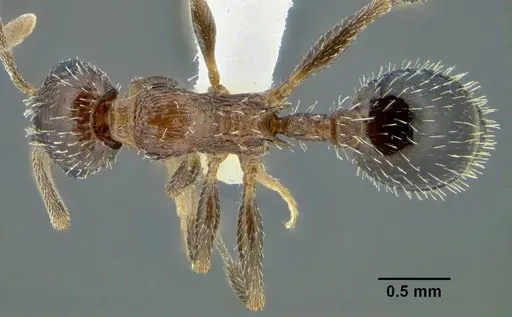
Literature
Loading distribution map...Loading products...