
Temnothorax minozzii
- Sci. Name
- Temnothorax minozzii
- Tribe
- Crematogastrini
- Subfamily
- Myrmicinae
- Author
- Santschi, 1922
- Distribution
- Found in 1 countries
Introduction
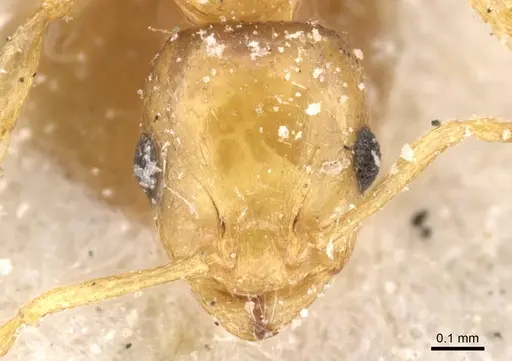
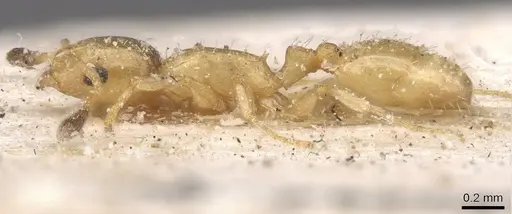
Temnothorax minozzii is a tiny ant native to Italy, known only from a lowland site . Workers are about 2-4 mm long. They belong to the Myrmicinae subfamily and are part of the yellow acorn ant group. Compared to similar species like T. apenninicus, T. minozzii has much shorter spines, a different petiole shape, and a smooth head sculpture . The species was originally described as Leptothorax silvestrii in 1921,but that name was already taken, so it was renamed to T. minozzii by Santschi in 1922 .
Quick Summary
- Difficulty: Easy
- Origin & Habitat: Italy (Palaearctic), lowland areas only [1]. Based on related Temnothorax species, they likely live in dry grasslands, rocky slopes, or woodland edges, nesting in small cavities under stones or in rotting wood.
- Colony Type: Likely monogyne (single queen), unconfirmed. The genus sometimes has ergatoid (wingless) replacement queens, but this trait is not known for T. minozzii.
- Size & Growth:
- Queen: No species-specific data. Inferred from typical Temnothorax queens: ~4-5 mm.
- Worker: ~2-4 mm, inferred from genus patterns [1] does not give exact measurements, but matches the tiny size expected.
- Colony: Estimated up to 200 workers, based on typical Temnothorax colony sizes.
- Growth: Moderate, typical for small Myrmicinae.
- Development: Estimated 6-10 weeks at 20-24 °C, based on related species. Cooler temperatures slow development. (No specific data for T. minozzii. Timeline is an estimate.)
- Antkeeping:
- Temperature: Unknown for this species. Based on related lowland Italian Temnothorax, keep at room temperature (20-24 °C). Provide a gentle gradient so ants can choose. Avoid prolonged heat above 28 °C.
- Humidity: Moderate. Let the nest substrate dry partly between waterings. No specific data, start with conditions that keep the nest from drying out but not waterlogged.
- Diapause: Yes, as a temperate species, a winter rest is needed. Reduce temperature to 10-15 °C for 2-3 months (estimated, based on general temperate ant care). Do not feed during this period but provide a small water source.
- Nesting: Small nests with tight chambers. Y‑tong, plaster, or test tube setups work well. In nature, likely nest under stones or in small cavities, unconfirmed.
- Behavior: Generally peaceful and non‑aggressive. Workers forage individually rather than in trails. They are not known to sting (defense mechanism: smear venom, typical for Myrmicinae tribe Crematogastrini). Escape risk is high due to tiny size, use fine mesh or fluon barriers.
- Common Issues: tiny size makes escape likely without fine mesh barriers, slow colony growth can frustrate beginners who overfeed or disturb the nest, winter die‑off if diapause conditions are not provided properly, wild‑caught colonies may carry parasites, difficult to detect, test tube setups can dry out quickly in dry environments
Housing and Nest Setup
Temnothorax minozzii are tiny ants that need appropriately scaled housing. A test tube setup works well for founding colonies, use a small tube with a cotton water reservoir. For established colonies, a Y‑tong (AAC) nest with narrow chambers or a small plaster nest works. The key is tight‑fitting connections, these ants can squeeze through tiny gaps. Always use fluon or similar barriers. A naturalistic setup (small container with soil and a flat stone) can mimic their natural under‑stone nesting, but this is unconfirmed for the species. Information is inferred from related Temnothorax.
Feeding and Diet
Like related Temnothorax species, T. minozzii likely accepts a varied diet. Offer sugar water or honey as a constant energy source. Provide protein: small live prey like fruit flies, pinhead crickets, or mealworm pieces. Feed protein twice weekly, adjusting to colony size. Remove uneaten prey after 24-48 hours to prevent mold. They may also tend aphids in a naturalistic setup. No specific dietary studies exist for this species.
Temperature and Seasonal Care
Keep the colony at room temperature (20-24 °C), estimated based on typical lowland Italian conditions. Avoid temperatures above 28 °C. In winter, provide a diapause period: reduce temperature to 10-15 °C for 2-3 months. This can be done in an unheated garage or basement. Do not feed during diapause but keep a small water source. Resume normal feeding and temperature gradually in spring. These recommendations are inferred from general temperate ant care, species‑specific data is lacking.
Colony Development
Founding behavior is unconfirmed for this species. Based on related Temnothorax, a newly mated queen likely seals herself in a small chamber and lays eggs (claustral founding), living off stored fat. The first workers (nanitics) emerge after several weeks. Colony growth is moderate, and mature colonies typically stay under 200 workers. Be patient and avoid disturbing the colony, especially during early stages.
Behavior and Observation
Workers are active and curious, foraging individually rather than in obvious trails. They are not aggressive and will flee if threatened. Their defense mechanism is to smear venom, a characteristic of the Crematogastrini tribe. While they do not sting, they can be difficult to observe due to tiny size. Use a magnifying glass to watch brood care and interactions. In a naturalistic setup, they may tend aphids. No behavioral studies specific to T. minozzii are available.
Frequently Asked Questions
How long does it take for Temnothorax minozzii to have first workers?
Expect first workers (nanitics) to emerge 6-10 weeks after the queen lays eggs, assuming temperatures around 20-24 °C. This is an estimate based on related species. Cooler temperatures will slow development.
Can I keep Temnothorax minozzii in a test tube?
Yes, test tubes work excellently for founding colonies. Use a small tube with a water reservoir separated by cotton. Keep it horizontal with the water end slightly elevated. Cover the open end with stretched cotton to prevent tangling.
Do Temnothorax minozzii ants sting?
No, they are not known to sting. They are harmless to humans, their defense is to smear venom, not inject it. Their mandibles are too tiny to be noticeable.
Do I need to hibernate my Temnothorax minozzii colony?
Yes, as a temperate species from Italy, they require a winter diapause. Reduce temperature to 10-15 °C for 2-3 months. Do not feed during this period but maintain a small water source. This is based on general temperate ant care, as no species‑specific data exists.
How big do Temnothorax minozzii colonies get?
Based on typical genus patterns, colonies likely reach 50-200 workers at maturity. They do not become large colonies. A healthy colony should reach this size within 1-2 years under good conditions.
What do Temnothorax minozzii eat?
They accept sugar sources (honey water, sugar water) and protein (small insects like fruit flies, mealworms, pinhead crickets). Feed protein 1-2 times weekly and keep a sugar source available. Remove uneaten food promptly to prevent mold.
Are Temnothorax minozzii good for beginners?
Yes, they are considered easy to keep. They are forgiving of minor care mistakes, don't require specialized equipment, and are peaceful. Their small size and simple requirements make them suitable for new ant keepers. However, the lack of species‑specific data means some trial and error may be needed.
Why are my Temnothorax minozzii escaping?
Their tiny size means they can squeeze through remarkably small gaps. Use fluon or another barrier on all edges, ensure lids fit tightly, and check for any cracks or gaps. Even a millimeter gap is enough for them to escape.
When should I move my colony to a formicarium?
Wait until the colony has at least 20-30 workers and the test tube is becoming crowded. Moving too early can stress the colony. Connect the test tube to the new nest and let them migrate on their own.
Can I keep multiple queens together?
Temnothorax are typically monogyne (single queen) species, though T. minozzii has not been confirmed. Combining unrelated queens is not recommended, they will likely fight. Keep caught foundresses in separate test tubes until you can identify a single queen colony.
Report an Issue
The current care sheet is based fully on literature. See inconsistencies, or something that's incorrect? Please , it will be resolved after review from an admin. Contributing to the blogs tab also helps providing information, to make us be able to further improve the caresheets. Thank you for your support!
References

This caresheet is licensed under CC BY-SA 4.0 .
Community Blogs
CASENT0912964
View on AntWeb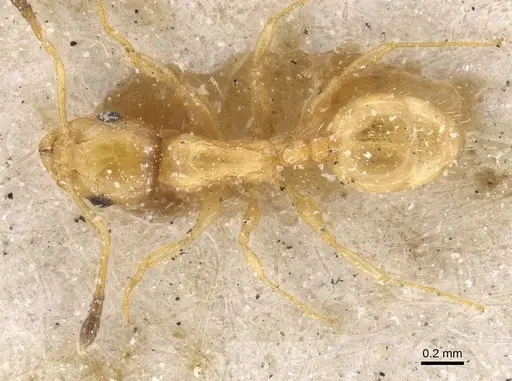
Literature
Loading distribution map...Loading products...