
Temnothorax minotaurosi
- Sci. Name
- Temnothorax minotaurosi
- Tribe
- Crematogastrini
- Subfamily
- Myrmicinae
- Author
- Salata <i>et al.</i>, 2018
- Distribution
- Found in 1 countries
Introduction
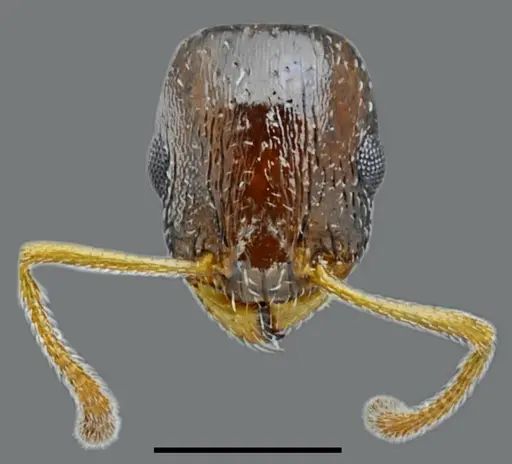
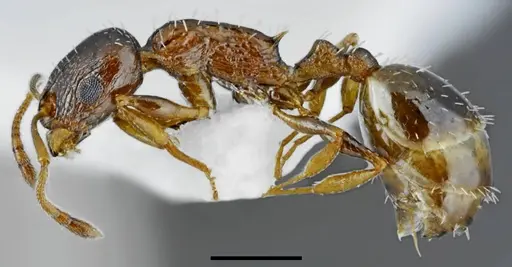
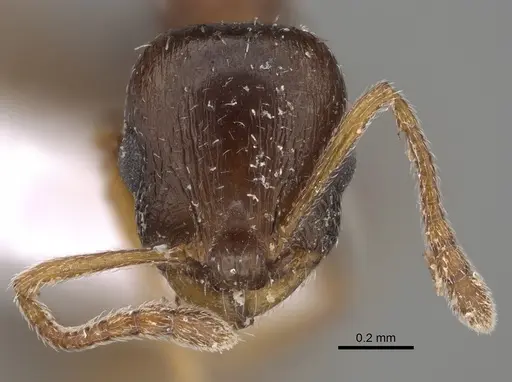
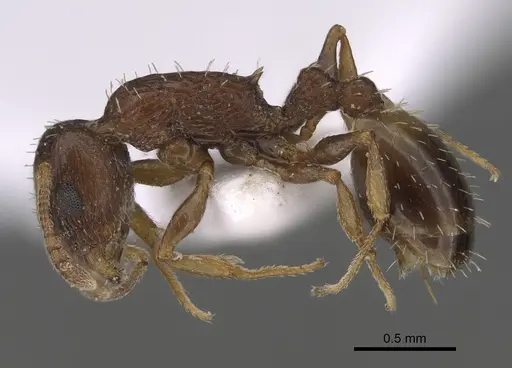
Temnothorax minotaurosi is a tiny, recently described ant species endemic to the island of Crete, Greece. Workers have a head length of 0.68-0.74 mm, making them one of the smaller Temnothorax species . They have a uniformly dark brown body with slightly lighter legs and antennae, and can be identified by the sparse thick longitudinal striation on their mesosoma and the smooth area on the center of their head . This species was only formally described in 2018,named after the Minotaur of Greek mythology because it was discovered on Crete . These ants inhabit humid areas overgrown with bushes, typically close to water sources. In the wild, workers have been found foraging on rocks partly covered by vegetation . As an island endemic restricted to Crete, this species offers a unique opportunity to keep a very localized ant that few collectors have access to.
Quick Summary
- Difficulty: Medium
- Origin & Habitat: Endemic to Crete, Greece, found only on this Mediterranean island in humid areas overgrown by bushes, usually close to water sources [1][2].
- Colony Type: Likely single-queen colonies (inferred from typical Temnothorax genus behavior)
- Size & Growth:
- Queen: Not described in scientific literature
- Worker: ~2-3 mm total body length (inferred from Temnothorax genus), head length 0.68-0.74 mm [1]
- Colony: Likely up to several hundred workers based on typical Temnothorax colony sizes
- Growth: Moderate, typical for small Myrmicinae
- Development: Estimated 6-10 weeks at optimal temperature based on related Temnothorax species (Development time inferred from genus-level data, specific timing for this species has not been studied)
- Antkeeping:
- Temperature: Based on its Mediterranean habitat, maintain warm, stable temperatures around 20-24°C. Provide a temperature gradient so workers can choose their preferred spot. Avoid extremes and sudden fluctuations.
- Humidity: Keep nest substrate consistently moist but not waterlogged. These ants naturally inhabit humid areas near water sources, so aim for high humidity with good ventilation. The substrate should feel damp to the touch, with slightly drier areas available.
- Diapause: Likely requires a mild winter rest period (diapause) at cooler temperatures (around 10-15°C) for 2-3 months, mimicking Cretan seasonal patterns. Reduce feeding during this time.
- Nesting: Prefers small, tight spaces. Test tubes, small Y-tong (AAC) nests, or plaster nests with narrow chambers work well. They naturally nest under stones and in rock crevices in humid habitats.
- Behavior: These ants are small and relatively docile. Workers are active foragers, collecting honeydew and small prey. Their defense mechanism is smearing venom using a modified stinger (typical of the Crematogastrini tribe) rather than piercing, but they are not dangerous to humans. Because of their tiny size, escape prevention is critical, they can squeeze through standard mesh barriers. They are peaceful colony inhabitants that do well in naturalistic setups.
- Common Issues: escape prevention is critical due to their very small size, use fine mesh barriers, fluon, and tight-fitting lids, wild-caught colonies may be stressed from collection and difficult to establish, maintaining consistent humidity without flooding is tricky with such small nests, and mold can develop if too wet, slow colony growth requires patience, avoid overfeeding to prevent mold, as an island endemic, this species may have specific requirements not met by general Temnothorax care
Housing and Nest Setup
Temnothorax minotaurosi is a tiny ant, so your housing needs to be scaled accordingly. Test tubes work well for founding colonies, use a small water reservoir (about 1-2 cm) and keep the cotton tight to prevent escapes. As the colony grows, you can move them to a Y-tong (AAC) nest with narrow chambers or a small plaster nest that maintains humidity [1].
The key is tight spaces. These ants feel secure in small chambers that closely match their natural nesting under stones and in rock crevices. Avoid large, open formicaria where they may feel exposed. A naturalistic setup with flat stones on moist substrate can also work well, mimicking their natural habitat on Crete where they nest under stones in humid, vegetated areas [1].
Escape prevention is non-negotiable. Their tiny size means they can slip through gaps you wouldn't believe. Use fluon on test tube rims, fine mesh on any ventilation, and check connections regularly. Inspect under magnification if needed.
Feeding and Diet
Like most Temnothorax species, these ants are omnivorous with a preference for protein. In captivity, they readily accept small live prey like fruit flies, pinhead crickets, and small mealworms. They also collect honeydew from aphids if you keep them in a naturalistic setup [1].
For sugar sources, offer a drop of honey water or sugar water occasionally, though protein is more important for colony growth. Feed small amounts 2-3 times per week, removing any uneaten prey after 24 hours to prevent mold. A well-fed colony will have workers with distended abdomens (social stomachs) visible through their semi-transparent exoskeleton.
Their small size means prey items should be appropriately sized, nothing larger than their head. Overfeeding is a common mistake that leads to mold problems in small nests.
Temperature and Seasonal Care
Based on the Mediterranean habitat of this species, keep your colony at warm, stable temperatures around 20-24°C. Provide a slight temperature gradient so workers can choose their preferred spot. Room temperature in most homes (20-22°C) is usually ideal [1].
During winter, reduce temperature to around 10-15°C for 2-3 months to allow for diapause (winter rest). This mimics the mild seasonal patterns of their native Crete habitat. Reduce feeding during this period and keep the nest slightly cooler but not cold. Do not freeze them, a cool basement or unheated room works well.
Avoid temperature extremes and sudden fluctuations. These ants come from a relatively stable Mediterranean climate, so consistency matters more than exact numbers.
Humidity and Water
Temnothorax minotaurosi naturally inhabits humid areas near water sources on Crete, so humidity is important for their success. Keep the nest substrate consistently moist but never waterlogged. The substrate should feel damp to the touch, with some slightly drier areas available for workers to regulate their own humidity [1][2].
In test tube setups, the water reservoir provides humidity. Check that condensation is present on the tube walls, if it disappears, the colony is drying out. In Y-tong or plaster nests, mist occasionally and monitor the moisture level. A hygrometer near the nest can help you maintain high relative humidity (60-80% is a good target, but focus on substrate feel).
However, balance is key. Too wet and mold becomes a problem. Too dry and brood development stalls. The goal is damp, not wet, think of a moist cliff face, not a flooded basement.
Colony Development
As a recently described species (2018), specific development data for T. minotaurosi is not available. However, based on typical Temnothorax patterns, founding is likely claustral, the queen seals herself in a small chamber and raises the first workers alone on her stored fat reserves [1]. First workers (nanitics) will be smaller than mature workers.
After the first workers emerge, the colony enters a slow growth phase. Full development from egg to worker likely takes 6-10 weeks at optimal temperature (around 22°C). Colony growth is moderate, don't expect rapid expansion.
Mature colonies likely reach up to several hundred workers, typical for Temnothorax. The queen continues laying eggs, and workers take over all colony maintenance tasks. Patience is key with this species, small colonies grow slowly but steadily.
Behavior and Observation
These are peaceful, small ants that are a joy to observe. Workers actively forage and will recruit nestmates to food sources through tandem running, one worker leads another to food, a behavior common in Temnothorax [1]. Their defense is a smear venom system (typical of the Crematogastrini tribe): they use a modified flattened stinger to wipe venom onto enemies rather than pierce. This makes them harmless to humans.
Their small size makes them excellent escape artists. Even a tiny gap in your setup will result in lost workers. Check all connections, use fluon barriers, and consider keeping them in a dedicated enclosure. That said, their small size also means they're fascinating to watch as they navigate their environment.
Because they're endemic to Crete, they're a special species for antkeepers interested in geographic rarities. Few people have access to this species, making an established colony a real prize.
Frequently Asked Questions
How long does it take for Temnothorax minotaurosi to have first workers?
Based on typical Temnothorax development, expect first workers (nanitics) to emerge 6-10 weeks after the queen lays her first eggs, at optimal temperature around 22°C. This is an estimate since specific development data for this species hasn't been studied.
What do Temnothorax minotaurosi ants eat?
They are omnivorous with a protein preference. Feed small live prey like fruit flies, small mealworms, or pinhead crickets 2-3 times per week. They also accept honey water or sugar water as an occasional treat. Remove uneaten prey after 24 hours to prevent mold.
Do Temnothorax minotaurosi ants sting?
They have a stinger but use it to smear venom rather than pierce (typical of the Crematogastrini tribe). They are not dangerous to humans and are more likely to flee than to attack when threatened.
Can I keep multiple queens together in one colony?
Uncertain. Most Temnothorax are monogyne (single-queen), so it's recommended to start with one queen per colony. Combining unrelated queens has not been documented in this species and could lead to fighting.
What temperature do Temnothorax minotaurosi need?
Keep them at around 20-24°C. A slight gradient allowing workers to choose their preferred spot is ideal. They prefer warm, stable conditions typical of their Mediterranean Crete habitat. Room temperature in most homes works well.
Do they need hibernation?
Likely yes. A mild winter rest (diapause) is recommended based on the Mediterranean climate of Crete. Reduce temperature to around 10-15°C for 2-3 months during winter. Reduce feeding during this period. Do not freeze them, a cool basement or unheated room works.
Are Temnothorax minotaurosi good for beginners?
They are moderate difficulty, not the easiest but not the hardest. Their small size requires attention to escape prevention, and maintaining proper humidity takes some care. They're a better choice after you've kept a few colonies successfully. The main appeal is keeping a rare, island-endemic species.
How big do colonies get?
Based on typical Temnothorax size, colonies likely reach up to several hundred workers at maturity. Growth is moderate, expect several months before you see significant numbers. They are small colonies compared to Lasius or Camponotus.
Why are my ants escaping?
Their tiny size makes escape likely without excellent prevention. Use fluon on test tube rims, fine mesh on all ventilation, and check connections regularly. Even tiny gaps that seem impossible for them to squeeze through often aren't. Inspect under magnification if needed.
When should I move them to a formicarium?
Wait until the colony has around 20-30 workers or the test tube becomes crowded. For this small species, a small Y-tong or plaster nest works well. Don't rush the move, test tubes are perfectly adequate for founding colonies.
What humidity level do they need?
Keep nest substrate consistently moist but not waterlogged. Aim for high relative humidity (60-80% is a good target, but focus on substrate feel). The substrate should feel damp to the touch. They naturally inhabit humid areas near water on Crete.
Where is Temnothorax minotaurosi found in the wild?
They are endemic to Crete, Greece, found nowhere else on Earth. They inhabit humid areas overgrown by bushes, usually close to water sources. Workers have been collected on rocks partly covered by vegetation.
Report an Issue
The current care sheet is based fully on literature. See inconsistencies, or something that's incorrect? Please , it will be resolved after review from an admin. Contributing to the blogs tab also helps providing information, to make us be able to further improve the caresheets. Thank you for your support!
References

This caresheet is licensed under CC BY-SA 4.0 .
Community Blogs
CASENT0845915
View on AntWeb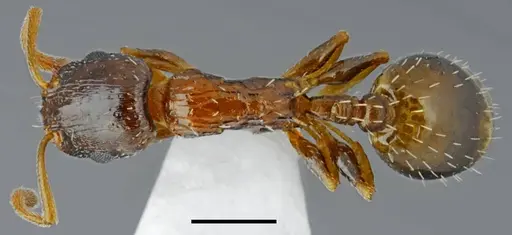
CASENT0845922
View on AntWeb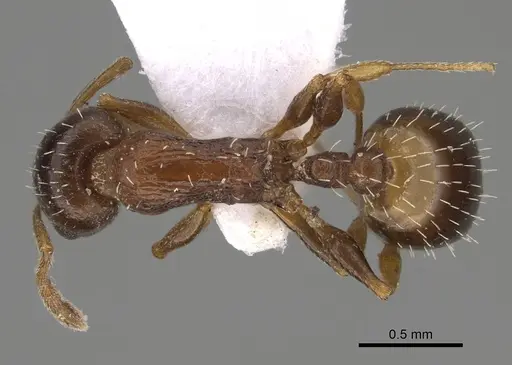
Literature
Loading distribution map...Loading products...