
Temnothorax manni
- Sci. Name
- Temnothorax manni
- Tribe
- Crematogastrini
- Subfamily
- Myrmicinae
- Author
- Wheeler, 1914
- Distribution
- Found in 1 countries
Introduction
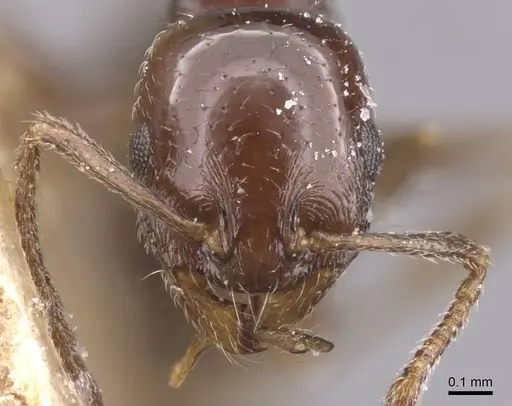
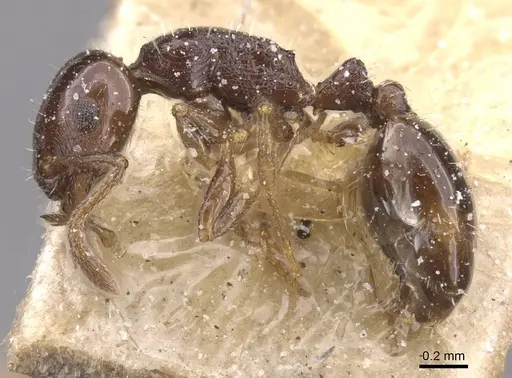
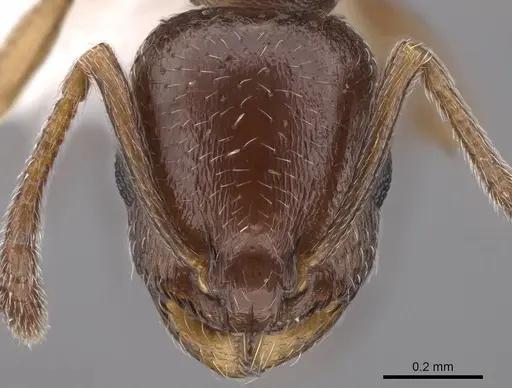
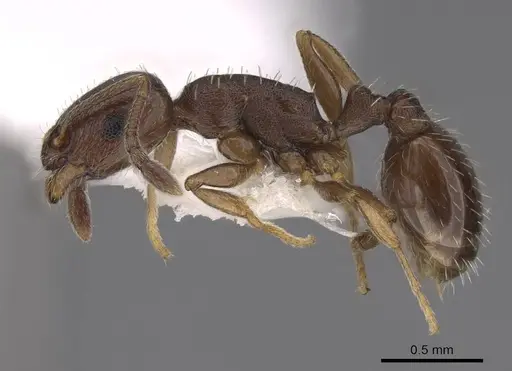
Temnothorax manni is a small ant from central Mexico. Workers are medium brown with smooth, shiny surfaces and have 12-segmented antennae. The propodeal spines are small but visible, and the petiolar node is rounded when viewed from the side . These ants belong to the sallei-clade of the genus. Temnothorax manni is known only from the type specimens collected in oak-pine woodland at elevations of 2600-2800 meters in the Mexican states of Hidalgo, Morelos, and Guerrero . The hillsides where they were found were dry, though the deeper canyons were riparian. Very little is known about their biology or behavior, and no captive colonies have been documented.
Quick Summary
- Difficulty: Hard
- Origin & Habitat: Central Mexico (Hidalgo, Morelos, Guerrero) at 2600-2800 m elevation in dry oak-pine woodland [1][2].
- Colony Type: Unconfirmed. Based on typical Temnothorax patterns, likely single-queen (monogyne) colonies, but this is inferred and not verified.
- Size & Growth:
- Queen: size data unavailable
- Worker: size data unavailable
- Colony: Unknown
- Growth: Unknown
- Development: Unknown (No direct data exists. General Temnothorax species typically take 6-10 weeks for egg-to-worker development at suitable temperatures, but this is an inference.)
- Antkeeping:
- Temperature: Unknown. Given the high-elevation habitat (2600-2800 m), these ants likely prefer cool conditions (18-22°C). Avoid sustained temperatures above 25°C. Heating is not recommended unless you observe the colony struggling at room temperature.
- Humidity: Provide a moisture gradient. The natural habitat is dry hillsides, so ants can tolerate quite dry conditions. One end of the nest may be slightly moist (near the water source), while the rest stays dry. Avoid waterlogging.
- Diapause: Possibly yes, but unconfirmed. High elevation in central Mexico likely brings seasonal temperature drops. If kept in captivity, a mild winter rest of 2-3 months at 10-15°C may be beneficial, but this is speculative. Monitor the colony for signs of reduced activity.
- Nesting: In the wild, they likely nest in small cavities in rotting wood, under bark, or inside acorns, typical for the genus. In captivity, use test tubes with a water reservoir or small Y-tong (AAC) nests with narrow chambers. Ensure all connections are escape-proof.
- Behavior: Due to lack of documented observations, behavior is inferred from the genus. Temnothorax are generally peaceful and non-aggressive. They have a modified stinger used for smearing venom (subfamily Myrmicinae, tribe Crematogastrini), but they are harmless to humans. Escape prevention is critical because of their small size, they can slip through very narrow gaps.
- Common Issues: care requirements are largely unknown, everything is inferred, so monitor the colony closely and adjust., escape risk is high due to tiny size, use fine mesh, tight cotton plugs, and seal all joints., 25°C) because of their cool natural habitat., colony growth may be slow, but this is speculative., overwatering can be fatal, create a dry zone that reflects their dry hillside habitat.
Housing and Nest Setup
Because detailed nesting biology is unknown, housing is based on general Temnothorax preferences. Use test tubes with a small water reservoir and cotton plug, or a small Y-tong (AAC) nest with narrow chambers. The ants naturally inhabit small cavities (e.g., in rotting wood or under bark) [1]. Ensure all connections are escape-proof, these ants are small and can squeeze through tight gaps. A small outworld (10×10 cm) is sufficient for a young colony.
Temperature and Seasonal Care
The only environmental clues come from the collection site: oak-pine woodland at 2600-2800 m elevation, with dry hillsides [1]. This suggests a preference for cool conditions. Keep the nest between 18-22°C if possible. Avoid temperatures above 25°C. A winter rest (diapause) is possible but not confirmed, if you live in a region with seasonal temperature changes, you may simulate a mild winter by keeping them at 10-15°C for 2-3 months. Watch the colony for natural signs of reduced activity before inducing diapause.
Feeding and Diet
No dietary data exists for this species. Based on omnivorous habits of most Temnothorax, provide small live prey such as fruit flies (Drosophila) or small pinhead crickets 2-3 times per week. Also offer a constant sugar source (honey, sugar water, or diluted maple syrup). Remove uneaten prey after 24-48 hours. Since workers are small, all food items should be appropriately sized.
Humidity and Water
The natural habitat is described as dry hillsides, so these ants likely tolerate lower humidity than many ant species [1]. Provide a moisture gradient: one side of the nest slightly moist (near the water reservoir), the rest dry. Avoid soaking the nest. A test tube setup with a water reservoir gives a natural gradient. Clean water should always be available.
Colony Development
There is no documented colony development for this species. If you manage to start a colony from a wild queen (note: collection may be restricted in Mexico), be patient. General Temnothorax colonies grow slowly, taking weeks to months to produce the first workers. Expect a modest colony size (tens to low hundreds of workers) after several years if conditions are suitable.
Handling and Observation
Ants in this genus are usually non-aggressive. Their defense mechanism is a modified stinger used for smearing venom (smear defense), which is harmless to humans [1]. Because of their small size, use good lighting and a dark background for observation. Disturb the nest minimally to avoid stress. Always maintain tight escape prevention.
Frequently Asked Questions
How long does it take for Temnothorax manni to produce first workers?
Unknown. For related Temnothorax species, egg-to-worker development typically takes 6-10 weeks, but this is an inference. There are no direct observations for T. manni.
What temperature do Temnothorax manni ants need?
Based on their high-elevation habitat, keep them at 18-22°C. Avoid temperatures above 25°C [1].
Can I keep Temnothorax manni in a test tube?
Yes, a test tube with a water reservoir is suitable for small colonies. Ensure the cotton plug is tightly packed to prevent escape.
Do Temnothorax manni ants need hibernation?
Likely yes, but unconfirmed. Their high-elevation origin suggests they experience seasonal temperature drops. A mild winter rest of 2-3 months at 10-15°C may be beneficial. Observe the colony for signs of decreased activity before attempting diapause.
How big do Temnothorax manni colonies get?
Unknown. Most Temnothorax species form small colonies (tens to a few hundred workers). There are no estimates specific to this species.
What do Temnothorax manni ants eat?
Their diet is unknown but inferred from the genus: omnivorous. Offer small live prey (fruit flies, small mealworms) and sugar water. Feed protein 2-3 times per week and keep sugar available always.
Are Temnothorax manni ants good for beginners?
No, this species is not recommended for beginners. Almost nothing is known about its care requirements. It is also rarely available and has unknown founding behavior.
Do Temnothorax manni ants sting?
They have a modified stinger, but it is used for smearing venom rather than piercing. They are harmless to humans and rarely sting even if handled.
Why is my Temnothorax manni colony growing slowly?
Slow growth may be normal, but because care requirements are unknown, any slow growth could also indicate suboptimal conditions. Check that temperature is cool (18-22°C), food is provided, and the queen is healthy.
When should I move my colony to a formicarium?
Wait until the colony outgrows its test tube (usually when the tube becomes crowded). Move only when the colony has at least 30-50 workers, but since growth is unknown, monitor carefully.
Can I keep multiple queens together?
Not recommended. Colony structure is unknown, attempting to house multiple queens could lead to fighting.
Where is Temnothorax manni found in the wild?
Central Mexico: Hidalgo, Morelos, and Guerrero states, at 2600-2800 m elevation in oak-pine woodland [1][2].
Report an Issue
The current care sheet is based fully on literature. See inconsistencies, or something that's incorrect? Please , it will be resolved after review from an admin. Contributing to the blogs tab also helps providing information, to make us be able to further improve the caresheets. Thank you for your support!
References

This caresheet is licensed under CC BY-SA 4.0 .
Community Blogs
CASENT0912960
View on AntWeb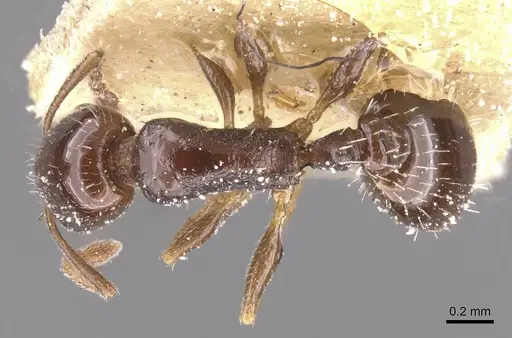
CASENT0922572
View on AntWeb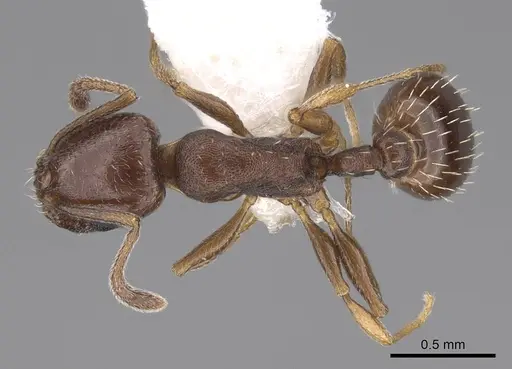
Literature
Loading distribution map...Loading products...