Long-spined Acorn Ant
Temnothorax longispinosus
- Sci. Name
- Temnothorax longispinosus
- Tribe
- Crematogastrini
- Subfamily
- Myrmicinae
- Author
- Roger, 1863
- Common Name
- Long-spined Acorn Ant
- Distribution
- Found in 2 countries
Introduction
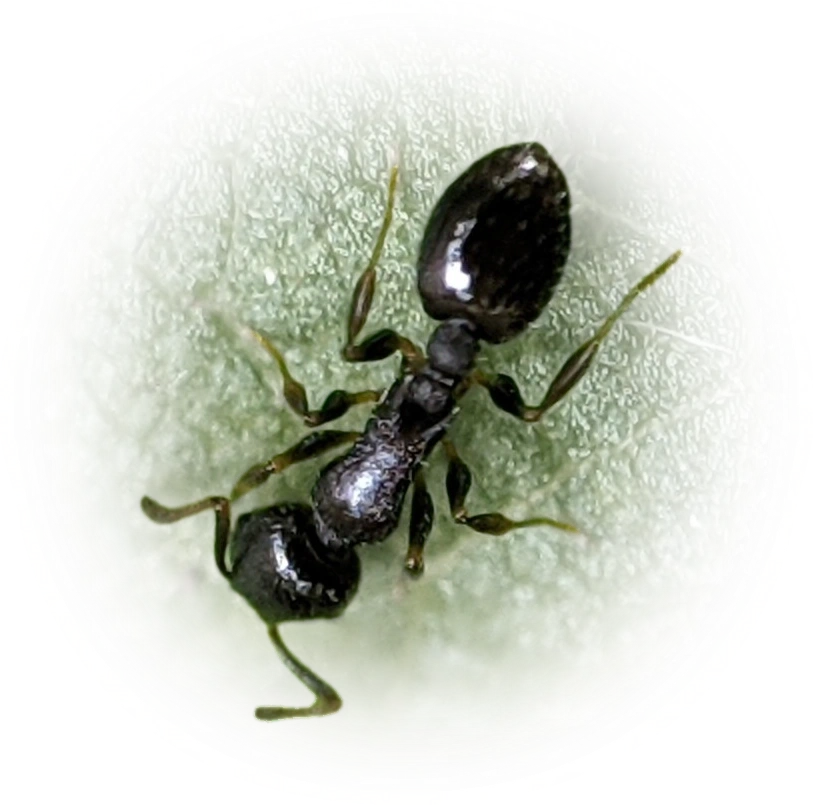
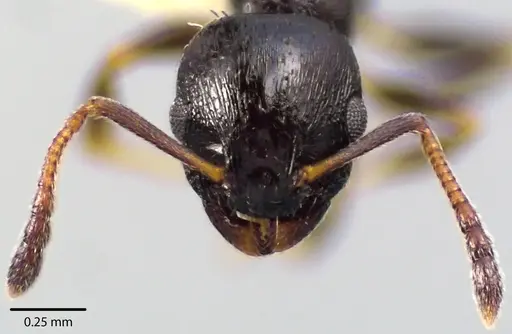
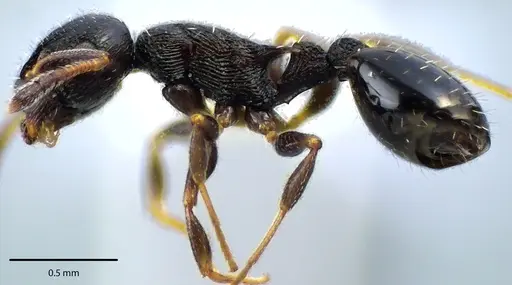
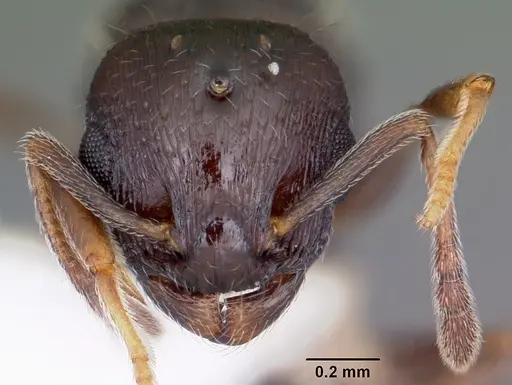
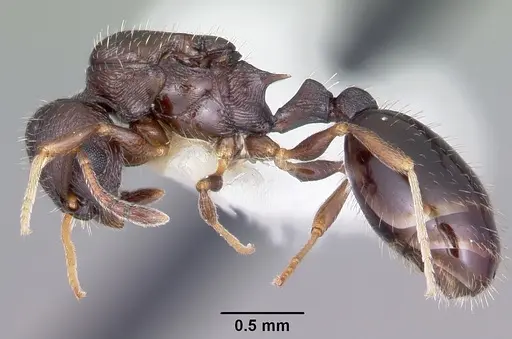
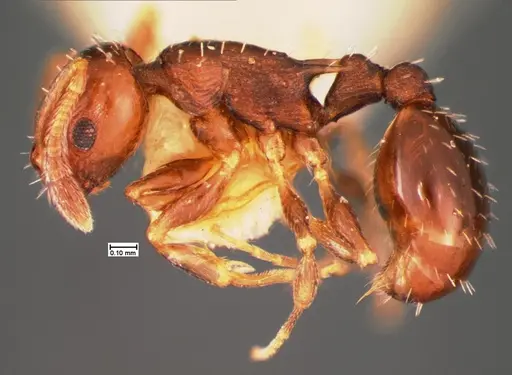
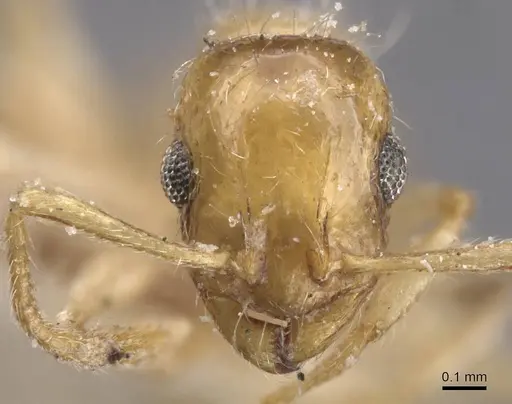
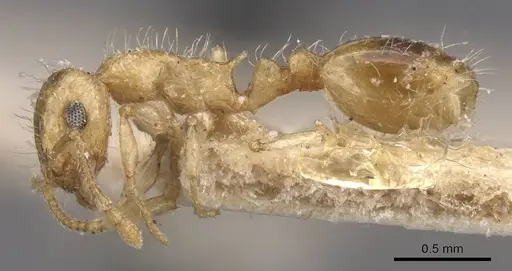
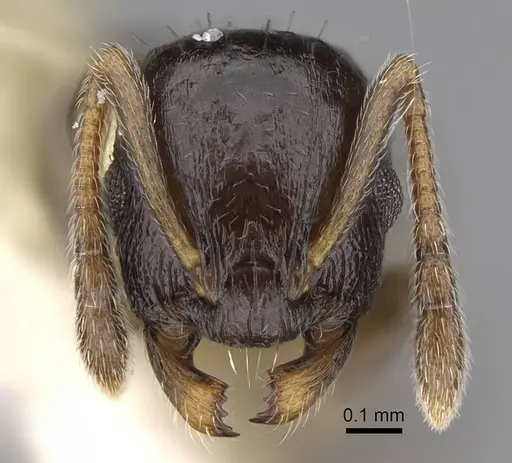
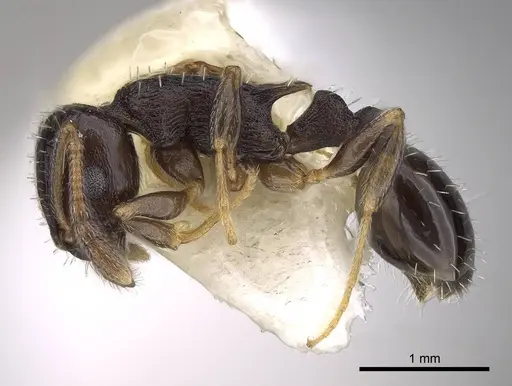
Temnothorax longispinosus is a small, dark ant native to eastern North America. Workers measure 2.25-2.5mm and are nearly black with long, distinctive propodeal spines that are nearly twice as long as the distance between their bases . The head is mostly smooth and glossy with fine striolae, and the 11-segmented antenna has a 3-jointed club . This species gets its name from these remarkably long spines, which easily separate it from most other Temnothorax species . Queens are larger at 3.5-4mm, and males measure 2-2.5mm . What makes T. longispinosus particularly interesting is its complex social structure. Colonies are facultatively polygynous, meaning they can have one queen or multiple queens working together . They are also polydomous - during summer months, colonies spread across multiple nest sites (often in acorns, twigs, or hollow plant stems), then coalesce into a single nest for winter . This species is also a common host for three species of slave-making ants: Protomognathus americanus, Temnothorax duloticus, and Temnothorax pilagens .
Quick Summary
- Difficulty: Easy
- Origin & Habitat: Eastern North America, found from Quebec and Ontario south to Georgia and Alabama, west to Michigan, Iowa, and Missouri [1]. Inhabits deciduous and mixed forests with dense tree shade, often in moist woods of oak and hickory mixed with red maple or black cherry, on slopes of hollows or near swamps [6]. Also found in conifer forests, open woods, and forest edges with good drainage [2].
- Colony Type: Facultatively polygynous, colonies can have single or multiple queens. Polydomous in summer, with colonies spread across multiple nest sites, then coalescing for winter. Worker reproduction occurs in queenright colonies [3][7].
- Size & Growth:
- Queen: 3.5-4mm [2]
- Worker: 2.25-2.5mm [2]
- Colony: Up to 150 workers per nest, but colonies often spread across multiple nests. Average around 45-50 workers per nest [1][8].
- Growth: Moderate
- Development: 4-6 weeks (estimated from field data: eggs laid mid May, pupae by early June) (Egg laying begins mid-May and continues through September. Overwintered larvae pupate in early June, with pupae present through September. Peak worker emergence is late summer [8].)
- Antkeeping:
- Temperature: 20-24°C. Upper thermal tolerance is 42-46°C, so they handle heat well but prefer cooler conditions. A gradient is beneficial [9].
- Humidity: Moderate. Keep the nest substrate moist but not waterlogged. They are forest floor ants that do well in setups mimicking leaf litter. Provide a gradient with one damp area and one drier area.
- Diapause: Yes, requires a winter dormancy period of 3-4 months at 5-10°C. In the wild, colonies coalesce in winter and nest mortality can reach 30-50% [4]. Avoid disturbance during hibernation.
- Nesting: Prefers small cavities, acorns, hickory nuts, hollow twigs, or preformed cavities in rotting wood. A Y-tong (AAC) nest or plaster nest with small chambers works well. Provide multiple small nest sites to accommodate polydomous behavior [1][3].
- Behavior: Generally peaceful but can be aggressive towards intruders, especially slave-making ants. Workers forage on low vegetation, tree trunks, and the ground in shaded forest areas [1]. They are cryptically colored and show a diurnal rhythm with peak activity around midday [10]. Escape prevention is critical due to small size, use fine mesh (0.5mm or smaller) on all openings.
- Common Issues: slave-maker invasion, this species is a common host for three species of slave-making ants, monitor colonies closely and remove any invading parasites [1][5], winter mortality, 30-50% of wild nests do not survive winter, ensure proper hibernation conditions (3-4 months at 5-10°C) and avoid disturbing the colony [4], polydomous stress, colonies may try to spread to multiple nests, provide several small nest sites connected by tubing to allow natural behavior and prevent crowding, small colony size, colonies typically stay under 100 workers per nest, this is normal and not a sign of problems [1], mold from overwatering, due to high moisture preferences, keep substrate damp but avoid standing water, remove uneaten food promptly
Housing and Nest Setup
Temnothorax longispinosus is a cavity-nesting species that naturally lives in preformed holes in the leaf litter, acorns, hickory nuts, hollow twigs, under bark, between rocks, and in rotten logs [1][2]. They prefer snug spaces and will feel secure in small chambers. For captive care, a Y-tong (AAC) nest or plaster nest with chambers of about 1-2cm diameter works well. You can also create a naturalistic setup with actual acorns or small twigs as nest sites, placed in a container with leaf litter and forest soil.
Because they are polydomous in summer, providing multiple small nest sites (connected by tubing) helps reduce stress and allows natural behavior. Wild nest densities can reach up to 4 nests per square meter [2]. Whatever nest type you choose, ensure excellent escape prevention, these tiny ants can squeeze through gaps under 1mm. Use fine stainless steel mesh on ventilation and apply fluon or a similar barrier to tube connections.
Colonies often occupy small chambers: one wild nest was just 1.2cm deep under a pebble 0.6cm in diameter [2]. Avoid oversized nests, they prefer tight spaces.
Feeding and Diet
In the wild, T. longispinosus workers forage for honeydew on leaf surfaces and attend extrafloral nectaries of trees like bigtooth aspen [1]. They are generalist scavengers that also take small insects. They are attracted to sweet baits and will spend time licking solid baits but quickly fill up at liquid baits like jelly [11].
For captive colonies, offer a mix of sugar sources (honey water, sugar water) and protein (small crickets, fruit flies, cut mealworms). Because of their small size, cut prey into appropriately small pieces. Feed twice weekly in small amounts, one small drop of honey and a few tiny prey items per feeding. Remove uneaten protein after 24-48 hours to prevent mold. They are not aggressive foragers and prefer easily accessible liquid foods and small, manageable prey.
Temperature and Seasonal Care
Keep T. longispinosus at room temperature, ideally 20-24°C. They are a forest species with good cold tolerance, upper thermal limits are 42-46°C, so they handle heat for short periods but do best in cooler conditions [9]. A temperature gradient (cool end 18°C, warm end 25°C) allows workers to choose their preferred spot.
Winter care is essential. This species requires a diapause of 3-4 months at cool temperatures (5-10°C). In the wild, colonies coalesce into single nests for winter, often in acorns or twigs buried in leaf litter [4]. During this time, do not disturb the colony or offer food. Keep the substrate slightly moist to prevent desiccation.
Come spring, colonies become active again. Egg-laying begins around mid-May in the wild, and you should resume normal feeding and temperatures as the colony breaks dormancy [8]. Expect increased activity and brood production as the seasons warm. Only larvae overwinter, eggs and pupae do not survive winter.
Colony Structure and Behavior
One of the most fascinating aspects of T. longispinosus is their flexible colony structure. They are facultatively polygynous, colonies can have one queen or multiple queens [3]. Research shows that about 37% of wild nests are queenless,48% have one queen, and 14% have multiple queens [3]. Queen number can vary by season and colony. New queens are often adopted into existing nests [2].
They are also polydomous. In productive summer months, colonies spread across multiple nest sites, with each site potentially having its own queen(s). This fragmentation responds to nest site limitation and resource availability [3]. During winter, these nests coalesce back into a single structure. Workers themselves can reproduce in queenright colonies, a relatively rare trait among ants [7]. Reproductive workers have 2 ovarioles [3].
Their behavior is generally peaceful, but they are known to increase aggression when exposed to slave-making ants, particularly Protomognathus americanus [12]. They can recognize this parasite as an enemy and mount collective defenses. Colonies from warm environments are more exploratory and less aggressive, while those from cooler areas are more defensive [12].
Dealing with Social Parasites
Temnothorax longispinosus is a common host for three species of slave-making ants: Protomognathus americanus, Temnothorax duloticus, and Temnothorax pilagens [1][5]. These parasites raid host colonies, steal brood to raise as slaves. At the Vermont study site, about 26% of host nests are raided per year, and only about 26% of raided nests survive [4].
If you keep this species, be vigilant for signs of parasitic invasion. Slave-maker scouts may enter your setup, and if established, you may see mixed workers. The good news is that T. longispinosus has evolved defenses. Colonies increase aggression after exposure to slave-makers, and some enslaved workers engage in 'slave rebellion, ' killing parasite brood [13]. If you detect a slave-maker invasion early, you can remove the parasite queen and her workers. Preventative measures include keeping colonies in secure enclosures and not collecting wild colonies from areas with high parasite pressure.
Growth and Development Timeline
Understanding the seasonal cycle helps with colony management. In the wild, egg-laying begins around mid-May and continues through September [8]. Overwintered larvae (only larvae overwinter, not eggs or pupae) begin pupating in early June. Pupae are present through September, with peak pupation in August.
Worker populations hit their lowest point in June before the year's new workers emerge. Numbers build through summer and peak in September [8]. This means your colony will look smallest in early summer and largest in late summer/early fall. Winged reproductives (alates) appear in summer. Males and winged females are found in nests starting in July, with mating flights from mid-July through early September [1].
For estimating development time: from egg to worker takes approximately 4-6 weeks at warm room temperature (20-24°C). The first workers (nanitics) will be smaller than mature workers and may take several months to reach full size as the colony grows.
Frequently Asked Questions
Can I keep Temnothorax longispinosus in a test tube?
Yes, test tubes work well for founding colonies and small groups. Use a small test tube with a cotton water reservoir, and ensure the chamber is appropriately sized for these tiny ants. For established colonies, consider a Y-tong nest or small plaster formicarium with tight chambers.
How long until first workers appear?
Expect first workers (nanitics) approximately 4-6 weeks after the queen lays eggs, assuming temperatures around 20-24°C. The exact time depends on temperature and feeding. Founding behavior is not fully documented, both single-queen and multiple-queen founding occur, but whether queens feed during founding is unknown [3].
How big do colonies get?
Colonies typically reach 40-100 workers in a single nest. Because they are polydomous, the total colony can spread across multiple nest sites in summer, potentially containing more workers overall. Maximum recorded is around 140-150 workers in one nest [1][8].
Do Temnothorax longispinosus ants sting?
They have a modified stinger used for smearing venom rather than piercing flesh, so they cannot deliver a typical stinging sensation. They may bite if threatened, but their small size makes this harmless to humans. Their defense mechanism is to smear venom onto enemies.
Are T. longispinosus good for beginners?
Yes, they are one of the easier Temnothorax species to keep. They are small but hardy, tolerate a range of temperatures, and are not aggressive. The main challenges are providing proper winter dormancy (3-4 months at 5-10°C) and watching for slave-maker parasites if collecting from the wild.
Do they need hibernation?
Yes, they require a winter dormancy period of 3-4 months at cool temperatures (5-10°C). This mimics their natural cycle and is important for colony health. Without proper hibernation, colonies may become stressed and fail to produce reproductives the following year. In the wild, winter nest mortality can be 30-50% [4].
Can I keep multiple queens together?
Yes, this species is facultatively polygynous, multiple queens can coexist in the same colony. In the wild, about 14% of nests have multiple queens [3]. However, if you are combining unrelated foundresses, introduce them carefully and monitor for aggression. Pleometrosis (multiple queens founding together) does occur naturally.
Why are my ants dying?
Common causes include: improper hibernation (too warm or too short), slave-maker invasion (look for different-looking workers), mold from overwatering or uneaten food, stress from too much handling, or natural colony senescence. Check temperature, humidity, and food. Some winter mortality is normal, 30-50% of wild nests do not survive winter [4]. Also, colonies are often small and may naturally decline after a few years.
When should I move them to a formicarium?
Move them when the test tube or founding setup becomes crowded, typically when you have 30+ workers. They prefer small chambers, so don't give them excessively large spaces. A Y-tong nest or small plaster formicarium with multiple connected chambers of 1-2cm diameter works well.
What do they eat?
They accept honey/sugar water, and small protein sources like fruit flies, tiny crickets, cut mealworms, or other small insects. They are generalist scavengers and also forage for honeydew. Offer small amounts twice weekly, a drop of honey and a few tiny prey items. Remove uneaten food promptly to prevent mold.
Report an Issue
The current care sheet is based fully on literature. See inconsistencies, or something that's incorrect? Please , it will be resolved after review from an admin. Contributing to the blogs tab also helps providing information, to make us be able to further improve the caresheets. Thank you for your support!
References

This caresheet is licensed under CC BY-SA 4.0 .
Community Blogs
ANTWEB1041703
View on AntWeb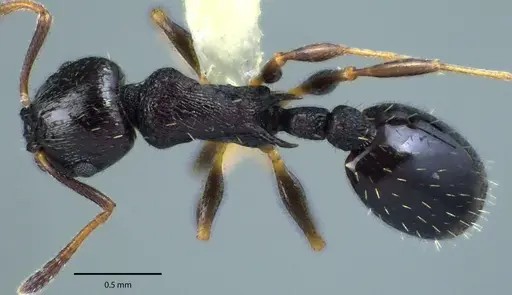
CASENT0104819
View on AntWeb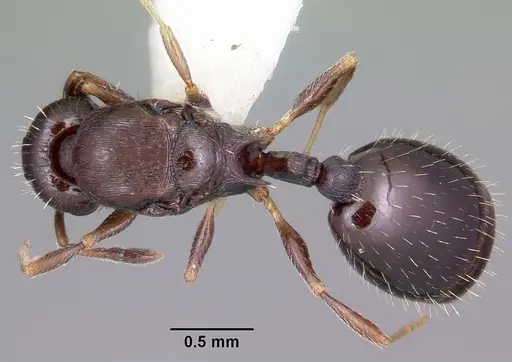
CASENT0105559
View on AntWeb
CASENT0912959
View on AntWeb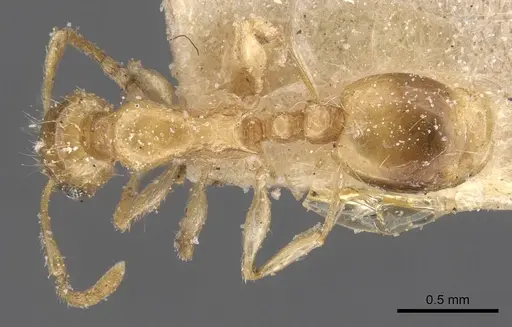
CASENT0914508
View on AntWeb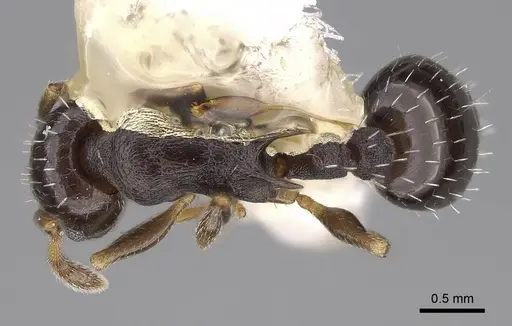
Literature
Loading distribution map...Loading products...