
Temnothorax korbi
- Sci. Name
- Temnothorax korbi
- Tribe
- Crematogastrini
- Subfamily
- Myrmicinae
- Author
- Emery, 1924
- Distribution
- Found in 1 countries
Introduction
Temnothorax korbi is a small, reddish-brown ant native to the Caucasus region, originally described from Talysh, Azerbaijan in 1924 . It is recorded across Azerbaijan, Georgia, and Turkey . Workers have short propodeal spines and a shallow metanotal groove, which distinguish them from similar species. Originally classified as Leptothorax corticalis var. korbi, it was later raised to species and transferred to the genus Temnothorax. This species is part of a group of cavity-nesting ants that live under stones, in rotting wood, or in small crevices. Temnothorax korbi is documented as a host for the slave-making ant Myrmoxenus gordiagini in Turkey . In its natural habitat, it occupies forested and mountainous areas of the Palaearctic region. As a small Temnothorax, it forms modest colonies and is generally docile.
Quick Summary
- Difficulty: Medium
- Origin & Habitat: Caucasus region (Azerbaijan, Georgia, Turkey) in forested and mountainous areas. Typical cavity-nesting ant found under stones, in rotting wood, or in small crevices [3][4][1].
- Colony Type: Unconfirmed. Based on typical Temnothorax patterns, likely single-queen (monogyne) colonies. Colony size is modest, likely up to a few hundred workers, but species-specific data are lacking.
- Size & Growth:
- Queen: Size data unavailable, inferred from typical Temnothorax genus (approximately 4-6 mm).
- Worker: Size data unavailable, inferred from typical Temnothorax genus (approximately 2-4 mm).
- Colony: Unknown, likely up to a few hundred workers based on genus patterns.
- Growth: Unknown, likely moderate based on related Temnothorax species.
- Development: Unknown, based on related Temnothorax species, roughly 6-10 weeks at moderate temperatures. (Species-specific timing has not been documented. Development is temperature-dependent.)
- Antkeeping:
- Temperature: Unconfirmed. Based on temperate Caucasian origin, keep at room temperature (20-24°C) and avoid overheating above 28°C. Provide a temperature gradient if possible.
- Humidity: Unconfirmed. Moderate humidity is likely, keep the nest substrate slightly moist but not waterlogged. A test tube with a water reservoir works well.
- Diapause: Likely yes, as a temperate species, a winter dormancy period is expected. Provide 2-3 months at 10-15°C (e.g., November-February) in a cool location. Reduce feeding but maintain moisture.
- Nesting: Cavity-nesting ant. Prefers small, enclosed spaces: test tubes, Y‑tong (AAC) or plaster nests with narrow chambers, or naturalistic setups with flat stones over soil. Avoid large, open formicaria. Use fine mesh or fluon to prevent escape of tiny workers.
- Behavior: Docile and non-aggressive. Because of their small size, workers can squeeze through tiny gaps, use proper barriers (fluon, tight lids). Defense: uses a modified flattened stinger to smear venom onto enemies (typical of the tribe Crematogastrini). In captivity, they forage for small prey and sugar sources, and may form short trails.
- Common Issues: colonies may grow slowly, avoid overfeeding to prevent mold., test tube setups can dry out quickly, monitor moisture regularly., winter dormancy is essential, skipping diapause can weaken or kill the colony., tiny workers can escape through standard barriers, use fine mesh and secure lids., wild-caught colonies may carry parasites (e.g., Temnothorax gordiagini), quarantine new colonies and observe for signs of social parasitism.
Taxonomy and Identification
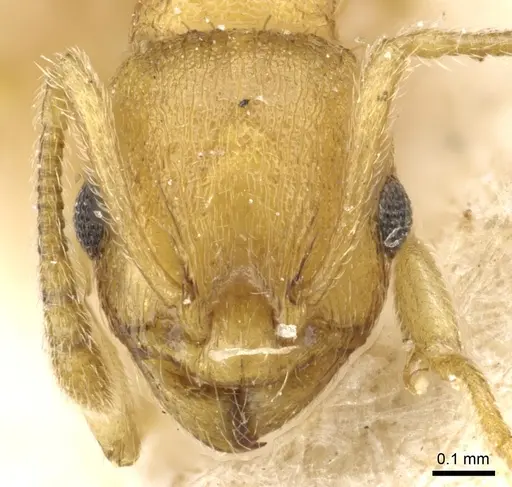
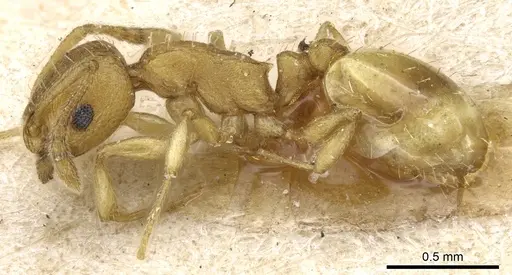
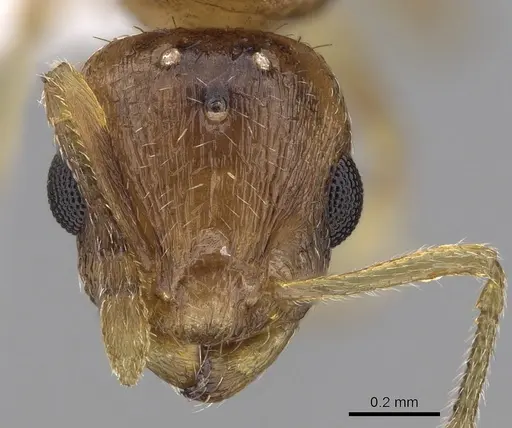
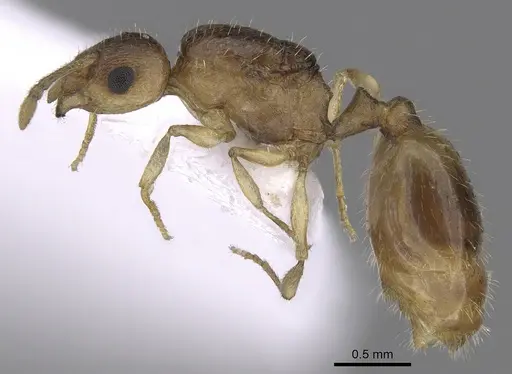
Temnothorax korbi was originally described by Emery in 1924 as a variety of Temnothorax corticalis, based on workers and a queen from Lenkoran, Azerbaijan [1][2]. It was raised to species by Arnol'di in 1948 and later transferred to the genus Temnothorax [2][1]. The species has short propodeal spines resembling Temnothorax corticalis, and a shallow metanotal groove that places it in the nylanderi species group rather than the original korbi group [1][2]. The korbi group (now mostly reassigned) was defined by a low, long mesosoma with coarse longitudinal rugae, a low petiole with a massive node, and very short propodeal denticles or blunt tubercles [1][2]. Workers are reddish-brown and small, no precise body measurements are available in the literature.
Distribution and Habitat
The species is recorded from Azerbaijan (Lerik, Talysh), Georgia (multiple localities including Tbilisi and Tetritskaro), and Turkey (Kaz Dağı) [3][4][5][1]. It inhabits forested and mountainous areas of the Caucasus region. Like most Temnothorax, it is a cavity nester, living under stones, in rotting wood, or in small crevices. No detailed habitat descriptions are available for this species, but it likely occupies sheltered microhabitats with moderate humidity.
Social Parasitism
Temnothorax korbi is a known host for the slave-making ant Temnothorax gordiagini in Turkey [6]. This parasite infiltrates colonies, kills the resident queen, and enslaves the workers to raise its own brood. In captivity, wild‑caught colonies should be quarantined and monitored for signs of parasitism, such as unusual worker behavior or the presence of Myrmoxenus workers. No other parasitic associations have been reported for this species.
Behavior and Defense
Temnothorax korbi is docile and non‑aggressive. Workers are small and calm, foraging for small prey and sugar sources. They can form short trails but are not known to be vigorous swarmers. Their defense mechanism, typical of the tribe Crematogastrini, involves a modified flattened stinger used to wipe or smear venom onto enemies rather than injecting it. This makes them harmless to humans. Their small size means they can escape through tiny gaps, so you need tight seals and a fluon barrier on enclosure walls.
Care Recommendations (Inferred from Genus)
Because no species‑specific studies on captive care exist, the following advice is based on typical Temnothorax husbandry. Start the colony in a test tube with a water reservoir plugged with cotton, this provides a small, humid chamber that mimics natural cavities. Feed small insects like fruit flies or pinhead crickets 2-3 times per week, and provide a constant sugar source (honey water or sugar water). Keep the colony at room temperature (20-24°C), avoid prolonged heat above 28°C. Most Temnothorax benefit from moderate humidity, ensure the nest substrate stays slightly moist but not wet. As a temperate species, a winter diapause of 2-3 months at 10-15°C is likely essential for long‑term health. For nesting, use Y‑tong (AAC) or plaster nests with narrow chambers, or natural setups with flat stones over soil. Avoid large, open formicaria. Always use fine mesh and fluon to prevent escape of these tiny ants.
Frequently Asked Questions
How long does it take for Temnothorax korbi to produce first workers?
Species‑specific timing is unknown. Based on related Temnothorax species, expect roughly 6-10 weeks from egg to first worker at around 22°C. The first workers (nanitics) will be smaller than mature workers, but they immediately begin colony tasks.
Can I keep Temnothorax korbi in a test tube setup?
Yes. Test tubes with a water reservoir and cotton plug work very well for this species, matching their natural cavity‑nesting preference. They can handle colonies up to 100-200 workers in a test tube. For larger colonies, move to a small Y‑tong or plaster nest with narrow chambers.
Do Temnothorax korbi ants need hibernation?
Likely yes. As a temperate species from the Caucasus, they probably require a winter dormancy period of 2-3 months at 10-15°C (e.g., November-February). Reduce feeding during this time but maintain some moisture. Skipping diapause may weaken the colony.
How big do Temnothorax korbi colonies get?
Colony size is not documented. Based on typical Temnothorax, they likely reach up to a few hundred workers, but this is an estimate. Growth is moderate, a healthy colony might reach 50+ workers during the first year.
What do Temnothorax korbi ants eat?
They are omnivorous. Offer small insects (fruit flies, pinhead crickets, small mealworms) 2-3 times per week as protein. Provide a constant sugar source (honey water or sugar water). Remove uneaten prey after 24-48 hours to prevent mold.
Are Temnothorax korbi good for beginners?
They are rated medium difficulty. Their small size requires careful escape prevention, and their need for winter diapause adds complexity. They are docile and don't need elaborate setups, but complete beginners may find them challenging compared to hardier species like Lasius or Messor.
Do Temnothorax korbi ants sting?
They have a stinger but use it mainly to smear venom (a modified spatulate sting typical of Crematogastrini). It is not painful to humans. They are docile and very unlikely to sting defensively.
What temperature is best for Temnothorax korbi?
No species‑specific data. Based on their temperate origin, keep them at room temperature (20-24°C). Avoid temperatures above 28°C for extended periods. A slight temperature gradient within the nest is beneficial.
When should I move my colony to a formicarium?
Move from a test tube to a larger nest when the colony reaches around 50-100 workers and the test tube feels crowded. Y‑tong, plaster, or 3D‑printed nests with narrow chambers work well. Avoid large open spaces, these ants prefer tight cavities.
Can I keep multiple queens together?
Not recommended. Temnothorax korbi is likely single‑queen (monogyne). Combining queens from different colonies would probably lead to fighting. If you catch multiple foundresses, house them separately.
Report an Issue
The current care sheet is based fully on literature. See inconsistencies, or something that's incorrect? Please , it will be resolved after review from an admin. Contributing to the blogs tab also helps providing information, to make us be able to further improve the caresheets. Thank you for your support!
References

This caresheet is licensed under CC BY-SA 4.0 .
Community Blogs
CASENT0904750
View on AntWeb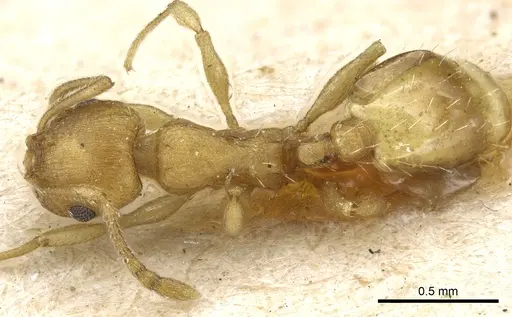
CASENT0906011
View on AntWeb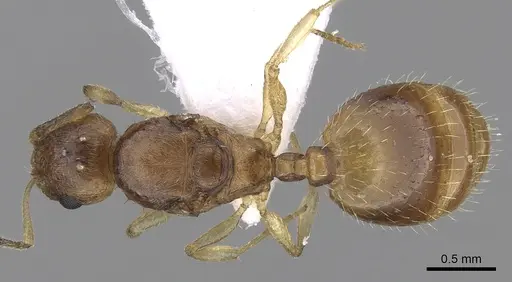
Literature
Loading distribution map...Loading products...