
Temnothorax hispidus
- Sci. Name
- Temnothorax hispidus
- Tribe
- Crematogastrini
- Subfamily
- Myrmicinae
- Author
- Cole, 1957
- Distribution
- Found in 1 countries
Introduction
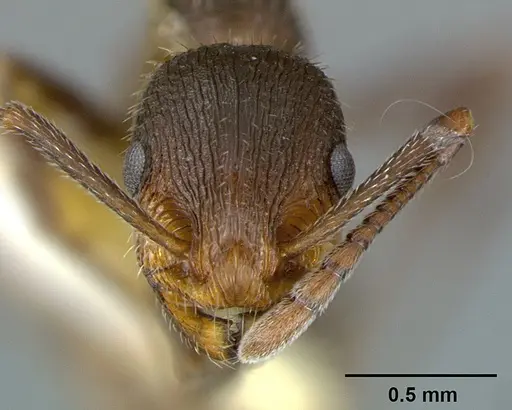
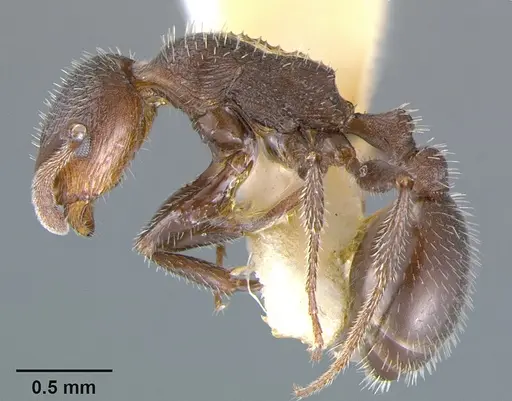
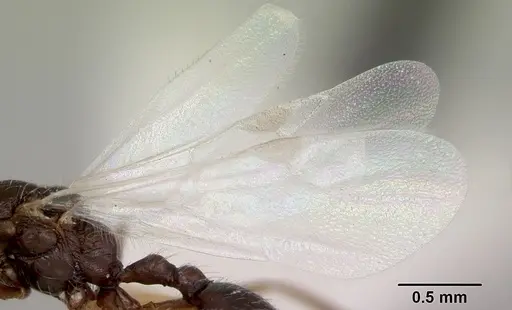
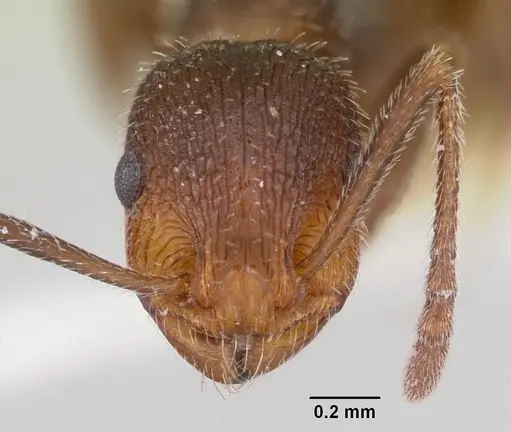
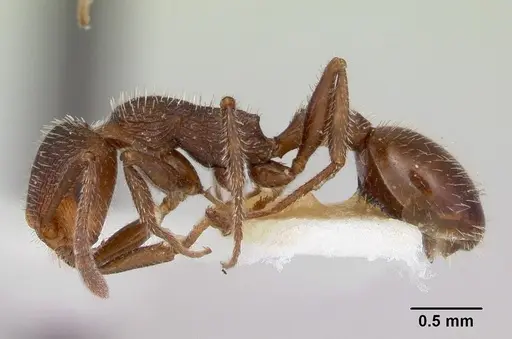
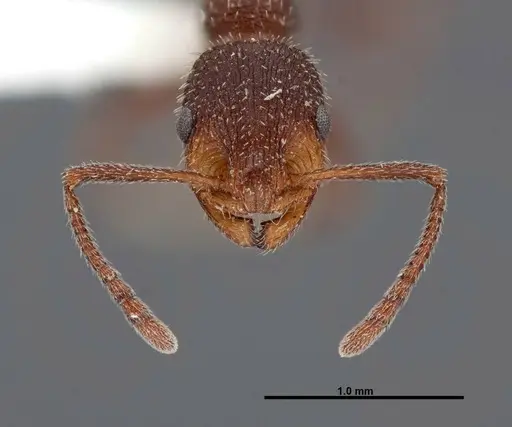
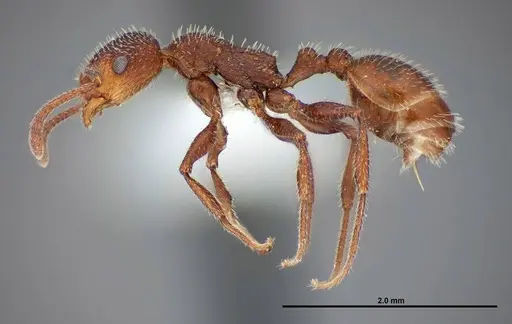
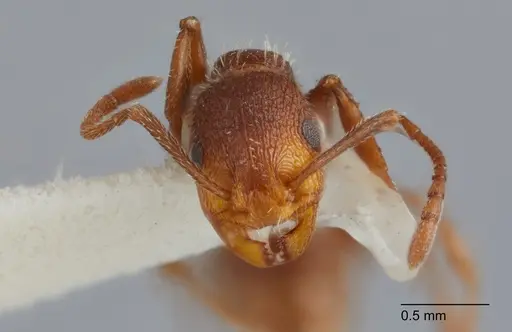
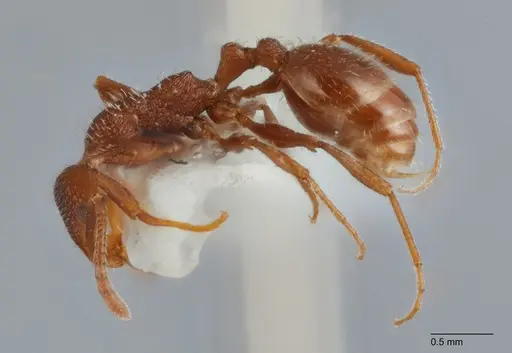
Temnothorax hispidus is a medium-sized dark brown ant (workers ~4 mm total length, queens ~6 mm) with a robust, coarsely wrinkled body covered in reticulated rugae . It has 12-segmented antennae, short propodeal spines that look like bumps, and a low, truncate petiole node . This species is native to the southwestern United States (Texas) and northern Mexico, where it lives at higher elevations (around 5,400 ft) in the Davis Mountains and Chiso Mountains . Nesting under stones in moist, loamy soil within grassy, sparsely wooded areas, it is rarely collected and appears to have very specific habitat requirements .
Quick Summary
- Difficulty: Hard
- Origin & Habitat: Southwestern United States (Texas) and northern Mexico (Coahuila, Nuevo León, Zacatecas). Found at high elevations (around 5,400 ft) in the Davis Mountains and Chiso Mountains, nesting under stones in moist, loamy soil within shaded grassy areas [1][2].
- Colony Type: Unconfirmed, only known from field collections, no reliable data on colony social structure. Although most Temnothorax are monogyne, this has not been confirmed for this species.
- Size & Growth:
- Queen: ~6 mm total length [1]
- Worker: ~4 mm total length (holotype 4.30 mm) [1]
- Colony: Unknown, rarely collected, no reliable estimates of typical colony size.
- Growth: Slow to moderate, inferred from typical Temnothorax development patterns.
- Development: Estimated 6-10 weeks at 20-24°C based on related species (No species-specific development data available, timing may vary with temperature.)
- Antkeeping:
- Temperature: Keep at 20-24°C. This species comes from cool mountain habitats, so avoid overheating. Provide a slight gradient so workers can choose their preferred zone
- Humidity: Moderate to high humidity. Natural nests are in moist, loamy soil, keep the substrate damp (but not waterlogged) and include a drier area for choice [1]
- Diapause: Likely required, reduce temperature to 10-15°C for 2-3 months in winter to mimic natural cycles
- Nesting: Prefers tight, enclosed spaces with damp substrate. Y-tong (AAC) blocks, test tubes with a water reservoir, or a naturalistic setup with moist soil under a flat stone work well [1]
- Behavior: Peaceful and non-aggressive. Defense is a modified stinger used to smear venom, not to pierce, not dangerous to humans. Workers are active foragers. Their small size (~4 mm) means they can escape through tiny gaps, so use escape prevention (tight lid, fluon). Avoid unsupported claims like tandem running, this has not been documented for the species.
- Common Issues: balancing humidity is critical, too dry and the colony fails, too wet causes mold., overheating can be fatal, keep below 25°C and away from direct heat., colonies grow slowly and are fragile during founding, be patient and minimize disturbance., wild-caught colonies may carry parasites or be stressed from habitat disruption., this species is rarely available in the hobby, acquiring a colony may be difficult.
Housing and Nest Setup
Temnothorax hispidus needs a compact, humid nest. Y-tong (AAC) blocks work well because they hold moisture and provide narrow chambers that mimic the spaces under stones [1]. Test tubes with a water reservoir can also work, but monitor humidity closely. For a naturalistic setup, use a container with moist soil or sand and place a flat stone or tile on top to create a chamber. The substrate should feel damp but not wet, standing water causes mold. These ants spend most of their time in the nest, so the outworld can be simple. Use a tight-fitting lid and fluon on edges to prevent escapes, their small size lets them squeeze through tiny gaps.
Feeding and Diet
As an omnivore, Temnothorax hispidus needs protein and sugar. Offer small prey like fruit flies, pinhead crickets, or tiny mealworms 2-3 times a week, removing leftovers after 24 hours. Sugar sources (honey water, sugar water) can be given occasionally. A constant water source (test tube or small dish with pebbles) is essential. During founding, give very small portions, one fruit fly may be enough for a queen and her first workers. These recommendations are based on typical Temnothorax diets, specific data for this species is lacking.
Temperature and Seasonal Care
Keep the colony at 20-24°C. This species lives in cool mountain areas and is sensitive to heat, avoid direct sun or heat mats. A slight temperature gradient lets workers choose. In winter, provide a diapause period: lower temperature to 10-15°C for 2-3 months. Do not feed during this time, the colony will be inactive. Resume normal temperatures and feeding gradually in spring. [2]
Colony Founding
Founding behavior is unconfirmed for Temnothorax hispidus. Most Temnothorax are claustral, the queen raises her first brood without leaving the nest, using stored reserves. If this is the case, keep the founding queen in a dark, quiet, humid setup (e.g., test tube with water). Avoid disturbing her, vibration or light can cause her to eat the brood. First workers (nanitics) should appear in 6-10 weeks at 22-24°C. After that, start offering tiny prey, but the colony remains fragile for several months.
Behavior and Observation
Temnothorax hispidus is a peaceful ant that relies on escape rather than aggression. Its modified stinger smears venom, making it harmless to humans. Workers are active foragers during daylight hours, but specific recruitment methods (e.g., tandem running) have not been documented. Their small size and dark color can make them hard to see, but they are interesting to watch as they explore and feed. Since this species is rarely kept, any behavioral observations you make would be valuable.
Frequently Asked Questions
How long does it take for Temnothorax hispidus to produce first workers?
Expect first workers (nanitics) in about 6-10 weeks after the queen lays eggs, at 22-24°C. This is based on related Temnothorax species, no specific data exists for T. hispidus.
Can I keep multiple queens together?
It is not recommended. There is no data on whether T. hispidus tolerates multiple queens (pleometrosis). Starting with a single queen avoids the risk of fighting. Most Temnothorax are monogyne, but this is unconfirmed for this species.
Does Temnothorax hispidus sting?
It has a modified stinger used for smearing venom, not piercing, so it does not sting in the usual sense. It is harmless to humans and not aggressive.
What is the best nest type for Temnothorax hispidus?
Y-tong (AAC) nests are ideal because they hold humidity well and provide tight chambers. Test tubes with a water reservoir also work if you keep the moisture stable. The key is a damp, enclosed space, they naturally nest under stones in moist soil [1].
How big do Temnothorax hispidus colonies get?
The colony size is unknown because the species is rarely collected. Typical Temnothorax colonies range from 50 to a few hundred workers, but this is only a guess. Growth is slow to moderate, expect a small colony for the first year.
Do they need hibernation?
Yes, they likely need a winter diapause. Reduce temperature to 10-15°C for 2-3 months, and do not feed. This mimics the natural cycle in their mountain habitats.
Are Temnothorax hispidus good for beginners?
Hard, not suitable for beginners. The main challenges are precise humidity, heat sensitivity, rare availability, and slow growth. Experienced keepers with stable setups may succeed.
Where does Temnothorax hispidus live in the wild?
It is found in the Davis Mountains (Texas) and Chiso Mountains (Texas) at around 5,400 ft elevation, and in the Mexican states of Coahuila, Nuevo León, and Zacatecas. It nests under stones in moist, loamy soil in shaded grassy areas [1][2][3].
Why are my founding colony's workers dying?
Common causes for founding failures: too dry (substrate must be damp), too cold (below 18°C slows growth), disturbance (queen may eat brood), or mold from overfeeding. Keep the setup dark, stable at 20-24°C, and minimize checking for the first 2-3 months.
Report an Issue
The current care sheet is based fully on literature. See inconsistencies, or something that's incorrect? Please , it will be resolved after review from an admin. Contributing to the blogs tab also helps providing information, to make us be able to further improve the caresheets. Thank you for your support!
References

This caresheet is licensed under CC BY-SA 4.0 .
Community Blogs
CASENT0105861
View on AntWeb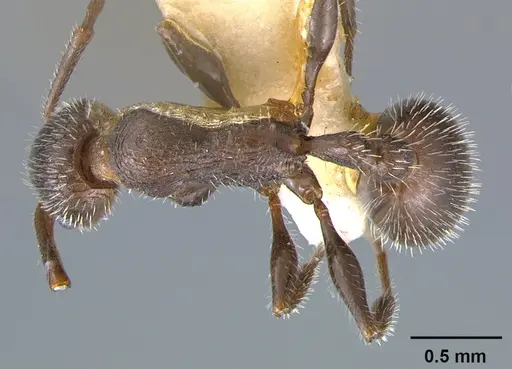
CASENT0172594
View on AntWeb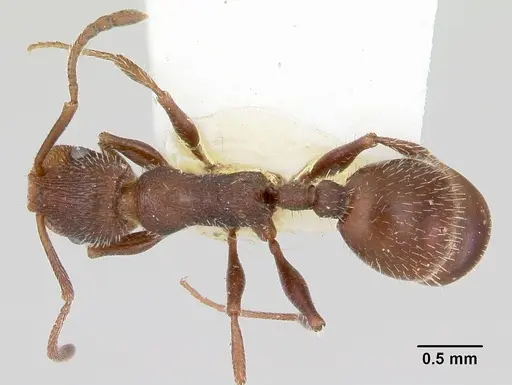
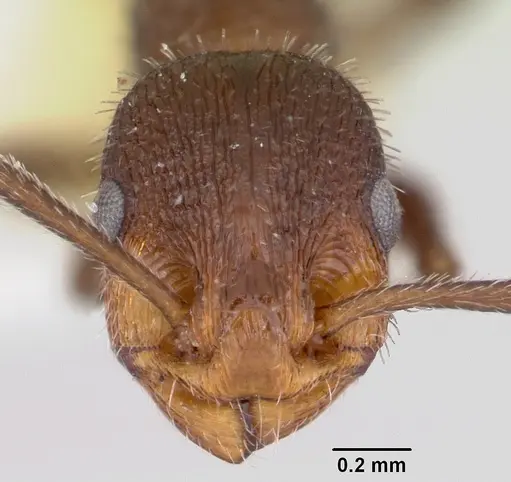
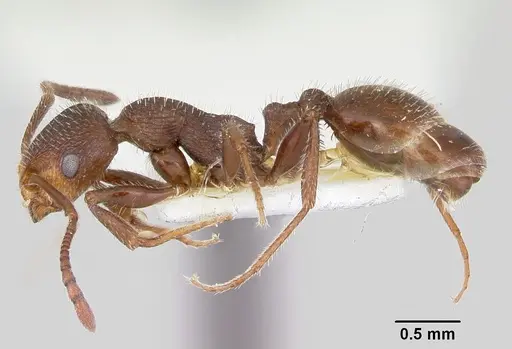
CASENT0172595
View on AntWeb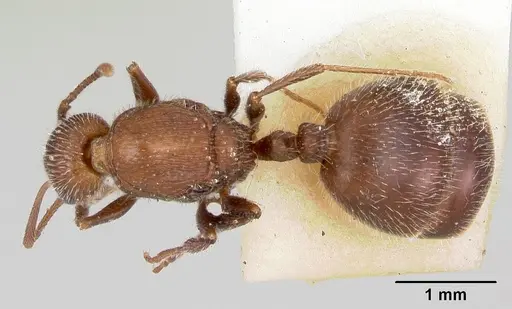
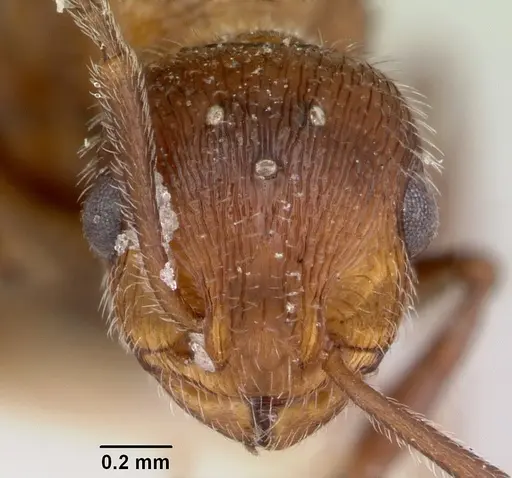
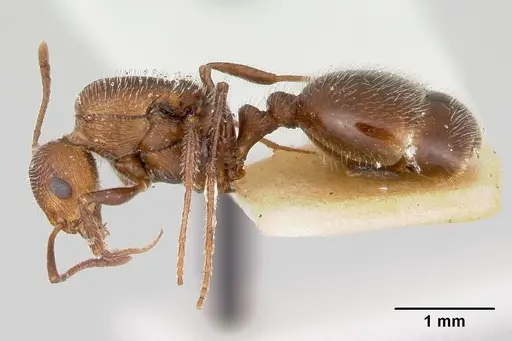
CASENT0172596
View on AntWeb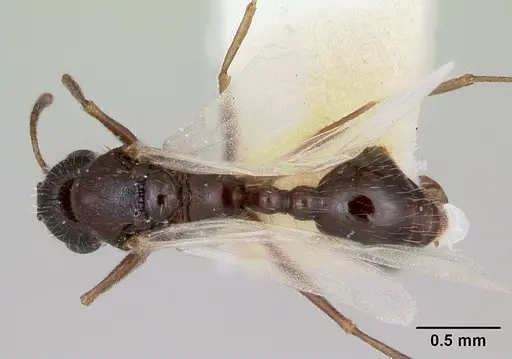
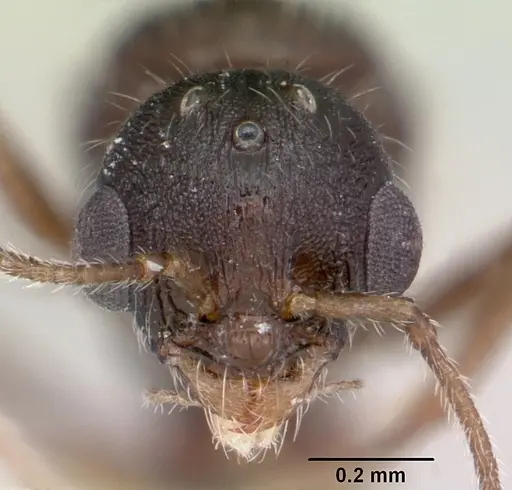
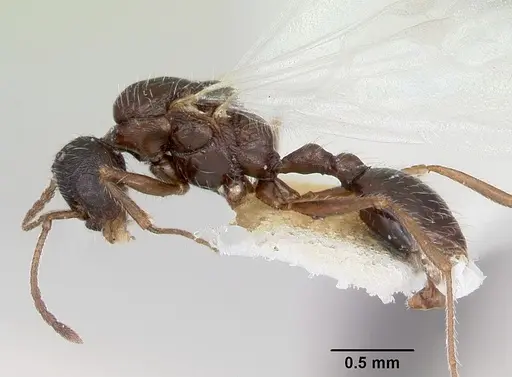
CASENT0172597
View on AntWeb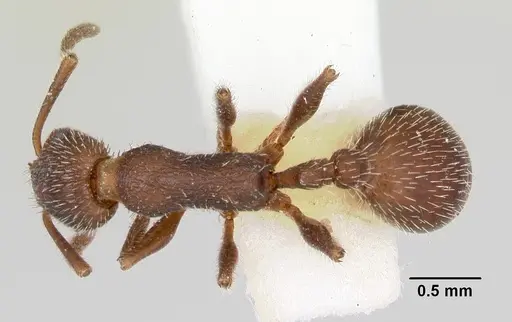
FMNHINS0000062737
View on AntWeb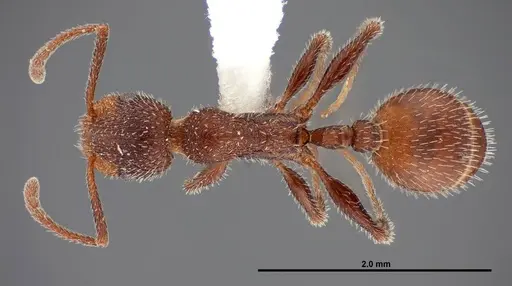
UTEPENTO60005
View on AntWeb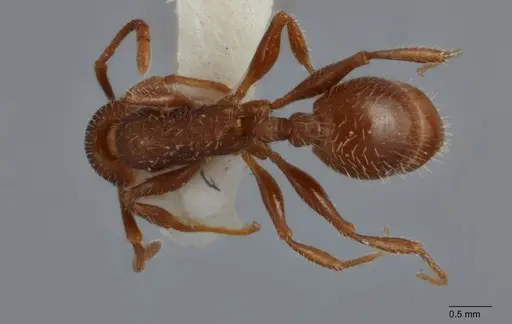
Literature
Loading distribution map...Loading products...