
Temnothorax hispaniolae
- Sci. Name
- Temnothorax hispaniolae
- Tribe
- Crematogastrini
- Subfamily
- Myrmicinae
- Author
- Baroni Urbani, 1978
- Distribution
- Found in 1 countries
Introduction
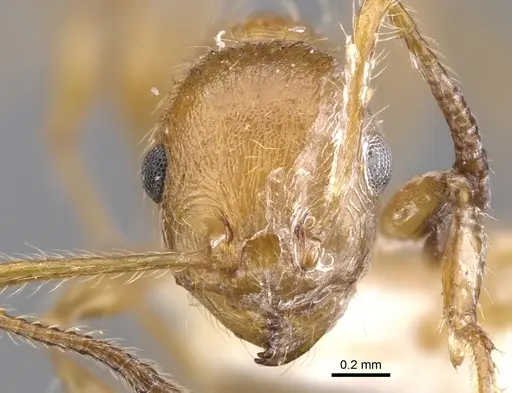
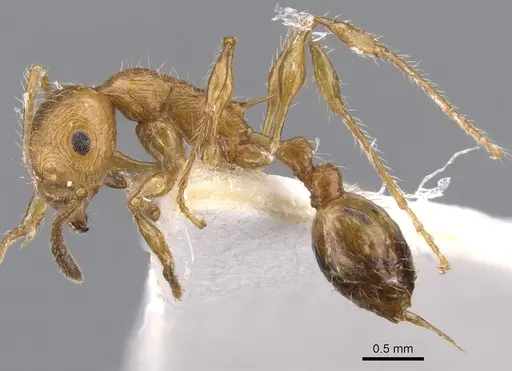
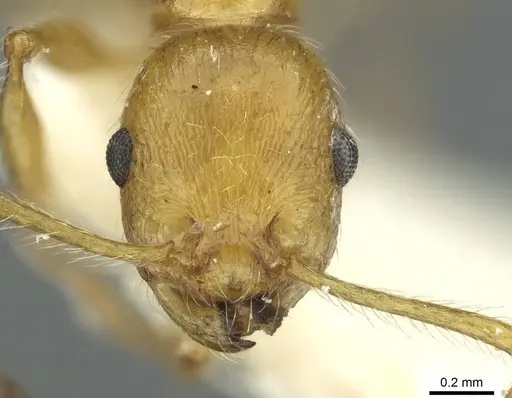
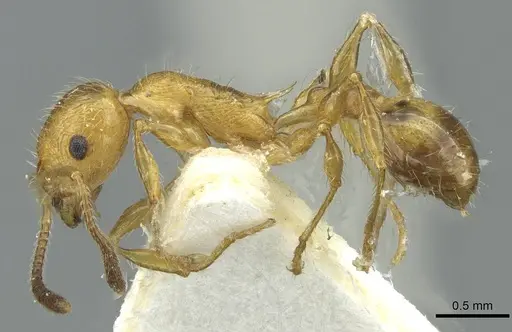
Temnothorax hispaniolae is a small, slender ant endemic to the Dominican Republic on the island of Hispaniola. Workers measure 3.1-4.2 mm with a yellowish-brown to dark brown body and a yellow gaster often marked with two pairs of dark spots . This species belongs to the sallei-clade, a group of arboreal cavity-nesting ants. Queens are larger at 6.1 mm, and males reach about 3.8 mm. It is distinguished from its close relative Temnothorax sallei by a more slender body and a nearly straight dorsal mesosomal outline . These ants are aggressive and well-known for their pugnacious behavior, delivering surprisingly painful stings for their size .
Quick Summary
- Difficulty: Medium
- Origin & Habitat: Endemic to the Dominican Republic (Hispaniola), found at elevations between 610-2,000 m in La Vega Province [2][3]. They opportunistically nest in small hollow cavities including dead twigs, sticks on the ground, and rot holes in trees [2]. This is an arboreal lineage within the sallei group [4].
- Colony Type: Likely single-queen colonies (monogyne), which is typical for most Temnothorax species. No specific data on multi-queen colonies exists for this species.
- Size & Growth:
- Queen: 6.1 mm [1]
- Worker: 3.1-4.2 mm [1]
- Colony: Likely small colonies of several dozen to a few hundred workers, typical of the genus
- Growth: Moderate
- Development: Estimated 6-10 weeks based on typical Temnothorax development patterns (Development time inferred from genus-level data, specific timing for this species has not been documented)
- Antkeeping:
- Temperature: Based on elevation range (610-2,000 m), maintain temperatures around 20-24 °C. Avoid extremes above 28 °C or below 15 °C. Provide a temperature gradient within the setup [2][3].
- Humidity: Keep the nest substrate moderately moist, not waterlogged. Provide a humidity gradient with one damp area and one drier area so the ants can choose their preferred zone. These cavity nesters do well with some damp substrate.
- Diapause: Specific diapause requirements are unknown. As a species from moderate elevations in the Dominican Republic, there may be a period of reduced activity during cooler months. If the colony slows down, consider a cooler period (15-18 °C) for 2-3 months, but this is not confirmed.
- Nesting: Provide small cavities, test tubes work well for founding colonies. As they naturally nest in hollow twigs and small cavities, they prefer tight-fitting chambers rather than large open spaces. For established colonies, use Y-tong (AAC) nests, plaster nests, or 3D-printed nests with narrow chambers.
- Behavior: These ants are aggressive and pugnacious, Bill Brown reportedly described their stings as intense despite their small size [2]. They are active foragers and will defend their nest vigorously. Workers are small (3-4 mm) so escape prevention is important, use fine mesh and tight-fitting barriers. They are arboreal cavity nesters by nature and will readily colonize small artificial nests.
- Common Issues: small size means escapes are likely without fine mesh barriers, aggressive defense requires careful handling, they will sting, colonies stay small, don't expect large worker counts, test tube water reservoir must be properly sealed with cotton to prevent flooding, wild-caught queens may carry parasites, check for health before introducing
Housing and Nest Setup
Temnothorax hispaniolae does well in small, cavity-based nests that mimic their natural hollow twig nesting preferences. For founding colonies, a standard test tube setup works excellently, fill one-third with water, plug with cotton, then connect to an outworld. The tube should be dark to simulate the interior of a hollow twig or branch. For established colonies, Y-tong (AAC) nests, plaster nests, or 3D-printed nests with narrow chambers work well. Avoid large, open spaces, these ants feel safest in tight chambers scaled to their tiny size. Provide a humidity gradient by placing part of the nest on moist plaster or soil while keeping another section drier [2][3].
Feeding and Diet
Like most Temnothorax species, Temnothorax hispaniolae is omnivorous. Offer protein sources such as small insects (fruit flies, small mealworms, pinhead crickets) and sugar sources (honey water, sugar water). Feed small prey items that match the worker size, these are tiny ants, so appropriately sized food is important. Provide protein 2-3 times per week and keep a constant sugar source available. Remove uneaten prey after 24-48 hours to prevent mold. In the wild, they likely forage for small arthropods and tend aphids for honeydew.
Temperature and Seasonal Care
Based on their elevation range (610-2,000 m), maintain temperatures around 20-24 °C for optimal colony development. Avoid extreme heat above 28 °C or cold below 15 °C. Provide a temperature gradient so workers can self-regulate by moving between warmer and cooler areas. During winter, you can reduce temperatures to 15-18 °C if the colony shows reduced activity, this may simulate their natural seasonal cycle, though specific hibernation requirements are not confirmed [2][3].
Behavior and Defense
Temnothorax hispaniolae is notably aggressive and pugnacious for such a small ant. Workers will readily defend the nest and are capable of delivering a surprisingly painful sting for their size [2]. When working with this species, use caution, they are quick to respond to perceived threats. They are active foragers and will send workers out to collect food. Their small size (3-4 mm workers) means they can escape through tiny gaps, so excellent escape prevention with fine mesh is essential. Despite their small size, do not underestimate their defensive capabilities.
Colony Development
Colonies remain relatively small throughout their lifecycle, typical of the genus Temnothorax. Expect colonies to grow slowly but steadily over the first year. A mature colony likely contains only several dozen to a few hundred workers. Founding behavior is unconfirmed, no specific data exists on whether queens are claustral or semi-claustral. The first workers (nanitics) are typically smaller than mature workers. Patience is key with this species, as growth is gradual compared to faster-growing genera like Camponotus or Lasius.
Frequently Asked Questions
How long does it take for Temnothorax hispaniolae to produce first workers?
Expect first workers (nanitics) to emerge in 6-10 weeks after the queen lays her first eggs, assuming temperatures around 22-24 °C. This is typical for Temnothorax species, though specific development timing has not been documented for this species.
Can I keep multiple queens together?
Not recommended. While specific founding behavior is unconfirmed for Temnothorax hispaniolae, Temnothorax species typically establish single-queen colonies. Combining unrelated queens risks fighting and colony failure.
Do Temnothorax hispaniolae ants sting?
Yes, they can sting and do so quite effectively. Despite their small size, they are aggressive defenders and their stings are reportedly intense [2]. Handle with care and use caution when working with established colonies.
What size colony do Temnothorax hispaniolae reach?
Colonies remain relatively small, likely several dozen to a few hundred workers at maturity. This is typical for the genus, which prefers small cavity nests rather than large colonies.
Are Temnothorax hispaniolae good for beginners?
They are intermediate in difficulty. While small and manageable, their escape-prone size, aggressive defense, and slower growth require some experience. Beginners should ensure excellent escape prevention and be patient with their slow development.
What do Temnothorax hispaniolae eat?
They are omnivorous. Feed small insects (fruit flies, tiny mealworms) as protein 2-3 times weekly, and provide constant access to sugar sources (honey water or sugar water). Remove uneaten food promptly.
Do they need hibernation?
Specific hibernation requirements are unknown. As a species from moderate elevations in the Dominican Republic, they may experience a period of reduced activity during cooler months. If the colony slows down, consider a cooler period (15-18 °C) for 2-3 months, but this is not confirmed.
When should I move them to a formicarium?
Wait until the colony has 20-30 workers before moving from a test tube to a formicarium. Ensure the new setup has appropriately sized chambers, these tiny ants do best in tight, cavity-style nests, not large open spaces.
Why are my ants escaping?
Their small size (3-4 mm) allows them to squeeze through tiny gaps. Use fine mesh on all openings, ensure lids fit tightly, and apply barrier tape or fluon to edges. Escape prevention is critical with this species.
Where is Temnothorax hispaniolae native to?
They are endemic to the Dominican Republic on Hispaniola island, found at elevations between 610-2,000 m in the La Vega Province region [2][3].
Report an Issue
The current care sheet is based fully on literature. See inconsistencies, or something that's incorrect? Please , it will be resolved after review from an admin. Contributing to the blogs tab also helps providing information, to make us be able to further improve the caresheets. Thank you for your support!
References

This caresheet is licensed under CC BY-SA 4.0 .
Community Blogs
CASENT0901799
View on AntWeb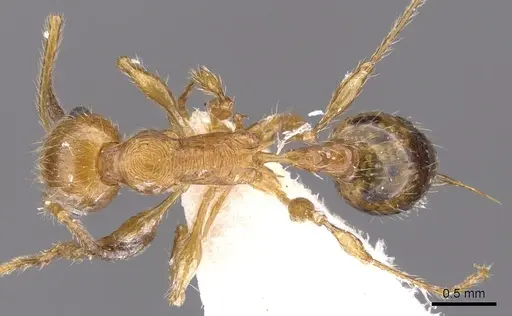
CASENT0912948
View on AntWeb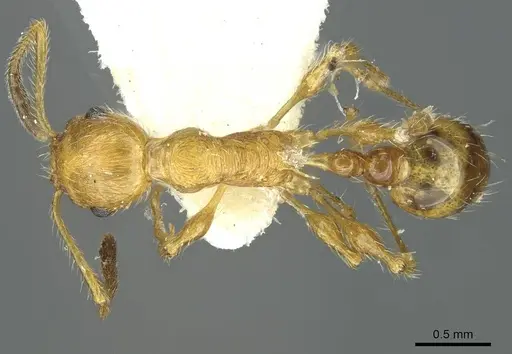
Literature
Loading distribution map...Loading products...