
Temnothorax convexus
- Sci. Name
- Temnothorax convexus
- Tribe
- Crematogastrini
- Subfamily
- Myrmicinae
- Author
- Forel, 1894
- Distribution
- Found in 3 countries
Introduction
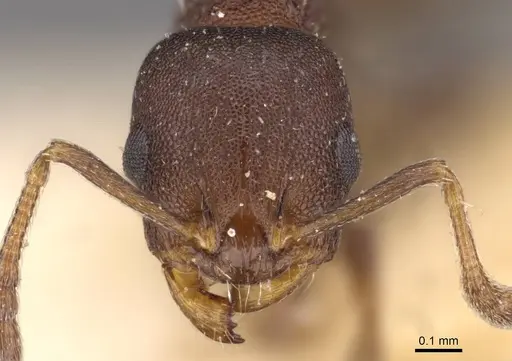
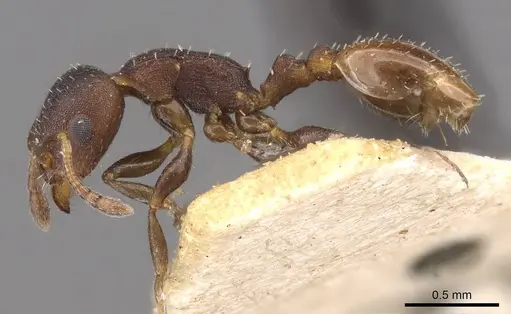
Temnothorax convexus is a small, dark brown ant from the Myrmicinae subfamily. Workers lack precise body length measurements but are typical of the genus (likely around 3-4 mm), with a robust build and a distinctly convex mesosoma profile. Queens are slightly larger, with body size unknown but probably 4-5 mm based on related species . The species has very reduced propodeal spines and short, rounded petiole, making it morphologically distinctive within its group . Originally described from northern Algeria, the species ranges across Morocco (Tangier, Rif), Gibraltar, southern Spain (Cádiz), and most recently Portugal, making it one of the rarer Mediterranean Temnothorax species . They nest in small cavities like abandoned oak galls and fallen branches in open, sun-exposed shrubland .
Quick Summary
- Difficulty: Medium
- Origin & Habitat: Mediterranean region, originally described from Algeria (M'Sila cork oak forest), now confirmed in Morocco (Tangier/Rif area), Gibraltar, southern Spain (Cádiz), and Portugal (Lousa) [1][4]. Inhabits open, sun-exposed shrubland with scattered oak trees (Quercus faginea and Quercus suber) [1].
- Colony Type: Single-queen (monogyne) colonies. One documented colony contained a gyne with approximately 30 workers and some female pupae [1]. Colony structure in captivity is unconfirmed but typical for the genus involves single-queen colonies.
- Size & Growth:
- Queen: No precise body length data available, likely around 4-5 mm based on Temnothorax genus
- Worker: No precise body length data available, likely around 3-4 mm based on Temnothorax genus
- Colony: Up to 30 workers observed in the wild, colonies likely remain small, probably under 100 workers [1]
- Growth: Moderate, based on typical Temnothorax development patterns
- Development: Estimated 6-10 weeks at optimal temperature based on genus-level data for related species (Development time inferred from typical Temnothorax patterns, specific data for this species is unavailable)
- Antkeeping:
- Temperature: Keep at 20-24°C. Mediterranean origin suggests they prefer warm conditions. A gentle gradient allows workers to self-regulate [1].
- Humidity: Moderate, they nest in oak galls and dead wood which stay relatively dry inside. Allow the nest substrate to dry partially between waterings. Avoid overly damp conditions [1].
- Diapause: Likely required, as a Mediterranean species from temperate latitudes, they probably need a winter rest period around 10-15°C for 2-3 months. More research needed on exact requirements.
- Nesting: Prefers small cavities, in nature they nest in abandoned oak galls and fallen branches [1]. In captivity, a Y-tong (AAC) nest with narrow chambers or a small naturalistic setup works well. Avoid large, open spaces.
- Behavior: Timid and non-aggressive. Workers are small and will flee rather than engage threats. They use a smearing defense mechanism (spatulate stinger to wipe venom) typical of the tribe Crematogastrini. They are not known to sting keepers. Escape prevention is important due to their small size, use fine mesh barriers. Foraging is typical for the genus, they search for small insects and honeydew.
- Common Issues: small size makes escape likely without fine mesh barriers (0.5 mm or smaller), limited distribution data means care requirements are not fully confirmed, wild-caught colonies may be stressed from collection, slow colony growth may frustrate beginners, winter diapause requirements are not well documented
Housing and Nest Setup
Temnothorax convexus is a tiny ant that needs appropriately scaled housing. In the wild, they nest in small cavities like abandoned oak galls (tiny wasp-induced growths on oak branches) and hollow sections of fallen branches [1]. For captivity, use a Y-tong (AAC) nest with narrow chambers or a small plaster nest with tight passages. Test tubes can work for founding colonies but may need upgrading as the colony grows. The nest should have a small outworld connected to it. Because of their tiny size, escape prevention is critical, use fine mesh barriers (0.5 mm or smaller) and ensure all connections are secure. These ants do not need large spaces, a compact nest with a small foraging area works best.
Feeding and Diet
Like most Temnothorax species, T. convexus likely accepts small protein sources and sugar. In the wild, they forage for small insects and honeydew. In captivity, offer small live prey like fruit flies, pinhead crickets, or mealworms cut into tiny pieces. Sugar can be provided as diluted honey water or sugar water, offered on a cotton swab or small dish. Feed protein 2-3 times per week and provide sugar constantly. Remove uneaten food promptly to prevent mold. Because workers are tiny, food items should be appropriately sized, avoid large prey that may overwhelm them.
Temperature and Seasonal Care
Keep the nest area at 20-24°C, which mimics Mediterranean conditions where this species naturally occurs. A heating cable on one side of the nest creates a temperature gradient that lets workers regulate their own temperature. As a species from Algeria, Morocco, Spain, and Portugal, they are adapted to warm, dry conditions with hot summers and mild winters. During the winter months (roughly November through February in the Northern Hemisphere), consider providing a cool period around 10-15°C to simulate natural seasonal changes. This diapause period may help trigger reproductive behavior in spring. More research is needed on exact overwintering requirements [1].
Behavior and Temperament
Temnothorax convexus is a timid, non-aggressive species. Workers are small and will typically flee from threats rather than engage. Their primary defense is smearing venom using a modified flattened stinger, typical of the tribe Crematogastrini. They are not known to sting keepers. Colonies are relatively quiet and do not produce strong alarm responses. Workers are moderately active and will forage for food in the outworld. The species shows typical Temnothorax behaviors including tandem-running recruitment (where one worker leads another to food sources). Due to their small size, they can squeeze through very small gaps, excellent escape prevention is essential. Queens are slightly larger than workers and can be distinguished by their larger thorax and wing scars (in dealate queens) [1].
Colony Development
Colony founding behavior is unconfirmed for this species, but based on related Temnothorax, it likely involves claustral foundation (the queen seals herself in a small chamber and raises the first brood alone using stored fat reserves). First workers (nanitics) are typically smaller than mature workers. Based on related species, expect 6-10 weeks from egg to first worker at optimal temperature (around 22°C). Growth is moderate, colonies likely stay small, with the one documented wild colony having approximately 30 workers with a queen and some female pupae [1]. Patience is key, Temnothorax species are not fast growers compared to some tropical ants.
Frequently Asked Questions
How long does it take for Temnothorax convexus to produce first workers?
Based on typical Temnothorax development, expect 6-10 weeks from egg to first worker at optimal temperature (around 22°C). Specific development data for this species is not available, so this is an estimate from related species.
Can I keep Temnothorax convexus in a test tube?
Yes, test tubes work well for founding colonies. Use a small test tube with a water reservoir (cotton ball) and provide a small outworld once workers emerge. Upgrade to a proper nest (Y-tong or plaster) when the colony reaches 20-30 workers.
Do Temnothorax convexus ants sting?
No, this species does not sting in the traditional sense. However, it can smear venom using a modified stinger as a defense mechanism. This venom is not harmful to humans, and they are completely safe to handle, though handling is not recommended as they can easily escape.
What do Temnothorax convexus eat?
They accept small protein sources (fruit flies, tiny crickets, mealworm pieces) and sugar (honey water, sugar water). Feed protein 2-3 times per week and provide sugar constantly. Remove uneaten food to prevent mold.
Do Temnothorax convexus need hibernation?
Likely yes, as a Mediterranean species from temperate latitudes, they probably need a winter rest period. Provide cool temperatures (10-15°C) for 2-3 months during winter. More research is needed on exact requirements.
How big do Temnothorax convexus colonies get?
Based on the one documented wild colony (~30 workers), colonies likely remain small, probably under 100 workers. They are not large colony builders.
Are Temnothorax convexus good for beginners?
They are moderate difficulty. Their small size requires good escape prevention, and care requirements are not fully confirmed due to limited species-specific data. They are peaceful and fascinating to watch, making them interesting for intermediate keepers.
When should I move my colony to a formicarium?
Move from test tube to a proper nest (Y-tong, plaster, or naturalistic) when the colony reaches 20-30 workers or when the test tube becomes crowded. Ensure the new nest has appropriate-sized chambers for their tiny size.
Can I keep multiple queens together?
Not recommended. This species is monogyne (single-queen) in the wild. Combining unrelated queens has not been documented and would likely result in fighting.
Why are my Temnothorax convexus escaping?
Their tiny size allows them to squeeze through very small gaps. Use fine mesh (0.5mm or smaller), ensure all connections are tight, and apply barrier gel or fluon to the edges of the outworld lid.
Report an Issue
The current care sheet is based fully on literature. See inconsistencies, or something that's incorrect? Please , it will be resolved after review from an admin. Contributing to the blogs tab also helps providing information, to make us be able to further improve the caresheets. Thank you for your support!
References

This caresheet is licensed under CC BY-SA 4.0 .
Community Blogs
CASENT0909022
View on AntWeb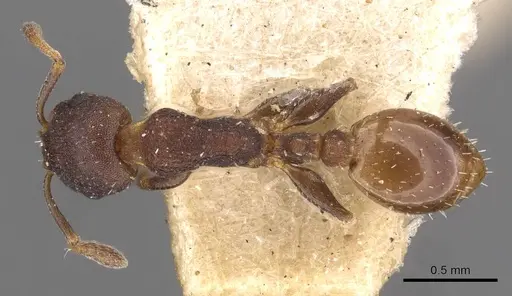
Literature
Loading distribution map...Loading products...