
Temnothorax conatensis
- Sci. Name
- Temnothorax conatensis
- Tribe
- Crematogastrini
- Subfamily
- Myrmicinae
- Author
- Galkowski & Lebas, 2016
- Distribution
- Found in 1 countries
Introduction
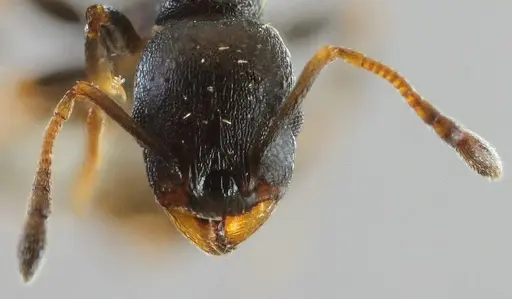
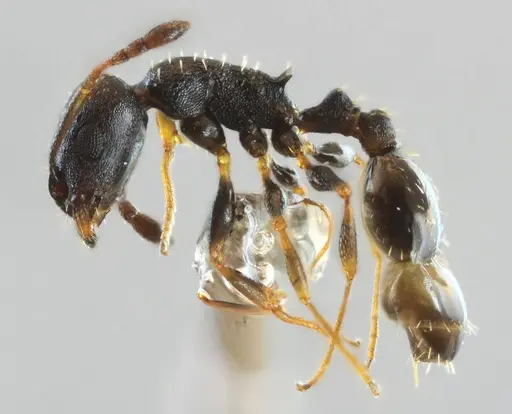
Temnothorax conatensis is a tiny, recently described ant from the Eastern Pyrenees in France. Workers are entirely black with brownish leg tips and antennae. Their body has a fine, net-like (reticulated) texture on the head and thorax that sets them apart from similar dark Temnothorax species . Each colony has just one queen (monogyne) and stays small - the largest wild nests had only 40 to 50 workers . These ants live in rocky, limestone mountain areas with open scrub vegetation (garrigue). They nest in cracks in rock faces or under moss on sloped surfaces . Workers hunt tiny insects and larvae on rock walls, even during the hottest part of the day . The species is also found in the Spanish Pyrenees at higher altitudes (up to 2000 m) .
Quick Summary
- Difficulty: Medium
- Origin & Habitat: Eastern Pyrenees, France (Conat Nature Reserve) at 600-700 m altitude. Also found in Spanish Pyrenees (Catalonia, Aragon) at 1300-2000 m. Lives in semi-open limestone garrigue with Quercus ilex, Thymus vulgaris, and Euphorbia nicaeensis. Nests in rock crevices or under moss on dolomitic limestone slopes [1][2][3].
- Colony Type: Monogyne, single queen per colony. Only one queen found in each wild nest [1][2]. Colonies are small, with a maximum of about 50 workers.
- Size & Growth:
- Queen: ~3-4 mm, inferred from Temnothorax genus [1]
- Worker: ~2-3 mm, inferred from Temnothorax genus [1]
- Colony: Up to 50 workers [1][2]
- Growth: Moderate
- Development: 6-10 weeks at optimal temperature (inferred from the nylanderi group) (Development time is estimated, no specific studies exist for this species. Related species in the nylanderi group take 6-10 weeks from egg to worker at room temperature.)
- Antkeeping:
- Temperature: Cool conditions suit them best. Based on their mountain habitat (600-2000 m), aim for 18-22 °C. Avoid temperatures above 25 °C [1][3].
- Humidity: Moderate: they naturally live in rocky areas with some moss moisture. Keep the nest substrate slightly moist but allow it to dry out between waterings. Provide a water source in the outworld.
- Diapause: Yes, as a Pyrenean mountain species, winter dormancy is essential. Keep the colony at 5-10 °C for 2-3 months (November to February) [1][4].
- Nesting: Use small nests with narrow chambers, Y-tong (AAC), plaster, or soil work well. Scale the chambers to their tiny size. Add flat stones or Dekovit to mimic natural rock crevices. Never use acrylic nests [1][2].
- Behavior: Workers are peaceful and harmless to humans. They have a modified spatulate stinger used to smear venom onto enemies, not to pierce skin, so they pose no pain or danger. They are active foragers during warmer parts of the day, hunting small prey on surfaces. Due to their tiny size (2 mm), escape prevention is critical, they can squeeze through very small gaps [1][2].
- Common Issues: tiny colony size makes them vulnerable to worker loss, any die-off can severely set back the colony, high escape risk: workers can fit through gaps smaller than 2 mm, seal everything tightly, sensitive to heat: temperatures above 25 °C can be lethal, rare in captivity, may be hard to obtain or exchange, requires a cold winter dormancy, missing or short diapause may prevent breeding
Housing and Nest Setup
Temnothorax conatensis is tiny, so you need a nest with small chambers and narrow passages. A Y‑tong (AAC) or plaster nest works well, avoid open spaces. In the wild they dig into rock crevices 5-10 cm deep, so they appreciate snug compartments. A naturalistic setup with flat stones or Dekovit can mimic their rock crevice habitat. Because workers are only about 2 mm, escape-proofing is absolutely essential, use fine mesh (e.g.,0.5 mm) and check every connection for gaps [1][2].
Feeding and Diet
In the wild workers hunt small insects and larvae on rock walls. In captivity, offer tiny live prey such as springtails, fruit flies, or the smallest crickets. They are mainly predatory, protein should be their main food. You can provide sugar water or honey occasionally, but don't overdo it. Feed small amounts 2-3 times per week and remove any uneaten prey to prevent mold [1][2].
Temperature and Seasonal Care
This is a mountain species from the Pyrenees (600-2000 m), so it prefers cool conditions. Keep the nest at 18-22 °C and never above 25 °C. During summer, room temperature is usually fine. In winter, they need a proper dormancy period: move them to a cool place (5-10 °C) for about 2-3 months (November to February). This mimics the cold mountain winters they experience naturally [1][3][4].
Colony Development
Colonies stay small, the largest wild nests had only 40-50 workers, so don't expect a big population. Growth is moderate. The queen is assumed to raise the first workers from her own reserves (claustral founding). No winged queens or males have been seen in wild colonies, which suggests swarming happens in late summer or spring from overwintering brood [1][2]. Be patient, the small colony size is normal and not a sign of trouble.
Behavior and Observation
Workers are active during the day and hunt on vertical rock surfaces. They are peaceful and harmless to people, their stinger is modified for smearing venom on insect attackers, not for piercing skin. Because of their dark colour and small size, you may need good lighting to watch them. They use tandem‑running to recruit nestmates to food, a common behaviour in Temnothorax [1][2].
Frequently Asked Questions
How long does it take Temnothorax conatensis to raise first workers?
Based on related Temnothorax species, expect 6-10 weeks from egg to first worker at around 20 °C. No specific data exists for this species, so this is an estimate [1].
How big do Temnothorax conatensis colonies get?
They stay small, the largest wild colonies had 40-50 workers. This is normal, not a problem [1][2].
Do Temnothorax conatensis sting?
They have a stinger but it's modified to smear venom, not pierce skin. They are completely harmless to humans, you won't feel a thing [1].
What temperature do Temnothorax conatensis need?
Keep them at 18-22 °C. Avoid temperatures above 25 °C. Room temperature is usually fine [1][3].
Do Temnothorax conatensis need hibernation?
Yes, they need a winter dormancy. Keep them at 5-10 °C for 2-3 months (e.g., November to February) to mimic their mountain winters [1][4].
Can I keep multiple queens together?
No, this is a monogyne species, only one queen per colony. Multiple queens would likely fight [1][2].
What do Temnothorax conatensis eat?
They need small live prey like fruit flies, springtails, or tiny crickets. Offer protein 2-3 times per week. Sugar water or honey can be given occasionally but shouldn't be the main food [1][2].
Are Temnothorax conatensis good for beginners?
They are rated medium difficulty. Their small size and specific temperature requirements (cool is better) mean they suit experienced beginners or intermediate keepers. Escape proofing is critical [1].
When do Temnothorax conatensis have nuptial flights?
Probably late summer (August) or spring from overwintering brood, based on weak brood in collected colonies and the absence of winged reproductives. Exact timing is not well known [1].
Why are my Temnothorax conatensis dying?
Common causes: temperatures above 25 °C, poor escape proofing (they crawl out and get lost), insufficient humidity, or lack of winter dormancy. Also make sure their prey is tiny enough for them to handle [1][2].
Report an Issue
The current care sheet is based fully on literature. See inconsistencies, or something that's incorrect? Please , it will be resolved after review from an admin. Contributing to the blogs tab also helps providing information, to make us be able to further improve the caresheets. Thank you for your support!
References

This caresheet is licensed under CC BY-SA 4.0 .
Community Blogs
ANTWEB1032081
View on AntWeb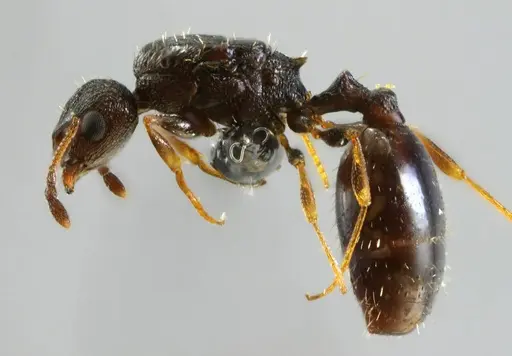
ANTWEB1032082
View on AntWeb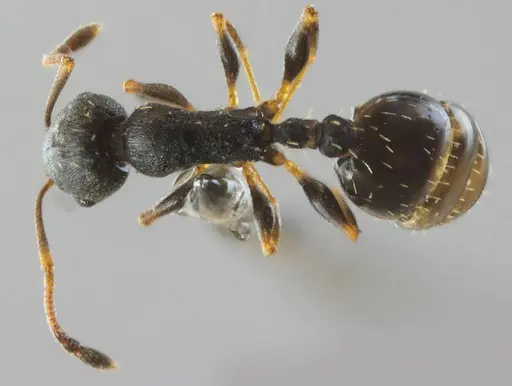
Literature
Loading distribution map...Loading products...