
Temnothorax caguatan
- Sci. Name
- Temnothorax caguatan
- Tribe
- Crematogastrini
- Subfamily
- Myrmicinae
- Author
- Snelling <i>et al.</i>, 2014
- Distribution
- Found in 2 countries
Introduction
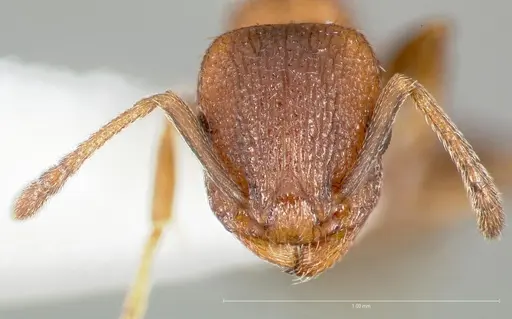
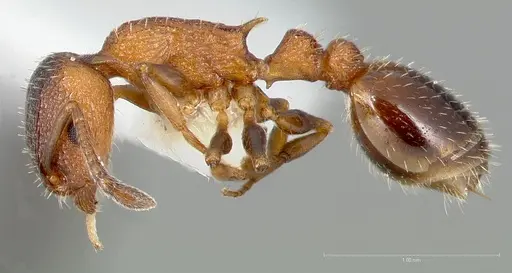
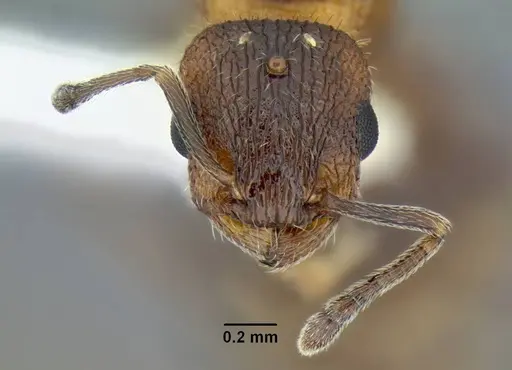
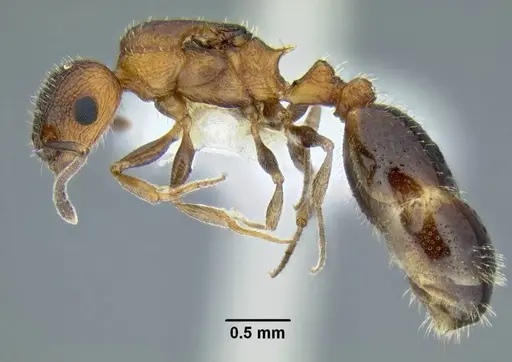
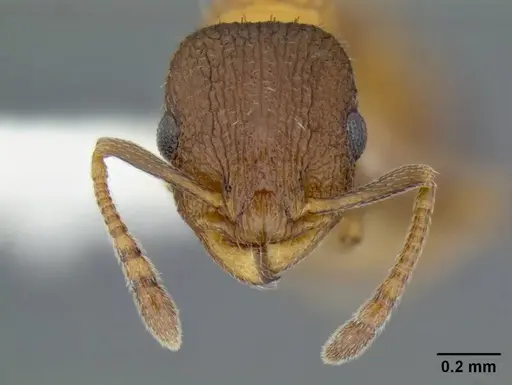
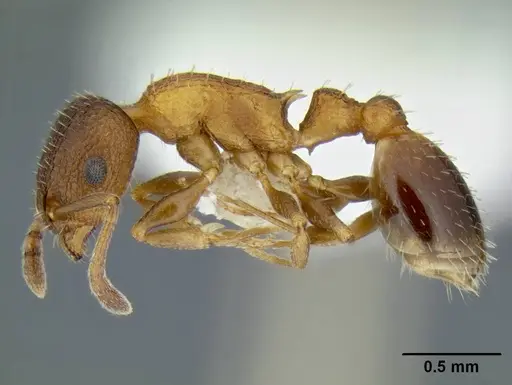
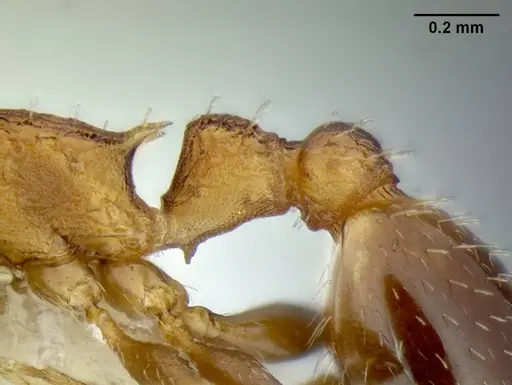
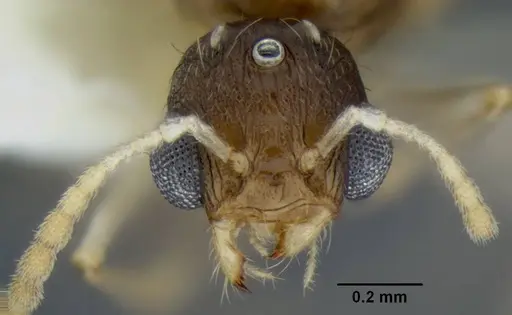
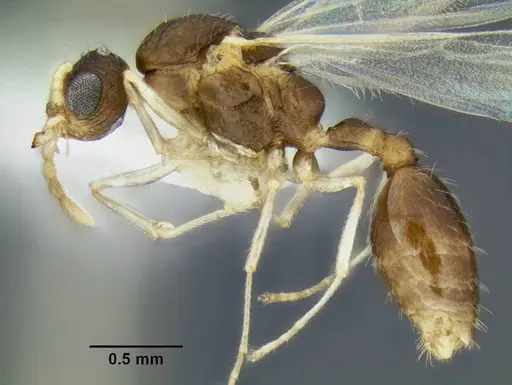
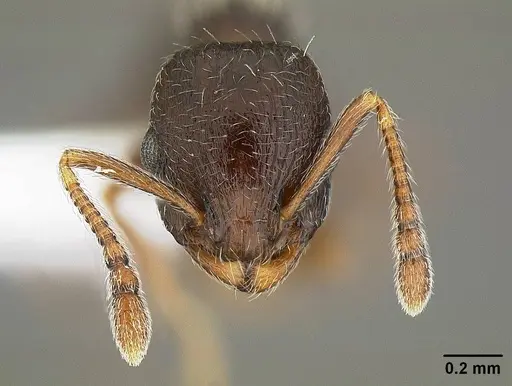
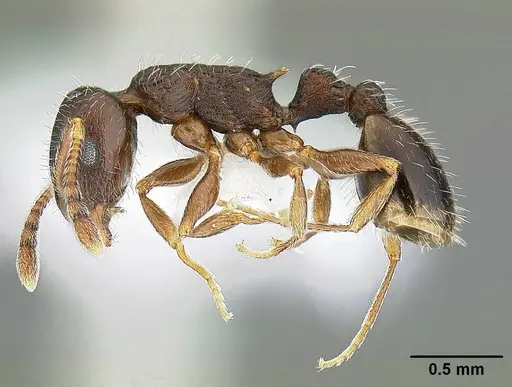
Temnothorax caguatan is a small arboreal ant native to the western United States and Baja California. Workers are small ants typical of the genus - exact body length is not recorded, but they are distinctly reddish-brown, with the head and gaster darker than the lighter mesosoma . They belong to the rugatulus species group and can be identified by their 11-segmented antennae and relatively long propodeal spines, which are longer than half the distance between their bases . These ants nest exclusively in dead branches of trees and shrubs, especially oaks (Quercus agrifolia, Q. chrysolepis, Q. kelloggii) and Jeffrey pine (Pinus jeffreyi) . That arboreal lifestyle means they need small, tight cavities rather than the open spaces many ground-nesting ants prefer. The species was only formally described in 2014,making it one of the more recently identified North American ants .
Quick Summary
- Difficulty: Easy
- Origin & Habitat: Native to Oregon, California, and Baja California. Found in diverse habitats including oak woodland, Jeffrey pine forest, chaparral, mixed coniferous forest, Sequoia forest, and riparian woodland [2]. Virtually all nest samples come from dead branches of trees and shrubs [1].
- Colony Type: Likely single-queen colonies (monogyne) and claustral founding, based on typical Temnothorax patterns [3].
- Size & Growth:
- Queen: Exact body length not available, estimated ~4-5mm from related Temnothorax species [1]
- Worker: Exact body length not available, estimated ~2.5-3mm from related Temnothorax species [1]
- Colony: Estimated at several hundred workers at maturity, based on typical Temnothorax colony sizes [3]
- Growth: Moderate
- Development: Estimated 6-10 weeks at room temperature, based on related Temnothorax species [3] (Development time depends on temperature, warmer conditions (around 20-24°C) speed it up, cooler temperatures slow it down.)
- Antkeeping:
- Temperature: Room temperature (20-24°C) works well. Avoid sustained temperatures above 28°C. These ants prefer moderate conditions and don't need extra heating.
- Humidity: Keep nest substrate dry to slightly moist, mimicking the dry conditions inside dead branches. Avoid condensation and waterlogging.
- Diapause: Yes, recommended for 3-4 months (November to February) at 10-15°C to simulate their natural temperate winter and support healthy colony cycling [3].
- Nesting: Provide small cavities that mimic their natural dead-branch habitat. Y-tong (AAC) nests with narrow chambers (3-5mm wide) work well. Small cork nests or test tube setups with tight spaces also work. Avoid large open chambers, these ants feel exposed and stressed in big spaces.
- Behavior: Temnothorax caguatan is generally peaceful and non-aggressive. Workers are small and relatively slow-moving. Their main defense is a modified stinger used to smear venom onto threats rather than sting, they are not dangerous to keepers. As arboreal ants, they enjoy climbing and exploring vertical spaces. Escape risk is high due to their small size: use fluon barriers on smooth surfaces and fine mesh to prevent escapes.
- Common Issues: high escape risk due to small size, require fluon barriers and fine mesh, arboreal nesting needs appropriately sized cavities, too-large chambers cause stress, winter diapause is important for long-term health, skipping it may lead to colony decline, wild-caught colonies may carry parasites that can devastate captive colonies, slow growth requires patience, especially during founding
Housing and Nest Setup
Temnothorax caguatan is an arboreal species that naturally nests in small cavities inside dead branches and twigs [1][2]. In captivity, this means you need to provide small, tight nesting chambers rather than large open ones. Y-tong (AAC) nests with narrow chambers (3-5mm wide) work well, these allow workers to touch both walls when inside. Small cork or plaster nests are also good. Test tubes can work for founding colonies, but once the colony grows, move them to a more naturalistic setup. The outworld should include climbing structures like twigs or cork bark, since these ants naturally forage in vertical spaces. Escape prevention is critical, these ants can squeeze through tiny gaps, so use tight-fitting lids and apply fluon to smooth surfaces near the nest entrance.
Feeding and Diet
Like most Temnothorax, T. caguatan likely eats small insects, honeydew from aphids, and nectar. In captivity, offer small protein sources like fruit flies, pinhead crickets, or tiny pieces of mealworm. Prey should be appropriately sized, a fruit fly is a substantial meal for a worker of this species. For carbohydrates, offer sugar water, honey water, or diluted jam. Some keepers find they prefer more natural sugar sources like honeydew. Feed small amounts every 2-3 days and remove uneaten food to prevent mold. During founding, the queen will not eat, she relies on stored fat. Once workers arrive, they will forage and can be offered food in the outworld. These ants are not aggressive foragers, so place food where they will find it easily. [3]
Temperature and Seasonal Care
Temnothorax caguatan comes from temperate California, where seasons are distinct. Room temperature (20-24°C) is ideal for keeping them active. They can tolerate temperatures down to 15°C without issue and may even benefit from cooler periods in winter. Avoid sustained temperatures above 28°C, which can stress the colony and cause brood death. No heated setup is needed, normal household temperatures work fine. The most important seasonal factor is providing a winter diapause. From November to February, gradually lower the temperature to 10-15°C. Reduce feeding during this time and minimize disturbance. In spring, slowly warm them back to room temperature to trigger renewed activity and brood production. [1][2]
Colony Development and Growth
Starting a colony of Temnothorax caguatan requires patience. A newly mated queen will seal herself in a small cavity and lay eggs without leaving to forage, that's typical claustral founding for this genus [3]. She relies on her stored fat reserves to survive and feed her first brood. The time from egg to first worker (nanitic) takes about 6-10 weeks at room temperature, with warmer conditions speeding things up. The first workers, called nanitics, are often smaller and paler than later workers. Once they emerge, the queen stops caring for the brood directly and becomes primarily an egg-layer. Workers take over foraging and brood care. Colony growth is gradual, expect a few months to reach 20-30 workers, and a year or more to pass 100. Providing stable conditions, proper food, and avoiding disturbance during founding are key to success.
Behavior and Observation
Temnothorax caguatan is a peaceful species that makes an excellent subject for observation. Workers move relatively slowly, which makes them easier to watch. As arboreal ants, they spend a lot of time climbing and exploring vertical surfaces, so provide climbing structures in the outworld. Their primary defense is a modified stinger used to smear venom onto threats, they are not aggressive and will retreat rather than fight. They pose no danger to keepers. Interestingly, queens are often visible in the nest and not hidden away. Workers communicate by touching antennae and will establish defined foraging routes once they find reliable food sources. [3]
Frequently Asked Questions
How long does it take for Temnothorax caguatan to produce first workers?
From egg to first worker typically takes 6-10 weeks at room temperature (20-24°C), based on related Temnothorax species [3]. Warmer conditions speed development, cooler slows it. The founding queen raises the first brood alone without foraging.
What size colony does Temnothorax caguatan reach?
Based on typical Temnothorax colony sizes, a mature colony likely reaches several hundred workers. The exact maximum is not documented, but it is not one of the largest Temnothorax species. Growth is slow, it may take 1-2 years to exceed 100 workers.
Do Temnothorax caguatan ants sting?
No, they do not sting in the usual sense. They have a modified stinger used to smear venom onto threats rather than inject it. They are not dangerous to humans and will simply retreat if disturbed.
What do I feed Temnothorax caguatan?
Offer small protein sources like fruit flies, tiny mealworm pieces, or small crickets. They also accept sugar sources like honey water or sugar water. Feed small amounts every 2-3 days and remove uneaten food to prevent mold.
Do Temnothorax caguatan ants need hibernation?
Yes, a winter diapause is recommended. Since they are native to temperate California with distinct seasons, provide a rest period from November to February at 10-15°C. Reduce feeding and disturbance during this time. This helps maintain long-term colony health.
What nest type is best for Temnothorax caguatan?
Y-tong (AAC) nests with narrow chambers (3-5mm wide) or small cork nests work best. These ants naturally nest in small cavities inside dead branches, so they prefer tight chambers rather than large open spaces.
Are Temnothorax caguatan ants good for beginners?
Yes, this is an excellent species for beginners. They are small, peaceful, do not sting in a harmful way, and have simple care requirements. The main challenges are providing appropriately sized nesting cavities and being patient with their slow growth.
Can I keep multiple queens together in a Temnothorax caguatan colony?
This species is likely monogyne (single-queen) based on typical Temnothorax patterns. Combining unrelated queens may lead to fighting. If you have a mated queen, house her alone until workers appear.
When should I move my Temnothorax caguatan to a formicarium?
Wait until the colony has at least 20-30 workers before moving them to a larger setup. A test tube works well for the first few months. Once they are established, provide a more elaborate setup with nesting and foraging areas.
Why is my Temnothorax caguatan colony declining?
Common causes include: skipping winter diapause, using nesting chambers that are too large, excessive disturbance during founding, parasites from wild-caught colonies, or poor nutrition. Review your care conditions. Purchasing from reputable sellers reduces parasite risks.
Report an Issue
The current care sheet is based fully on literature. See inconsistencies, or something that's incorrect? Please , it will be resolved after review from an admin. Contributing to the blogs tab also helps providing information, to make us be able to further improve the caresheets. Thank you for your support!
References

This caresheet is licensed under CC BY-SA 4.0 .
Community Blogs
CASENT0005692
View on AntWeb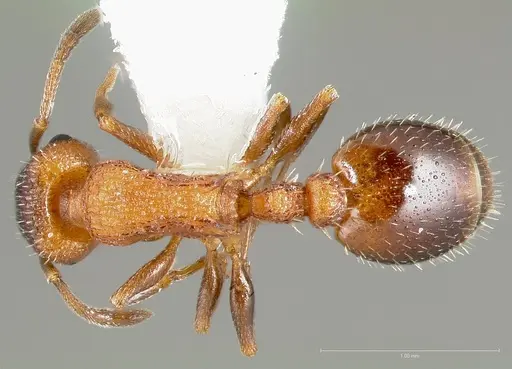
CASENT0118155
View on AntWeb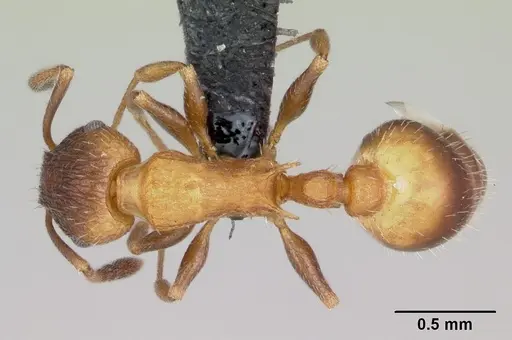
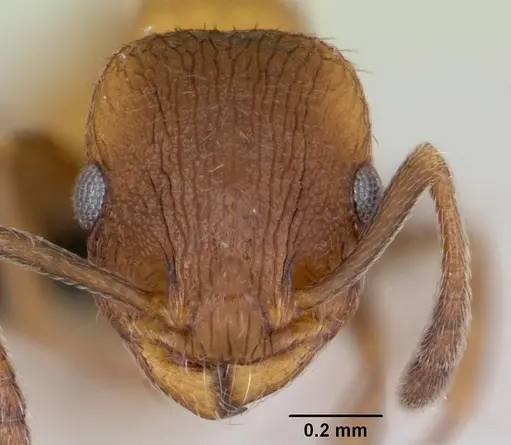
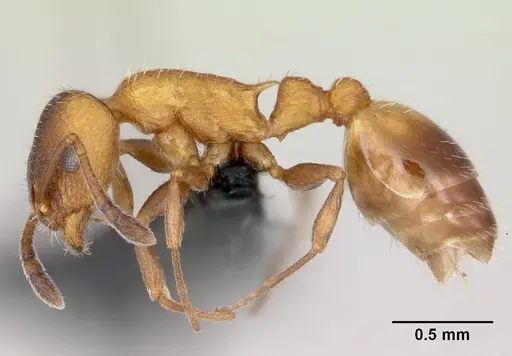
CASENT0218887
View on AntWeb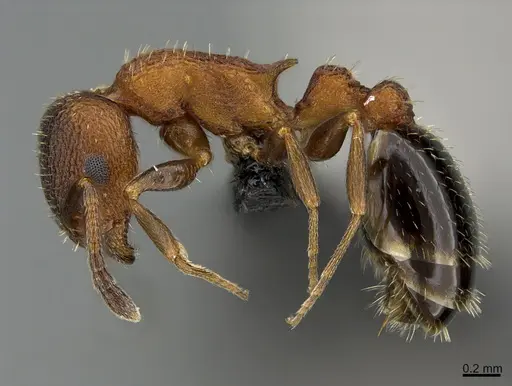
CASENT0339250
View on AntWeb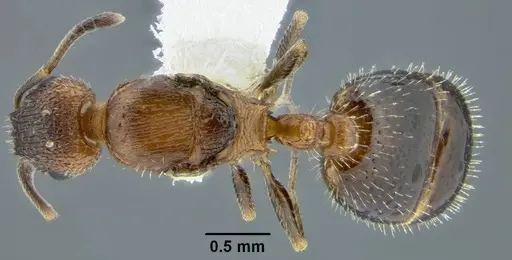
CASENT0339286
View on AntWeb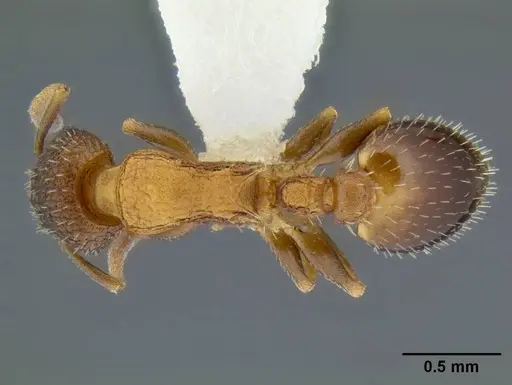
CASENT0339304
View on AntWeb
CASENT0844364
View on AntWeb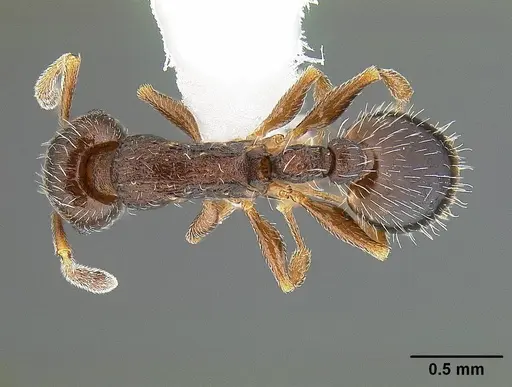
Literature
Loading distribution map...Loading products...