
Temnothorax brackoi
- Sci. Name
- Temnothorax brackoi
- Tribe
- Crematogastrini
- Subfamily
- Myrmicinae
- Author
- Salata & Borowiec, 2019
- Distribution
- Found in 1 countries
Introduction
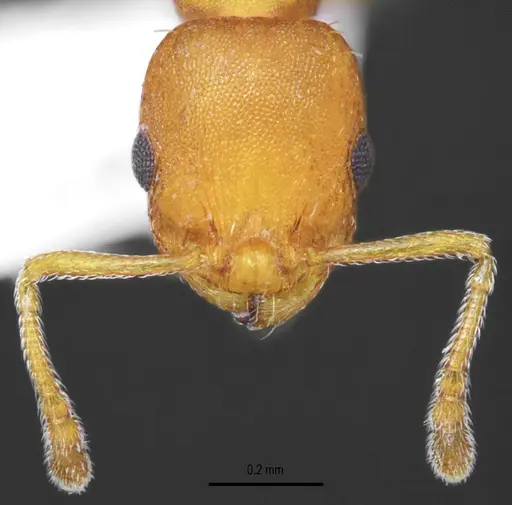
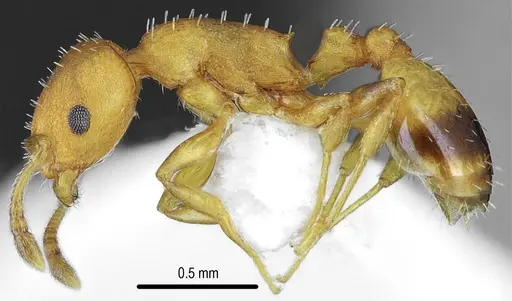
Temnothorax brackoi is a tiny, recently described ant from the eastern Mediterranean. Workers are uniformly yellow to dark yellow with a distinctive dark band across the first segment of the gaster . They are typical of the genus Temnothorax in size and build, though no total body length has been recorded in research. This species belongs to the aveli species group and was formally described in 2019,having been split from the broader Temnothorax unifasciatus complex . In western Greece it is very common, especially in warm lowland areas with Mediterranean shrubland, though its occurrence decreases towards the east . Specimens have been found on shrubs and trees along roadsides, in olive plantations, maquis, phrygana, and inside deciduous or coniferous forests at elevations from 9-990 meters . Nests have not been observed in the wild, but based on related species they probably nest inside dry stems of herbs and bushes .
Quick Summary
- Difficulty: Easy
- Origin & Habitat: Eastern Mediterranean, found throughout Greece (Epirus, Ionian Islands, Peloponnese, Thessaly, Sterea Ellas) and into Dalmatia, Croatia. Inhabits warm lowland areas with Mediterranean shrubs, including maquis, phrygana, and open forest edges [1][3][4].
- Colony Type: Likely monogyne (single queen) based on typical Temnothorax patterns, but not directly confirmed.
- Size & Growth:
- Queen: Size data unavailable, queens have not been described in research.
- Worker: Size data unavailable, no total body length recorded. Workers are small, typical of the genus.
- Colony: Likely up to several hundred workers at maturity (estimated from related species).
- Growth: Moderate (estimated)
- Development: Estimated 6-10 weeks based on related Temnothorax species (Development time from egg to worker has not been directly studied for T. brackoi.)
- Antkeeping:
- Temperature: 20-26°C, with 22-24°C being ideal. Provide a slight gradient so ants can self-regulate. They are adapted to warm Mediterranean conditions [3].
- Humidity: Moderate, tending towards drier conditions, they naturally live in dry Mediterranean shrubland. Keep the nest substrate lightly moist but allow it to dry between waterings. Avoid waterlogging.
- Diapause: Yes, likely requires a winter rest period of 8-12 weeks at 5-10°C based on its temperate climate. Specific requirements have not been studied.
- Nesting: In nature they probably nest inside dry stems of herbs and bushes [1][3][4]. In captivity, use a Y‑tong (AAC) nest with narrow chambers or a test tube setup. They prefer tight, enclosed spaces.
- Behavior: Peaceful and non‑aggressive. Workers are small and relatively slow. They possess a modified stinger used to smear venom rather than pierce (trait of the Crematogastrini tribe), but they rarely use it and pose no danger to keepers. Escape prevention is critical due to their tiny size, they can squeeze through very small gaps.
- Common Issues: escape prevention is critical due to very small size, they can squeeze through tiny gaps., colonies may fail if kept too wet, they prefer drier conditions than many ants., slow growth can frustrate beginners, patience is needed during the founding phase., winter diapause is required for long‑term colony health, skipping hibernation can weaken colonies., disturbing the queen during founding may cause abandonment.
Housing and Nest Setup
Temnothorax brackoi is a small ant that does well in compact nests. A Y‑tong (AAC) formicarium with narrow chambers or a test tube setup works best. In the wild they likely nest inside dry plant stems, so they feel secure in tight, enclosed spaces [1][3][4]. Avoid large open chambers. Connect a small outworld for foraging, and treat the rim with fluon to prevent escapes. Because the workers are tiny, ensure all connections are sealed tight. A thin layer of substrate in the outworld helps them move and forage naturally.
Feeding and Diet
Like most Temnothorax, T. brackoi forages for honeydew from aphids and scale insects, and also scavenges small insects. In captivity offer a sugar source (diluted honey or sugar water, changed every 2-3 days) and small protein prey such as fruit flies, pinhead crickets, or other tiny arthropods. Feed protein once or twice a week, removing uneaten food after 24 hours. Portions should be very small, a drop of sugar water and a prey item smaller than a worker’s head is enough. Adjust based on your colony’s consumption.
Temperature and Seasonal Care
As a Mediterranean species, T. brackoi prefers warmth. Keep the nest area at 20-26°C, ideally with a gentle gradient so workers can choose their preferred spot. Room temperature within this range works well for most of the year. During summer they do well at the warmer end, which supports brood development. In winter they require a diapause (hibernation) period of 8-12 weeks at 5-10°C. This mimics their natural seasonal cycle in Greece and is important for long‑term colony health [3]. Move the colony to a cool basement, garage, or refrigerator during winter. Do not feed during diapause, keep them cold and dark, with just enough substrate moisture to prevent complete drying.
Colony Founding and Growth
Founding behavior has not been directly observed for this species. Based on typical Temnothorax patterns, it is believed that queens found claustrally, sealing themselves in a small chamber and raising the first brood from stored reserves without foraging. The first workers (nanitics) are smaller than normal workers and will begin foraging once they emerge. After that, the colony enters a growth phase. Growth is moderate: from egg to worker you can expect roughly 6-10 weeks at optimal temperatures (estimated from related species). Colonies likely reach a few hundred workers after 1-2 years. Patience is important, disturbing the queen during founding can cause her to abandon the nest.
Behavior and Temperament
Temnothorax brackoi is a peaceful, non‑aggressive ant. Workers are small, slow‑moving, and go about their foraging methodically. They belong to the tribe Crematogastrini, whose members have a modified stinger used to smear venom onto enemies rather than pierce them. However, they are not aggressive and pose no danger to keepers. In the wild they use chemical trails and tandem‑running to recruit nestmates to food. Due to their tiny size, escape prevention is critical, they can slip through very small gaps. They are best suited for keepers who enjoy observing calm, small colonies.
Frequently Asked Questions
How long does it take for Temnothorax brackoi to raise their first workers?
Egg‑to‑worker development is estimated at 6-10 weeks at around 24°C, based on related Temnothorax species. Specific data for T. brackoi is not available. The queen likely stays sealed in during founding and emerges once the first workers have hatched.
What temperature do Temnothorax brackoi ants need?
Keep them at 20-26°C, with 22-24°C being ideal. They are a Mediterranean species adapted to warmth. A slight temperature gradient allows the ants to self‑regulate [3].
Do Temnothorax brackoi ants need hibernation?
They likely require a winter diapause period (about 8-12 weeks at 5-10°C) because they come from a temperate climate with mild winters. This has not been studied specifically for T. brackoi, but skipping hibernation may shorten colony lifespan.
What do Temnothorax brackoi ants eat?
Offer a sugar source (honey water or sugar water changed every few days) and small protein prey like fruit flies or pinhead crickets once or twice a week. Remove uneaten prey after 24 hours to avoid mold.
Are Temnothorax brackoi ants good for beginners?
Yes, they are generally easy to handle, peaceful, don't require elaborate setups, and tolerate typical room temperatures. However, their tiny size demands careful escape prevention, and the need for winter diapause can be a hurdle for absolute beginners. Patience is needed during the slow founding phase.
How big do Temnothorax brackoi colonies get?
Based on related species, mature colonies likely reach a few hundred workers. They are not among the largest Temnothorax, but can produce a nice‑sized nest over 1-2 years under good conditions.
Can I keep multiple Temnothorax brackoi queens together?
Not recommended. Most Temnothorax are monogyne (single‑queen), and while this hasn't been confirmed for T. brackoi, combining unrelated queens would likely lead to fighting. Keep one queen per colony.
Do Temnothorax brackoi ants sting?
They have a modified stinger used to smear venom, not to pierce. They are not aggressive and are safe to handle, but avoid provoking them. The venom may cause minor skin irritation in sensitive individuals, but this is rare.
What is the best nest type for Temnothorax brackoi?
A Y‑tong (AAC) formicarium with narrow chambers or a test tube setup works well because they prefer tight, dark, enclosed spaces, like the dry plant stems they nest in naturally. Avoid large open chambers [1][4].
Where is Temnothorax brackoi found in the wild?
It is native to the eastern Mediterranean, common in western Greece and also recorded from coastal Croatia. It lives in warm lowland habitats with Mediterranean shrubs, maquis, phrygana, and forest edges at elevations from 9-990 m [1][3][4].
Why are my Temnothorax brackoi dying?
Common causes: too much moisture (they prefer drier conditions), escape holes you didn't notice, disturbing the queen during founding, or skipping winter diapause. Check that the nest isn't wet, all seals are tight, and provide the needed hibernation period.
When should I move my colony to a formicarium?
Wait until there are at least 20-30 workers before moving from a test tube to a formicarium. Moving too early can stress the colony. Make sure the new nest has appropriately sized chambers and that all escape points are sealed.
Report an Issue
The current care sheet is based fully on literature. See inconsistencies, or something that's incorrect? Please , it will be resolved after review from an admin. Contributing to the blogs tab also helps providing information, to make us be able to further improve the caresheets. Thank you for your support!
References

This caresheet is licensed under CC BY-SA 4.0 .
Community Blogs
CASENT0846669
View on AntWeb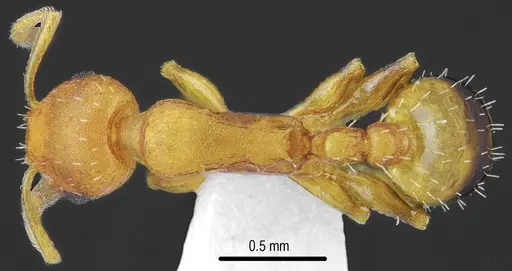
Literature
Loading distribution map...Loading products...