
Temnothorax blascoi
- Sci. Name
- Temnothorax blascoi
- Tribe
- Crematogastrini
- Subfamily
- Myrmicinae
- Author
- Espadaler, 1997
- Distribution
- Found in 1 countries
Introduction
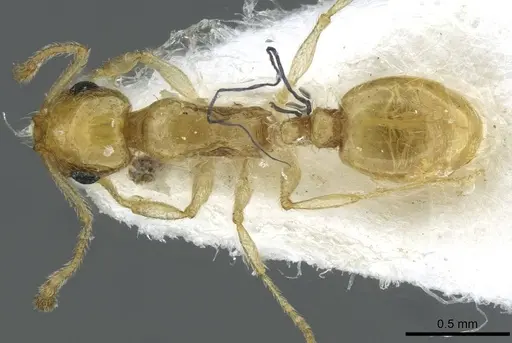
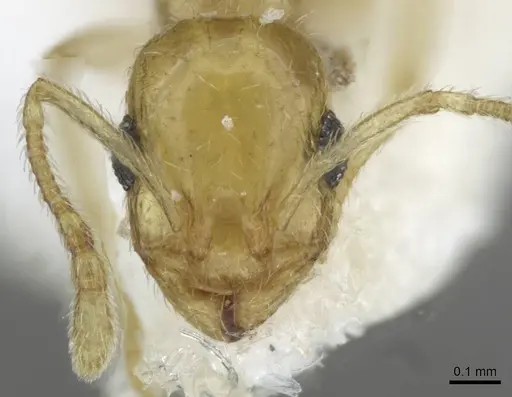
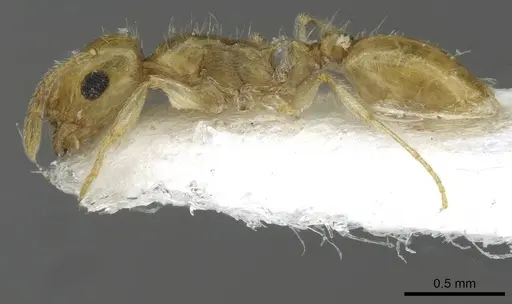
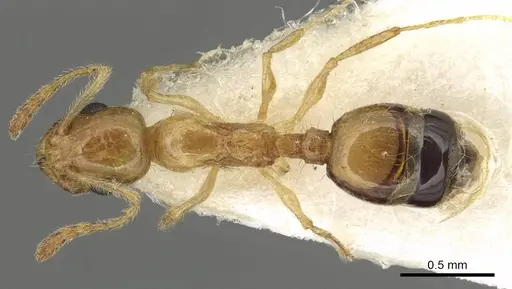
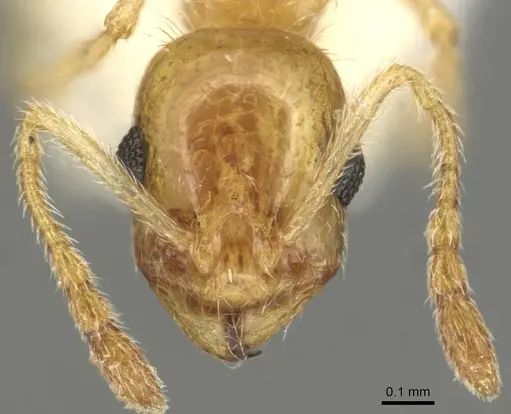
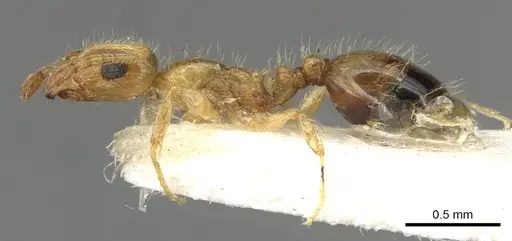
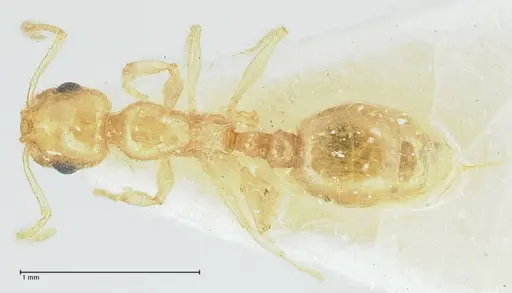
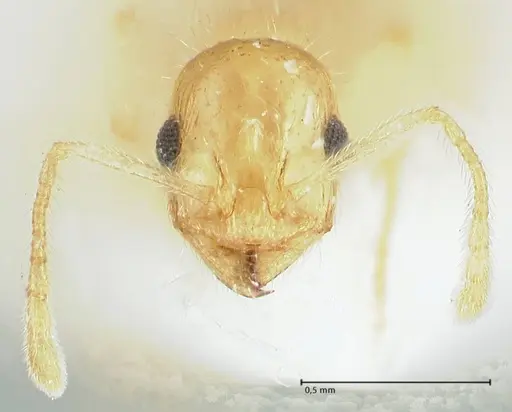
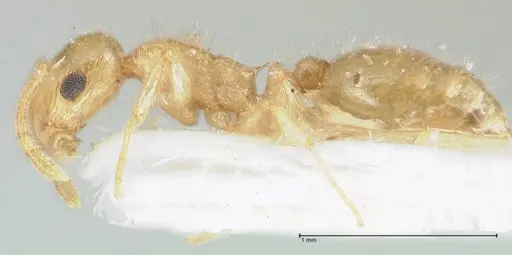
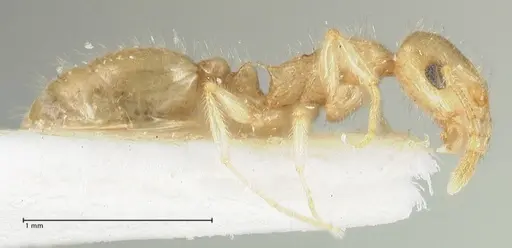
Temnothorax blascoi is a tiny ant species endemic to the Iberian Peninsula in Spain . Workers are light yellow with enormous eyes, a smooth and shiny head, and very long, tapered body hairs that give them a fuzzy look . The species belongs to the laurae group within the Palearctic clade of Temnothorax . It's a poorly known endemic found only in semiarid habitats with sparse vegetation in eastern Spain, at elevations from 854 to 1,339 meters . Queens and males were collected alongside workers at the type locality, La Retuerta in Pina de Ebro, Zaragoza . Originally described as Leptothorax blascoi in 1997,it was moved to Temnothorax in 2003 .
Quick Summary
- Difficulty: Medium
- Origin & Habitat: Endemic to the Iberian Peninsula, Spain – specifically Zaragoza province and the Segura River basin in southeastern Spain [6][7]. Found in semiarid habitats with scarce vegetation at low altitudes between 854 and 1,339 meters [6][7].
- Colony Type: Single-queen colonies are typical for this genus. Ergatoid (wingless) replacement reproductives may appear if the primary queen dies, which is common in Temnothorax.
- Size & Growth:
- Queen: ~4–5 mm – inferred from Temnothorax genus patterns (no direct measurements available)
- Worker: ~2–4 mm – inferred from Temnothorax genus and smaller than related T. ansei [8]
- Colony: Likely under 100 workers at maturity – typical for the genus
- Growth: Moderate
- Development: Estimated 6–10 weeks based on typical Temnothorax development at optimal temperature (Development time inferred from genus-level data for related laurae-group species)
- Antkeeping:
- Temperature: Keep at 20–24°C. These are Mediterranean ants adapted to warm conditions, but not extreme heat. Provide a gradient so they can choose their preferred spot [6][7].
- Humidity: Moderate – they come from semiarid habitats. Keep the nest substrate slightly moist in one area and dry in another, letting the ants regulate [7].
- Diapause: Yes – as a temperate Spanish species, give them 8–12 weeks of winter rest at 10–15°C [7].
- Nesting: Y-tong (AAC) or plaster nests work well. They naturally nest in small cavities under stones or in rotting wood in dry sites. Keep chambers tight and scaled to their tiny size.
- Behavior: Generally peaceful and non‑aggressive. Workers are active foragers, likely relying on their large eyes for visual navigation. They probably tend aphids and hunt small insects. Their tiny size means fine mesh (≤0.5 mm) is needed to stop escapes. They do not sting and are harmless to keepers.
- Common Issues: tiny size makes escapes likely without fine mesh barriers, slow colony growth can frustrate beginners who overfeed or disturb the nest too often, semiarid origin means they are sensitive to excess moisture – avoid waterlogged nests, limited distribution in the wild makes wild colonies hard to find, as a poorly known endemic, many care details are inferred rather than directly observed
Housing and Nest Setup
Temnothorax blascoi does well in Y‑tong (AAC) or plaster nests with tight chambers scaled to their tiny size. A test tube setup works for founding colonies. Because they come from semiarid habitats [7], the nest should have both a slightly moist area and drier zones so workers can choose [6][7]. Use fine mesh (≤0.5 mm) on all openings – these ants can squeeze through very small gaps. The outworld can be simple, they don't need much space.
Feeding and Diet
Like most Temnothorax, these ants are omnivorous. Offer sugar water, honey, or diluted maple syrup as a constant carbohydrate source. For protein, provide small live prey such as fruit flies, pinhead crickets, or tiny mealworm pieces. Feed protein every 5–7 days and remove uneaten prey after 24 hours to prevent mold. Since colonies stay small, portion sizes should be tiny – a few drops of sugar water and prey smaller than the workers themselves.
Temperature and Seasonal Care
Keep nest temperatures between 20–24°C for optimal brood development [6][7]. A heating cable on one side creates a gradient so workers can regulate conditions. During winter, provide a diapause period of 8–12 weeks at 10–15°C [7]. Stop feeding during this period and keep them dark and quiet. Cool them gradually over 2–3 weeks, and warm them up slowly afterward. This annual cycle helps maintain colony health.
Behavior and Observation
Workers are active and alert, likely using their unusually large eyes for visual navigation [2][3]. They forage alone rather than in groups, searching for nectar, honeydew, and small arthropods. The species is not aggressive – workers flee rather than fight. Their long body hairs (pilosity) help them sense their environment [2][3]. Observation is easiest in the evening when workers are most active.
Frequently Asked Questions
How long does it take for Temnothorax blascoi to produce first workers?
Expect 6–10 weeks from egg to first worker at around 22°C. This is typical for Temnothorax species, though exact timing varies with temperature and feeding.
Do Temnothorax blascoi ants sting?
No, they are harmless. They are too small to sting and use fleeing as their main defense.
What size colony does Temnothorax blascoi reach?
Colonies are small, likely under 100 workers at maturity. This is typical for the genus.
Can I keep multiple queens together?
Not recommended. Temnothorax are typically single‑queen (monogyne). Combining unrelated foundresses has not been documented for this species and could lead to fighting.
What temperature do they need?
Keep the nest at 20–24°C. They are Mediterranean ants adapted to warm conditions but not extreme heat. A temperature gradient is useful [6][7].
Do they need hibernation?
Yes. As a temperate Spanish species, give them 8–12 weeks of winter rest at 10–15°C to mimic their natural cycle [7].
Why are my ants escaping?
Their tiny size lets them slip through very small gaps. Use fine mesh (≤0.5 mm) on all openings and check for gaps around tubing connections.
Is Temnothorax blascoi good for beginners?
Medium difficulty. They are harder than common Lasius but not as demanding as tropical ants. Their small size and escape risk need careful setup, but care requirements are straightforward once established.
Report an Issue
The current care sheet is based fully on literature. See inconsistencies, or something that's incorrect? Please , it will be resolved after review from an admin. Contributing to the blogs tab also helps providing information, to make us be able to further improve the caresheets. Thank you for your support!
References

This caresheet is licensed under CC BY-SA 4.0 .
Community Blogs
Literature
Loading distribution map...Loading products...