
Temnothorax barrettoi
- Sci. Name
- Temnothorax barrettoi
- Tribe
- Crematogastrini
- Subfamily
- Myrmicinae
- Author
- Hamer & Guénard, 2023
- Distribution
- Found in 0 countries
Introduction
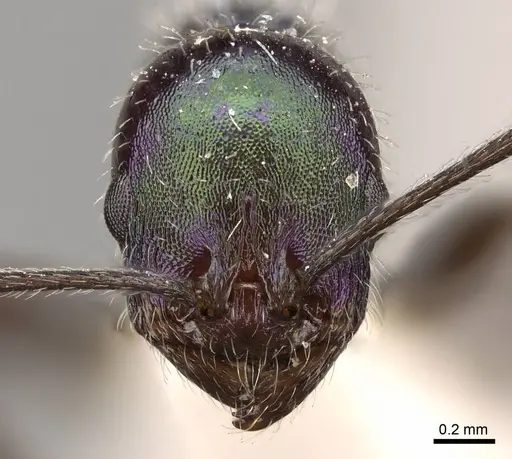
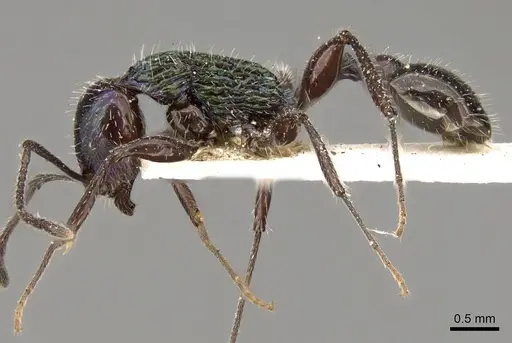
Temnothorax barrettoi is a tiny yellow ant first described in 2023 from Hong Kong . Workers are about 2.2 mm long with an ochreous yellow body and noticeably lighter legs and antennae . What sets this species apart is the unique areolate-rugose (rough, cobblestone-like) sculpture on its head - a pattern not seen in any other Chinese Temnothorax . It was discovered in Tai Po Kau Headland, a protected area with natural lowland coastal woodland and a rare pre-war Feng Shui relict forest . Since then, it’s also been found in Thailand and on Hainan Island, suggesting a wider subtropical range . The most interesting thing about T. barrettoi is its ergatoid queen system. In Thailand, a colony was found with 4 wingless queens (ergatoids) living alongside 8 workers . These ergatoid queens can replace a lost primary queen, and having multiple ones in a colony is unusual - it might mean this species can be polygynous. Combined with its tiny size and recent discovery, T. barrettoi offers a peek into a just‑described ant that’s still mostly a mystery.
Quick Summary
- Difficulty: Medium
- Origin & Habitat: Tai Po Kau Headland, Hong Kong, lowland coastal woodland at 70 m elevation [1]. Also recorded in Thailand (dry evergreen forest, nesting in dead twigs on the forest floor) and Hainan Province, China [2][3].
- Colony Type: Social structure unclear. Likely monogyne with ergatoid replacement queens, but the presence of multiple ergatoids in one colony could indicate polygyny [3]. More research is needed.
- Size & Growth:
- Queen: ~1.9 mm (ergatoid queen total length) [3]. Winged queens have not been collected.
- Worker: 2.2 mm [1].
- Colony: Up to 8 workers recorded in the field, based on typical Temnothorax colonies, likely up to 200 workers [3].
- Growth: Moderate
- Development: Estimated 6-10 weeks at 24-26°C, inferred from related species (No specific data for T. barrettoi, estimate is from other small Temnothorax.)
- Antkeeping:
- Temperature: Keep at 22-26°C. This subtropical ant prefers steady warmth. Provide a gradient so ants can self‑regulate [3].
- Humidity: Moderate to high. Keep nest substrate slightly moist (not wet). Leaf‑litter species need damp conditions. A moisture gradient is ideal [1][3].
- Diapause: Unlikely to be required. As a subtropical species, it has no strong seasonal cues. A slight cool period (18-20°C) in winter may be beneficial but is not necessary.
- Nesting: Use small test tubes for founding, then Y‑tong (AAC) nests with narrow chambers. In nature they nest in dead twigs on the forest floor [3]. Avoid large open spaces.
- Behavior: Shy and non‑aggressive. Workers are active foragers but flee rather than fight. Tiny size (2.2 mm) means they can slip through most barriers, use fine mesh or fluon. They have a stinger used for venom smearing (typical of Crematogastrini), but almost never strike keepers.
- Common Issues: escapes through tiny gaps, use fine mesh (0.5 mm or smaller), newly described species, care is experimental, little husbandry data, wild‑caught colonies may carry mites or other parasites, overwatering leads to mold, check for condensation and reduce if needed, removing dead workers from nest is normal, but a sudden die‑off often means drying out or overheating
Housing and Nest Setup
Because Temnothorax barrettoi is so tiny (2.2 mm), you must scale your setup accordingly. Y‑tong (AAC) nests with narrow chambers work well, they mimic the small twig cavities these ants naturally nest in [3]. Alternatively, small test tubes with a cotton ball water reservoir are perfect for founding colonies. Avoid large, open spaces that would make the ants feel exposed. Cover any ventilation holes or connections with fine mesh (0.5 mm gaps) to prevent escapes, these ants can slip through ordinary barrier materials. For the outworld, use a small plastic container with a tight lid. Add a shallow water dish and tiny food items. During the first months, keep the test tube or formicarium attached directly to the outworld so the ants can move freely.
Feeding and Diet
Like most Temnothorax, T. barrettoi likely accepts small insects, honeydew, and sugar water. In captivity, offer live prey no bigger than the workers themselves, for example, fruit flies, pinhead crickets, or pieces of small mealworms. Provide a drop of honey or sugar water twice a week. Protein is essential for the queen to lay eggs and for the brood to develop. For a founding colony, a tiny piece of cricket or a dead fruit fly will do. Remove any uneaten prey after 24 hours to prevent mould. Once you have workers, offer food on a small dish or directly in the outworld. Keep a constant sugar source available, but change it regularly. [3]
Temperature and Seasonal Care
As a subtropical species from Hong Kong and Thailand, T. barrettoi prefers warm, stable conditions, roughly 22-26°C [3]. Room temperature usually works, but you may need a small heating mat on one side of the nest during cooler months. The ants will move to their preferred spot. Unlike temperate ants that need a cold hibernation, this species likely does not require diapause. A minor drop to 18-20°C in winter may simulate natural seasonal change and help synchronise colony rhythms, but it is not essential. Keep the temperature above 15°C and below 30°C. Use a digital thermometer to check.
Humidity and Water
Temnothorax barrettoi lives in leaf litter in damp forests [1]. In captivity, keep the nesting area moist but not waterlogged. For a test tube setup, the cotton plug should feel wet to the touch but you should see no free water. For Y‑tong nests, moisten one section and let it dry out before rewetting, this creates a gradient they can choose from. Mold is a common problem with high humidity, if you see fuzzy growth, reduce moisture and clean the affected area. A shallow water dish in the outworld gives the ants extra access to water and helps regulate overall humidity.
Ergatoid Queens and Colony Structure
One of the most unusual features of this species is its ergatoid (wingless) queen system. In a Thai colony, researchers found 4 ergatoid queens living alongside 8 workers [3]. Ergatoids are born without wings and act as replacement reproductives, if the primary queen dies, an ergatoid can take over. The presence of multiple ergatoids in one colony raises the possibility that T. barrettoi can be polygynous (more than one queen regularly), but this has not been confirmed. Do not try to combine unrelated queens, there is no data on how they react. If you receive a colony with an ergatoid, treat it like a normal queen, she will need food and workers will care for her.
Handling and Observation
These ants are shy and will bolt rather than confront you. They are best observed from a distance. Use a magnifying glass or macro camera lens to appreciate the detailed areolate‑rugose sculpture on their head [1]. Minimise disturbances, especially during colony founding. If you need to move the nest, do it gently and give the ants a day to settle. Their small size means they dry out quickly if exposed to air, so keep handling to a bare minimum and always maintain high humidity in the nest. Do not attempt to pick up individual ants, they are too fragile.
Frequently Asked Questions
How long does it take for Temnothorax barrettoi to have its first workers?
Based on the development of similar small Temnothorax, first workers appear in about 6-10 weeks after the queen lays eggs, assuming temperatures around 24-26°C. There is no exact data for this species.
Can I keep Temnothorax barrettoi in a test tube?
Yes, test tubes are great for founding colonies. Use a narrow tube with a cotton ball water reservoir. The tube should be small enough that the queen can touch both sides. Close the opening with cotton or fine mesh, these ants can squeeze through tiny gaps.
Do Temnothorax barrettoi sting?
They have a stinger but are extremely non‑aggressive. They rarely attempt to sting and the sting is too small to hurt a human. Their main defense is fleeing.
What do Temnothorax barrettoi eat?
They accept small live prey (fruit flies, small crickets) and sugar sources (honey, sugar water). Offer protein twice a week and keep a sugar source available. Remove leftovers after 24 hours.
Are Temnothorax barrettoi good for beginners?
This is a medium‑difficulty species. They are forgiving in terms of temperature and food, but their tiny size makes escape prevention tricky. Also, being newly described means there is little captive experience to draw on.
How big do Temnothorax barrettoi colonies get?
In the field, a colony had just 8 workers and 4 queens. Based on other Temnothorax, they likely max out around 200 workers, but this is an estimate, not confirmed.
Do Temnothorax barrettoi need hibernation?
Probably not. They come from a subtropical region with mild winters. A slight temperature drop to 18-20°C in winter may help them rest, but it is not required. Avoid temperatures below 15°C.
Why are my Temnothorax barrettoi dying?
Common causes: escaping through tiny gaps (block them), drying out (check nest moisture), mould from overwatering, stress from frequent disturbance, or internal parasites from wild stock. Check your setup step by step.
When should I move Temnothorax barrettoi to a formicarium?
Wait until the test tube is crowded, at least 20-30 workers. This may take 6-12 months. Connect the formicarium to the test tube and let the ants move on their own. Do not force them.
Report an Issue
The current care sheet is based fully on literature. See inconsistencies, or something that's incorrect? Please , it will be resolved after review from an admin. Contributing to the blogs tab also helps providing information, to make us be able to further improve the caresheets. Thank you for your support!
References

This caresheet is licensed under CC BY-SA 4.0 .
Community Blogs
CASENT0914187
View on AntWeb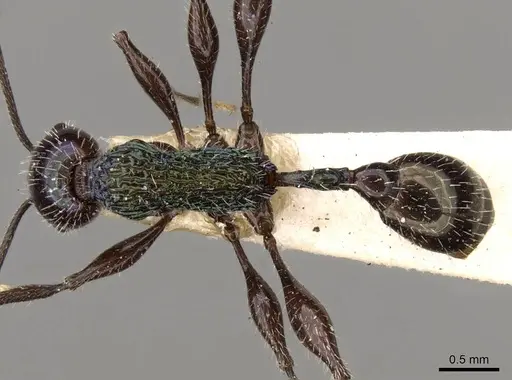
Literature
Loading distribution map...Loading products...