
Temnothorax arboreus
- Sci. Name
- Temnothorax arboreus
- Tribe
- Crematogastrini
- Subfamily
- Myrmicinae
- Author
- Snelling <i>et al.</i>, 2014
- Distribution
- Found in 1 countries
Introduction
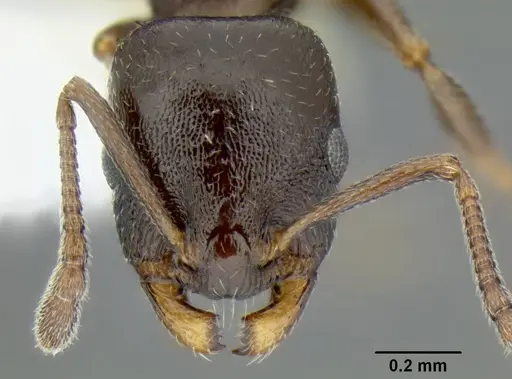
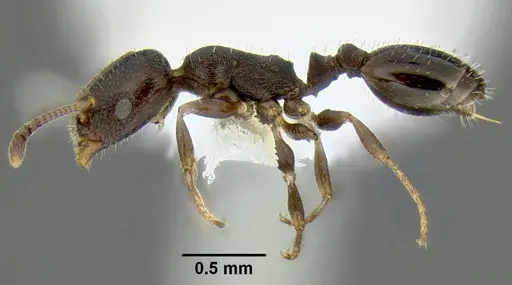
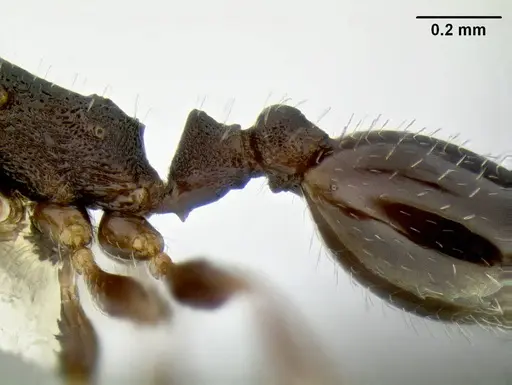
Temnothorax arboreus is a tiny, dark brown ant from the pine forests of southern California . Workers are about 2.5-3 mm (inferred from typical Temnothorax sizes) and have a shiny head, robust triangular petiole, and reduced propodeal spines . True to its name (Latin for 'of trees'), this species is arboreal - it forages on trunks and foliage, especially Jeffrey pine (Pinus jeffreyi), which sets it apart from most ground‑nesting relatives like Temnothorax nitens . It belongs to the sallei‑clade and is known only from a few locations in San Diego and Riverside counties .
Quick Summary
- Difficulty: Medium
- Origin & Habitat: Southern California, USA (San Diego and Riverside counties) in montane Jeffrey pine (Pinus jeffreyi) forest at around 1800 m elevation [1][2].
- Colony Type: Unconfirmed, likely monogyne (single queen) based on genus patterns, but no colony‑structure data are available [1].
- Size & Growth:
- Queen: Size data unavailable, queen has not been described [1].
- Worker: ~2.5-3 mm (inferred from typical Temnothorax sizes) [1].
- Colony: Unknown, colonies of related species can reach a few hundred workers, but no data for T. arboreus [1].
- Growth: Moderate (presumed from genus) [1].
- Development: Unknown, no data for this species, typical Temnothorax development at 22 °C is roughly 6-10 weeks for small colonies [1]. (Timing depends heavily on temperature and food, adjust expectations based on observation.)
- Antkeeping:
- Temperature: Keep at room temperature (20-24 °C). Being from a mountain habitat, they tolerate cooler conditions but develop faster in stable warmth [1].
- Humidity: Moderate, keep nesting substrate slightly moist but not waterlogged. As an arboreal species, they may tolerate drier air than ground‑nesters, but a humidity gradient is recommended [1].
- Diapause: Likely required, the species comes from a temperate mountain with cold winters. A 2-3 month period at 10-15 °C is recommended to mimic natural rest [1].
- Nesting: Y‑tong (AAC) or plaster nests with tight chambers work well. Provide vertical surfaces (e.g., cork bark) because they are arboreal foragers. Test tubes are fine for founding [1].
- Behavior: Workers are active, individually foraging ants. They use a modified stinger to smear venom as a defense (typical of Crematogastrini), but they are not aggressive toward keepers. Their tiny size (
- Common Issues: tiny size makes escape very likely unless barriers are airtight, use fine mesh or fluon., arboreal nature may mean they prefer vertical surfaces, provide climbing areas to prevent stress., limited availability in the hobby, rarely offered for sale., winter dormancy likely needed but specifics unconfirmed, monitor colony health after hibernation., unknown queen and colony founding details, be prepared for trial‑and‑error.
Housing and Nest Setup
Because workers are only ~2.5 mm, choose a formicarium with narrow passages and small chambers. Y‑tong (AAC) blocks with carved tunnels work well, make sure entrances are just wide enough for a single ant. Plaster nests also offer good humidity control. For founding, a test tube with water reservoir is easiest, but wrap the cotton plug tightly to prevent escapes. The arboreal lifestyle means they appreciate vertical climbing surfaces, attach a piece of cork bark or a twig in the outworld. Keep the nest in a dim, low‑vibration area at 20-24 °C [1].
Feeding and Diet
Offer a constant source of sugar water or honey, plus small protein items 2-3 times per week. Suitable proteins include flightless fruit flies, pinhead crickets, or tiny mealworm pieces. In the wild, workers forage on pine trunks for honeydew and small insects [1]. Place food on a flat surface in the outworld, they are most active on vertical surfaces, so a tilted platform can help. Remove leftovers after 24 hours to prevent mold.
Temperature and Seasonal Care
Maintain 20-24 °C year‑round for active brood rearing. Comes from montane California, so it can handle brief cooler periods but thrives in stable warmth [1]. For winter dormancy, lower to 10-15 °C for 2-3 months (e.g., November-February). Reduce feeding gradually and stop completely during the coldest weeks. Provide a small water source. After dormancy, slowly raise temperature and resume feeding. Without a rest period, colony vigour may decline over successive years [1].
Behavior and Observation
These ants forage individually rather than in trails, typical for Temnothorax. They are curious but not defensive when handled gently. If threatened, they may smear a faint, sticky venom from their modified stinger (a tribe‑level defence), but it is harmless to humans. Their dark brown bodies contrast nicely against light‑coloured nests, making them excellent for close‑up observation. Look for workers carrying brood or the queen’s egg‑laying, be patient, as they often hide when disturbed. Their small size means you’ll need good lighting and perhaps a magnifying glass [1].
Frequently Asked Questions
How long does it take for Temnothorax arboreus to have first workers?
No published data for this species. For related Temnothorax kept at 22 °C, first nanitics appear after about 6-10 weeks. Expect similar timing, but monitor carefully [1].
Can I keep multiple Temnothorax arboreus queens together?
Unlikely, most Temnothorax are monogyne. The biology of T. arboreus is unknown, so it is safer to assume queens are solitary. Combining them usually leads to fighting [1].
Do Temnothorax arboreus ants sting?
They have a modified stinger that smears venom rather than injecting it (a smear defence common in Crematogastrini). The venom is not dangerous to people, but handle gently to avoid stress [1].
What do Temnothorax arboreus eat?
Accept standard ant foods: sugar water, honey, and small protein insects (fruit flies, pinhead crickets, tiny mealworms). Feed sugar always, protein 2-3 times weekly. Remove uneaten food to prevent mold [1].
Are Temnothorax arboreus good for beginners?
Medium difficulty. Their tiny size requires careful escape prevention, and they likely need winter dormancy. The biggest hurdle is finding them, they are rarely sold. If you have experience with small colonies and can source them, they are manageable [1].
Do Temnothorax arboreus need hibernation?
Very likely yes, they come from a mountain climate with cold winters. Without 2-3 months at 10-15 °C, colony health may decline. This is the safest assumption given current knowledge [1].
What size colony do Temnothorax arboreus reach?
Unknown, related species reach a few hundred workers, but no data exist for T. arboreus. Expect at most a few hundred if well‑cared for [1].
When should I move my colony to a formicarium?
No specific data. As a general rule for tiny colonies, wait until the queen has about 10-15 workers and the test tube becomes cramped. Move carefully by connecting the new nest via tubing and letting them migrate on their own [1].
Why is my Temnothorax arboreus colony dying?
Common reasons: escape (they slip through tiny gaps), insufficient protein, improper humidity (too dry or too wet), or stress from disturbance. First check for escape holes, they are expert squeezers. Also review food and dormancy schedule [1].
Report an Issue
The current care sheet is based fully on literature. See inconsistencies, or something that's incorrect? Please , it will be resolved after review from an admin. Contributing to the blogs tab also helps providing information, to make us be able to further improve the caresheets. Thank you for your support!
References

This caresheet is licensed under CC BY-SA 4.0 .
Community Blogs
CASENT0005933
View on AntWeb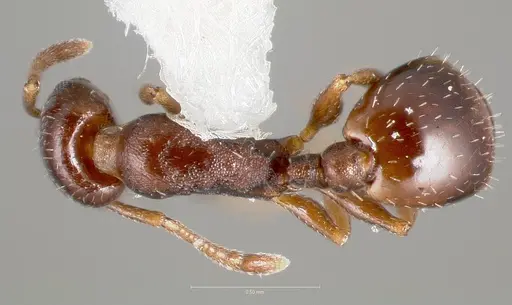
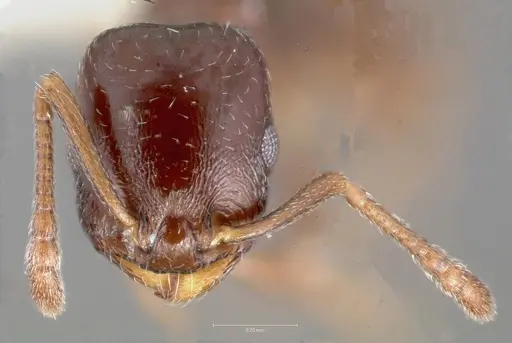
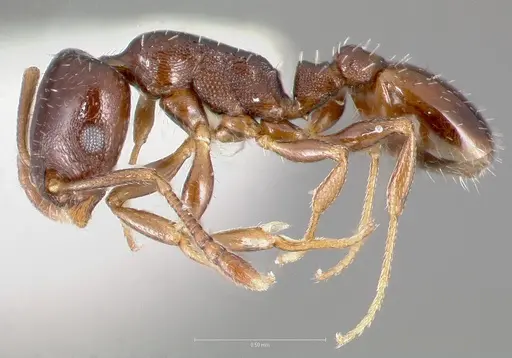
CASENT0339243
View on AntWeb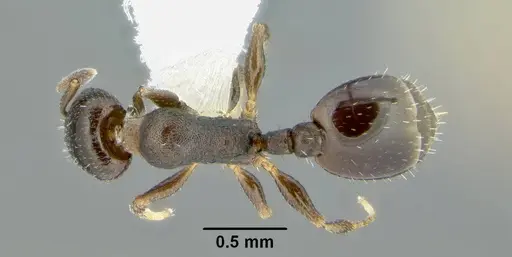
Literature
Loading distribution map...Loading products...