
Technomyrmex schimmeri
- Sci. Name
- Technomyrmex schimmeri
- Tribe
- Tapinomini
- Subfamily
- Dolichoderinae
- Author
- Viehmeyer, 1916
- Distribution
- Found in 1 countries
Introduction
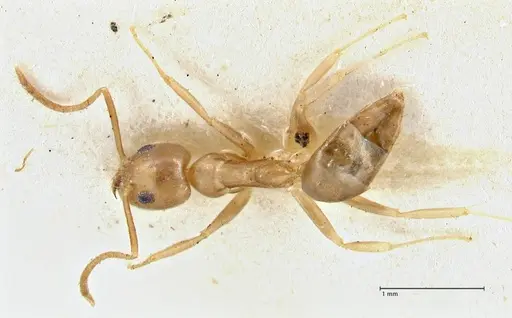
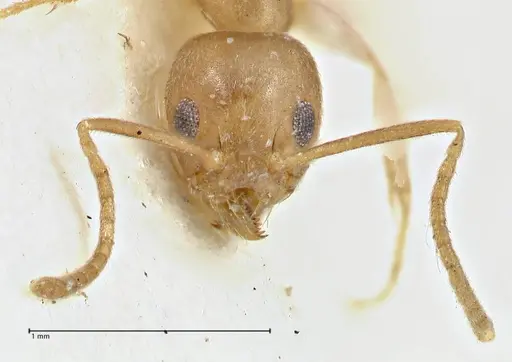
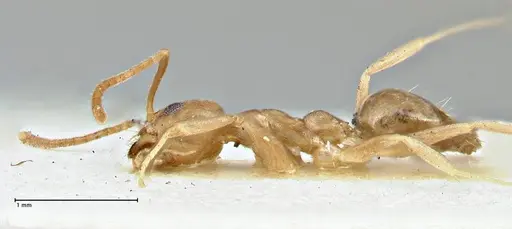
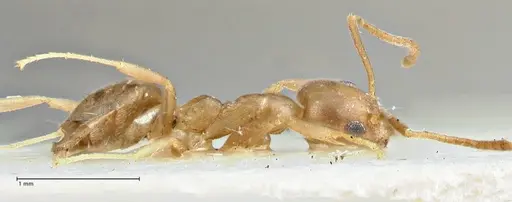
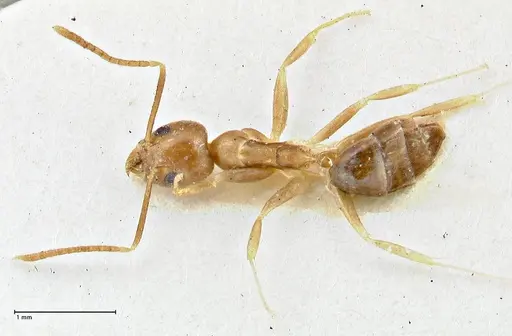
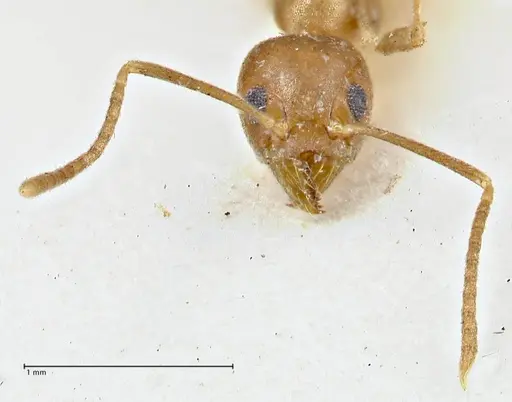
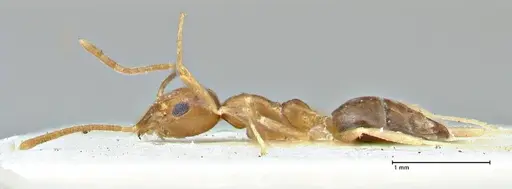
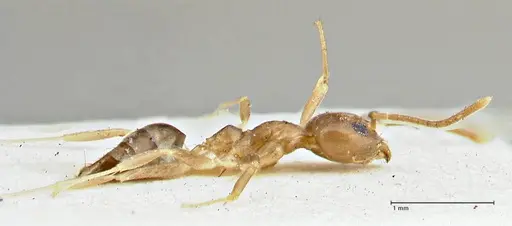
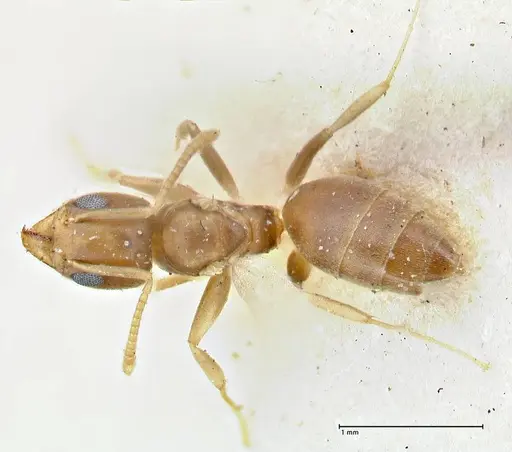
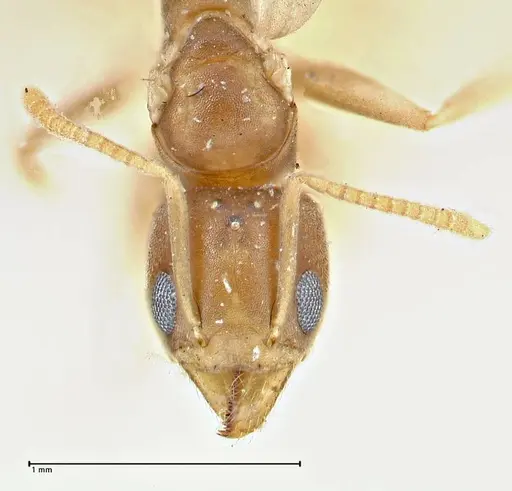
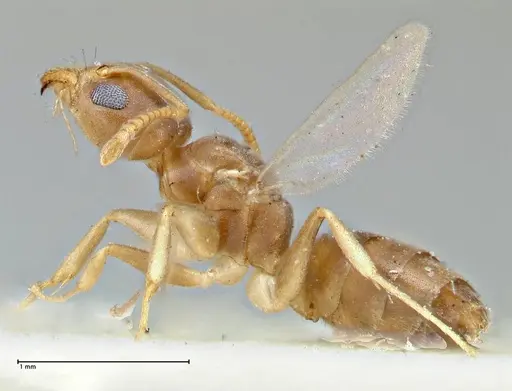
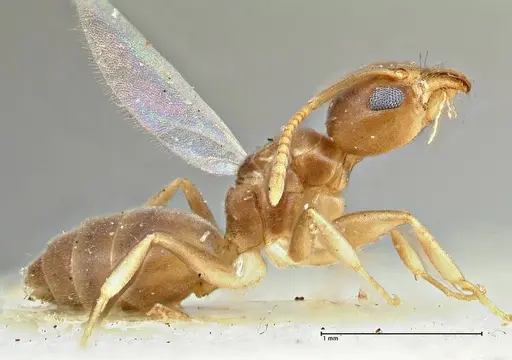
Technomyrmex schimmeri is a small, pale ant from Southeast Asia - found in Singapore, Borneo, Indonesia, Malaysia, and Thailand . Workers are 3.3-4.1 mm long, with a yellow to dirty yellow head, mesosoma, and petiole, and a pale brown gaster that is usually a bit darker than the rest of the body . They belong to the Technomyrmex bicolor group and have long, stiff hairs on their abdominal segments. This species lives in disturbed forests and nests in rotten wood, dead twigs, leaf litter, or withered bamboo . Like other Dolichoderinae, they lack a stinger and instead exude sticky, foul‑smelling anal gland secretions when threatened.
Quick Summary
- Difficulty: Medium
- Origin & Habitat: Southeast Asia, Singapore, Borneo, Indonesia, Malaysia, and Thailand. Found in disturbed forests, nests in rotten wood, dead twigs, leaf litter, or withered bamboo [1][2][3].
- Colony Type: Unconfirmed, no studies have determined whether colonies are single‑ or multi‑queen.
- Size & Growth:
- Queen: ~5.1 mm [1], from a single measured queen.
- Worker: 3.3-4.1 mm [1], small and slender.
- Colony: Unknown, no colony size data available.
- Growth: Unknown, not studied.
- Development: Not documented. If similar to other tropical Dolichoderinae, development may take 4-8 weeks at optimal warmth. (This estimate is based on related species, not direct observation.)
- Antkeeping:
- Temperature: Keep at 24-28°C, they are tropical and need steady warmth. A slight gradient helps workers regulate.
- Humidity: Moderate to high, keep the nest substrate damp but not waterlogged. They naturally live in moist rotting wood and leaf litter [1][4].
- Diapause: No, as a tropical species they do not hibernate. Keep warm year‑round.
- Nesting: Mimic their natural habitat: Y‑tong (AAC), plaster, or soil nests with tight, dark chambers. Pieces of rotting wood or cork bark in moist substrate work well [1][4].
- Behavior: Generally calm and not aggressive. When threatened they release a sticky, foul‑smelling anal gland secretion, this is not a sting, just an irritant. Workers are active foragers. Their small size (under 4 mm) means escape prevention is critical, use fine mesh (0.5 mm or smaller) and seal all gaps.
- Common Issues: escape prevention is critical, they can squeeze through tiny gaps., their anal gland secretion can be irritating if sprayed on skin or eyes., maintaining consistent humidity without mold can be challenging in closed nests., wild‑caught colonies may carry parasites., limited documented care means you may need to experiment with conditions.
Housing and Nest Setup
Mimic their natural rotten‑wood habitat. Y‑tong (AAC) nests hold humidity well and provide dark chambers. Plaster nests are another good option, keep the plaster moist, not wet. Naturalistic setups with pieces of rotting wood or cork bark buried in moist substrate also work [1][4]. Because these ants are small (under 4 mm), chambers should be tight enough that workers can touch the ceiling, they feel exposed in large open cavities. Their small size also means any gap over 0.5 mm is an escape route. Use fine mesh on all openings and check lid seals regularly.
Feeding and Diet
Diet has not been studied for this species. Based on related Technomyrmex, they likely feed on honeydew and small insects. In captivity, offer sugar water or diluted honey as a constant energy source, and small prey like fruit flies, pinhead crickets, or tiny mealworm pieces. Remove uneaten protein within 24-48 hours to prevent mold. Watch what your colony accepts and adjust the menu accordingly.
Temperature and Seasonal Care
Keep your colony at a steady 24-28°C all year. These tropical ants do not tolerate cool temperatures well, do not let it drop below 20°C for long. Use a heating cable or mat on one side of the nest to create a gradient. No hibernation is needed. Avoid placing the nest near air conditioning vents or drafty windows. [1]
Humidity Management
Aim for moderate to high humidity, the nest substrate should feel damp to the touch without pooling water. Their natural habitat is rotting wood and leaf litter on the forest floor, so they need consistent moisture [1][4]. Check the substrate regularly and rehydrate when the surface starts to dry. A water reservoir (like a test‑tube setup) helps maintain humidity through evaporation. Good ventilation is important too, closed, wet nests can grow mold.
Behavior and Defense
Workers are active foragers and usually flee rather than attack. As a Dolichoderinae, they have no stinger. Instead, they exude a sticky, foul‑smelling anal gland secretion as a defense, this can be irritating but is not dangerous. Their small size makes them escape artists, use fine mesh (0.5 mm or smaller) and seal all connections. They are generally easy to observe because they are calm and not aggressive.
Frequently Asked Questions
How long does it take for Technomyrmex schimmeri to raise first workers?
It is not documented. If similar to other tropical Dolichoderinae, expect 4-8 weeks from egg to first worker at about 26°C.
Can I keep Technomyrmex schimmeri in a test tube setup?
Yes, a test tube with a water reservoir sealed by a cotton plug works well for a founding colony. It gives the queen a dark, humid space to raise her first brood. Move them to a proper nest once the colony grows and the water runs low.
What do Technomyrmex schimmeri eat?
Their natural diet has not been studied. In captivity, they seem to accept sugar water, honey, and small insects like fruit flies. Offer a constant sugar source and provide protein regularly.
Are Technomyrmex schimmeri good for beginners?
They are rated Medium difficulty. While they are calm and not aggressive, their small size demands excellent escape prevention, and there is little documented care information. Beginners should be ready to experiment with conditions.
How big do Technomyrmex schimmeri colonies get?
This is not documented. Related Technomyrmex species can reach several hundred workers, but growth rate and maximum size for this species are unknown.
Do Technomyrmex schimmeri need hibernation?
No, they are tropical and need steady warmth year‑round (24-28°C). No seasonal cooling is required.
Why are my Technomyrmex schimmeri escaping?
Workers are under 4 mm long and can squeeze through gaps you might not notice. Use fine mesh (0.5 mm or smaller) on all openings, check seals, and consider a fluon barrier.
When should I move my colony to a formicarium?
Move them when the test‑tube colony has grown noticeably and the water reservoir is running low. Choose a Y‑tong or plaster nest with small, tight chambers, this species prefers confined spaces.
Can I keep multiple Technomyrmex schimmeri queens together?
Queen number has not been studied. Unless the species is confirmed as polygynous, it is safest to start with a single queen.
Report an Issue
The current care sheet is based fully on literature. See inconsistencies, or something that's incorrect? Please , it will be resolved after review from an admin. Contributing to the blogs tab also helps providing information, to make us be able to further improve the caresheets. Thank you for your support!
References

This caresheet is licensed under CC BY-SA 4.0 .
Community Blogs
Literature
Loading distribution map...Loading products...