
Technomyrmex kraepelini
- Sci. Name
- Technomyrmex kraepelini
- Tribe
- Tapinomini
- Subfamily
- Dolichoderinae
- Author
- Forel, 1905
- Distribution
- Found in 9 countries
Introduction
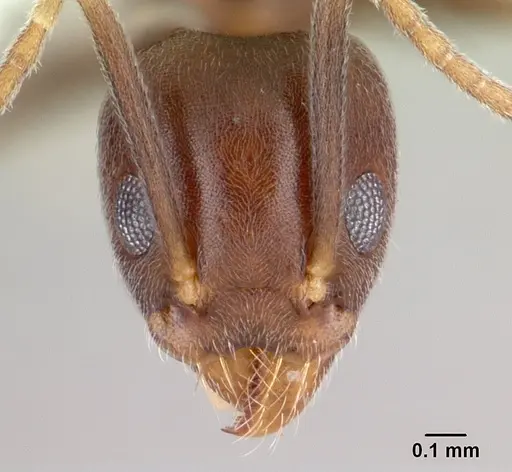
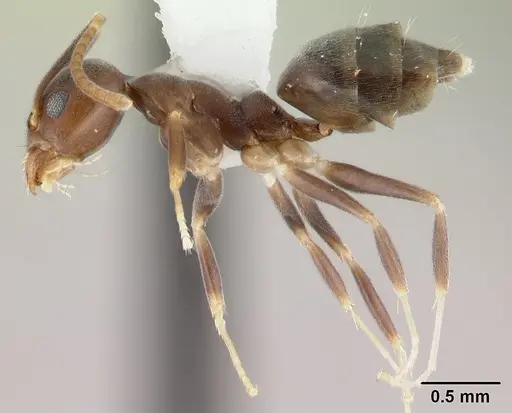
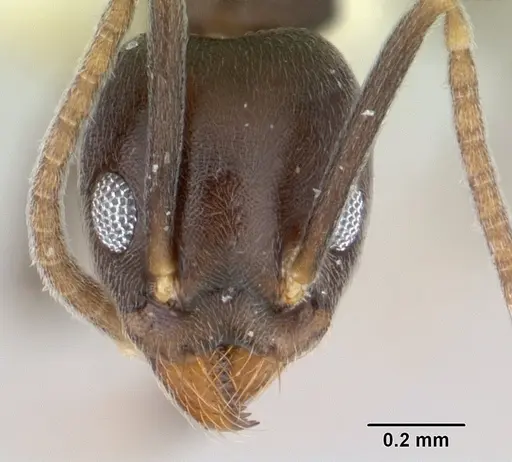
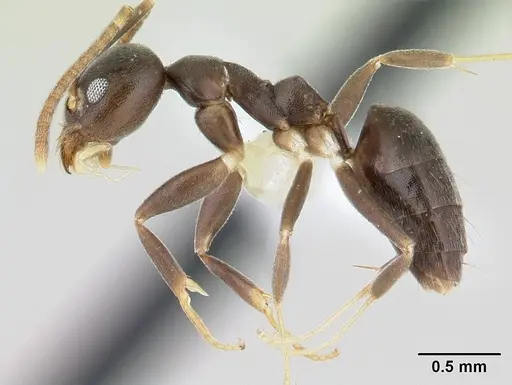
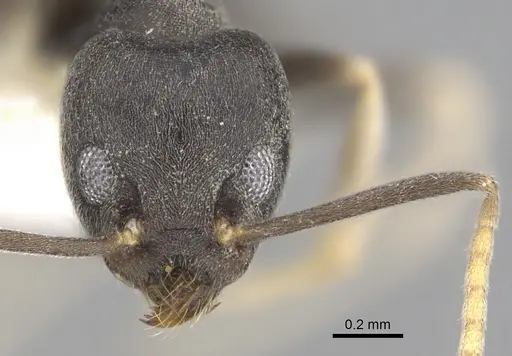
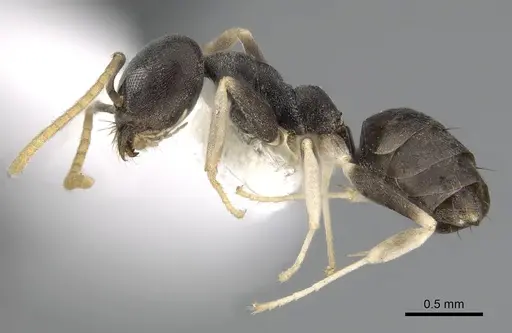
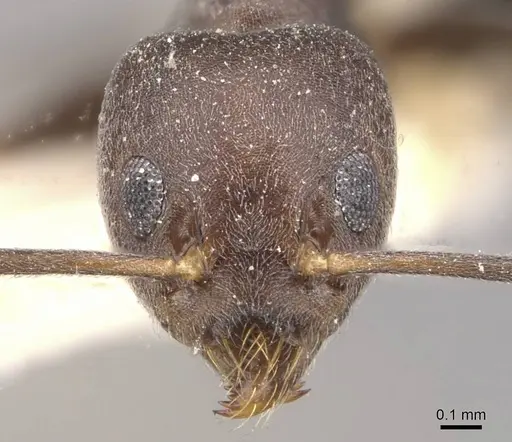
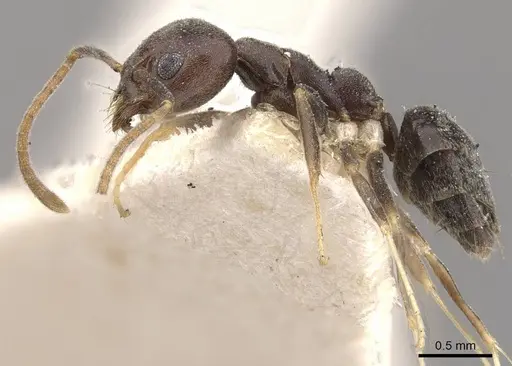
Technomyrmex kraepelini workers measure 2.5-3.7 mm . They are uniformly dark brown to blackish brown on the head, mesosoma, petiole, and gaster, appearing almost entirely black . Their most distinctive feature is the stark contrast between the dark body and off-white to yellow middle and hind coxae, which stand out clearly against the dark femora and mesosoma . Trochanters and tarsi are also yellow, giving a two-toned look that helps separate them from similar species like Technomyrmex sundaicus . Workers have long, erect setae on the abdominal segments (gastral tergites II-IV): 2-3 pairs on the second segment and 3-4 pairs on the third and fourth segments . They belong to the subfamily Dolichoderinae and lack a functional stinger; instead, they defend themselves by exuding sticky, foul-smelling compounds from an anal gland.
Quick Summary
- Difficulty: Medium
- Origin & Habitat: Native to the Indomalaya region: Borneo, Brunei, Indonesia, Laos, Malaysia, Philippines, Singapore, Thailand, and also found in Micronesia and Palau [1]. They inhabit both primary and secondary forests, nesting in rotten wood, dead twigs, and leaf litter [1]. They have also been collected from the canopy of lowland dipterocarp forests [2].
- Colony Type: Unconfirmed, queens and males have not been collected in Thailand [1]. Based on related Technomyrmex species, colonies are likely monogyne (single queen), but this has not been confirmed.
- Size & Growth:
- Queen: Undescribed, queen measurements not yet documented in scientific literature [1]
- Worker: 2.5-3.7 mm [1]
- Colony: Unknown, likely reaches several hundred workers based on related Technomyrmex species
- Growth: Moderate
- Development: Not specifically studied, estimated at 6-8 weeks based on typical Dolichoderinae development at 24-28°C (Development timeline has not been studied for this species. Estimate is based on genus-typical patterns in tropical conditions.)
- Antkeeping:
- Temperature: Keep at 24-28°C. As a tropical species from Southeast Asian forests, they need warm conditions. Room temperature within this range is usually suitable [3].
- Humidity: Keep the nest substrate moderately moist. In nature they nest in rotting wood and leaf litter, which maintain damp but not waterlogged conditions [1]. Provide a gradient with some drier areas so ants can self-regulate.
- Diapause: No, this is a tropical species that does not require hibernation. Maintain warm temperatures year-round.
- Nesting: Y-tong (AAC) nests, plaster nests, or soil nests work well. They naturally nest in rotting wood and dead twigs, so a setup with some moisture retention suits them [1]. Test tube setups are also suitable for founding colonies.
- Behavior: These ants are relatively calm and not aggressive toward keepers. As Dolichoderinae, they lack a sting and defend themselves by exuding sticky, foul-smelling compounds from an anal gland [3]. Workers are active foragers that scavenge and tend honeydew-producing insects. They are small (2.5-3.7 mm), so escape prevention matters, use standard barriers. They adapt well to disturbed habitats and have been found in urban green areas in Bangkok [4].
- Common Issues: queen not yet described, finding a mated queen for sale may be difficult since reproductive castes haven't been documented in many range countries, tropical humidity needs, dry conditions will stress colonies since they naturally inhabit damp forest floor microhabitats, limited availability, this species is rarely available in the antkeeping hobby compared to common genera, escape prevention, small worker size means standard barriers should be used despite moderate activity levels, colony size unknown, final size is uncertain, which may affect long-term planning
Housing and Nest Setup
Technomyrmex kraepelini does well in Y-tong (AAC) nests, plaster nests, or soil nests. They naturally nest in rotten wood and dead twigs in forest habitats, so a setup that can hold some moisture is ideal [1]. The nest should have chambers scaled to their small size (2.5-3.7 mm). Since they come from damp forest floor environments, keep the nest material moderately moist but not waterlogged. A water tube attached to the nest can help maintain humidity. Place the nest in a warm area of your setup, around 24-28°C, as this is a tropical species [3]. The outworld can be simple, these ants are primarily foragers on the ground and in vegetation.
Feeding and Diet
In the wild, T. kraepelini is a scavenger that forages on the forest floor and in vegetation [5]. They also tend honeydew-producing insects like aphids, they have been found on banana plants with aphids, suggesting they readily accept honeydew [6]. Offer a varied diet including sugar water or honey as an energy source, and protein sources like small insects (fruit flies, small mealworms, crickets). Since they are small ants, prey items should be appropriately sized. Feed them a few times per week, removing uneaten food to prevent mold.
Temperature and Seasonal Care
As a tropical species from Southeast Asia, Technomyrmex kraepelini requires warm temperatures year-round. Keep the nest area at 24-28°C for optimal colony activity and brood development [3]. They do not require hibernation or cooling periods, maintaining consistent tropical conditions is key. Room temperature in most homes is usually suitable, but you may need a heating cable or mat in cooler climates. Avoid temperatures below 20°C for extended periods. They are found across a wide range from Laos to Micronesia, indicating adaptability within the tropical zone [1].
Behavior and Temperament
These ants are relatively docile and not aggressive toward keepers. When threatened, they defend by exuding sticky, foul-smelling compounds from an anal gland, the standard defense mechanism for Dolichoderinae, rather than stinging [3]. Workers are active foragers that search for food both on the ground and in vegetation. They are comfortable in disturbed habitats and have been found in agricultural areas and urban green spaces [5][4], suggesting they adapt well to captivity. Their small size means they can slip through small gaps, so use standard escape prevention like smooth barriers (fluon). They are not known for being particularly escape-prone compared to very tiny species.
Field Identification Tips
Technomyrmex kraepelini can be identified by its distinctive two-toned leg coloration: the middle and hind coxae are off-white to yellow and strongly contrast with the dark brown to blackish brown mesosoma [1]. This contrasts with the similar Technomyrmex sundaicus, where the coxae are the same brown color as the body. Workers have long erect setae on abdominal segments II-IV: 2-3 pairs on segment II and 3-4 pairs on segments III-IV [1]. The body is uniformly dark brown to blackish brown except for the yellow trochanters and tarsi. They belong to the Technomyrmex bicolor group, which typically has relatively short, broad mesosomas compared to other Technomyrmex species.
Frequently Asked Questions
How long does it take for Technomyrmex kraepelini to raise their first workers?
The exact development timeline has not been studied. Based on typical Dolichoderinae development in tropical conditions, expect approximately 6-8 weeks from egg to first worker at optimal temperatures (24-28°C). This is an estimate.
Can I keep Technomyrmex kraepelini in a test tube?
Yes, test tube setups work well for founding colonies. Keep the tube warm (24-28°C) and ensure the water reservoir doesn't flood the colony. Once the colony grows beyond 20-30 workers, consider moving them to a small Y-tong or plaster nest that can hold moisture.
Are Technomyrmex kraepelini good for beginners?
This species is rated as medium difficulty. While they are adaptable and found in disturbed habitats, they are rarely available in the hobby and require tropical conditions year-round. Beginners may find more common species easier to obtain and keep.
How big do Technomyrmex kraepelini colonies get?
Colony size data is limited. Based on related Technomyrmex species, colonies likely reach several hundred workers at maturity. They are not among the largest species, but they form moderate-sized colonies.
What do Technomyrmex kraepelini eat?
They are scavengers that accept a variety of foods. Offer sugar sources like honey or sugar water, and protein like small insects (fruit flies, small mealworms). They will also tend honeydew-producing insects. Feed a few times per week, adjusting based on consumption.
Do Technomyrmex kraepelini need hibernation?
No, they do not require hibernation. This is a tropical species from Southeast Asia and Micronesia that needs warm temperatures year-round. Keep them at 24-28°C consistently. Cooling below 20°C could be harmful.
Where is Technomyrmex kraepelini found in the wild?
They range across the Indomalaya region including Borneo, Brunei, Indonesia, Laos, Malaysia, Philippines, Singapore, Thailand, plus Micronesia and Palau [1]. They inhabit both primary and secondary forests, nesting in rotten wood, dead twigs, and leaf litter [1]. They are also found in tree canopies in lowland dipterocarp forests [2].
Why are my Technomyrmex kraepelini dying?
Common causes include: temperatures below 20°C (they need warmth), dry nest conditions (they prefer damp rotting wood habitats), mold from overwatering, or stress from too much handling. Ensure they have warm, humid conditions and minimal disturbance. Also verify escape prevention is in place.
Report an Issue
The current care sheet is based fully on literature. See inconsistencies, or something that's incorrect? Please , it will be resolved after review from an admin. Contributing to the blogs tab also helps providing information, to make us be able to further improve the caresheets. Thank you for your support!
References

This caresheet is licensed under CC BY-SA 4.0 .
Community Blogs
CASENT0178418
View on AntWeb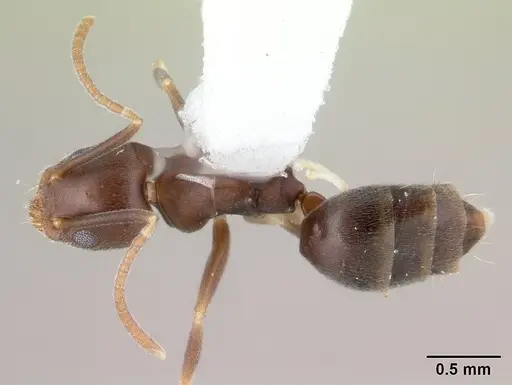
CASENT0178471
View on AntWeb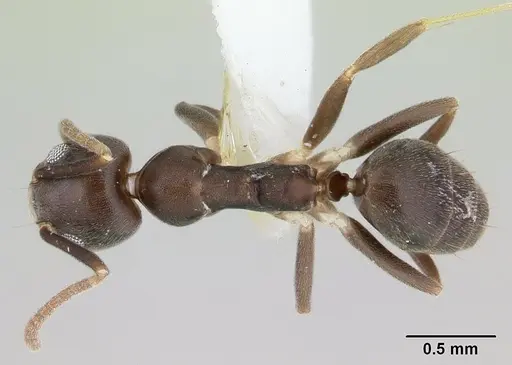
CASENT0249789
View on AntWeb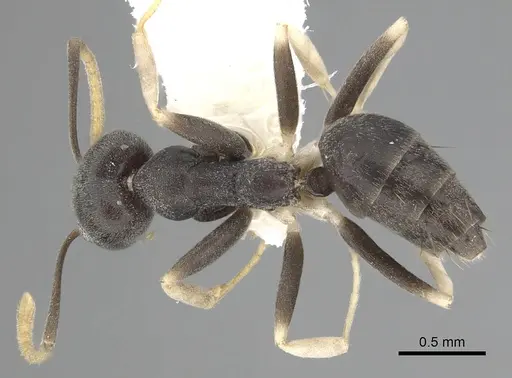
CASENT0909801
View on AntWeb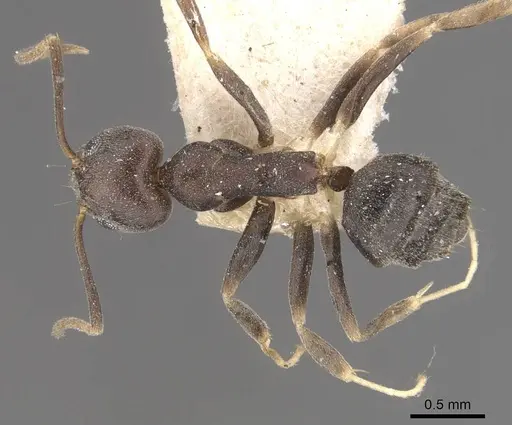
Literature
Loading distribution map...Loading products...