
Technomyrmex bicolor
- Sci. Name
- Technomyrmex bicolor
- Tribe
- Tapinomini
- Subfamily
- Dolichoderinae
- Author
- Emery, 1893
- Distribution
- Found in 6 countries
Introduction
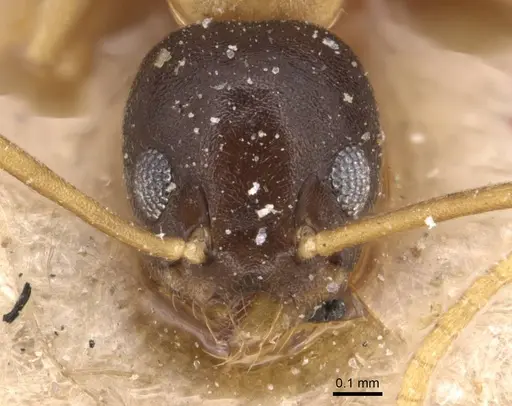
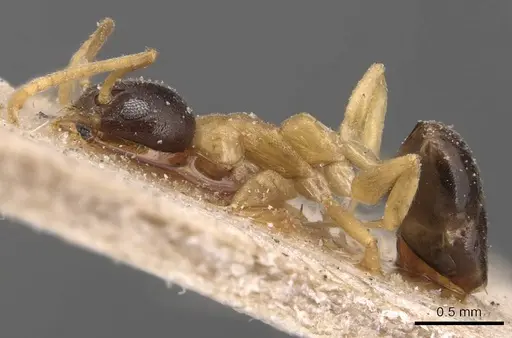
Technomyrmex bicolor is a tiny ant measuring just 2.9mm in total length, a member of the subfamily Dolichoderinae. Its most distinctive feature is the striking bicolored appearance: the head and gaster are very dark brown (almost black), while the mesosoma, petiole, legs, and antennae are a contrasting bright yellow . This color pattern is unique within the genus, making it easy to identify. Workers have a smooth, nearly hairless dorsum on the head, and the front edge of the clypeus has a clear, semicircular notch . This species is found across the Indomalayan region, with confirmed records from India, Sri Lanka, and southern China . Research from Sri Lanka shows it occurs in all four climate zones of the island, in habitats ranging from lowland wet forests to dry zone lands, coconut plantations, and rubber plantations . Being a Dolichoderine ant, it lacks a functional stinger. Instead, it defends itself by exuding a sticky, foul-smelling liquid from its anal gland - a typical defense for this subfamily.
Quick Summary
- Difficulty: Medium
- Origin & Habitat: Native to the Indomalayan region, India, Sri Lanka, and southern China. Found across all four climate zones of Sri Lanka in diverse habitats including lowland wet forests, dry zone lands, coconut plantations, and rubber plantations [2][3][4][5].
- Colony Type: Colony structure is unconfirmed. No published data on queen number or colony size exists for this species.
- Size & Growth:
- Queen: Unconfirmed, no published measurements available.
- Worker: 2.9mm total length (TL) [1].
- Colony: Unknown, no colony size data has been published.
- Growth: Unknown, no development data available.
- Development: Unconfirmed, no published data. Based on related Dolichoderines, development may take 4-8 weeks at warm temperatures, but this is speculative. (No direct observations of founding or development have been published. Related Technomyrmex species typically develop from egg to worker in 4-8 weeks in warm conditions.)
- Antkeeping:
- Temperature: Based on its tropical/subtropical origin (Sri Lanka, India, southern China), aim for warm conditions around 24-28°C. This is an estimate since no specific temperature data exists for this species.
- Humidity: Based on habitat data showing presence in lowland wet forests and coconut plantations, they likely prefer moderate to high humidity. Keep the nest substrate consistently moist but not waterlogged.
- Diapause: Unknown, no published data on overwintering requirements. Given its tropical/subtropical distribution, diapause is likely not required, though a slight cool period may be beneficial.
- Nesting: In the wild, they have been found in ground-level samples using soil sifting, leaf-litter sifting, and pitfall trapping methods [4]. For captivity, a small test tube setup or a Y-tong/plaster nest with narrow chambers suits their tiny size. Keep the nest humid and provide a foraging area.
- Behavior: Temperament is unconfirmed, but related Technomyrmex species are generally not aggressive and tend to be shy foragers. Their small size (under 3mm) means they can escape through tiny gaps, excellent escape prevention is essential. As Dolichoderines, they lack a stinger and defend themselves by exuding a sticky, foul-smelling liquid from the anal gland, which poses no danger to keepers. They are likely generalist foragers based on what is known about the genus.
- Common Issues: tiny size means escapes are likely without fine mesh or Fluon barriers, no published care information makes husbandry somewhat speculative, growth rate is unknown, so planning colony stages is difficult, wild-caught colonies may carry parasites, quarantine before setting up, humidity control is important, too dry and they may fail to thrive
Appearance and Identification
Technomyrmex bicolor workers are tiny ants measuring just 2.9mm in total length, making them one of the smaller ant species you might encounter. Their most distinctive feature is the striking bicolored appearance: the head capsule and gaster are a very dark brown, almost black, while the mesosoma (the middle body section), petiole, and all leg segments are a clear, contrasting yellow [1]. This color pattern is unique within the genus and makes identification straightforward under magnification.
Workers have a smooth, nearly hairless appearance, the dorsum of the head behind the clypeus lacks setae (bristles). The front edge of the clypeus has a clear, semicircular notch with sharply defined margins. In side view, the propodeal dorsum is slightly longer than the depth of the declivity to the spiracle. These details help distinguish them from other Technomyrmex species in the region [1].
Distribution and Habitat
This species is native to the Indomalayan region, with confirmed records from India, Sri Lanka, and southern China [1]. In Sri Lanka, researchers have recorded Technomyrmex bicolor across all four climate zones, showing it is adaptable to different conditions [2].
The habitat data shows some interesting patterns. Studies in Sri Lanka found these ants in lowland wet forest reserves, dry zone lands, and various plantations including coconut and rubber plantations [3][4][5]. One study noted them as restricted to primary and secondary forest regions (suggesting they may indicate undisturbed forest) [6], while another found them specifically in rubber plantations and not in primary or secondary forest [7]. This conflict might reflect local differences or sampling methods. In terms of abundance, one study detected Technomyrmex bicolor at 12.6% relative abundance in a non-agricultural area [8], while in coconut plantations it showed lower proportional abundances of 0.3-0.8% [5].
Feeding and Diet
No specific dietary studies exist for Technomyrmex bicolor, but like other members of the Dolichoderinae subfamily, they are probably generalist foragers. Related Technomyrmex species are known to tend aphids for honeydew and will also collect small insects and sugary substances.
For captive care, offer a varied diet including sugar water or honey as a carbohydrate source, and small protein sources such as fruit flies, small crickets, or other tiny insects. Given their very small size (under 3mm), prey items should be appropriately sized, springtails or fruit fly pupae work well. Offer small amounts every few days, removing uneaten food after 24 hours to prevent mold. Watch your colony's activity and adjust portions accordingly.
Temperature and Care
Since no specific temperature requirements have been documented for Technomyrmex bicolor, we must infer from its geographic origin. This species comes from tropical and subtropical regions (India, Sri Lanka, southern China), so warm conditions are appropriate. Aim for temperatures in the range of 24-28°C, which is typical for tropical ants.
Room temperature (20-24°C) may be slightly cool, so consider using a heating cable or heat mat on one side of the nest to create a gradient. Place the heating element on top of the nest rather than underneath to avoid drying out the substrate. Allow the ants to choose their preferred temperature.
Humidity requirements are inferred from habitat data showing presence in lowland wet forests and coconut plantations [3][5], they likely prefer moderate to high humidity. Keep the nest substrate consistently moist but not waterlogged. A small water tube or reservoir connected to the nest can help maintain humidity through evaporation.
Nesting and Setup
In the wild, Technomyrmex bicolor has been collected using soil sifting, leaf-litter sifting, and pitfall traps, suggesting they nest in soil and ground-level microhabitats [4]. Their tiny size (2.9mm) means they need appropriately scaled housing.
For captivity, a small test tube setup works well for founding colonies. The test tube provides a humid, dark chamber that mimics an underground nest. For established colonies, a small plaster or Y-tong nest with narrow chambers scaled to their size is appropriate. Avoid large, open spaces that would make them feel exposed.
Because of their very small size, escape prevention is critical. Use tight-fitting lids and consider applying Fluon or a similar barrier to the edges of the outworld. Even tiny gaps that would not concern keepers of larger ants can allow these ants to escape.
Provide a simple outworld (foraging area) with a water source and food dish. Keep the setup relatively simple, these are not demanding ants in terms of complex enrichment, but they do need consistent humidity and temperature.
Behavior and Temperament
Specific behavioral observations for Technomyrmex bicolor are not documented in scientific literature, but general patterns for the genus Technomyrmex can inform expectations. These ants are usually not aggressive and tend to be shy, non-confrontational foragers. They are unlikely to bite, and their small size means any attempt to defend themselves would have minimal effect.
As Dolichoderine ants, they lack a functional stinger. Instead, they defend themselves by exuding a sticky, foul-smelling liquid from the anal gland. This can cause mild irritation but poses no serious health risk.
Their tiny size (under 3mm) makes them quick and somewhat nervous, they may move rapidly when disturbed. They are likely more active at warmer temperatures and may become sluggish if kept too cool. Provide a sense of security by keeping the nest dark and quiet, only exposing them to light during feeding or nest checks.
Frequently Asked Questions
How long does it take for Technomyrmex bicolor to produce first workers?
The egg-to-worker development time is unconfirmed, no published data exists. Based on related Dolichoderine ants in tropical conditions, you can expect approximately 4-8 weeks from egg to first worker, but this is an estimate rather than a confirmed timeline. Patience is key during the founding stage.
Can I keep Technomyrmex bicolor in a test tube?
Yes, a test tube setup is appropriate for this tiny species. The small chamber provides a humid, dark environment similar to their natural ground-level nesting sites. Use a test tube with a water reservoir at one end, sealed with a cotton plug, to maintain humidity. For a founding colony (queen alone), a standard small test tube works well.
What do Technomyrmex bicolor ants eat?
While no species-specific dietary studies exist, Technomyrmex ants are generalist foragers. Offer small protein sources such as fruit flies, small crickets, or other tiny insects. They will also likely accept sugar water or honey as a carbohydrate source. Given their tiny size, ensure prey items are appropriately small, springtails or fruit fly pupae are ideal.
Are Technomyrmex bicolor good for beginners?
This species falls into the medium difficulty category. While their small size and lack of aggressive behavior make them manageable, the complete lack of published care information means you will be pioneering husbandry techniques. If you are an experienced antkeeper comfortable with speculative care, this could be an interesting species to keep. Beginners might prefer species with more documented care requirements.
Do Technomyrmex bicolor need hibernation?
Diapause requirements are unknown for this species. Given its tropical/subtropical distribution across India, Sri Lanka, and southern China, a true hibernation is likely not required. However, a slight temperature reduction during winter months may be natural and potentially beneficial. If you keep them at room temperature year-round, they should be fine, but monitor for any signs of stress during cooler months.
How big do Technomyrmex bicolor colonies get?
Colony size data has not been published for this species, so maximum colony size is unknown. Based on their tiny worker size (2.9mm) and what is known about related species, colonies likely reach several hundred workers at most, not the thousands seen in larger ant species. Expect moderate-sized colonies rather than massive supercolonies.
Why are my Technomyrmex bicolor dying?
Without species-specific data, we can only offer general guidance. Common issues with poorly-studied species include: incorrect humidity (too dry is most likely), temperatures outside their comfort range (too cold), stress from excessive disturbance, or escape-related losses. Ensure your setup maintains consistent moisture, temperatures in the 24-28°C range, and excellent escape prevention. Wild-caught colonies may also carry parasites that can cause issues in captivity.
When should I move Technomyrmex bicolor to a formicarium?
There is no specific data on when to upgrade from test tube to formicarium. As a general guideline for small species, consider moving to a small plaster or Y-tong nest once the colony reaches 20-30 workers and the test tube is becoming cramped. The transition should be done carefully, connect the formicarium to the test tube and allow the ants to move themselves rather than forcibly relocating them.
Can I keep multiple Technomyrmex bicolor queens together?
The colony structure (monogyne vs polygyne) is unconfirmed for this species, no published data exists on queen number. Combining unrelated queens is not recommended given the lack of information. It is best to keep a single queen per colony unless you observe specific behaviors indicating tolerance.
Report an Issue
The current care sheet is based fully on literature. See inconsistencies, or something that's incorrect? Please , it will be resolved after review from an admin. Contributing to the blogs tab also helps providing information, to make us be able to further improve the caresheets. Thank you for your support!
References

This caresheet is licensed under CC BY-SA 4.0 .
Community Blogs
CASENT0905071
View on AntWeb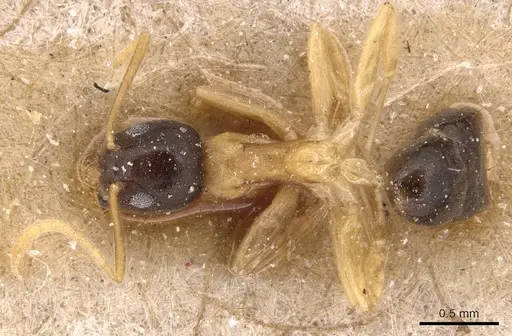
Literature
Loading distribution map...Loading products...