
Technomyrmex arnoldinus
- Sci. Name
- Technomyrmex arnoldinus
- Tribe
- Tapinomini
- Subfamily
- Dolichoderinae
- Author
- Forel, 1913
- Distribution
- Found in 2 countries
Introduction
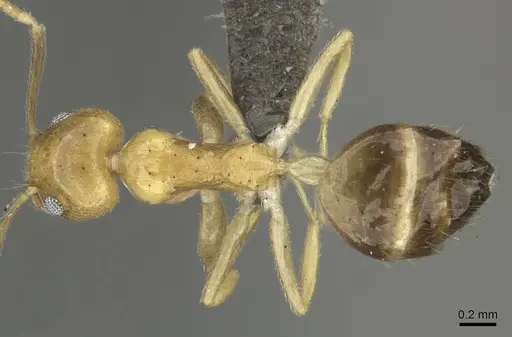
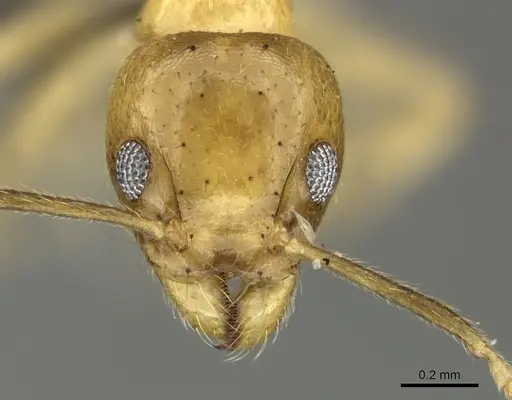
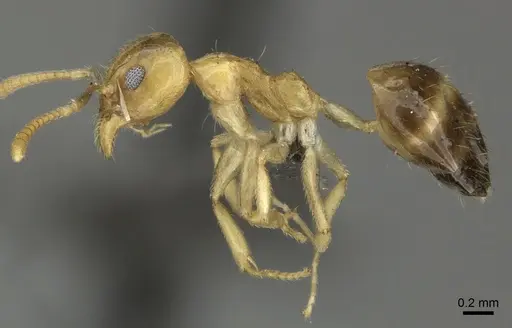
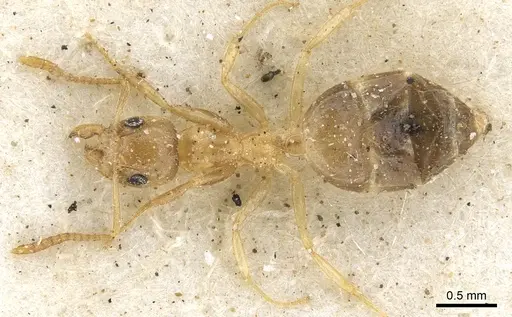
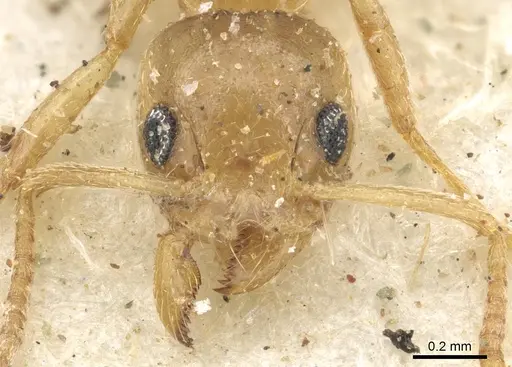
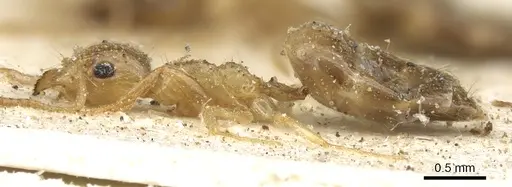
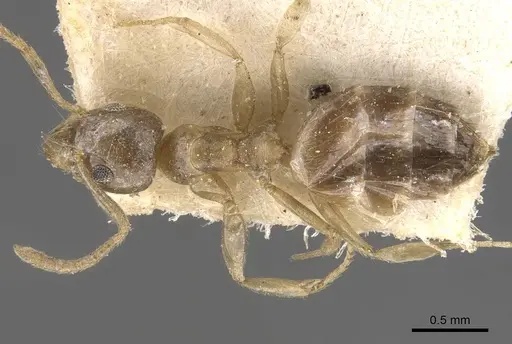
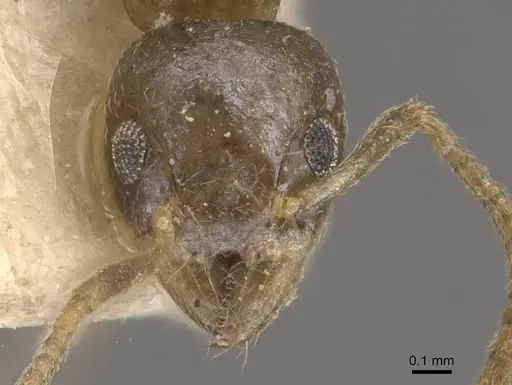
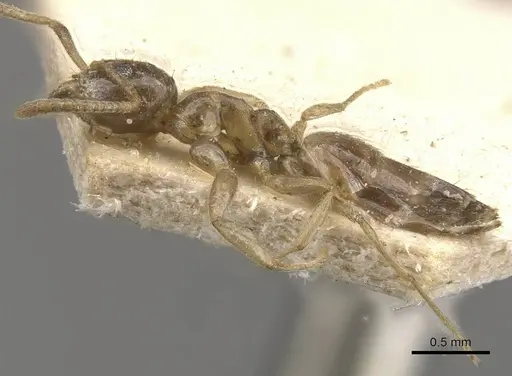
Technomyrmex arnoldinus is a small ant native to the Afrotropical region, recorded from Zimbabwe and Tanzania. Workers measure 2.6-3.2 mm in total length, with the head and thorax yellow to brown and the gaster usually darker . This species nests in earth, often under stones, and forages both on the ground and in low vegetation . It is easily identified by the unique transverse fine rugulose sculpture on the propodeal declivity, a feature not shared by any other Afrotropical Technomyrmex . The biology of this species is poorly known, and queens have not been formally described.
Quick Summary
- Difficulty: Unknown, limited data
- Origin & Habitat: Afrotropical region: Zimbabwe and Tanzania. Ground-nesting under stones, foraging terrestrially and on vegetation [1].
- Colony Type: Unconfirmed. No data available on queen number or social structure.
- Size & Growth:
- Antkeeping:
- Temperature: Based on Afrotropical origin, maintain 24-28°C. A temperature gradient is beneficial but not documented for this species.
- Humidity: Keep nest substrate moderately moist, reflecting natural ground-nesting habitat. Avoid waterlogging.
- Diapause: Unconfirmed, likely no true diapause given tropical origin, but may slow down at cooler temperatures.
- Nesting: Natural nests in soil or under stones. In captivity, plaster or Y-tong nests with chambers scaled to small workers work well.
- Behavior: Non-stinging, uses anal gland secretions (smear defense) when threatened [1]. Very small workers can escape through minute gaps, escape prevention must be excellent. Forages actively both on ground and on plants.
- Common Issues: extremely small worker size (2.6-3.2 mm) requires meticulous escape prevention, use fine mesh and fluon or PTFE barriers, very limited captive care data available, troubleshooting may be difficult, smear defense produces a sticky, foul-smelling secretion but is not harmful to humans, wild-caught colonies may carry mites or parasites, quarantine new colonies
Housing and Nest Setup
Technomyrmex arnoldinus naturally nests in soil or under stones [1]. In captivity, a plaster nest or Y-tong (AAC) formicarium with chambers sized for small workers is recommended. Keep the nest substrate moderately moist but not waterlogged, a moisture gradient helps ants choose their preferred microclimate. Because workers are only 2.6-3.2 mm [1], escape prevention is critical. Use fine mesh (e.g.,0.5 mm) on all openings and apply a fluon or PTFE barrier to the outworld walls. Even tiny gaps can lead to escapes.
Feeding and Diet
Like other Technomyrmex species, T. arnoldinus likely feeds on honeydew from aphids and scale insects, as well as small arthropods [1]. In captivity, provide a constant source of sugar water or honey for energy. Offer small protein sources such as fruit flies, pinhead crickets, or crushed mealworms 2-3 times per week. Remove uneaten prey within 24-48 hours to prevent mold. No specific dietary studies exist for this species.
Temperature and Seasonal Care
As a tropical Afrotropical species, Technomyrmex arnoldinus prefers warm conditions. Maintain the nest temperature between 24-28°C [1]. Avoid prolonged exposure below 20°C. A heating mat on one side of the nest can create a temperature gradient, but this is not mandatory. Diapause is not required, as the species does not experience cold winters in its natural range. Colonies may show reduced activity if kept cooler for extended periods.
Defense and Handling
Technomyrmex arnoldinus belongs to the subfamily Dolichoderinae, which lacks a functional sting. Instead, workers exude a sticky, foul-smelling cyclopentanoid monoterpene secretion from the anal gland when threatened (smear defense) [1]. This secretion can be unpleasant but is not harmful to humans. Wear gloves if handling the colony, and avoid provoking the ants. Because of their small size, use a fine brush or aspirator for transfers. Always wash hands after contact.
Frequently Asked Questions
How long does it take for Technomyrmex arnoldinus to produce first workers?
This has not been documented for this species. Development time is unknown.
Can I keep Technomyrmex arnoldinus in a test tube?
A test tube setup may work for a founding colony if a queen is available, but the queen's size and founding habits are unknown. Once the colony has a small worker force (numbers undocumented), move them to a properly sealed formicarium with fine mesh to prevent escapes.
What do Technomyrmex arnoldinus eat?
Specific diet is unstudied. Like other Technomyrmex, they likely feed on honeydew and small insects. In captivity, offer sugar water or honey and small protein items such as fruit flies or tiny crickets.
Are Technomyrmex arnoldinus good for beginners?
No. Very little is known about captive care for this species, and queens are rarely collected. Beginners should start with well-documented species.
How big do Technomyrmex arnoldinus colonies get?
Colony size is unknown. Given the small worker size (2.6-3.2 mm) [1], colonies may contain several hundred workers, but this is speculation.
Do Technomyrmex arnoldinus need hibernation?
No. The species is native to tropical Africa, which lacks cold winters. No diapause is required.
Why are my Technomyrmex arnoldinus escaping?
Workers are only 2.6-3.2 mm [1] and can squeeze through very small gaps. Check all connections, use fine mesh, and apply fluon or PTFE barriers to outworld walls. Ensure no gaps larger than 0.5 mm.
Can I keep multiple queens together?
There is no information on colony structure. Avoid combining queens unless observations confirm polygyny in this species.
What temperature is best for Technomyrmex arnoldinus?
Based on its Afrotropical origin, keep the nest at 24-28°C [1]. Provide a gradient if possible, but avoid temperatures below 20°C for extended periods.
Report an Issue
The current care sheet is based fully on literature. See inconsistencies, or something that's incorrect? Please , it will be resolved after review from an admin. Contributing to the blogs tab also helps providing information, to make us be able to further improve the caresheets. Thank you for your support!
References

This caresheet is licensed under CC BY-SA 4.0 .
Community Blogs
Literature
Loading distribution map...Loading products...