
Tapinoma sinense
- Sci. Name
- Tapinoma sinense
- Tribe
- Tapinomini
- Subfamily
- Dolichoderinae
- Author
- Emery, 1925
- Distribution
- Found in 3 countries
Introduction
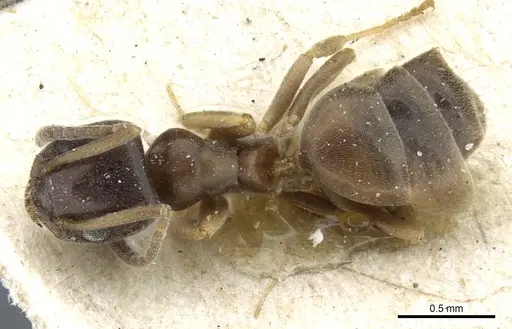
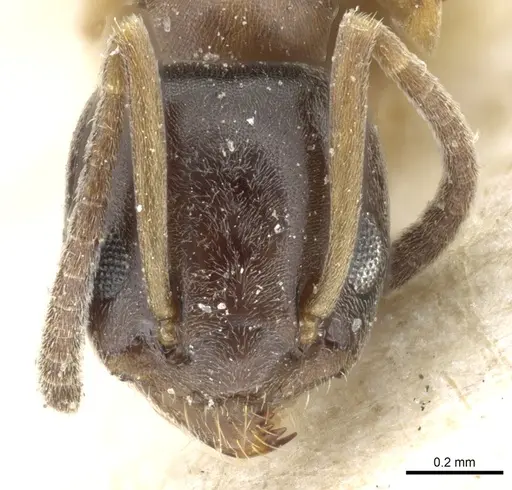
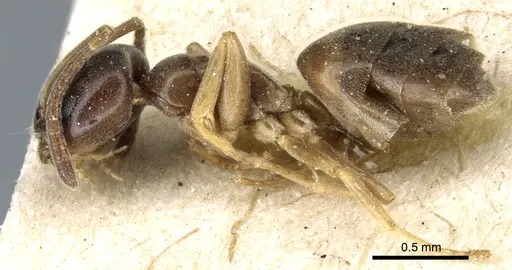
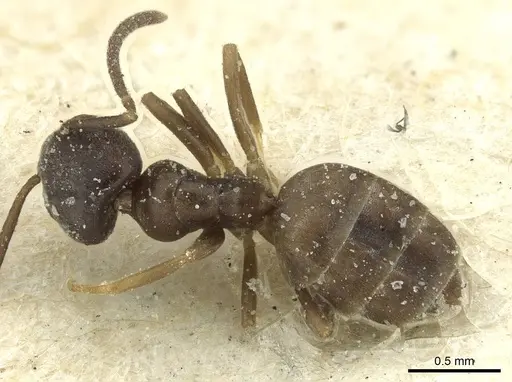
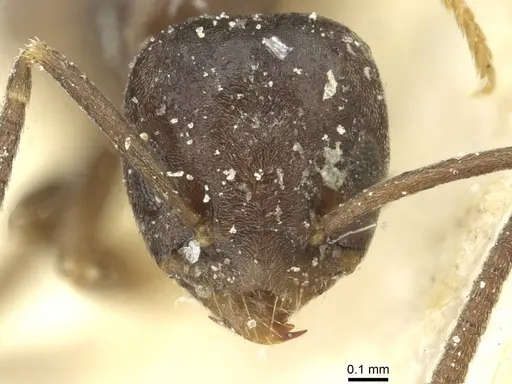
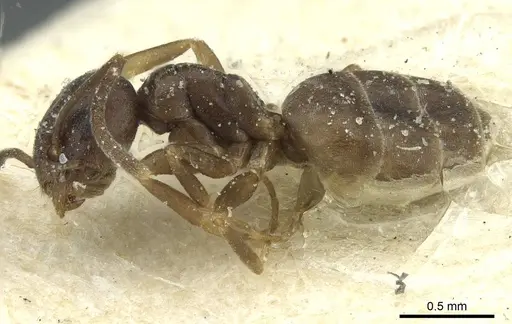
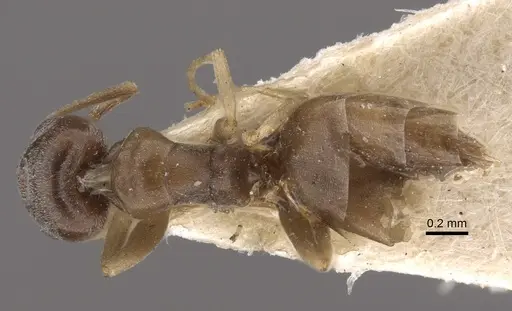
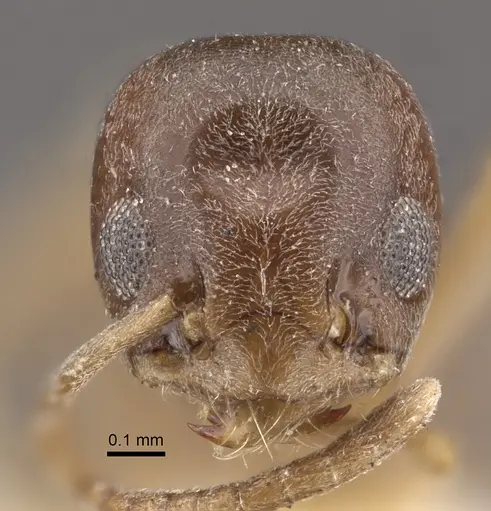
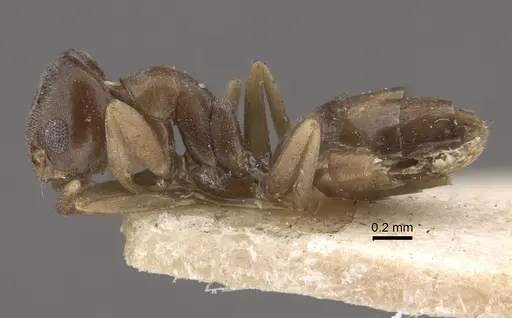
Tapinoma sinense is a tiny ant native to the Palaearctic region, found in Mongolia, China, Kazakhstan, Kyrgyzstan, Russia, North Korea, South Korea, and surrounding areas . Workers are very small, precise body length is not recorded, but head measurements indicate they are among the smallest Tapinoma. They have a short, broad head and a very shallow, broad clypeal excision that sets them apart from relatives . Their body is dirty brown with paler legs and antennae. This species is considered rare with a highly restricted distribution, primarily in eastern Mongolia and high-altitude steppes of Central Asia . As a Dolichoderinae ant, it lacks a stinger and defends itself by exuding foul-smelling secretions from its anal gland, not by spraying formic acid.
Quick Summary
- Difficulty: Medium
- Origin & Habitat: Native to the Palaearctic region: Mongolia, China, Kazakhstan, Kyrgyzstan, Russia (Caucasus), Turkmenistan, North Korea, South Korea [1][2][3]. Found in forest steppe and high-altitude steppe up to 2400 m elevation [5][6].
- Colony Type: Unconfirmed – likely monogyne (single queen) based on typical Tapinoma patterns, but no direct evidence.
- Size & Growth:
- Queen: Unconfirmed – no body size data available from literature.
- Worker: Very small – total body length is not reported in scientific sources. Head capsule size suggests they are among the smaller Tapinoma species [4].
- Colony: Unknown – no colony size estimates exist in research.
- Growth: Unknown
- Development: Estimated 6‑8 weeks based on typical Dolichoderinae development at warm temperatures (24‑26 °C). (Timeline is inferred from genus-level data, no species-specific study exists.)
- Antkeeping:
- Temperature: Keep at 20‑26 °C. They tolerate cooler conditions given their northern range, but activity increases with warmth. Room temperature (20‑24 °C) works well. Avoid exceeding 30 °C.
- Humidity: Moderate humidity – keep the nest substrate slightly moist but not waterlogged. They inhabit forest steppe, so conditions should be neither arid nor soaked.
- Diapause: Likely yes – given their native range includes cold winters in Mongolia and Kazakhstan, a winter rest period of 2‑3 months at 5‑10 °C is recommended [1].
- Nesting: In nature they nest in soil under stones in steppe habitats. For founding, a test tube setup is fine. For established colonies, use a naturalistic setup with soil and flat stones, or a Y‑tong/plaster nest with narrow chambers scaled to their tiny size.
- Behavior: Generally non‑aggressive and shy. As Dolichoderinae, they lack stingers but exude foul‑smelling anal gland secretions when threatened. Workers are very small and fast‑moving. Their tiny size makes escape prevention critical – use fine mesh and tight seals. They likely feed on honeydew and small insects, similar to other Tapinoma.
- Common Issues: extremely small workers can squeeze through tiny gaps – use fine mesh barriers and ensure tight seals on all connections., limited wild distribution makes obtaining colonies difficult – ensure your source is sustainable., rare species in the wild – do not collect from vulnerable populations., cold tolerance is moderate – avoid temperatures below 10 °C except during hibernation., limited research means most care recommendations are inferred from related species.
Housing and Nest Setup
For founding colonies, a standard test tube setup works well. Fill a tube one‑third with water, plug the end with cotton, and introduce the queen. Because founding type is unconfirmed, you may need to provide a small entrance to allow foraging – observe her behavior. For established colonies, provide a naturalistic setup with moist soil and flat stones, or use a Y‑tong/plaster nest with narrow chambers. Because workers are tiny, escape prevention is critical: use mesh with openings smaller than 0.5 mm and seal all connections tightly [4].
Temperature and Heating
Tapinoma sinense comes from temperate regions with cold winters [1]. Keep the nest at room temperature (20‑24 °C) for normal activity. They can tolerate cooler conditions down to about 15 °C, but brood development will slow. A gentle heat gradient (one side slightly warmer, up to 26 °C) can boost growth. Avoid temperatures above 30 °C. For winter, provide a diapause period of 2‑3 months at 5‑10 °C to mimic their natural cycle [1].
Feeding and Diet
Like other Tapinoma, they likely feed on honeydew and small insects. In captivity, offer a constant source of sugar water or honey water. For protein, provide small prey such as fruit flies, pinhead crickets, or other tiny insects. Remove uneaten prey after 24‑48 hours to prevent mold. Because workers are very small, prey should be appropriately sized.
Seasonal Care and Hibernation
Given their native range includes areas with severe winters, a hibernation period is recommended [1]. In autumn, gradually reduce temperature to 10‑15 °C, then provide 2‑3 months at 5‑10 °C. Do not feed during hibernation. Reduce humidity slightly to prevent mold. In spring, warm the colony back to room temperature gradually and resume feeding. Watch for increased activity as they break dormancy.
Behavior and Temperament
Tapinoma sinense is shy and non‑aggressive. Workers are small and fast, avoiding confrontation. As Dolichoderinae, they lack stingers – when threatened they exude foul‑smelling anal gland secretions, not formic acid [4]. They are not known to be territorial toward other colonies. Their tiny size means they can squeeze through very small gaps, so escape prevention is essential. They likely form trails to food sources and maintain small to moderate colonies.
Frequently Asked Questions
How long does it take for Tapinoma sinense to produce first workers?
The exact timeline is unconfirmed. Based on typical Dolichoderinae development, expect first workers (nanitics) approximately 6‑8 weeks after the queen lays eggs at 24‑26 °C. Development may be slower at cooler temperatures.
Can I keep Tapinoma sinense in a test tube?
Yes – test tubes are suitable for founding. Ensure the water reservoir is properly cotton‑plugged. Because workers are tiny, cover ventilation holes with fine mesh to prevent escapes.
What temperature do Tapinoma sinense need?
Keep them at room temperature,20‑24 °C. They tolerate cooler conditions but should stay above 15 °C for active growth. A slight warm spot up to 26 °C can encourage brood development. Avoid temperatures above 30 °C [1].
Do Tapinoma sinense need hibernation?
Yes, likely required. Because their native range includes cold winters in Mongolia and Kazakhstan, provide a 2‑3 month winter rest at 5‑10 °C to maintain natural seasonal rhythms [1].
How big do Tapinoma sinense colonies get?
Colony size is not documented in scientific literature. Based on their small worker size and restricted distribution, colonies probably remain modest – likely under a few hundred workers. More research is needed.
Are Tapinoma sinense good for beginners?
They are moderate difficulty. Their tiny size demands excellent escape prevention, and their rarity makes them hard to obtain. Basic care is straightforward once you have a colony, but they are not the easiest first ant.
What do Tapinoma sinense eat?
They likely accept sugar sources (honey water, sugar water) and small protein prey such as fruit flies, pinhead crickets, or other tiny insects. Remove uneaten food promptly to prevent mold.
Why are my Tapinoma sinense escaping?
Their tiny workers (head capsule ~0.67 mm) can squeeze through gaps that seem impossibly small [4]. Use mesh with openings smaller than 0.5 mm, ensure all lid connections are tight, and check for cracks or gaps in your setup.
Where is Tapinoma sinense found in the wild?
They are native to the Palaearctic region: eastern Mongolia, China, Kazakhstan, Kyrgyzstan, Russia (Caucasus), Turkmenistan, North Korea, South Korea [1][2][3]. They inhabit forest steppe and high‑altitude steppe up to 2400 m elevation [5][6].
Report an Issue
The current care sheet is based fully on literature. See inconsistencies, or something that's incorrect? Please , it will be resolved after review from an admin. Contributing to the blogs tab also helps providing information, to make us be able to further improve the caresheets. Thank you for your support!
References

This caresheet is licensed under CC BY-SA 4.0 .
Community Blogs
Literature
Loading distribution map...Loading products...