
Tapinoma magnum
- Sci. Name
- Tapinoma magnum
- Tribe
- Tapinomini
- Subfamily
- Dolichoderinae
- Author
- Mayr, 1861
- Distribution
- Found in 10 countries
Introduction
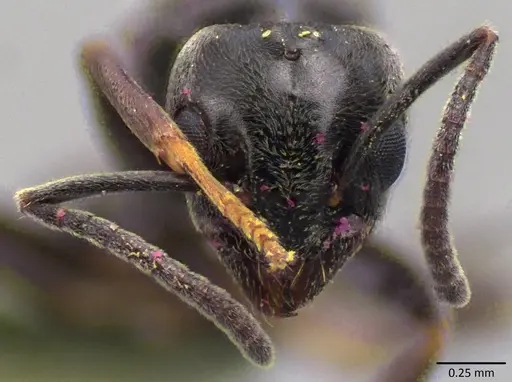
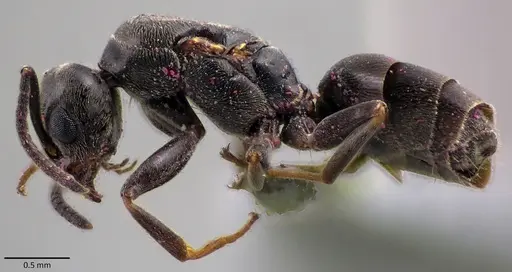
Tapinoma magnum is a small to large, polymorphic ant species from the Dolichoderinae subfamily. Workers range from 2‑4mm in length . The body is brown to black, with the gena often slightly paler yellowish‑brown, and antennae and legs brown to almost black . It is part of the Tapinoma nigerrimum complex, a group of four cryptic species that are difficult to separate visually . Native to the western Mediterranean (North Africa from Morocco to Tunisia, Italy, Corsica, Sardinia, and southern France), T. magnum has become a major invasive pest in central and northern Europe, including Germany, Belgium, the Netherlands, Switzerland, and the UK. It was introduced through the trade of potted plants from garden centers . What makes T. magnum especially notable is its supercolonial lifestyle. It forms massive, strongly polygynous colonies (up to 350 queens per nest spot) that can stretch over one hectare and contain more than 20 million workers . These supercolonies are polydomous, with multiple nest sites connected by trails, and workers and brood constantly exchanged. The species also shows remarkable cold tolerance for a Mediterranean ant: it forages at temperatures as low as 3‑7°C and survives frost periods of -15°C without damage . When disturbed, workers emit a distinctive rancid‑butter or Roquefort‑like odor and will readily bite .
Quick Summary
- Difficulty: Expert
- Origin & Habitat: Native to the western Mediterranean basin (North Africa from Morocco to Tunisia, Italy, Corsica, Sardinia, southern France). Invasive in central/northern Europe including Germany, Belgium, Netherlands, Switzerland, UK, Austria, Hungary, introduced through potted plants from garden centers [3][1]. Prefers sunny, open, degraded areas with strong human impact, often on sandy soils and in coastal zones [2].
- Colony Type: Supercolonial, strongly polygynous (multiple queens per nest) and polydomous (multiple connected nest sites). Single nest spots can hold up to 350 queens. Supercolonies can exceed 20 million workers spanning over one hectare [3]. Colonies expand locally through budding, workers colonize new areas and transport queens [4].
- Size & Growth:
- Queen: ~5‑6 mm (inferred from Tapinoma genus patterns, exact body length not recorded in research).
- Worker: 2‑4 mm [1].
- Colony: Supercolonies can exceed 20 million workers spanning one hectare or more [3].
- Growth: Fast, supercolonial growth with rapid expansion through budding.
- Development: 6‑8 weeks, estimated based on typical Dolichoderinae development at optimal temperature, exact timeline not directly studied for this species. Brood with eggs, larvae, and pupae observed in May in temperate populations [1]. (Temperature: 20‑24°C promotes faster development. Lower temperatures slow growth but do not stop it.)
- Antkeeping:
- Temperature: Room temperature (18‑24°C) is ideal. This species is remarkably cold‑tolerant, it forages at 3‑7°C and survives frost. A heating cable on one side of the nest can create a useful gradient. Avoid temperatures above 30°C [3].
- Humidity: Provide a gradient: keep most of the nest substrate dry to slightly moist, with one small area consistently damp. In nature they prefer sandy, well‑drained soils [3].
- Diapause: No true diapause, remains active year‑round at low temperatures. In temperate regions, activity slows during winter but can resume on sunny days above 3°C [3]. Not required.
- Nesting: Subterranean nests are preferred. Use a test tube for founding, but plan to connect it to a larger formicarium with deep soil chambers (at least 10‑15 cm depth) within 6‑12 months. Y‑tong or plaster nests with added soil space work well. Natural nests reach 1 m depth [3].
- Behavior: Highly aggressive when disturbed, workers bite readily and emit a strong rancid‑butter odor. Forms dense foraging columns along walls and sidewalks. Very active foragers that quickly dominate food sources. Workers are polymorphic, but not as extreme as some other species. Escape prevention is critical due to small size (2‑4 mm). Known to displace the invasive Argentine ant (Linepithema humile) through superior fighting and recruitment [3].
- Common Issues: invasive species, do NOT release anywhere outside its native Mediterranean range. Releasing is illegal and ecologically harmful., supercolonial growth can lead to enormous colony sizes quickly, ensure you have space for expansion or means to control growth., strong odor when crushed, distinctive rancid butter smell as a defense mechanism., aggressive biting, will bite when nest is disturbed, handle with care., escape risk due to small size, use fine mesh and tight‑fitting barriers., difficult to control once established, even professional pest control struggles with large wild supercolonies [7].
Housing and Nest Setup
Tapinoma magnum needs more space than typical ants due to its supercolonial lifestyle. A standard test tube works for the founding queen and first workers, but you should plan for expansion within 6‑12 months as the colony grows. These ants naturally build subterranean nests reaching 1 m depth, so a formicarium with a deep soil chamber (at least 10‑15 cm) works best [3]. A combination of a test tube connected to a larger soil area is effective. Y-tong or plaster nests with moisture reservoirs are suitable options. Provide a temperature gradient, they prefer sunny warm spots for nesting but will forage in cooler areas. The outworld should be spacious with multiple feeding stations because workers form dense foraging columns [1]. Escape prevention is critical due to their small size, use fluon on container edges and fine mesh (0.5 mm or smaller) on any openings.
Feeding and Diet
Tapinoma magnum is omnivorous with a strong preference for sugary substances. In captivity, offer constant access to sugar water (1:3 sugar to water ratio) or honey. They also readily accept protein sources including mealworms, crickets, and other small insects. In the wild, they tend aphid colonies extensively, feeding on honeydew, and also consume nectar and fruit juices [1][5]. They are known to hunt small invertebrates including earthworms [1]. A varied diet is recommended, alternate between protein prey items and sugar sources. Feed protein 2‑3 times per week depending on colony size, and ensure sugar is always available. These ants are highly aggressive foragers and will quickly dominate food sources, so provide multiple feeding stations to prevent conflict in multi‑species setups. They may ignore unfamiliar foods initially but will adapt over time.
Temperature and Seasonal Care
One of the most remarkable aspects of Tapinoma magnum is its cold tolerance. Unlike most Mediterranean ants, it remains active at temperatures as low as 3‑7°C and has survived 14‑day frost periods with mean temperatures of -6.6°C and absolute minimum -15°C without visible damage [3]. In temperate regions, they show last activity in late December at 3°C (cloudy days) or -2°C (sunny days), then resume activity after snowmelt in January when temperatures reach around 10.6°C [3]. For captive care, room temperature (18‑24°C) is ideal for optimal development. They do not require hibernation or diapause, in fact, keeping them cool in winter may slow but not stop activity. A heating cable on one side of the nest can create a temperature gradient, allowing ants to choose their preferred zone. Avoid temperatures above 30°C as this exceeds their natural range.
Behavior and Defense
Tapinoma magnum is notoriously aggressive when threatened. Workers bite readily and emit a distinctive, strong odor reminiscent of rancid butter or Roquefort cheese, this comes from anal gland secretions considered highly toxic to other ant species [4]. When disturbed, dozens of workers quickly climb onto the intruder (feet, legs, hands) and bite. This makes nest maintenance challenging. They form dense foraging columns along walls and fences, exploring every fissure for food. Recruitment is extremely efficient, hundreds of workers can appear within minutes. In competitive interactions with other ants, T. magnum dominates through both fighting ability and recruitment efficiency, it is known to displace the invasive Argentine ant (Linepithema humile) [3]. When keeping this species, work carefully around the nest and consider using gloves.
Colony Growth and Expansion
Tapinoma magnum colonies grow explosively due to their supercolonial structure. A single nest spot can contain up to 350 queens, and supercolonies can span over one hectare with more than 20 million workers [3]. Colonies expand locally through budding, workers colonize new areas and transport queens to establish satellite nests. Your colony can grow from a few dozen workers to tens of thousands within a couple of years if given adequate space. Plan for rapid growth and provide expanding housing before the colony becomes cramped. The polygynous nature means colony death is unlikely unless all queens are lost. Growth rate is faster in warmer conditions, at 20‑24°C, development from egg to worker takes approximately 6‑8 weeks. Young colonies may grow slowly initially but accelerate once they reach 50‑100 workers.
Legal and Ethical Considerations
CRITICAL: Tapinoma magnum is a highly invasive species in central and northern Europe. It has become a significant pest in urban areas, damaging pavements, entering homes, and disrupting ecosystems by outcompeting native ants. You MUST NOT release this species anywhere outside its native Mediterranean range. In many European countries, keeping invasive ant species may have legal implications, check your local regulations. If you can no longer keep your colony, contact a local pest control professional or an ant enthusiast who can responsibly take over. Do not release, flush down drains, or abandon outdoors. The species was introduced to northern Europe through the potted plant trade, so responsible keeping prevents further spread [6]. This species is also very difficult to control once established, professional pest controllers in Switzerland and Germany have struggled with large supercolonies spanning hectares [7].
Frequently Asked Questions
Can I keep Tapinoma magnum in a test tube?
A test tube works for the founding colony, but Tapinoma magnum needs more space quickly. Use a test tube for the founding phase (queen + first workers), then connect it to a larger formicarium within 6‑12 months as the colony grows. These ants naturally build deep subterranean nests, so a formicarium with soil depth of 10‑15 cm is ideal for established colonies [3].
How long until Tapinoma magnum has first workers?
Development from egg to first worker takes approximately 6‑8 weeks at optimal temperature (20‑24°C). This is estimated based on typical Dolichoderinae development, the exact timeline has not been directly studied for this species. Major (larger) workers develop first as nanitics, followed by more workers as the colony grows [3].
Are Tapinoma magnum good for beginners?
No, Tapinoma magnum is not recommended for beginners. While relatively easy to keep due to tolerance of varying conditions, they present challenges: they are aggressive biters, emit a strong odor, can become extremely large colonies quickly, and are an invasive species requiring responsible containment. Additionally, they may be illegal to keep in some regions [6].
What do Tapinoma magnum eat?
They are omnivorous with a preference for sugary foods. Offer constant access to sugar water or honey. For protein, feed small insects like mealworms, fruit flies, or crickets 2‑3 times per week. In the wild, they also feed on honeydew from aphids, nectar, and fruit juices, and will hunt small invertebrates including earthworms [1][5].
Can I keep multiple queens together?
Yes, Tapinoma magnum is naturally polygynous (multiple queens per colony). A single nest spot can contain up to 350 queens, and supercolonies function with many queens working together [3]. However, combining unrelated foundress queens that have not been raised together may result in aggression. If you have multiple founding queens, it is safer to keep them in separate setups until their first workers emerge, then introduce them gradually.
Do Tapinoma magnum need hibernation?
No, Tapinoma magnum does not require hibernation. They remain active year-round, even in winter months at temperatures as low as 3°C. In temperate regions, they simply reduce activity rather than entering true diapause [3]. Keeping them at room temperature (18‑24°C) year-round is perfectly suitable.
How big do Tapinoma magnum colonies get?
Extremely large, supercolonies can exceed 20 million workers spanning over one hectare. In captivity, colonies can reach tens of thousands of workers within 2‑3 years with proper care. The polygynous structure (multiple queens) ensures rapid growth once the colony establishes [3]. Plan accordingly for space requirements.
Why do my Tapinoma magnum smell like cheese?
This is normal and serves as a defense mechanism. When crushed or threatened, Tapinoma magnum workers emit secretions from their anal glands that smell like rancid butter or Roquefort cheese. These secretions are also toxic to other ant species. The smell is a characteristic trait of this species and indicates the ants are stressed or defending their nest [4].
What temperature do Tapinoma magnum need?
Room temperature (18‑24°C) is ideal. This species is remarkably cold-tolerant, it forages at temperatures as low as 3‑7°C and survives frost. However, warmer temperatures (20‑24°C) promote faster brood development. A heating cable on one side of the nest creates a gradient for the ants to choose their preferred zone. Avoid temperatures above 30°C [3].
When should I move Tapinoma magnum to a formicarium?
Move from test tube to formicarium when the colony reaches 50‑100 workers or after 6‑12 months, whichever comes first. These ants need space for their large colony size and prefer deep soil chambers for nesting. A formicarium with both dry and humid areas allows them to regulate humidity themselves [3].
Report an Issue
The current care sheet is based fully on literature. See inconsistencies, or something that's incorrect? Please , it will be resolved after review from an admin. Contributing to the blogs tab also helps providing information, to make us be able to further improve the caresheets. Thank you for your support!
References

This caresheet is licensed under CC BY-SA 4.0 .
Community Blogs
ANTWEB1041867
View on AntWeb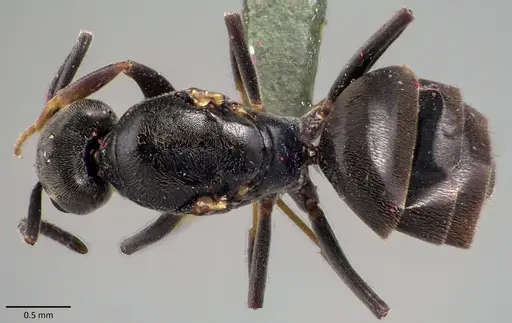
Literature
Loading distribution map...Loading products...