
Tapinoma lugubre
- Sci. Name
- Tapinoma lugubre
- Tribe
- Tapinomini
- Subfamily
- Dolichoderinae
- Author
- Santschi, 1917
- Distribution
- Found in 5 countries
Introduction
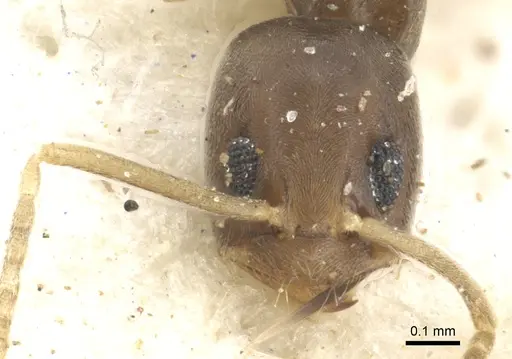
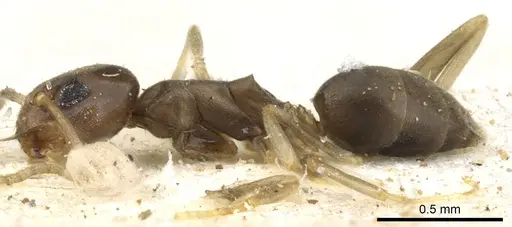
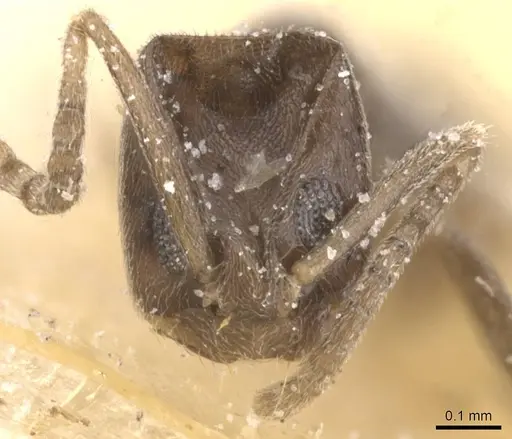
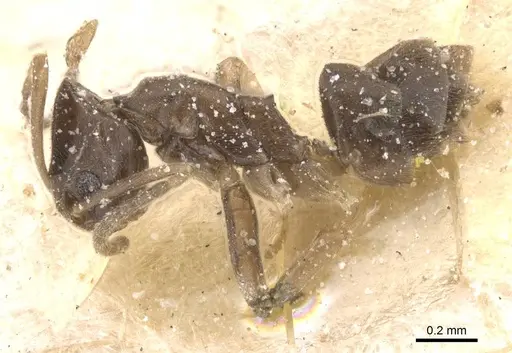
Tapinoma lugubre is a tiny African ant with workers measuring just 1.5-1.8mm in total length . They are dark brown to dull yellowish black, with the head and gaster often appearing blackish . This species belongs to the lugubre group, which has a distinctive peaked propodeum (the rear part of the body has a raised point) . Originally described from Zimbabwe in 1917,it has since been recorded across West Africa including Ghana, Ivory Coast, Nigeria, and Togo . This species thrives in cities - research in Abidjan found it in 38 urban locations but nowhere in nearby protected forests . It appears to live in trees and bushes rather than on the ground . As a Dolichoderinae ant, it lacks a stinger and instead defends itself by releasing a foul-smelling sticky secretion from its anal gland.
Quick Summary
- Difficulty: Medium
- Origin & Habitat: West Africa, found in Zimbabwe, South Africa, Ghana, Ivory Coast, Nigeria, and Togo [2]. This species thrives in urban environments and appears to live in vegetation rather than ground nests [3][4][5].
- Colony Type: Colony structure is unconfirmed. Based on typical Tapinoma patterns, likely single-queen colonies, but this has not been directly studied.
- Size & Growth:
- Queen: Unknown, not directly measured in available research
- Worker: 1.5-1.8mm total length [1]
- Colony: Unknown, no colony size data available
- Growth: Unknown, growth rate has not been studied
- Development: Unknown, no development data available. Based on similar small tropical ants, estimate 4-8 weeks at warm temperatures. (Estimate based on genus patterns, not directly studied for this species)
- Antkeeping:
- Temperature: Keep warm, around 24-28°C. This species is adapted to tropical African conditions and likely prefers these temperatures.
- Humidity: Moderate to high humidity. Their arboreal nature suggests they tolerate some moisture but avoid waterlogged conditions.
- Diapause: Unlikely, as a tropical African species, they probably do not need hibernation [4]. They may slow down during cooler seasons but stay active if kept warm year-round.
- Nesting: Based on their arboreal nature, they likely nest in vegetation, hollow stems, or under bark [4][5]. In captivity, a small test tube setup or Y-tong (AAC) nest with fine chambers works well for their tiny size. Avoid large open spaces.
- Behavior: These are tiny, fast-moving ants that are generalist feeders [6]. They are highly adapted to urban environments and can be found foraging on buildings and in gardens [3][7]. As Dolichoderinae, they do not sting but will release a foul-smelling sticky secretion when threatened. Their small size means excellent escape prevention is essential, they can squeeze through tiny gaps. They are likely shy and non-aggressive toward humans.
- Common Issues: tiny size makes escape likely without fine mesh barriers, no development data available makes timing uncertain, colony size unknown so growth expectations are unclear, urban-adapted species may not thrive in naturalistic setups, limited research means care is largely based on genus-level inference
Housing and Nest Setup
Because these ants are tiny (1.5-1.8mm) and live in trees, you need carefully scaled housing [1]. A standard test tube setup works well for starting colonies, use a test tube with a water reservoir backed by cotton. For larger colonies, use a Y-tong (AAC) nest with narrow chambers or a small plaster nest with tight passages. Avoid large open spaces that can stress them. With their tiny size, use a layer of fluon or fine mesh to prevent escapes, these ants can squeeze through impossibly small gaps. Provide an outworld scaled to their size, with shallow food dishes they can reach easily.
Feeding and Diet
These ants are generalist feeders [6]. Offer sugar water or diluted honey as a constant energy source, they will take sweet liquids readily. For protein, provide small prey like fruit flies, tiny spiders, pinhead crickets, or other small insects. Because they live in trees, they might tend aphids for honeydew if you have plants in the outworld. Feed small amounts every 2-3 days and remove uneaten prey within 24 hours to prevent mold. With their tiny size, even very small prey works.
Temperature and Humidity
Keep these ants warm, aim for 24-28°C to match their tropical African origin [4]. Provide a slight temperature gradient so they can choose their preferred zone. Room temperature (20-24°C) may be acceptable, but the colony will be more active and grow faster at the warmer range. For humidity, provide moderate levels, a test tube water reservoir gives enough moisture. Avoid overly damp conditions that could cause mold. Their tree-dwelling nature means they're used to more variable conditions than ground-nesting ants, but consistent moderate humidity works best.
Behavior and Temperament
These are small, fast-moving ants that are shy rather than aggressive. As Dolichoderinae, they lack a stinger but release a foul-smelling sticky secretion from the anal gland as defense, harmless to humans but worth knowing. They handle urban environments well [3][7], so they tolerate some disturbance and variable conditions. However, their tiny size makes them vulnerable, don't put them in setups where they can be crushed or escape easily. They're likely to be active and visible while foraging in the open. Expect them to explore their outworld quickly and find food fast.
Seasonal Care
As a tropical African species, Tapinoma lugubre likely does not need hibernation [4]. In temperate climates, you may see less activity in winter if room temperatures drop, but this is not a true diapause, just maintain normal care and they'll stay active if kept warm. If you need to slow them down for any reason, a brief cool period (18-20°C) for 4-6 weeks may work, but watch for stress. Do not try cold hibernation with this species. Keep them warm at 24-28°C year-round for continuous growth.
Frequently Asked Questions
How long does it take for Tapinoma lugubre to develop from egg to worker?
The exact development time is unknown, no research documents their timeline. Based on similar small tropical ants and typical Tapinoma patterns, expect about 4-8 weeks from egg to first worker at warm temperatures (around 26-28°C). Be patient, this species seems to grow slowly in captivity.
Can I keep Tapinoma lugubre in a test tube?
Yes, a test tube setup is ideal for this tiny species. Use a standard test tube with a water reservoir backed by cotton. The small worker size (1.5-1.8mm) means they do well in compact spaces. Make sure you have excellent escape prevention, these tiny ants can fit through very small gaps.
How big do Tapinoma lugubre colonies get?
The maximum colony size is unknown, no research has documented colony sizes for this species. Based on their small worker size and typical Tapinoma patterns, colonies likely reach a few hundred workers at most. They are considered a smaller ant species [5].
Are Tapinoma lugubre good for beginners?
This species is rated as Medium difficulty. Their small size and escape risk require attention, but they are generalist feeders and tolerate urban conditions well. However, the lack of species-specific research means care is largely based on inference from related species, which may be challenging for complete beginners.
What do Tapinoma lugubre eat?
They are generalist feeders. Offer sugar water or honey as a constant energy source, and small protein sources like fruit flies, tiny spiders, or small insects. Based on their tree-dwelling lifestyle, they may also accept honeydew from aphids if you include plants in their setup.
Do Tapinoma lugubre need hibernation?
No, as a tropical African species, they do not require hibernation [4]. Keep temperatures warm year-round (24-28°C) for best growth. They may be less active in cooler conditions but this is not a true diapause requirement.
Why are my Tapinoma lugubre escaping?
Their tiny size (1.5-1.8mm) makes them excellent escape artists [1]. Use fine mesh barriers, fluon on container edges, and check all openings are sealed. Even tiny gaps that seem too small for ants are potential escape routes.
Where does Tapinoma lugubre naturally live?
This species is found across West Africa including Zimbabwe, South Africa, Ghana, Ivory Coast, Nigeria, and Togo [2]. It prefers urban environments and appears to be arboreal, living in vegetation rather than ground nests [3][4][5].
Report an Issue
The current care sheet is based fully on literature. See inconsistencies, or something that's incorrect? Please , it will be resolved after review from an admin. Contributing to the blogs tab also helps providing information, to make us be able to further improve the caresheets. Thank you for your support!
References

This caresheet is licensed under CC BY-SA 4.0 .
Community Blogs
CASENT0903070
View on AntWeb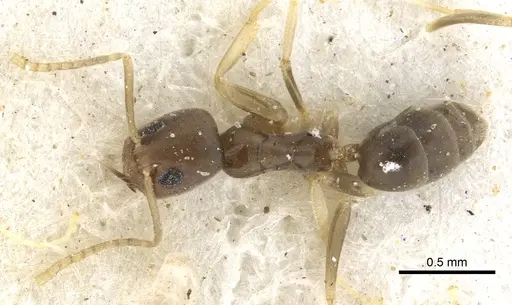
CASENT0911569
View on AntWeb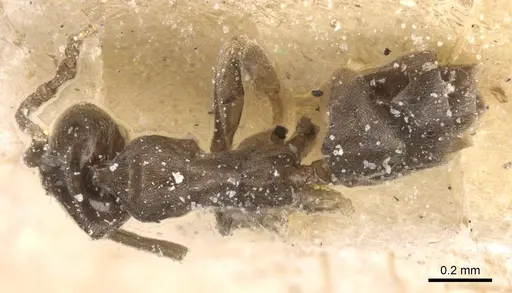
Literature
Loading distribution map...Loading products...