
Tapinoma ibericum
- Sci. Name
- Tapinoma ibericum
- Tribe
- Tapinomini
- Subfamily
- Dolichoderinae
- Author
- Santschi, 1925
- Distribution
- Found in 3 countries
Introduction
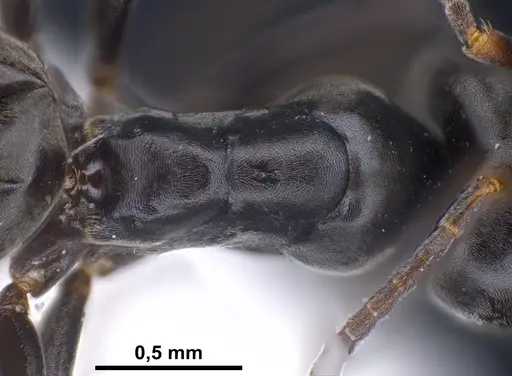
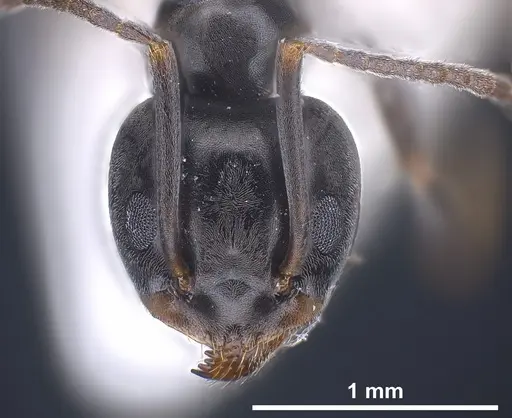
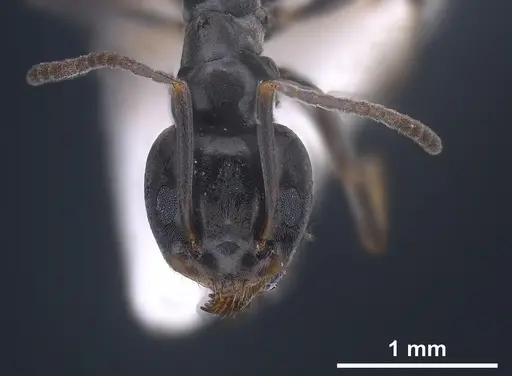
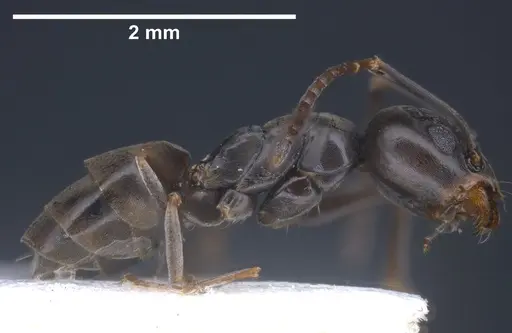
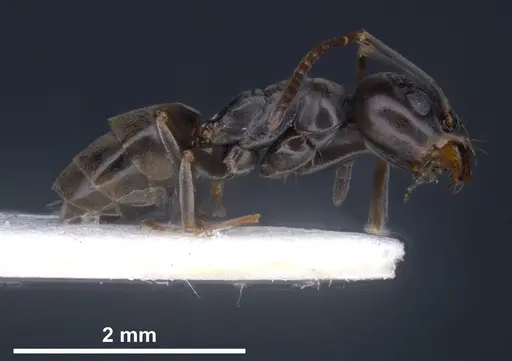
Tapinoma ibericum is a medium-sized ant in the subfamily Dolichoderinae. It belongs to the Tapinoma nigerrimum complex, a group of four cryptic species separated through genetic and morphological analysis . Workers have a distinctive clypeal notch and broad head. Body size data is unavailable in the literature, but based on related Tapinoma species, workers are typically 2–3 mm long. This ant is native to the Iberian Peninsula (Spain and Portugal south of 41°N), where it lives in dry Mediterranean habitats at elevations averaging 623 m . It builds extensive subterranean nests with characteristic crater‑like soil domes at the entrances . Although it has weaker invasive potential than Tapinoma magnum, it still forms large supercolonies that can dominate areas and displace native ants in introduced regions .
Quick Summary
- Difficulty: Expert
- Origin & Habitat: Native to the Iberian Peninsula (Spain, Portugal) south of 41°N. Introduced to the UK (Isle of Wight), France, Germany, and the Netherlands via plant material imports [1][2]. Inhabits dry Mediterranean areas, often at elevations of 623 ± 264 m [3].
- Colony Type: Supercolonial – forms large polygynous (multiple queen) colonies with satellite nests (polydomous). Many thousands of interconnected workers cooperate across multiple nest sites [4][5].
- Size & Growth:
- Queen: Size data unavailable, estimated at 6–7 mm based on related Tapinoma species (inferred).
- Worker: Size data unavailable, workers of related Tapinoma are typically 2–3 mm long (inferred from genus).
- Colony: Extremely large – mature supercolonies can contain hundreds of thousands to millions of workers [4].
- Growth: Fast, once established, colonies expand rapidly.
- Development: About 6–8 weeks at 24–28°C (estimated from typical Dolichoderinae development). (Development is temperature‑dependent, warmer conditions accelerate growth. The first workers (nanitics) are smaller than mature ones.)
- Antkeeping:
- Temperature: Keep the nest at 24–28°C for optimal brood development. These ants are cold‑tolerant – in Portugal, foragers remain active at air temperatures as low as 10°C [1]. Use a heating cable on one side of the nest to create a gradient.
- Humidity: Provide a humidity gradient in the nest. Keep the substrate slightly moist but allow the surface to dry between waterings. These ants are adapted to Mediterranean climates with dry summers and mild wet winters.
- Diapause: Yes – based on their Mediterranean origin, a winter rest period of 2–3 months at 10–15°C is recommended. Reduce feeding during this time and keep the nest cool but above freezing [1].
- Nesting: Y‑tong (AAC) nest with multiple chambers, or a naturalistic soil setup. They need ample space for their extensive subterranean tunnels and satellite nests [3].
- Behavior: Workers are fast, active foragers that lay chemical trails to food. They do not have a functional sting – instead, they exude a sticky, foul‑smelling deterrent from an anal gland (smear defense). They are aggressive toward other ant species and can displace native ants in introduced areas [2]. Escape risk is moderate: workers are small (about 2–3 mm), so fine mesh and Fluon barriers are necessary.
- Common Issues: supercolonies need enormous space – a small formicarium will be outgrown quickly. Plan for connection to multiple nest boxes., invasive species warning – never release this ant outside its native range. It can cause severe ecological damage. Extreme escape precautions are mandatory., aphid farming can lead to sooty mold if not managed – clean the outworld regularly., winter diapause is essential – skipping it can weaken the colony and shorten queen lifespan., polygynous colony dynamics can be difficult to manage if queen acceptance fails, provide ample space to reduce conflict., workers are small and can escape through tiny gaps – use fine mesh (≤0.5 mm) on all ventilation holes and apply Fluon or PTFE to rims.
Housing and Nest Setup
Tapinoma ibericum needs much more space than most ant species because of its supercolonial nature [4]. A Y‑tong (AAC) nest with several chambers works well, or you can use a naturalistic setup with a deep soil layer for their extensive tunneling. In the wild, they build long subterranean tunnel networks, often with crater‑like soil mounds at the entrances [3]. Start a newly mated queen in a test tube, but be ready to transfer the colony to a small formicarium within 3–6 months – growth is fast. Provide a large outworld connected to the nest, because these ants will forage over a wide area and may farm aphids there. Workers are small (inferred 2–3 mm), so use fine mesh (≤0.5 mm) on all ventilation holes and apply Fluon or PTFE to the outworld rim to prevent escapes [4].
Feeding and Diet
In the wild, Tapinoma ibericum is an omnivore with a strong sweet tooth. It actively tends aphids for honeydew and is a major predator of the Olive Moth (Prays oleae) in southern Spain [1]. In captivity, provide a constant sugar source (e.g.,1:3 honey‑water or pure honey) and offer protein 2–3 times per week – small insects (fruit flies, small crickets, mealworm pieces) or protein jelly work well. Watch for sooty mold, this black fungus grows on accumulated honeydew and can cover the formicarium if you don't clean the outworld regularly.
Temperature and Seasonal Care
Keep the nest at 24–28°C for optimal brood development. T. ibericum is cold‑tolerant – workers in Portugal were observed foraging at air temperatures as low as 10°C in February [1]. Use a heating cable on one side of the nest to create a temperature gradient so the ants can choose their preferred spot. In winter, provide a diapause period of about 2–3 months at 10–15°C. This mimics their natural Mediterranean climate and is essential for long‑term colony health. Reduce feeding during diapause and keep the nest slightly cool but above freezing [1].
Colony Growth and Expansion
Tapinoma ibericum forms true supercolonies – massive networks of interconnected nests with multiple queens [4][5]. In the wild, these colonies can cover huge areas and contain enormous numbers of workers. In captivity, expect rapid growth after the first workers appear. A single queen (if claustral) will raise the first nanitics alone, then the colony will expand quickly. After 6–12 months you may have hundreds to thousands of workers. Because they are supercolonial, they benefit greatly from extra space – connect multiple formicaria or provide a large naturalistic setup. The polygynous (multiple queen) structure contributes to their rapid growth and colony stability [4][5].
Behavior and Defense
Workers are fast, active foragers that use chemical trails to recruit nestmates to food. They do not have a functional sting – instead, they exude a sticky, foul‑smelling deterrent from their anal gland (smear defense), typical of Dolichoderinae. T. ibericum is aggressive toward other ant species and readily displaces native ants in its introduced range [2]. In captivity, they are generally calm toward keepers but will defend the colony if disturbed. Their size and speed make them interesting to watch, especially when they tend aphids or establish foraging highways.
Frequently Asked Questions
Can I keep Tapinoma ibericum in a test tube?
You can start a founding colony in a test tube, but because of their supercolonial nature and fast growth, you will need to move them to a formicarium within 3–6 months. They will outgrow a simple test tube quickly.
How long does it take for the first workers to emerge?
At 24–28°C, the first workers (nanitics) typically emerge in 6–8 weeks. Warmer temperatures speed up development, cooler ones slow it down. This is an estimate based on related ant species – no precise data exists for T. ibericum.
Are Tapinoma ibericum good for beginners?
No – this species is rated Expert. It is invasive in parts of Europe, grows into enormous colonies, requires strict escape prevention, and needs a winter diapause. Only experienced keepers with ample space and resources should attempt this species.
Do Tapinoma ibericum need hibernation?
Yes – they need a winter diapause of 2–3 months at 10–15°C to stay healthy. Skipping it can weaken the colony and shorten the queen’s lifespan. Reduce feeding and keep the nest cool but above freezing during this period.
How big do Tapinoma ibericum colonies get?
Extremely large – mature supercolonies can contain hundreds of thousands to millions of workers. In captivity, a well‑established colony after 1–2 years may have several thousand workers. Plan for significant space expansion.
Can I keep multiple queens together?
Yes – established colonies are naturally polygynous (multiple queens). However, it is unknown how founding queens behave together because colony founding in this species has not been studied in detail. It may be possible, but you should expect some queen loss.
What do Tapinoma ibericum eat?
They are omnivorous with a sweet preference. Offer a constant sugar source (honey‑water, pure honey) and protein 2–3 times per week (small insects, protein jelly). They will also collect honeydew if you provide aphids. In the wild, they prey on Olive Moth eggs and larvae [1].
Why are my Tapinoma ibericum dying?
Common causes: skipping winter diapause (essential for this species), enclosure too small, incorrect humidity (too wet or too dry), or repeated disturbance. Also check for mold in the nest. These ants are generally hardy, so review your temperature, feeding, and hibernation schedule.
Report an Issue
The current care sheet is based fully on literature. See inconsistencies, or something that's incorrect? Please , it will be resolved after review from an admin. Contributing to the blogs tab also helps providing information, to make us be able to further improve the caresheets. Thank you for your support!
References

This caresheet is licensed under CC BY-SA 4.0 .
Community Blogs
ANTWEB1041374
View on AntWeb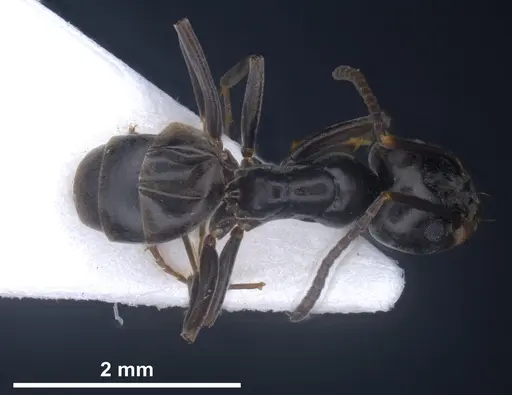
Literature
Loading distribution map...Loading products...