
Tanipone maculata
- Sci. Name
- Tanipone maculata
- Subfamily
- Dorylinae
- Author
- Bolton & Fisher, 2012
- Distribution
- Found in 1 countries
Introduction
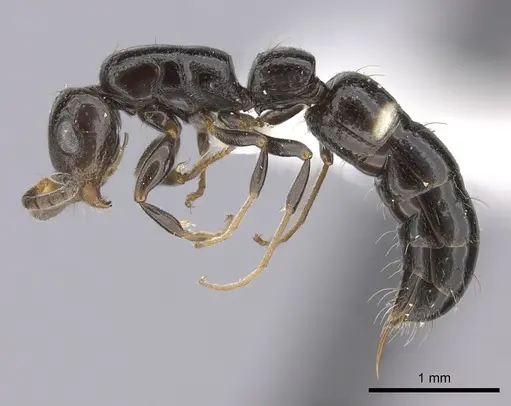
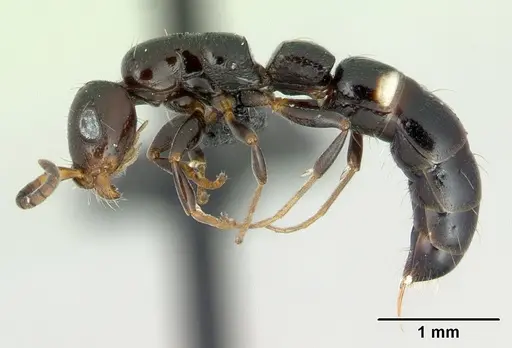
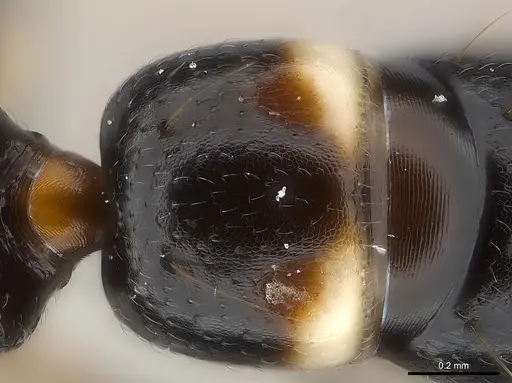
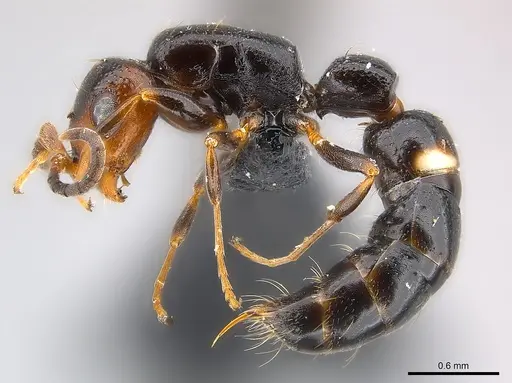
Tanipone maculata is a tiny, dark ant species from Madagascar, belonging to the Dorylinae subfamily (army ants and relatives). Workers are small, with head length measurements of about 0.69–0.90mm, but their total body length has not been recorded . They are dark brown to black with a pair of pale yellowish spots on the third abdominal segment (AIII), separated by a dark stripe down the middle . These ants are found only in southern Madagascar (Toliara province), in spiny forest and tropical dry forest at around 300m elevation . They nest in rotten logs and forage on the ground. This species is the most variable in its group regarding hairiness and body sculpture, and its closest relative is Tanipone zona, which has a continuous pale band instead of spots and is less hairy .
Quick Summary
- Difficulty: Expert
- Origin & Habitat: Madagascar: southern Toliara province, Andohahela National Park, at ~300m elevation. Inhabits spiny forest and tropical dry forest. Nests in rotten logs, workers forage in leaf litter and on the ground [1][2].
- Colony Type: Probably monogyne (single-queen colonies), but this has not been confirmed through field studies. The species has ergatoid (wingless) queens, which can act as replacement reproductives if the primary queen dies [1].
- Size & Growth:
- Queen: Total body length not recorded. Ergatoid (wingless) queens are larger than workers, head length about 0.98mm. True queen size unknown [1].
- Worker: Total body length not recorded. Head length range 0.69–0.90mm [1].
- Colony: Unknown – no data available from scientific literature.
- Growth: Unknown
- Development: Unknown – no direct measurements exist. Based on typical Dorylinae patterns, development might take 4–8 weeks at warm temperatures, but this is speculative. (Development timeline has not been studied for this species.)
- Antkeeping:
- Temperature: Likely needs warm conditions similar to other Madagascar forest ants. Based on its tropical dry forest habitat, aim for 24–28°C with a slight gradient. No direct temperature data exists.
- Humidity: Moderate to high humidity. Their natural habitat experiences seasonal moisture. Keep the nest substrate moderately moist but not waterlogged. Provide a humidity gradient.
- Diapause: Unknown – Madagascar species may have reduced activity periods rather than true hibernation. No research on overwintering requirements exists.
- Nesting: In the wild they nest in rotten logs. In captivity, offer a naturalistic setup with decaying wood pieces or a well-humidified plaster/Ytong nest. They are ground-dwelling and prefer enclosed spaces.
- Behavior: These ants are predatory, like other Dorylinae, likely hunting small invertebrates. Workers forage on the ground in leaf litter. They are tiny, so escape prevention must be excellent – standard barriers may fail. Temperament is unknown, but related army ants are aggressive predators, treat as potentially defensive. No sting information is available for this species.
- Common Issues: no captive care information exists – this species is extremely rare in the antkeeping hobby, escape prevention is critical due to their tiny size – they can squeeze through standard barriers, predatory diet requirements make them difficult to feed – likely need live small prey, virtually nothing is known about colony founding or reproduction in captivity, the species shows high morphological variability, which may indicate multiple cryptic species, wild-caught colonies could be mixed
Appearance and Identification
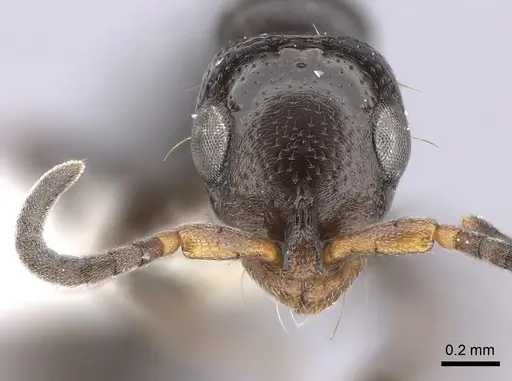
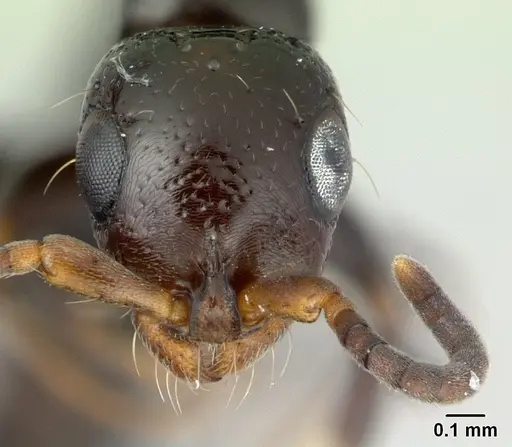
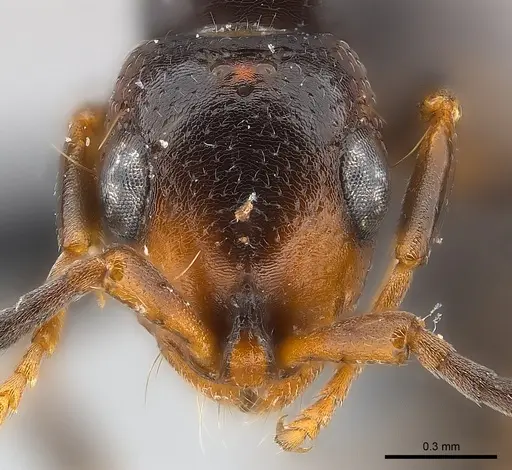
Tanipone maculata is a very small ant. Workers have a head length of about 0.69–0.90mm [1]. They are dark brown to black, with a pair of pale yellowish spots on the third abdominal segment (AIII), separated by a dark median stripe [1]. This is their most distinctive feature. They are noticeably hairier than their close relative Tanipone zona, which has a continuous pale band instead of spots. Workers usually have a pair of setae (bristles) on the mesonotum and a single seta on the underside of the mesofemur and metafemur [1]. The species shows considerable variation in hairiness and body sculpture – some specimens are heavily sculptured and may actually be ergatoid queens rather than workers [1]. This variability makes identification tricky and may suggest that multiple species are currently lumped under this name.
Natural Habitat and Distribution
This species is endemic to Madagascar, limited to the southern Toliara province. The type specimens were collected in Andohahela National Park at about 300m elevation [1]. Their habitat is spiny forest and tropical dry forest, which are dry, seasonal environments with spiny vegetation. All known specimens were collected from ground-foraging, litter samples, pitfall traps, under stones, or in rotten logs [1][2]. They appear to be strictly ground-dwelling, hunting in the leaf litter layer. The species has not been recorded outside this small area.
Nesting Behavior
In the wild, Tanipone maculata nests in rotten logs and forages on the ground surface [1]. This matches the collection data: most specimens come from litter samples and ground foraging. They are likely litter-dwelling predators, hunting in the decomposing organic layer of the forest floor. For captive care, a naturalistic setup with decaying wood material and a humid nest would likely work best. The presence of ergatoid (wingless) queens indicates a replacement reproductive system – if the primary queen dies, an ergatoid can take over egg-laying [1]. No detailed nesting observations are available.
Taxonomy and Relatives
Tanipone maculata belongs to the Dorylinae subfamily (army ants and relatives) and is in the maculata species group, maculata complex. It was described by Bolton and Fisher in 2012 [1]. Its closest relative is Tanipone zona, which can be told apart by having a continuous pale band on the abdomen (instead of separate spots) and being less hairy [1]. This species is the most variable in its group regarding pilosity and sculpture. The high variability may mean that multiple species are currently classified under this name – more nest samples are needed to clarify [1].
Keeping Tanipone maculata in Captivity
This is an extremely difficult species to keep and is not recommended for beginners. No established captive protocols exist, and very few antkeepers have tried it. Based on related Dorylinae and its natural habitat, it likely needs warm (24–28°C), moderately humid conditions with access to small live prey. Their tiny size means escape prevention must be excellent – use fluon or other barriers, and check for gaps regularly. They probably accept small live prey like springtails, fruit flies, and other micro-arthropods. It is unclear whether they accept sugar – some Dorylinae take honeydew, but their primary diet is protein. If you obtain a colony, document everything carefully, as any data would be scientifically valuable.
Conservation and Collection Notes
Tanipone maculata is known only from a limited area in southern Madagascar, and was described in 2012 from specimens collected in the early 2000s [1]. Wild populations may face threats from deforestation and agriculture. In the antkeeping hobby, this species would almost certainly be wild-caught, as captive breeding has not been established. Any captive colonies should be thoroughly documented, as they represent rare opportunities to study this species. Its IUCN status has not been assessed.
Frequently Asked Questions
How big do Tanipone maculata ants get?
Total body length has not been recorded. Workers have a head length of about 0.69–0.90mm [1]. Ergatoid (wingless) queens are larger, with a head length of about 0.98mm [1]. They are very small ants.
Where is Tanipone maculata found in the wild?
Only in Madagascar, specifically in the southern Toliara province, in spiny forest and tropical dry forest [1][2].
What do Tanipone maculata ants eat?
As a member of the Dorylinae subfamily, they are likely predatory and hunt small invertebrates. In captivity, you would probably need to offer small live prey like springtails, fruit flies, and other micro-arthropods. Their acceptance of sugar is unknown, but related species are primarily carnivorous.
Are Tanipone maculata good for beginners?
No. This species is rated Expert difficulty because virtually no captive care information exists. They are extremely rare in the hobby and their requirements are poorly understood. They are not recommended except for advanced keepers willing to experiment and document findings.
How do Tanipone maculata form colonies?
Colony founding has not been observed. The species has ergatoid (wingless) queens that can serve as replacement reproductives if the primary queen dies [1]. This suggests a single-queen colony structure, but this has not been confirmed through field studies.
What temperature do Tanipone maculata need?
Exact requirements are unknown. Based on their Madagascar tropical dry forest habitat, aim for warm conditions around 24–28°C. Provide a temperature gradient so the ants can choose.
Do Tanipone maculata need hibernation?
Diapause requirements are unknown. As a species from a warm environment, it likely does not need true hibernation, but may have reduced activity during cool or dry seasons.
How long does it take for Tanipone maculata to develop from egg to worker?
This has not been studied. Based on typical Dorylinae development, it might take 4–8 weeks at warm temperatures, but this is purely speculative.
Can I keep multiple Tanipone maculata queens together?
This has not been studied. The presence of ergatoid replacement queens suggests single-queen colonies, but polygyny (multiple queens) has not been documented. Combining unrelated queens is not recommended given the lack of data.
What makes Tanipone maculata different from similar species?
It has distinctive pale spots on the abdomen (instead of a continuous band as in Tanipone zona) and is generally hairier [1]. It is the most morphologically variable species in its group.
Why are they called Tanipone maculata?
The species name 'maculata' means 'spotted' in Latin, referring to the pale spots on the abdomen [1]. The genus name Tanipone is derived from a Malagasy word for a small ant.
Report an Issue
The current care sheet is based fully on literature. See inconsistencies, or something that's incorrect? Please , it will be resolved after review from an admin. Contributing to the blogs tab also helps providing information, to make us be able to further improve the caresheets. Thank you for your support!
References

This caresheet is licensed under CC BY-SA 4.0 .
Community Blogs
CASENT0001335
View on AntWeb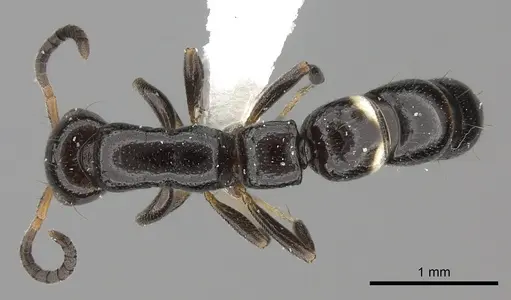
CASENT0002380
View on AntWeb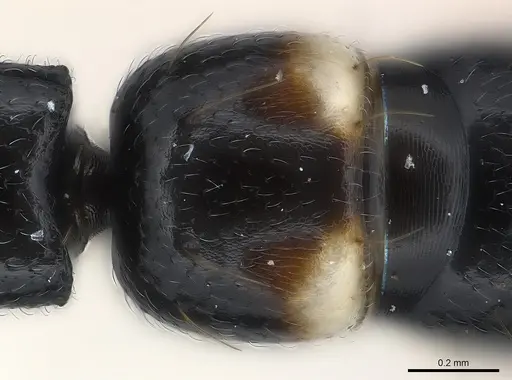
CASENT0002516
View on AntWeb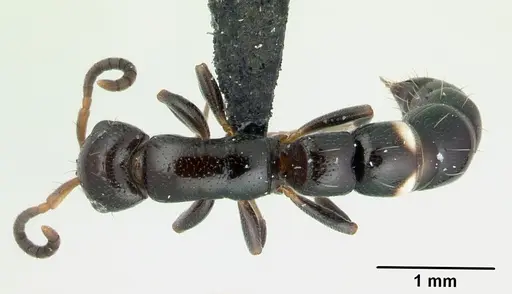
CASENT0002590
View on AntWeb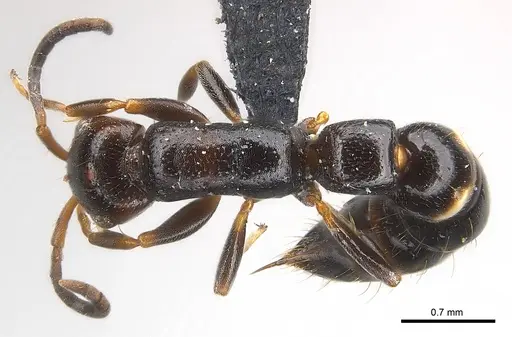
Literature
Loading distribution map...Loading products...