
Tanipone hirsuta
- Sci. Name
- Tanipone hirsuta
- Subfamily
- Dorylinae
- Author
- Bolton & Fisher, 2012
- Distribution
- Found in 1 countries
Introduction
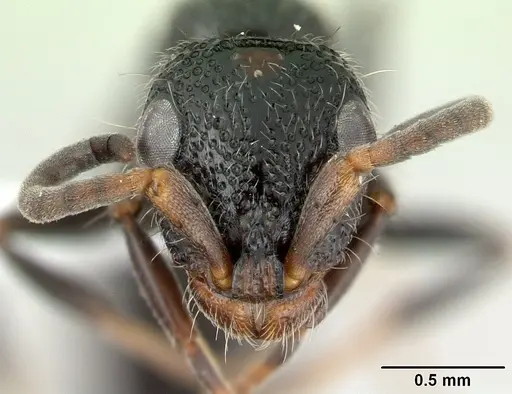
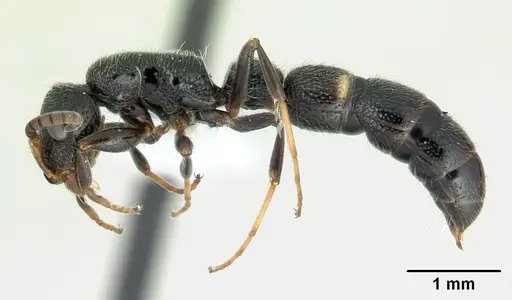
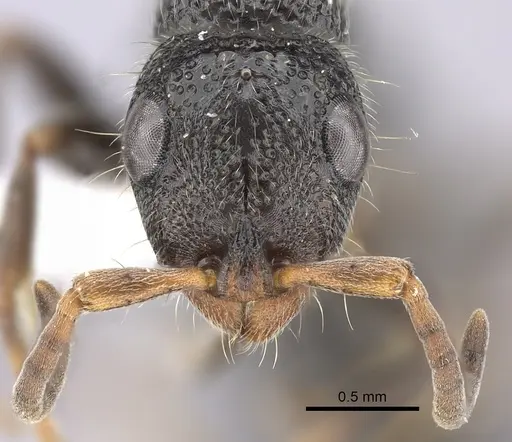
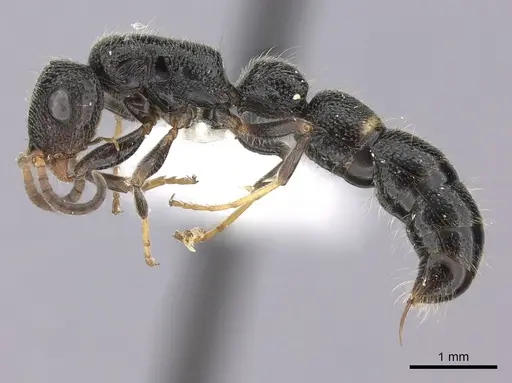
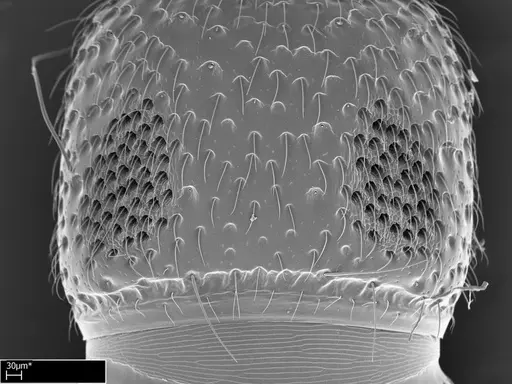
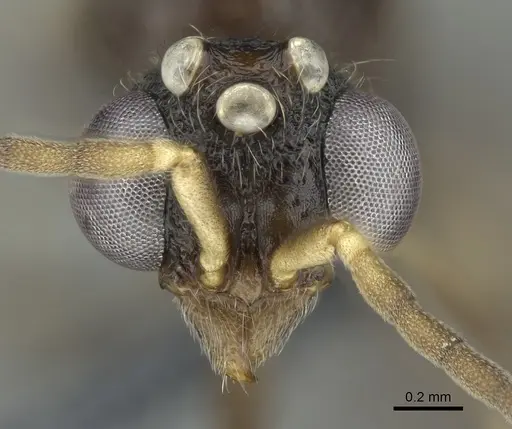
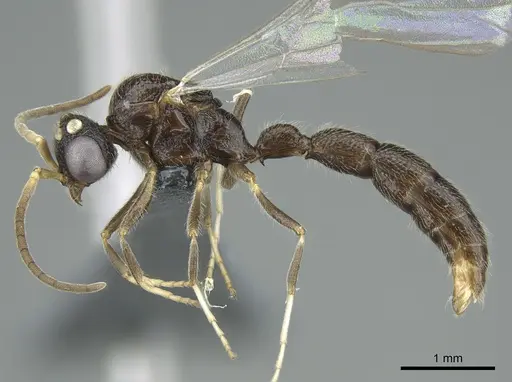
Tanipone hirsuta is a tiny, densely hairy ant species endemic to Madagascar. Workers are very small, total body length estimated at approximately 2-3 mm . They are uniformly black with distinctive pale spots on the third abdominal segment , and their most striking feature is the dense covering of long, curved setae across their head and body, they're the hairiest species in the Tanipone genus . Their eyes are positioned further back on the head than any other Tanipone species, a unique trait that helps identify them . This species inhabits Madagascar's dry forests, where they nest in dead twigs and branches above ground, though they also forage on the ground and in rotting wood . As members of the Dorylinae subfamily, they are predatory ants that likely hunt small invertebrates, though their exact prey preferences in the wild remain unstudied. Their small size and arboreal nesting habits make them a challenging species for experienced antkeepers.
Quick Summary
- Difficulty: Expert
- Origin & Habitat: Endemic to Madagascar, specifically the Toliara province, found in tropical dry forest, spiny forest, and occasionally gallery forest at low elevations around 100 m [1][2].
- Colony Type: Colony structure is unconfirmed, the number of queens and colony organization have not been documented in scientific literature.
- Size & Growth:
- Queen: Unknown, the queen caste has not been described [1]
- Worker: Very small, total body length estimated at 2-3 mm (based on head size measurements) [1]
- Colony: Unknown, no colony size estimates are documented
- Growth: Unknown, growth rate has not been studied
- Development: Unknown, development timeline has not been documented (No direct measurements available. Based on related Dorylinae and their small size, development may take 4-8 weeks at tropical temperatures, but this is an estimate.)
- Antkeeping:
- Temperature: Keep at 24-28°C, these are tropical ants from Madagascar and need warm conditions. A heating cable on one side of the nest creates a suitable gradient.
- Humidity: Moderate humidity around 60-70%. They inhabit dry forests but also use rotting wood, so some moisture is important. Keep the nest substrate slightly moist but allow it to dry partially between waterings.
- Diapause: No, as a tropical species from Madagascar, they do not require hibernation. Maintain warm temperatures year-round.
- Nesting: They naturally nest in dead twigs, branches, and rotting tree stumps above ground [2]. In captivity, a small Y-tong (AAC) nest or plaster nest with narrow chambers works well. Their tiny size means chambers should be appropriately scaled.
- Behavior: Tanipone hirsuta is a predatory ant, likely hunting small invertebrates like springtails and mites. They are arboreal nesters but also forage on the ground [2]. Workers are tiny, escape prevention is critical since they can squeeze through extremely small gaps. Their defensive capabilities are not well documented, but being in the Dorylinae subfamily, they may have a functional stinger. Handle with caution and use fine mesh barriers.
- Common Issues: tiny size means escapes are likely without fine mesh barriers, these ants can slip through gaps you might not notice, predatory diet makes feeding challenging, they need live small prey regularly, colony size and growth rate are unknown, making it hard to plan long-term care, nesting behavior is not well understood, they may be sensitive to nest conditions, no documented queen or founding behavior makes colony establishment uncertain
Housing and Nest Setup
Tanipone hirsuta is an extremely small ant that requires carefully scaled housing. In the wild, they nest in dead twigs, branches, and rotting tree stumps, often found in low vegetation above ground [2]. For captivity, a Y-tong (AAC) nest with narrow chambers or a small plaster nest works well. The chambers should be appropriately sized for their tiny workers, tight spaces help them feel secure. Because of their small size, escape prevention is critical. Use fine mesh (at least 0.5mm) on all openings and consider applying Fluon to the inner rim of the outworld. A small outworld is sufficient since colonies likely remain small. Provide a water source via a cotton ball or small test tube with a sponge.
Feeding and Diet
As a member of the Dorylinae subfamily, Tanipone hirsuta is likely predatory and hunts small invertebrates. In captivity, offer small live prey such as springtails, fruit flies, and other tiny arthropods. They are too small to take larger prey items effectively. Feed small amounts of protein 2-3 times per week, removing any uneaten prey after 24 hours to prevent mold. Sugar sources may be accepted occasionally, you can offer a tiny drop of honey water or sugar water, but do not rely on these as primary food. Their small size means even small prey items represent significant meals. Observe feeding behavior to determine individual colony preferences.
Temperature and Humidity
These are tropical ants from Madagascar requiring warm, stable conditions. Maintain temperatures between 24-28°C year-round, they do not experience cold winters in their native habitat. A small heating cable placed on one side of the nest creates a gentle thermal gradient, allowing ants to regulate their own temperature. For humidity, aim for 60-70% relative humidity. They inhabit dry forests but also use rotting wood, indicating they need some moisture but not saturated conditions. Use a moisture gradient in the nest, some areas slightly damp, others drier. Monitor with a hygrometer and adjust based on colony behavior and nest condition. [2]
Behavior and Temperament
Tanipone hirsuta workers are tiny but active predators. They likely forage both in vegetation and on the ground, based on collection data showing specimens from multiple microhabitats [2]. Their dense covering of setae may serve a defensive function or help them sense vibrations while hunting [1]. Being in the Dorylinae subfamily, they likely have a functional stinger, though their small size means any sting would be minimal. They are not aggressive toward humans but will defend their nest. The most important consideration is their tiny size, they are excellent escape artists and require fine mesh barriers. Colonies likely remain relatively small compared to many common ant species.
Colony Establishment
Establishing a Tanipone hirsuta colony presents challenges because so little is known about their biology. No queen has been described in scientific literature, and founding behavior remains unconfirmed [1]. If you obtain a colony, it likely consists of workers only. Without documented queen biology, establishing a new colony from founding is extremely difficult. Existing colonies should be maintained carefully with stable conditions. Do not attempt to combine unrelated queens, this has not been studied and could result in aggression. Focus on maintaining established worker colonies with proper feeding and housing. Their rarity in the hobby means each colony is valuable and should be treated with extra care.
Frequently Asked Questions
How big do Tanipone hirsuta ants get?
Workers are very small, with total body length estimated at about 2-3 mm (based on head size measurements) [1]. The queen has not been described, so her size is unknown.
Can I keep Tanipone hirsuta in a test tube?
A test tube setup can work for a small colony, but due to their tiny size, you must ensure excellent escape prevention. Use cotton wool that is tightly packed, and consider covering the opening with fine mesh. A small Y-tong or plaster nest is often better for long-term housing.
What do Tanipone hirsuta eat?
They are predatory ants that hunt small invertebrates. Feed them live springtails, fruit flies, and other tiny arthropods. Small amounts of sugar water or honey may occasionally be accepted but should not be their primary food.
Do Tanipone hirsuta need hibernation?
No, they are tropical ants from Madagascar and do not require hibernation. Keep them warm year-round at 24-28°C.
Are Tanipone hirsuta good for beginners?
No, this species is not recommended for beginners. Their tiny size makes escape prevention difficult, their colony biology is poorly understood, they require specific predatory diets, and they are extremely rare in the antkeeping hobby. They are best left to experienced antkeepers.
How fast do Tanipone hirsuta colonies grow?
The growth rate is unknown, no scientific studies have documented colony development. Based on their small size and related Dorylinae species, growth is likely slow to moderate, but this is an estimate.
Where is Tanipone hirsuta found?
This species is endemic to Madagascar, specifically found in the southwestern region around Toliara province. They inhabit tropical dry forest and spiny forest at low elevations around 100 meters [1][2].
Why is Tanipone hirsuta hairy?
Tanipone hirsuta is the most densely setose (hairy) species in the Tanipone genus [1]. This dense covering of bristles likely helps them sense vibrations while hunting prey in their forest habitat, and may also provide some defensive function.
Report an Issue
The current care sheet is based fully on literature. See inconsistencies, or something that's incorrect? Please , it will be resolved after review from an admin. Contributing to the blogs tab also helps providing information, to make us be able to further improve the caresheets. Thank you for your support!
References

This caresheet is licensed under CC BY-SA 4.0 .
Community Blogs
CASENT0000547
View on AntWeb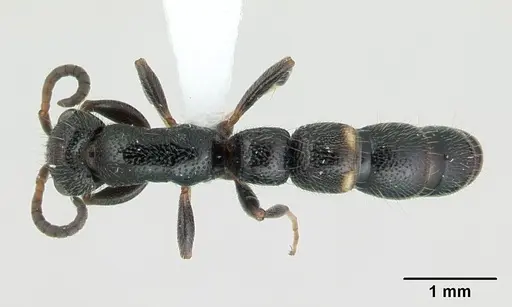
CASENT0000842
View on AntWeb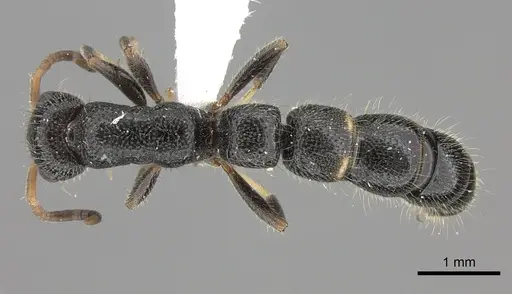
CASENT0010022
View on AntWeb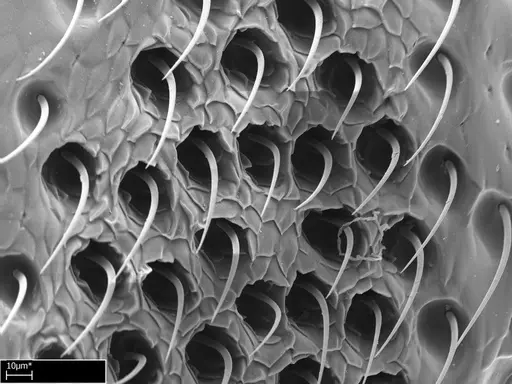
CASENT0207891
View on AntWeb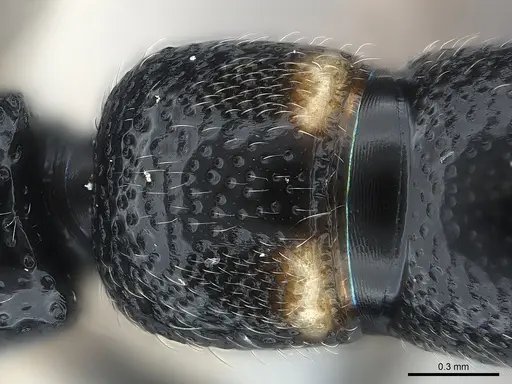
CASENT0740899
View on AntWeb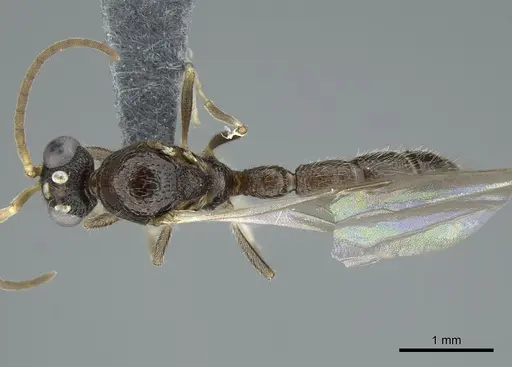
Literature
Loading distribution map...Loading products...