
Tanipone aglandula
- Sci. Name
- Tanipone aglandula
- Subfamily
- Dorylinae
- Author
- Bolton & Fisher, 2012
- Distribution
- Found in 1 countries
Introduction
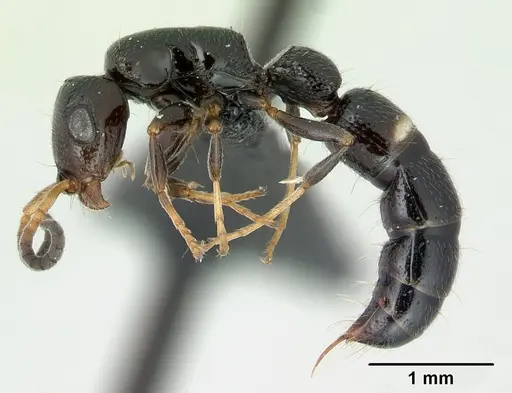
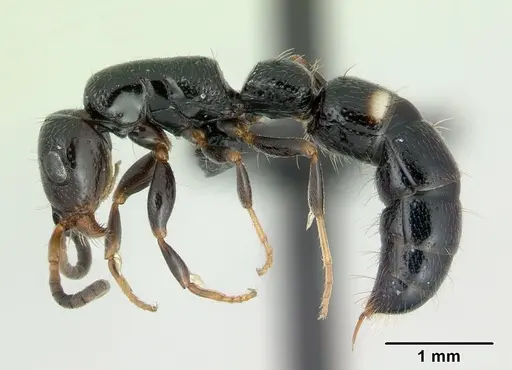
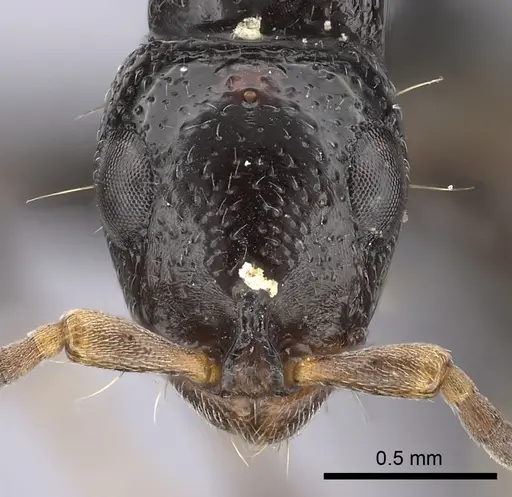
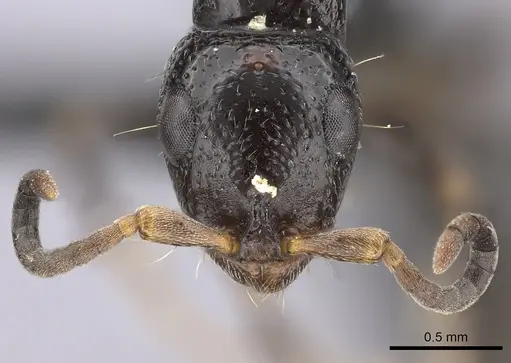
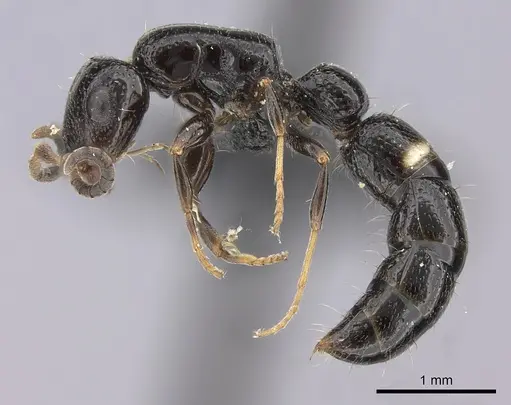
Tanipone aglandula is a small, dark ant species native to Madagascar, belonging to the Dorylinae subfamily. Workers are uniformly blackish brown to black, with distinctive pale off-white to yellowish spots on the third abdominal segment (AIII). This species is the sole member of the aglandula species group and is immediately recognizable by its intermediate pilosity (body hair) pattern - not as sparsely haired as the maculata group nor as densely covered as the hirsuta group. The metatibial gland orifice is the most extensively developed in the genus . In the wild, these ants inhabit tropical dry forest and gallery forest areas, typically found on low vegetation, in dead twigs and branches, or in rot pockets above ground level .
Quick Summary
- Difficulty: Expert
- Origin & Habitat: Madagascar, specifically Mahajanga Province in the northwest. They live in tropical dry forest and gallery forest habitats, nesting above ground in vegetation like dead twigs, branches, and rot pockets [2][1].
- Colony Type: Colony structure is unconfirmed, queens have not been described. Based on arboreal nesting and limited observations, likely monogyne but this is speculative.
- Size & Growth:
- Queen: Unknown, queen caste not described in scientific literature
- Worker: Size data unavailable (head length ~0.92-1.13mm reported but not body length)
- Colony: Unknown, no colony size data available
- Growth: Unknown
- Development: Unknown, not studied (Inferred from Dorylinae patterns, likely 4-8 weeks at 24-28°C.)
- Antkeeping:
- Temperature: 24-28°C. These tropical ants from dry forest require warm conditions, provide a temperature gradient within the nest [2].
- Humidity: Low to moderate. They are from dry tropical forest habitats (dry=1,dark=1) [3]. Avoid high humidity, provide a small hydrated area rather than overall dampness. Nest substrate should be dry to slightly moist.
- Diapause: Unlikely to require true diapause as they are from tropical Madagascar. Seasonal rainfall may affect activity, but temperature can be kept constant year-round [2].
- Nesting: Arboreal specialists. Provide dead twigs, cork, or small-chambered Y-tong nests mimicking branches. Avoid water reservoirs, instead offer hydration via a drinking tube in the outworld [2].
- Behavior: This is a poorly studied species. As Dorylinae ants, they are likely predatory on small invertebrates. Workers forage on low vegetation in nature. Their small size (under 2mm body length) makes escape prevention critical. They likely possess a functional stinger for defense.
- Common Issues: very small size makes escape prevention critical, use fine mesh barriers and tight-fitting lids., limited scientific data means care requirements are largely inferred from genus patterns., no documented colony size or growth rate makes it difficult to plan long-term care., humidity balance is critical, they prefer dry nests but need access to water, too wet can cause mold and stress., tropical temperature requirements year-round mean heating may be necessary in temperate climates.
Natural History and Distribution
Tanipone aglandula is endemic to Madagascar, specifically found in the Mahajanga Province in the northwest of the island. The type locality is along the Mahavavy River,6.2 km southeast of Mitsinjo, at an elevation of just 20 meters above sea level [1]. This region features tropical dry forest and gallery forest habitats. Unlike many army-ant relatives, Tanipone species are not ground-nesting predators that raid in columns. Instead, they are arboreal specialists that forage and nest in vegetation above ground level. Workers have been collected from low vegetation, inside live or dead twigs and branches, and in rot pockets (decayed wood cavities) well above the forest floor [2]. The species was described in 2012 by Bolton and Fisher and remains the sole member of its species group, distinguished by its unique combination of pilosity patterns and the most extensively developed metatibial gland orifice in the genus [1].
Identification and Morphology
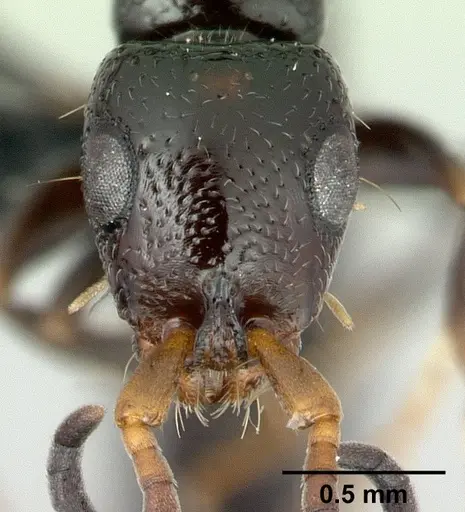
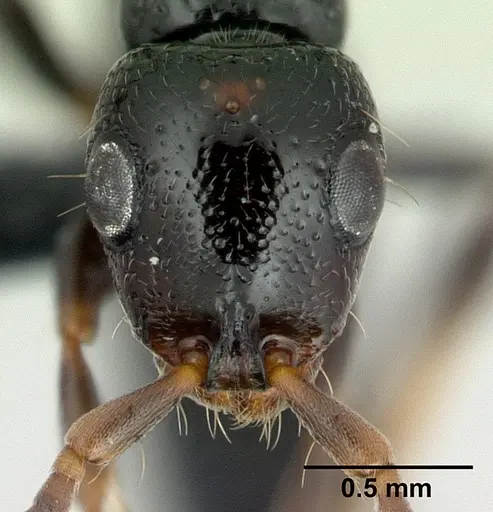
Workers of Tanipone aglandula are small and uniformly blackish brown to black, except for a pair of conspicuous off-white to yellowish pale spots on the posterior margin of the third abdominal segment (AIII). The pilosity (body hair) pattern is intermediate between the severely restricted setae of the maculata group and the much denser, disorganized pilosity of the hirsuta group. The metatibial gland orifice is the most extensively developed of any Tanipone species. Notably, this is the only known Tanipone species that lacks visible glandular patches on AIII [1]. These morphological details are important for identification but have no direct implications for captive care.
Housing and Nest Setup
Based on their natural arboreal habitat, these ants should be provided with nesting options that mimic their preferred microhabitat [2]. In captivity, they do well in Y-tong (AAC) nests with small, tight chambers scaled to their tiny worker size, or in naturalistic setups featuring dead twigs, cork, or other wood-based materials. The nest should be positioned to allow for vertical orientation, reflecting their natural tendency to nest in elevated positions. Escape prevention is critical due to their very small size, even standard ant keeping barriers may need to be supplemented with fine mesh. Provide a connected outworld for foraging that is appropriately scaled to their tiny dimensions. Keep the nest relatively dry, matching their dry forest habitat [3]. A small hydration source can be offered in a separate area of the outworld.
Feeding and Diet
As a Dorylinae ant, Tanipone aglandula is likely predatory on small invertebrates, though specific prey preferences have not been documented. In captivity, offer small live prey such as springtails, fruit fly larvae, and other micro-arthropods. The small worker size (under 2mm) means prey items must be appropriately sized, essentially microscopic fare. Sugar sources may be accepted but should not be relied upon as a primary food. Given the lack of specific dietary studies, offer a variety of small protein sources and observe what the colony accepts. Remove uneaten prey promptly to prevent mold issues.
Temperature and Seasonal Care
These are tropical ants from Madagascar requiring warm, stable temperatures year-round. Maintain nest temperatures between 24-28°C, with a slight gradient allowing workers to self-regulate [2]. Madagascar experiences minimal temperature variation throughout the year in the tropical north, so these ants likely do not require a true diapause period. However, they may show reduced activity during the dry season in their natural habitat. In captivity, maintain consistent tropical conditions without hibernation. If room temperature falls below 24°C, use a heating cable or mat placed on one side of the nest to create a warm zone, avoid placing heating directly under the nest to prevent rapid moisture loss.
Frequently Asked Questions
How big do Tanipone aglandula colonies get?
The maximum colony size is unknown, no scientific studies have documented colony sizes for this species. Based on related Dorylinae genera and their small worker size, colonies likely remain relatively small, possibly under 100-200 workers. More research is needed to confirm this estimate.
What do Tanipone aglandula ants eat?
They likely prey on small invertebrates like springtails, fruit fly larvae, and other micro-arthropods. As Dorylinae ants, they are predatory by nature. Sugar sources may be accepted occasionally but should not be a primary food source. Offer small live prey items appropriate to their tiny worker size.
Can I keep Tanipone aglandula in a test tube setup?
A test tube setup can work for founding colonies, but these are arboreal ants that naturally nest in twigs and branches above ground. For established colonies, consider a Y-tong nest or naturalistic setup with small chambers. The key is providing appropriately scaled, tight spaces for their tiny workers [2].
How long does it take for Tanipone aglandula to develop from egg to worker?
The exact development timeline is unconfirmed, no scientific studies have documented this species' development. Based on typical Dorylinae patterns at tropical temperatures (24-28°C), development likely takes 4-8 weeks from egg to first worker. This is an estimate rather than a confirmed value.
Are Tanipone aglandula good for beginners?
No, this species is rated as Expert difficulty. There is very limited scientific data on their care requirements, they are extremely small (escape risk is high), and they require specific arboreal nesting conditions that differ from common ant keeping setups. They are not recommended for beginners.
Do Tanipone aglandula need hibernation?
Likely no, Madagascar is tropical with year-round warm temperatures. These ants probably do not require a true diapause period. Maintain consistent tropical temperatures (24-28°C) year-round rather than attempting to simulate winter conditions [2].
Where is Tanipone aglandula found in the wild?
They are endemic to northwest Madagascar, specifically the Mahajanga Province region along the Mahavavy River. Their natural habitat is tropical dry forest and gallery forest at low elevation (around 20 meters). They forage and nest in vegetation above ground [1][2].
When do Tanipone aglandula nuptial flights occur?
The timing of nuptial flights is unconfirmed, no scientific documentation exists for this species. As a tropical species from Madagascar, reproduction likely occurs year-round with peaks corresponding to rainfall patterns, but this is speculative.
Can I keep multiple Tanipone aglandula queens together?
The colony structure (monogyne vs polygyne) is unconfirmed for this species. Without documented evidence of multi-queen colonies, combining unrelated foundresses is not recommended. The safe approach is to house single-queen colonies.
Report an Issue
The current care sheet is based fully on literature. See inconsistencies, or something that's incorrect? Please , it will be resolved after review from an admin. Contributing to the blogs tab also helps providing information, to make us be able to further improve the caresheets. Thank you for your support!
References

This caresheet is licensed under CC BY-SA 4.0 .
Community Blogs
CASENT0002597
View on AntWeb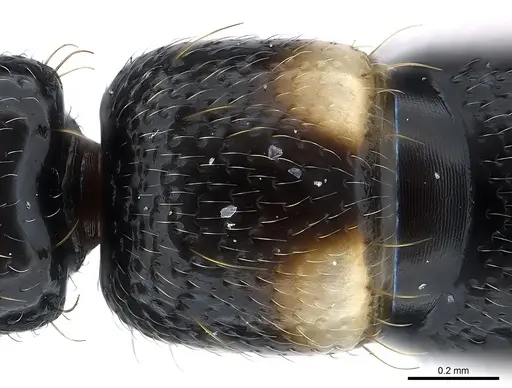
CASENT0492248
View on AntWeb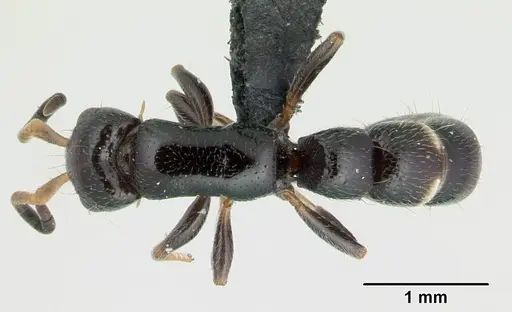
CASENT0492424
View on AntWeb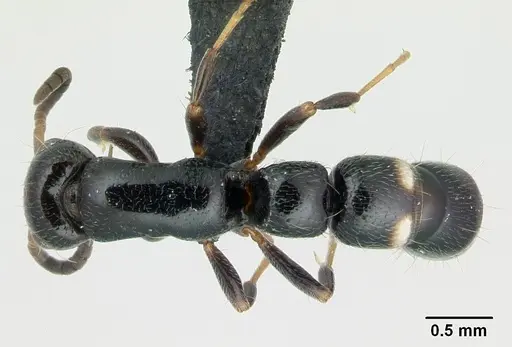
CASENT0492491
View on AntWeb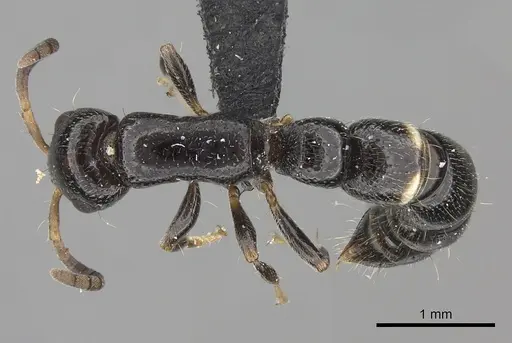
Literature
Loading distribution map...Loading products...