
Syscia persimilis
- Sci. Name
- Syscia persimilis
- Subfamily
- Dorylinae
- Author
- Longino & Branstetter, 2021
- Distribution
- Found in 5 countries
Introduction
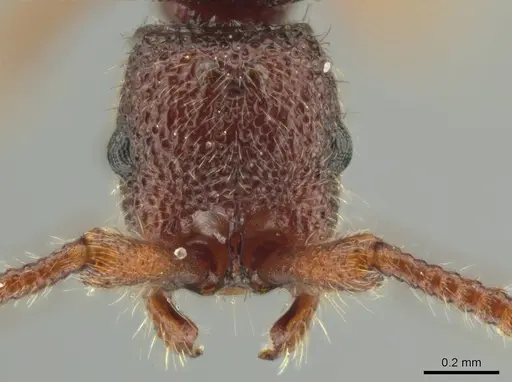
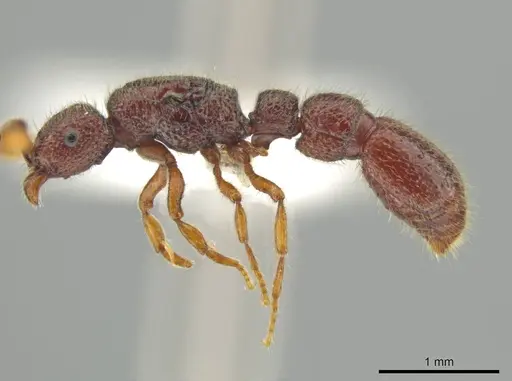
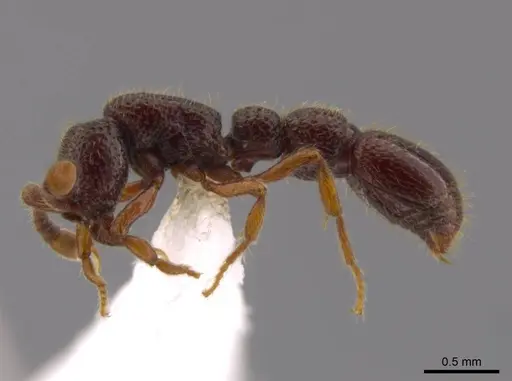
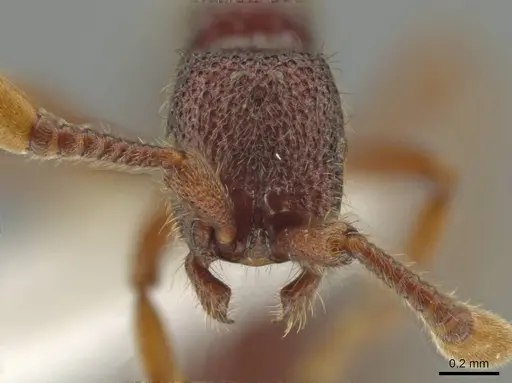
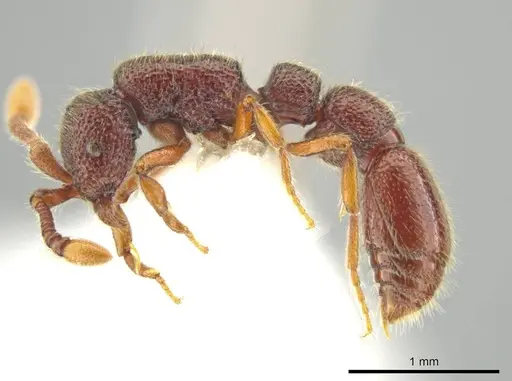
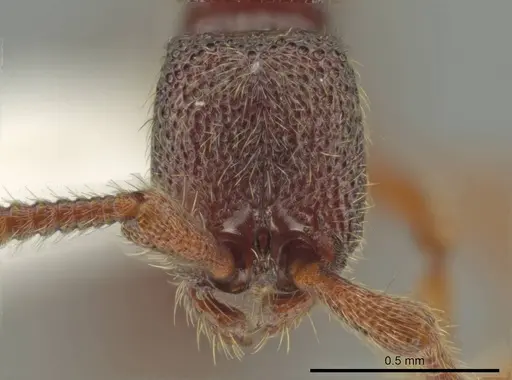
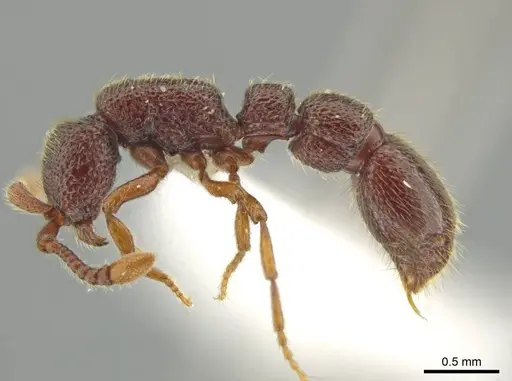
Syscia persimilis is a tiny, recently described army ant (subfamily Dorylinae) native to Central America, ranging from southern Mexico to Nicaragua . Workers are very small, but exact body length measurements are unavailable; published data give head width around 0.54 mm, but total length is not reported . They are reddish-brown with abundant, long, coarse standing hairs. Queens are slightly larger, and both alate (winged) and dealate (wingless) forms are known; one intercaste female with compound eyes, ocelli, and an elongated mesosoma has also been found . This species was only formally described in 2021,so there is no captive breeding history in the antkeeping hobby.
Quick Summary
- Difficulty: Expert
- Origin & Habitat: Cloud forests of Central America (Mexico to Nicaragua), typically at 1000–1600 m elevation, but also occurring in lowland rainforest (e.g., La Moskitia, Honduras) [1]. All records come from sifted leaf litter samples (Winkler/Berlese funnels).
- Colony Type: Colony structure is unconfirmed. All known specimens are from leaf litter samples, indicating a cryptic, ground-dwelling lifestyle [1].
- Size & Growth:
- Queen: Size data unavailable – exact total body length is not reported in the literature.
- Worker: Size data unavailable – exact total body length is not reported in the literature.
- Colony: Unknown – no colony size data available.
- Growth: Unknown
- Development: Unknown – no direct observations of captive development exist. (No captive breeding data is available for this species. Any estimates would be speculative.)
- Antkeeping:
- Temperature: Based on their cloud forest habitat at 1000–1600 m [1], they likely prefer cool to moderate temperatures (around 18–22°C). Avoid heat sources and direct sunlight.
- Humidity: High humidity needed – keep the nest substrate consistently moist, similar to cloud forest leaf litter conditions. Use a water reservoir or frequent misting.
- Diapause: Unknown – no data on seasonal requirements. Their highland origin may suggest a need for cooler winter temperatures, but this is unconfirmed.
- Nesting: Naturalistic setup with a moist substrate (e.g., a blend of soil, sand, and leaf litter) mimicking a cloud forest floor. Because of their tiny size, ensure the nest is tightly sealed, use fine mesh on all openings.
- Behavior: These ants are extremely small and cryptic. They are likely predatory on tiny invertebrates, as typical for Dorylinae. Escape prevention is critical due to their tiny size – they can squeeze through remarkably small gaps. They are not aggressive toward keepers, and any sting would be negligible.
- Common Issues: tiny size makes escape prevention extremely difficult – use fine mesh and tight-fitting lids., no captive breeding data exists – expect significant trial and error., high humidity requirements can lead to mold problems if ventilation is insufficient., wild-caught colonies may have parasites that are hard to identify or treat., feeding requires culturing appropriately-sized prey (e.g., springtails, fruit flies).
Natural History and Discovery
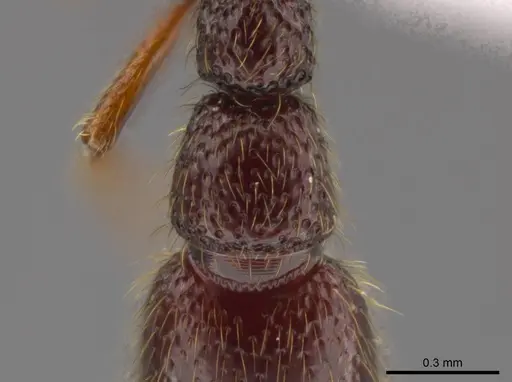
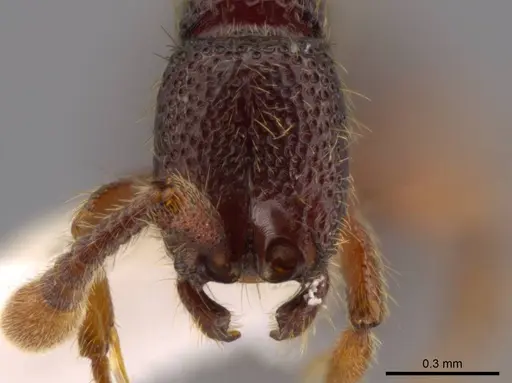
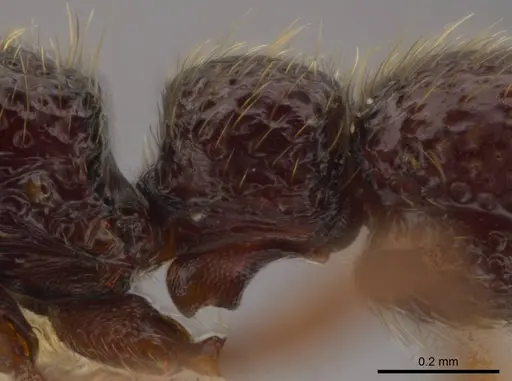
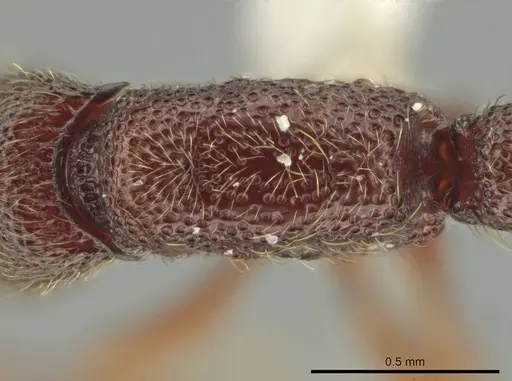
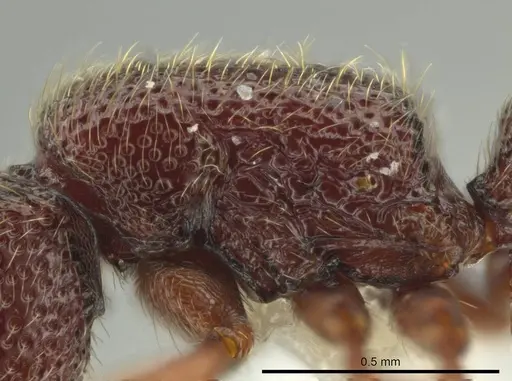
Syscia persimilis was formally described in 2021 by Longino and Branstetter [1]. The species ranges from the Mexican state of Chiapas through Guatemala to Nicaragua, with an additional record from lowland rainforest in Honduras (Cusuco National Park) [1]. It is most common in cloud forests at 1000–1600 m elevation, but occurs in lowland forests as well [1]. All specimens have been collected from leaf litter using Winkler or Berlese funnels, showing that they are cryptic, ground-dwelling ants that rarely come to the surface [1]. Workers are reddish-brown, with abundant, long, coarse standing hairs. The subpetiolar process has an acute posterior tooth, the third abdominal segment (AIII) is trapezoidal with moderately convex sides, the fourth abdominal segment (AIV) has weakly convex sides and a moderately truncate anterior border, punctation on AIV is distinct and fades at about midlength [1]. Queens are alate or dealate, and one intercaste female with compound eyes, ocelli, and an elongated mesosoma with a weakly impressed promesonotal suture has been found [1]. The species is sister to Syscia pervagata [1].
Housing and Nest Setup
Given their leaf litter dwelling habits, a naturalistic terrarium-style setup works best. Use a moist substrate mixture that holds humidity well – a blend of soil, sand, and decaying leaf matter mimics their natural environment [1]. Keep the substrate consistently damp but avoid waterlogging, which can kill the colony. Because they are so tiny, even small gaps in commercial formicaria can allow escapes. Avoid nests with large openings, instead, use a solid, sealable container with fine mesh ventilation. A thin layer of substrate (2–3 cm deep) with pieces of decaying wood or leaves provides nesting material. Cover the setup to maintain humidity and prevent escapes. Note that no specific nest type has been tested for this species, so expect experimentation.
Feeding and Diet
As members of the Dorylinae subfamily (army ants), Syscia persimilis is likely predatory on small invertebrates. In captivity, offer tiny live prey such as springtails, fruit flies, and other micro-arthropods. Due to their extremely small size, standard ant feeders like mealworms are too large. You may need to culture your own small prey items. The acceptance of sugar sources is uncertain – some Dorylinae will take honey or sugar water, but others are strictly predatory. Offer small amounts occasionally and observe. Feed small prey items every few days, adjusting based on consumption. [1]
Temperature and Humidity
Syscia persimilis comes from cool cloud forest environments at higher elevations [1], so they likely prefer cooler temperatures than most tropical ants. Aim for 18–22°C in the nest area – this is cooler than typical room temperature in many homes. Avoid placing the nest near heat sources or in direct sunlight. High humidity is essential – keep the substrate moist and consider using a water reservoir or misting regularly. If your room runs warm, consider ways to moderate the temperature or keep them in a cooler location. Based on their habitat, a heating cable is generally not needed and could be harmful.
Challenges and Why This Species Is Expert-Only
This species is recommended only for experienced antkeepers for several important reasons. First, there is absolutely no captive breeding data available – you will be pioneering husbandry for a species only described in 2021. Second, their tiny size creates significant practical challenges: escape prevention is extremely difficult, feeding requires culturing appropriately-sized prey, and observing the colony requires good lighting and magnification. Third, their specific environmental requirements (cool temperatures, high humidity, cloud forest conditions) are outside what most indoor environments naturally provide. Finally, wild-caught colonies may carry parasites or pathogens that are difficult to identify or treat. Expect a steep learning curve and be prepared to document your observations carefully to advance knowledge of this species. [1]
Frequently Asked Questions
How long does it take for Syscia persimilis to go from egg to worker?
This is unknown – no captive breeding data exists for this species. There are no published development times, and estimates based on related Dorylinae would be speculative. If you successfully breed them, documenting your observations would contribute valuable information to the antkeeping community.
Can I keep Syscia persimilis in a test tube setup?
A test tube can work for a founding queen or very small colony, but their leaf litter dwelling nature suggests a naturalistic setup with moist substrate is better long-term [1]. If using a test tube, ensure excellent escape prevention – their tiny size means they can squeeze through gaps you might not notice.
What do Syscia persimilis eat?
Based on their Dorylinae classification, they are likely predatory on small invertebrates. Feed tiny live prey such as springtails, fruit flies, and other micro-arthropods. Sugar acceptance is uncertain – offer small amounts of honey or sugar water occasionally but do not rely on carbohydrates as a primary food source.
Are Syscia persimilis good for beginners?
No – this species is recommended only for expert antkeepers. There is no captive breeding history, their tiny size creates practical challenges, and they have specific environmental requirements that are difficult to meet. Expect significant trial and error.
What temperature do Syscia persimilis need?
Based on their cloud forest origin at 1000–1600 m elevation [1], they likely prefer cool temperatures around 18–22°C. Avoid heat sources and keep them away from direct sunlight.
How big do Syscia persimilis colonies get?
Unknown – no colony size data has been published. Based on their cryptic leaf litter dwelling habits and tiny size, colonies are likely relatively small, possibly under a few hundred workers at most, but this is speculative.
Do Syscia persimilis need hibernation or diapause?
Unknown – no data exists on their seasonal requirements. Their highland cloud forest origin may suggest some need for cooler temperatures seasonally, but this is unconfirmed. Observe your colony for signs of reduced activity during winter months.
Why are my Syscia persimilis dying?
Common causes include: temperature too warm (they prefer cool conditions), humidity too low (keep substrate moist), escape due to tiny size, inappropriate prey size (must be very small), or parasites from wild-caught colonies. Review all environmental parameters and ensure prey is appropriately sized.
Report an Issue
The current care sheet is based fully on literature. See inconsistencies, or something that's incorrect? Please , it will be resolved after review from an admin. Contributing to the blogs tab also helps providing information, to make us be able to further improve the caresheets. Thank you for your support!
References

This caresheet is licensed under CC BY-SA 4.0 .
Community Blogs
CASENT0615012
View on AntWeb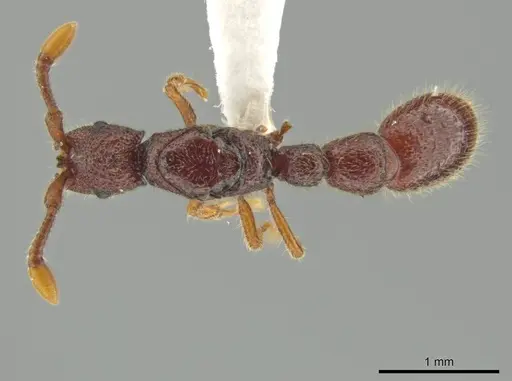
CASENT0617696
View on AntWeb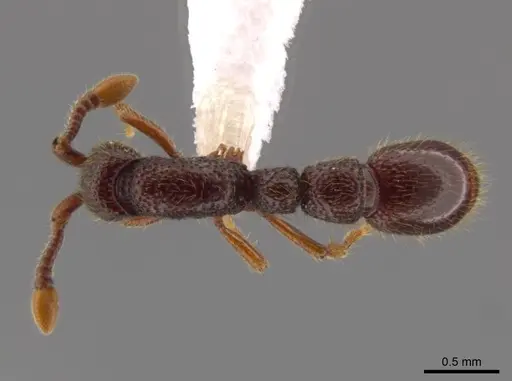
CASENT0629228
View on AntWeb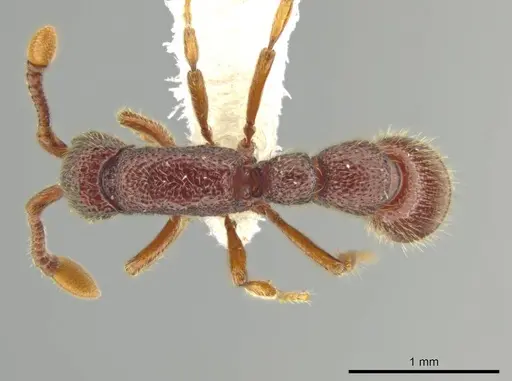
CASENT0630852
View on AntWeb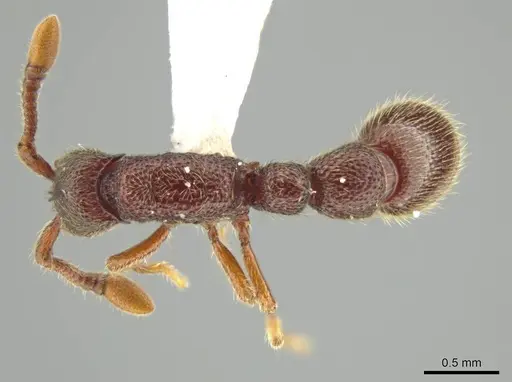
Literature
Loading distribution map...Loading products...