
Syscia murillocruzae
- Sci. Name
- Syscia murillocruzae
- Subfamily
- Dorylinae
- Author
- Longino & Branstetter, 2021
- Distribution
- Found in 1 countries
Introduction
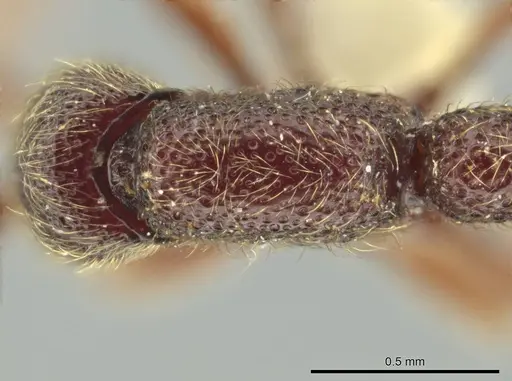
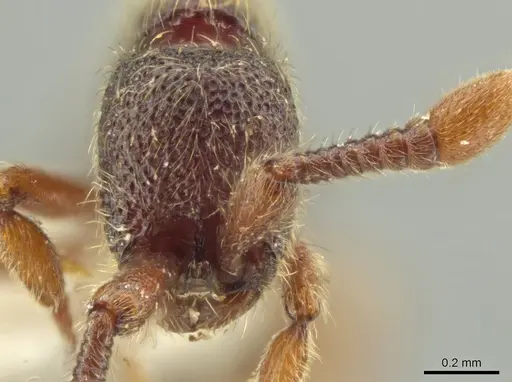
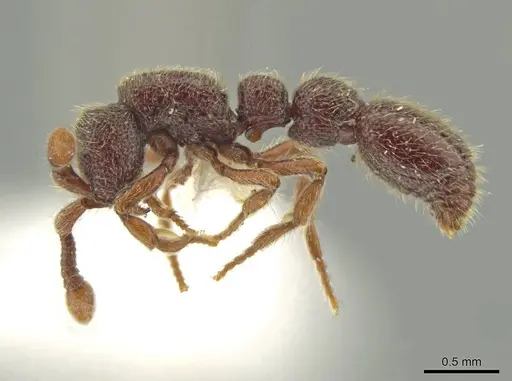
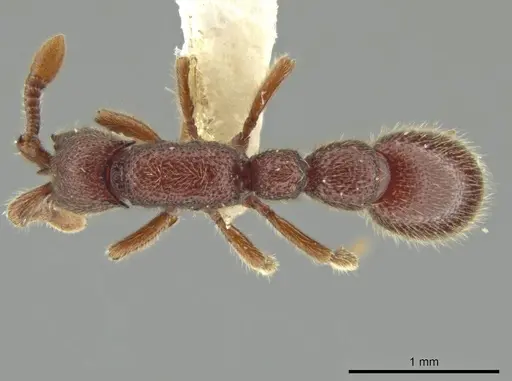
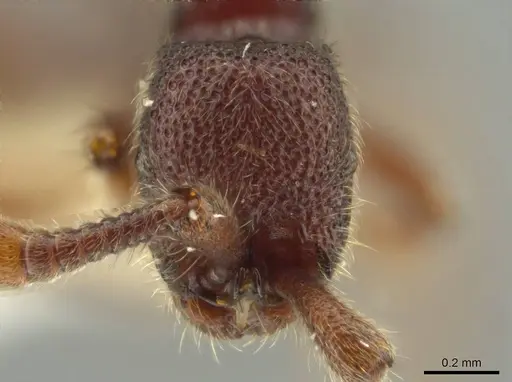
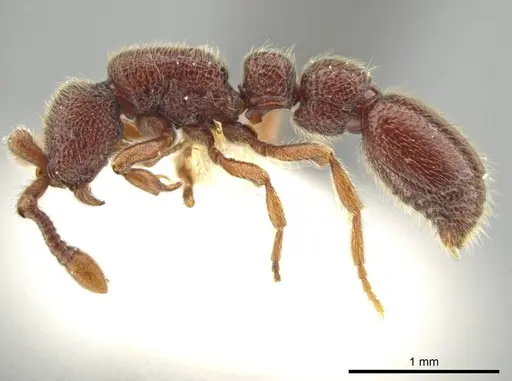
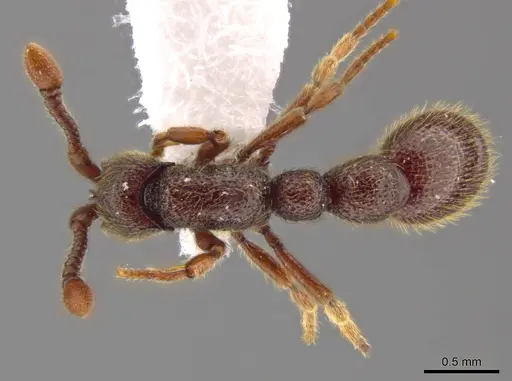
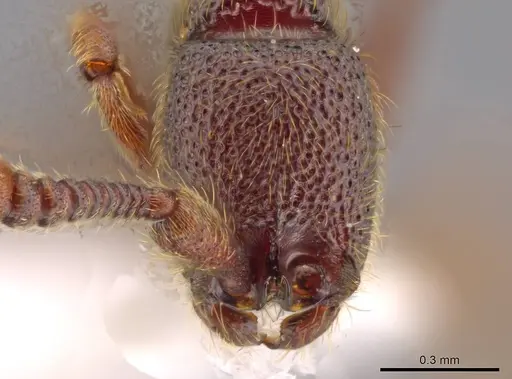
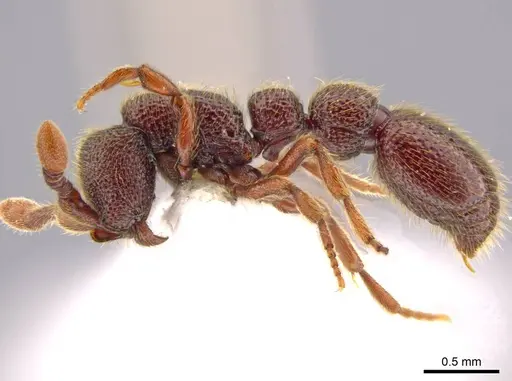
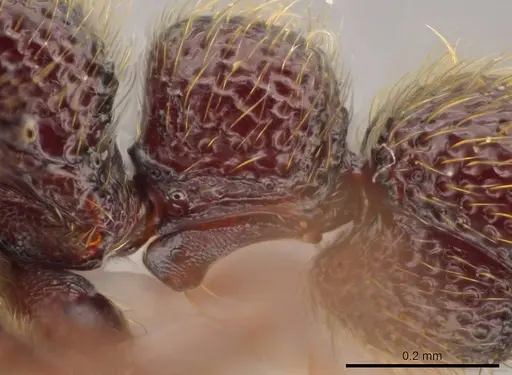
Syscia murillocruzae is a tiny, cryptic ant species from the lowland rainforests of Costa Rica . Workers are very small (body length not measured, but head length is about 0.67mm) and dark reddish-brown . They live in wet forest leaf litter and rotten wood, at elevations up to 500m . This species was described in 2021 from specimens collected in La Selva Biological Station, Heredia Province . What makes this ant unusual is its colony structure. Unlike most ants with clear queen and worker castes, Syscia murillocruzae has intercaste females - worker-like reproductives with small eyes that can lay eggs . Only one fully formed, wingless queen has ever been found . This suggests a flexible reproduction system where multiple females may share reproductive duties, but the exact social structure is still unknown.
Quick Summary
- Difficulty: Hard
- Origin & Habitat: Costa Rica, lowland rainforest leaf litter and rotten wood, at elevations up to 500m [1] [2].
- Colony Type: Uncertain, reproductive system includes intercaste females (worker-like reproductives with small eyes). Only one wingless queen found, no winged queens known. Possibly multiple females reproduce within a colony, but colony social structure is unconfirmed [1].
- Size & Growth:
- Queen: Size data unavailable, one wingless queen collected with mesosomal length ~1.23mm (head length ~0.77mm) [1]
- Worker: Size data unavailable, head length ~0.67mm, total body length not reported [1]
- Colony: Unknown, likely very small, as typical for leaf litter Dwelling Dorylinae [1]
- Growth: Unknown, no published data on colony growth [1]
- Development: Unknown, no data available, estimated 6-10 weeks based on similar leaf litter Dorylinae in warm conditions [1] (No direct information, highly speculative.)
- Antkeeping:
- Temperature: Keep warm (24-27°C), lowland tropical species from Costa Rica [1]. Avoid below 22°C.
- Humidity: Very high, nest substrate should be consistently moist but not waterlogged. Mimic damp rainforest leaf litter [1].
- Diapause: No, tropical origin, year-round warmth needed [1].
- Nesting: Requires very small chambers due to tiny size. Plaster or Y-tong nest with tight crevices works. Provide a foraging area with damp soil or coco fiber for hunting. Excellent escape prevention is critical [1].
- Behavior: Extremely cryptic and shy. Workers spend most time hidden in substrate or nest. They are predatory but not aggressive. Due to minute size (
- Common Issues: escape prevention is critical, workers are tiny and can squeeze through microscopic gaps, high humidity needs can cause mold if ventilation is poor, growth and development are poorly understood, no established care guidelines, requires constant supply of live micro-prey (springtails, mites), strict predators
Housing and Nest Setup
Syscia murillocruzae is extremely tiny, so standard formicarium chambers are far too large. Use a plaster or Y-tong nest with very small chambers (a few millimeters across). The nest must retain moisture well since this ant needs high humidity. Connect to an outworld with damp substrate (e.g., coco fiber or a soil-sand mix) for foraging. Because workers are less than 2mm, they can escape through seemingly solid joints. Apply fluon to all vertical surfaces and ensure lids are tight. A small water tube helps maintain humidity [1].
Feeding and Diet
As a Dorylinae species, Syscia murillocruzae is a strict predator of tiny leaf litter arthropods. In nature they eat springtails, mites, and other micro-invertebrates [1]. Offer live springtails regularly (every 2-3 days). You can also try fruit fly larvae or very small mealworm pieces, but springtails are the safest staple. Sugar sources are not accepted. Remove uneaten prey to prevent mold. Maintain a steady supply of prey to keep the colony healthy [1].
Temperature and Humidity
These ants come from the lowland Costa Rican rainforest, so they need warm, humid conditions year-round [1]. Keep temperatures between 24-27°C, avoid dropping below 22°C. Humidity should be very high, the nest substrate should be damp but not waterlogged. Use a hygrometer to monitor. Good airflow is important to prevent mold, but don’t let the nest dry out. A water tube in the outworld helps [1].
Colony Structure and Reproduction
The colony structure is unusual and not fully understood. No fully winged queens have been collected. Instead, intercaste females (worker-like with small eyes) are the main reproductives, they can lay eggs and produce workers [1]. Only one wingless queen (without wings, but with queen-like mesosoma) has ever been collected [1]. This suggests that reproduction may be shared among multiple intercaste females, but it’s not confirmed. Do not combine unrelated queens or intercastes, aggression is possible. The colony is likely small and cryptic [1].
Handling and Temperament
Systems murillocruzae is extremely shy and non-aggressive. Workers will retreat and hide rather than confront. They are so tiny you may rarely see them outside the nest. They cannot sting (Dorylinae have a reduced stinger). These ants are best suited for observation through a magnifying glass or macro lens. Disturb the nest as little as possible, they are delicate and stressed by vibrations [1].
Frequently Asked Questions
How long does it take for Syscia murillocruzae to produce first workers?
Exact timing is unknown, no published data exists [1]. Based on related leaf litter Dorylinae in warm conditions, estimate 6-10 weeks from egg to worker. Be patient.
Can I keep Syscia murillocruzae in a test tube?
Standard test tubes have chambers too large for these tiny ants. A custom setup with very small internal space (e.g., a modified test tube with cotton plugs reducing volume) might work, but a small plaster or Y-tong nest is far better. The key is scaling everything down to match their minute size [1].
What do Syscia murillocruzae eat?
They are strict predators. Their natural diet consists of tiny leaf litter arthropods like springtails and mites [1]. Offer live springtails regularly, they may also accept fruit fly larvae or small pieces of mealworm. Sugar is not accepted.
Are Syscia murillocruzae good for beginners?
No, this is an expert-level species. They are extremely tiny, require specialized housing, need constant live prey, and have no established care guidelines. The social structure is also poorly understood. Suitable only for experienced keepers [1].
Do Syscia murillocruzae need hibernation?
No, they come from tropical Costa Rica with stable temperatures. Maintain warm conditions year-round (24-27°C). No diapause is needed [1].
How big do Syscia murillocruzae colonies get?
Colony size is unknown but likely very small, probably under 100 workers. This is typical for leaf litter Dorylinae that are cryptic and predatory [1].
Why are my Syscia murillocruzae dying?
Common causes: escape (workers can slip through tiny gaps), low humidity, lack of live prey, or temperatures outside 24-27°C. Check escape barriers first, these ants are famous for finding imperfections. Also ensure the nest is moist but not flooded [1].
Can I keep multiple queens together?
The natural colony likely contains multiple intercaste females that reproduce, but it’s not confirmed [1]. There is no data on combining unrelated foundresses. The single wingless queen found suggests a claustral founding, but not proven. Avoid mixing colonies from different sources [1].
When should I move them to a formicarium?
Given their tiny size, consider starting them directly in a small naturalistic setup with damp substrate (coco fiber or soil mix) rather than moving later. If using a traditional formicarium, wait until you see at least 10-15 workers. The nest chambers must be scaled down, standard chambers will be too large [1].
Report an Issue
The current care sheet is based fully on literature. See inconsistencies, or something that's incorrect? Please , it will be resolved after review from an admin. Contributing to the blogs tab also helps providing information, to make us be able to further improve the caresheets. Thank you for your support!
References

This caresheet is licensed under CC BY-SA 4.0 .
Community Blogs
Literature
Loading distribution map...Loading products...