
Syscia chiapaneca
- Sci. Name
- Syscia chiapaneca
- Subfamily
- Dorylinae
- Author
- Longino & Branstetter, 2021
- Distribution
- Found in 1 countries
Introduction
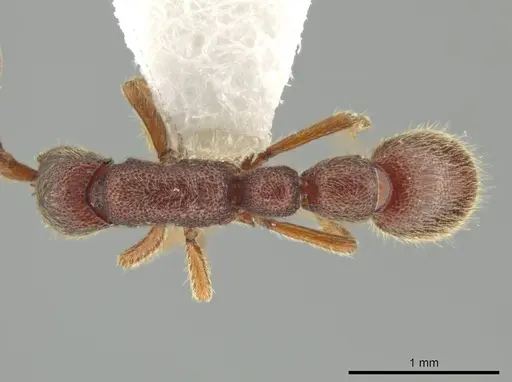
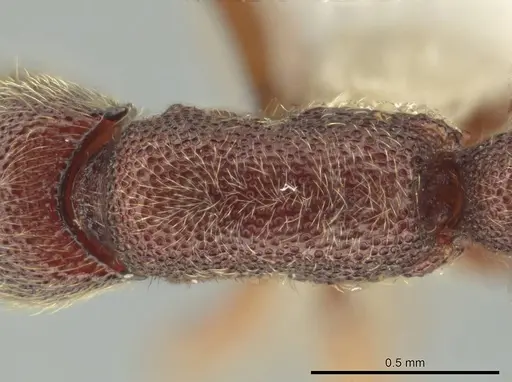
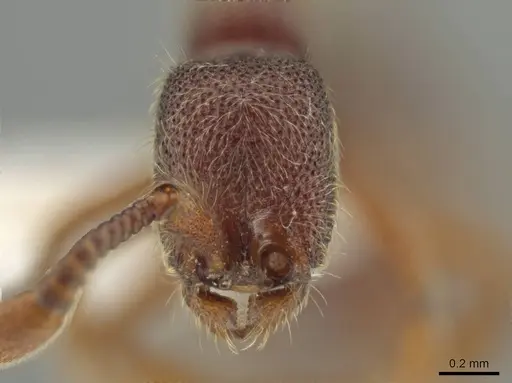
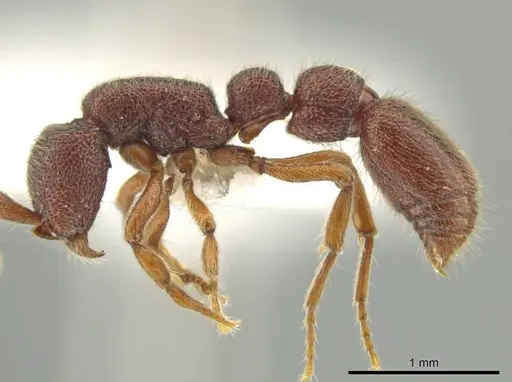
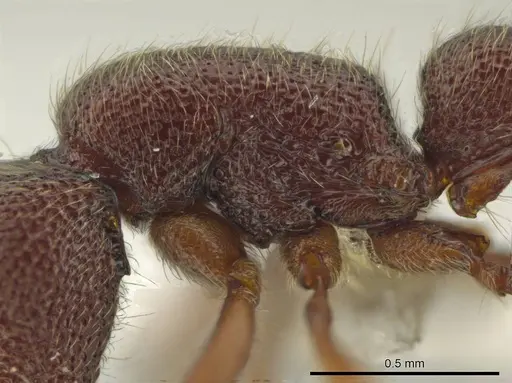
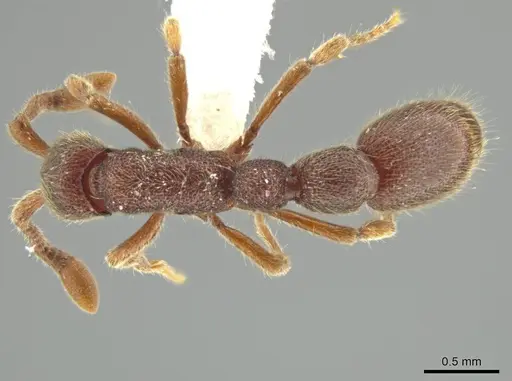
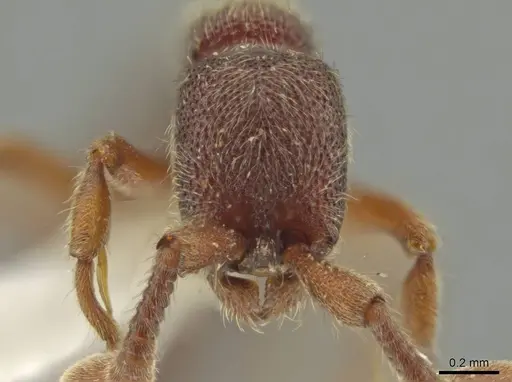
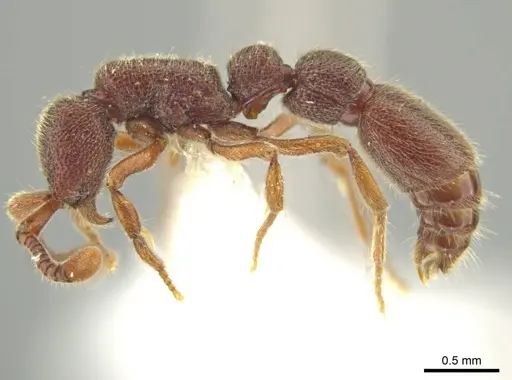
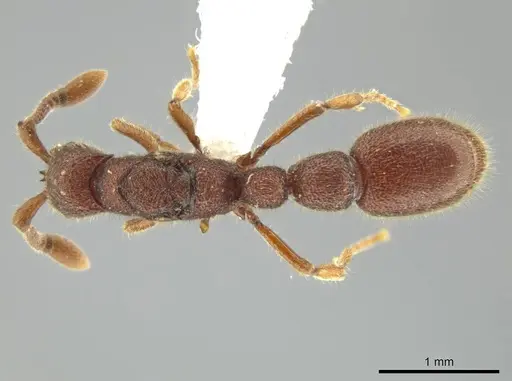
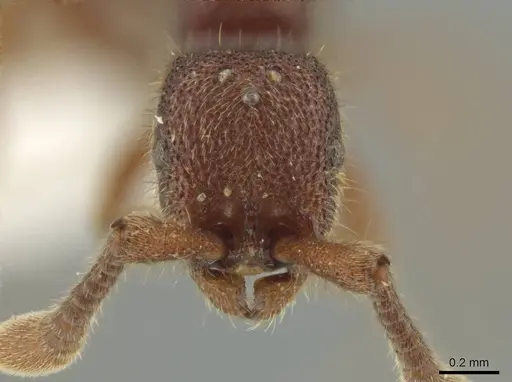
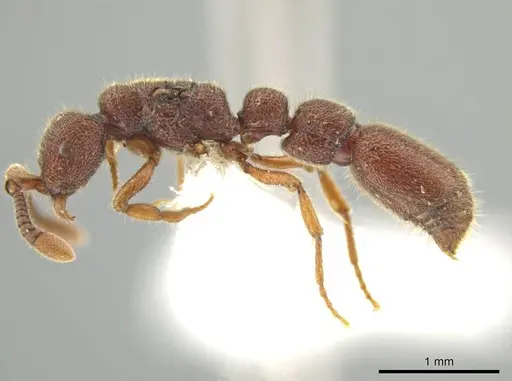
Syscia chiapaneca is a small Dorylinae ant found only in the cloud forests of Chiapas, Mexico . Workers have a reddish-brown body with distinctive sculpturing: the pits on the third abdominal segment are nearly fused, while those on the fourth segment are smaller and spaced apart . The queen has short, non-functional wings (brachypterous) and looks more like a worker . They live in leaf litter and rotting wood on the forest floor at elevations between 1450 and 1650 meters . First described in 2021,this species has not been kept in captivity, so most of its antkeeping needs are unknown .
Quick Summary
- Difficulty: Expert
- Origin & Habitat: Endemic to the cloud forests of Chiapas, Mexico (around 19 km ENE of Tonalá) at 1450-1650 meters elevation [1][2]. They live in mixed cloud forest and montane wet forest, in forest floor leaf litter and rotting wood [1].
- Colony Type: Single-queen colonies are likely but not confirmed. Only one brachypterous queen has been documented [1]. Colony structure in captivity is unconfirmed.
- Size & Growth:
- Queen: Size data unavailable (only head width is known, which does not represent total body length) [1].
- Worker: Size data unavailable (only head width is known, which does not represent total body length) [1]. Based on related Syscia species, workers are likely around 2-3 mm in total length.
- Colony: Unknown, no captive records exist [1].
- Growth: Unknown, estimated moderate based on small tropical Dorylinae [1].
- Development: Unknown, estimated 6-10 weeks based on typical Dorylinae development at optimal temperature [1]. (Development timeline is unconfirmed for this species. Estimates based on genus-level patterns for small tropical Dorylinae.)
- Antkeeping:
- Temperature: Keep around 20-22°C, based on their cloud forest origin at 1450-1650 m elevation [1]. This is a cool, stable mountain environment, avoid temperatures above 25°C. A gentle gradient with cooler areas is recommended.
- Humidity: High humidity is essential, keep the nest substrate consistently moist but not waterlogged. These ants live in damp leaf litter and rotting wood [1]. Provide a humid outworld and good ventilation to prevent mold.
- Diapause: Likely no true diapause needed, they come from a tropical cloud forest with mild seasonal variation. However, you may see reduced activity during cooler months, simply reduce feeding slightly and maintain stable conditions [1].
- Nesting: A naturalistic setup works best, a shallow layer of damp soil mixed with leaf litter, or a plaster nest with high humidity. Their tiny size means chambers should be tight and retain moisture. Avoid setups that dry out quickly.
- Behavior: Behavior is unconfirmed but likely similar to other Dorylinae, probably predatory on small invertebrates. They are secretive, litter-dwelling ants that prefer to stay hidden. Their tiny size means escape prevention is critical, standard mesh will not contain them. Handle with extreme care due to their minute size.
- Common Issues: escape prevention is critical due to their extremely tiny size, standard mesh will not contain them., high humidity requirements can lead to mold if ventilation is poor., no captive breeding data exists, this is an advanced species for experienced keepers., stress from handling or disturbance can easily kill these tiny ants., temperature sensitivity, overheating above 25°C can quickly prove fatal.
Housing and Setup
Syscia chiapaneca needs a setup that mimics a cloud forest floor. Use a naturalistic terrarium with a shallow layer of damp soil mixed with leaf litter. The substrate should stay moist but not waterlogged. Because they are tiny, you need fine mesh (at least 0.5 mm or tighter) on all openings to prevent escape. A small formicarium with tight chambers and good humidity retention can also work, but make sure chambers are scaled to their minute size. Avoid setups that dry out quickly, consider a water reservoir or regular misting to maintain humidity. Keep the nest dark and undisturbed, these ants are secretive and prefer staying hidden in the litter layer [1].
Feeding and Diet
As a Dorylinae ant, Syscia chiapaneca is likely predatory on small invertebrates. In captivity, offer small live prey such as springtails, fruit fly larvae, and other micro-arthropods. Because workers are extremely tiny, prey should be smaller than their own body size. Sugar sources may be accepted but are not a primary food. Remove any uneaten prey within 24 hours to prevent mold. Since no captive feeding data exists, be ready to experiment with different small prey items and adjust based on colony response. Do not overfeed, small colonies can easily be overwhelmed by excess food. [1]
Temperature and Humidity
Keep temperatures around 20-22°C, matching their cloud forest origin at 1450-1650 m elevation in Chiapas [1]. Avoid temperatures above 25°C, this species is not heat-tolerant. A slight temperature gradient with cooler areas is beneficial. High humidity is critical, aim for 70-85% relative humidity in the nest area. The substrate should feel damp at all times. Use a hygrometer to monitor humidity and adjust ventilation to prevent both drying out and stagnant air. Poor ventilation combined with high humidity can lead to mold, which can be fatal.
Colony Establishment
Establishing a colony of Syscia chiapaneca is challenging due to lack of captive breeding data. The queen is brachypterous (short, non-functional wings) rather than fully winged [1]. The founding chamber should be small, humid, and dark. Founding method is likely claustral (queen seals herself in and lives off stored fat) but unconfirmed [1]. Do not disturb the founding chamber for the first several weeks. Once workers emerge, they will be extremely tiny and require the finest escape prevention. Only experienced antkeepers should attempt this species, patience is essential [1].
Behavior and Temperament
Specific behavioral observations are lacking, but Dorylinae ants are typically predatory and form small to moderate colonies. Syscia chiapaneca is a litter-dwelling, secretive ant that prefers staying within the substrate rather than foraging openly. Their tiny size makes them vulnerable to stress. Handle with extreme care, they can easily be crushed or lost. They are not aggressive toward humans and likely pose no stinging risk. Your main concerns are keeping them contained and maintaining proper humidity. Expect most activity to happen inside the nest and substrate rather than in an outworld. [1]
Frequently Asked Questions
How long does it take for Syscia chiapaneca to have first workers?
The exact timeline is unknown. Based on typical Dorylinae development for small species at their optimal temperature, expect around 6-10 weeks from egg to first worker. This is just an estimate, no captive breeding data exists for this recently described species [1].
What do Syscia chiapaneca ants eat?
As a Dorylinae ant, they are likely predatory on small invertebrates. Offer small live prey such as springtails, fruit fly larvae, and other micro-arthropods. Choose prey smaller than their tiny workers. Sugar sources may be accepted but should not be the main food. Remove uneaten prey within 24 hours to prevent mold [1].
Can beginners keep Syscia chiapaneca?
No. This species is rated Expert difficulty because of their extremely tiny size (needs perfect escape prevention), high humidity requirements, lack of captive breeding data, and recent description in 2021. Only experienced antkeepers should attempt this species [1].
What temperature do Syscia chiapaneca ants need?
Keep them around 20-22°C, based on their cloud forest origin at 1450-1650 m elevation in Chiapas [1]. Avoid temperatures above 25°C, they are not heat-tolerant. A gentle temperature gradient with cooler areas is recommended.
Do Syscia chiapaneca ants need hibernation?
Likely no true hibernation. As a cloud forest species from tropical Mexico, they experience mild seasonal variation rather than cold winters. You may notice reduced activity during winter months, simply reduce feeding slightly and maintain stable temperatures. Do not cool them dramatically [1].
How big do Syscia chiapaneca colonies get?
Colony size in captivity is unknown. Based on their elevation (1450-1650 m) and habitat, colonies are likely small to moderate. The only known queen is brachypterous, which may indicate compact colonies [1].
Can I keep multiple Syscia chiapaneca queens together?
Not recommended. Only a single queen has been documented, and she is brachypterous (short-winged). Combining unrelated queens has not been studied and would likely lead to aggression. Stick to single-queen colonies [1].
Why are my Syscia chiapaneca ants dying?
Common causes include escape due to inadequate mesh (they are extremely tiny), humidity too low or too high (leading to desiccation or mold), temperature stress (above 25°C), overhandling, and disturbance. This species needs stable, humid, dark conditions with minimal intervention. Review your setup against their cloud forest requirements [1].
When should I move Syscia chiapaneca to a formicarium?
This species is best kept in a naturalistic setup that replicates their leaf litter habitat rather than a traditional formicarium. If you must use a formicarium, wait until the colony reaches at least 50 workers and ensure the chambers are scaled to their tiny size. A small, humid plaster nest with tight chambers can work, but a soil-based setup is preferable [1].
Report an Issue
The current care sheet is based fully on literature. See inconsistencies, or something that's incorrect? Please , it will be resolved after review from an admin. Contributing to the blogs tab also helps providing information, to make us be able to further improve the caresheets. Thank you for your support!
References

This caresheet is licensed under CC BY-SA 4.0 .
Community Blogs
Literature
Loading distribution map...Loading products...