
Syscia benevidesae
- Sci. Name
- Syscia benevidesae
- Subfamily
- Dorylinae
- Author
- Longino & Branstetter, 2021
- Distribution
- Found in 4 countries
Introduction
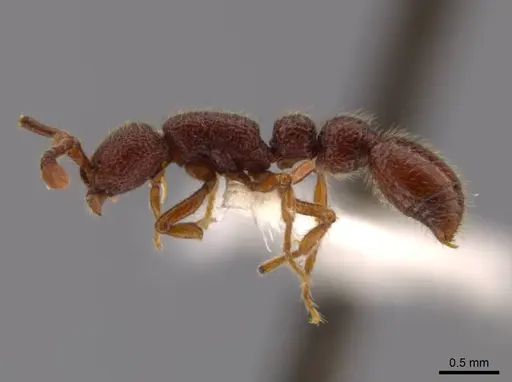
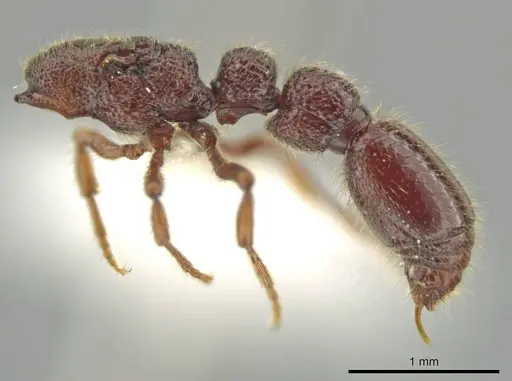
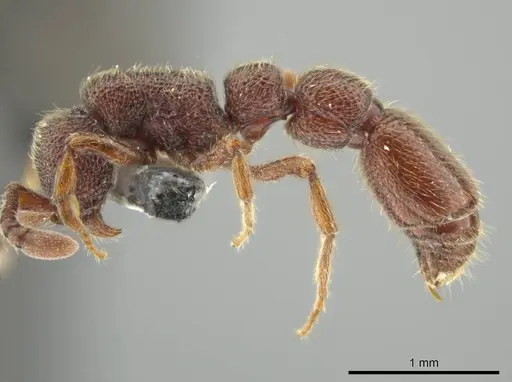
Syscia benevidesae is a tiny Dorylinae ant species native to the Neotropical region, found across Costa Rica, Panama, Colombia, Ecuador, and Venezuela . Workers are tiny with a reddish-brown coloration and distinctive coarse standing hairs on the body. This species belongs to the army ant subfamily Dorylinae, though unlike some famous army ants, Syscia species are cryptic leaf-litter dwellers rather than nomadic swarm-foragers . These ants are rarely seen by casual observers because they live entirely within the forest floor litter layer. Most records come from Winkler and Berlese samples of sifted leaf litter, making them one of the more difficult ant groups to encounter in the wild . Only dealate queens have been collected - queens shed their wings after mating, and no winged queens are known.
Quick Summary
- Difficulty: Hard
- Origin & Habitat: Wet to dry forest habitats in lowland tropical areas from sea level to approximately 800 m elevation, with one record from 1100 m in Venezuela [1]. Found in sifted leaf litter samples from forest floors.
- Colony Type: Colony structure is unconfirmed. Only dealate queens have been collected, indicating queens shed their wings after mating. No data on queen number or ergatoid reproduction.
- Size & Growth:
- Queen: Size data unavailable
- Worker: Size data unavailable
- Colony: Unknown, likely small based on typical Dorylinae leaf-litter specialists
- Growth: Unknown, estimated based on related species
- Development: Unknown, estimated 6‑10 weeks based on typical Dorylinae patterns (No direct development data available for this species. Estimates based on related Dorylinae leaf-litter specialists.)
- Antkeeping:
- Temperature: Based on their lowland tropical habitat, keep at 24‑28 °C, stable and warm [1]
- Humidity: High humidity, think damp forest floor. Keep substrate consistently moist but not waterlogged.
- Diapause: No, being a tropical species, they do not require hibernation [1]
- Nesting: Natural nesting occurs in leaf litter and upper soil layers. In captivity, provide a naturalistic setup with moist substrate (coco fiber, soil mix) and plenty of hiding structures like cork bark or flat stones. Test tubes with cotton may work for founding colonies.
- Behavior: These ants are cryptic and secretive, spending most of their time hidden in the substrate. They are likely predatory on small arthropods, typical of Dorylinae. Workers are tiny and may be overlooked in the wild. Escape prevention is critical due to their very small size, use fine mesh barriers. Temperament is unknown but likely not aggressive given their cryptic lifestyle.
- Common Issues: very small size makes escape prevention critical, use fine mesh barriers, cryptic lifestyle means colonies may seem inactive, don't assume they're dying, no captive husbandry data exists, this is an advanced species for experienced keepers, humidity must be maintained consistently, drying out kills colonies quickly, predatory diet may be difficult to replicate, live small prey essential
Natural History and Distribution
Syscia benevidesae is a Neotropical leaf-litter ant species ranging from Costa Rica through Panama, Colombia, Ecuador, and Venezuela [1]. Longino and Branstetter formally described the species in 2021 as part of a major phylogenetic revision of New World Syscia. The type locality is in Costa Rica's Puntarenas province, in wet forest at approximately 240 m elevation [1].
These ants inhabit wet to dry forest environments from sea level up to about 800 m elevation, with a single record from 1100 m in Venezuela [1]. Collectors almost always obtain them by sifting leaf litter and processing it through Winkler or Berlese funnels, this tells us they live entirely within the forest floor debris layer rather than in soil or rotting wood. One exception is a Colombian collection from a rotten termite log [1].
The only queens found are dealate (they have shed their wings), suggesting that queens mate and then lose their wings. No winged queens have been collected, which is unusual but may simply reflect sampling bias.
Identification and Morphology
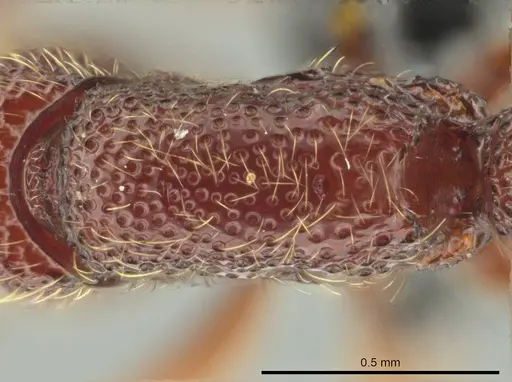
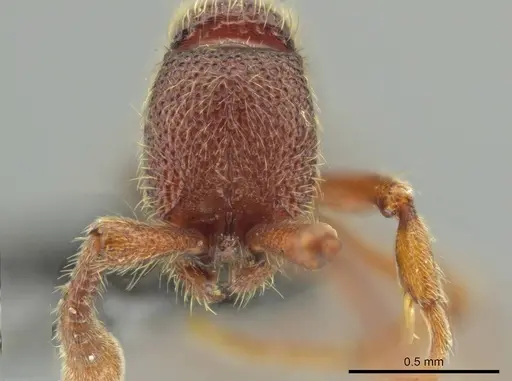
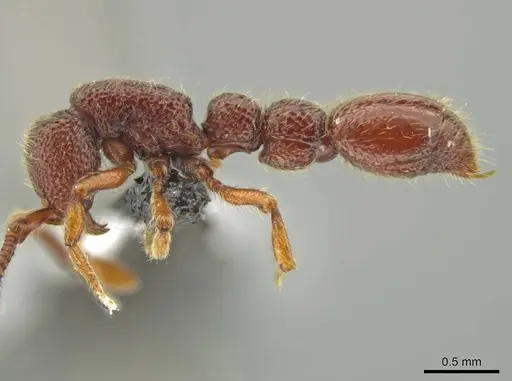
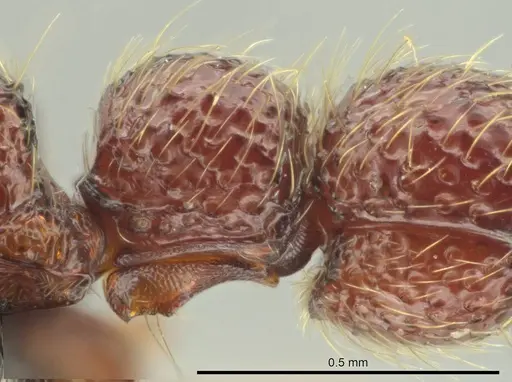
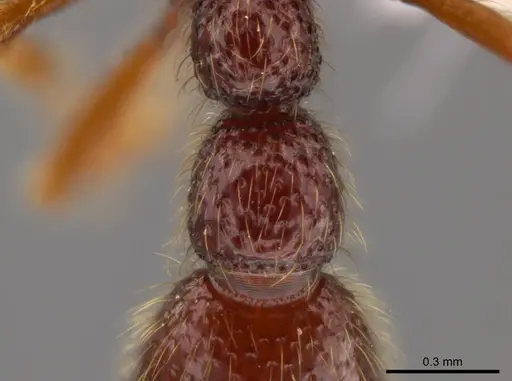
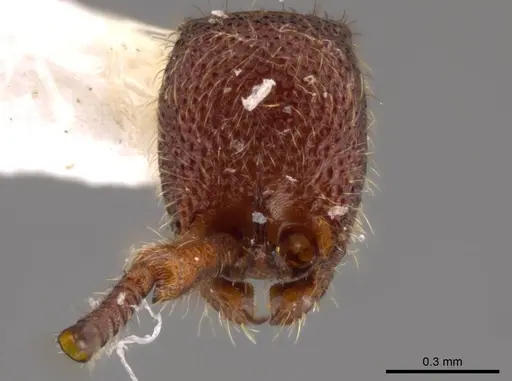
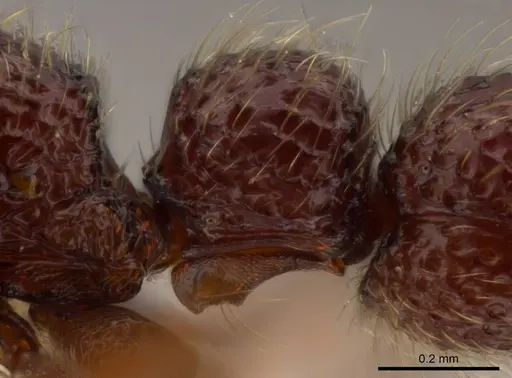
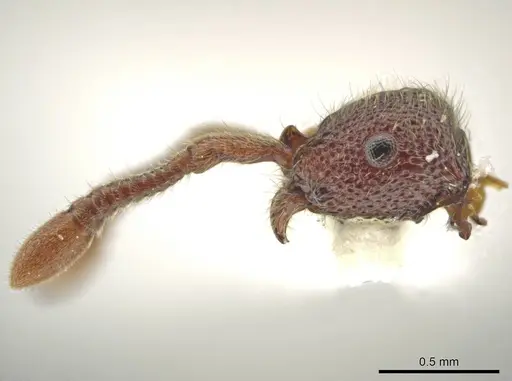
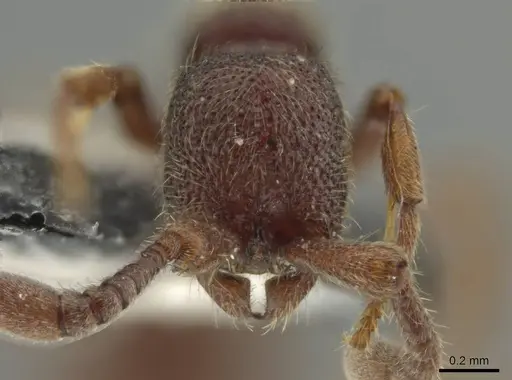
Workers of Syscia benevidesae are tiny and reddish-brown. You can identify them by these features: a shallow, broad subpetiolar process with an obtuse posterior angle, a trapezoidal third abdominal segment (AIII) with moderately convex sides, and a fourth abdominal segment (AIV) with convex sides and a non-truncate anterior margin [1].
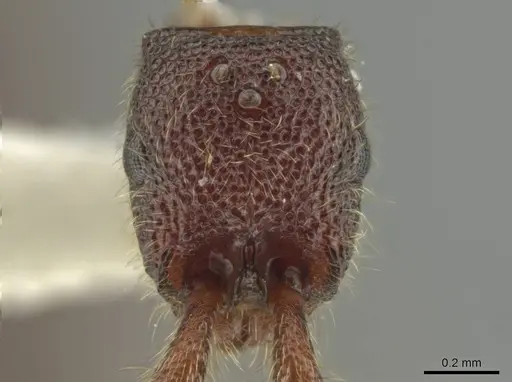
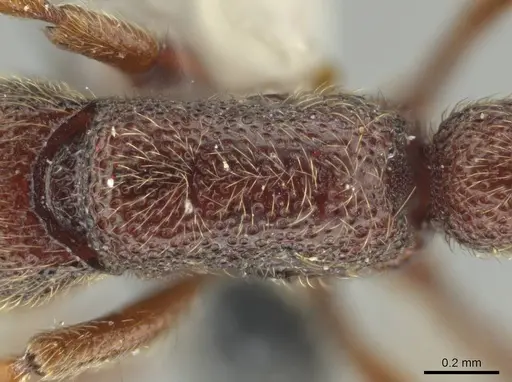
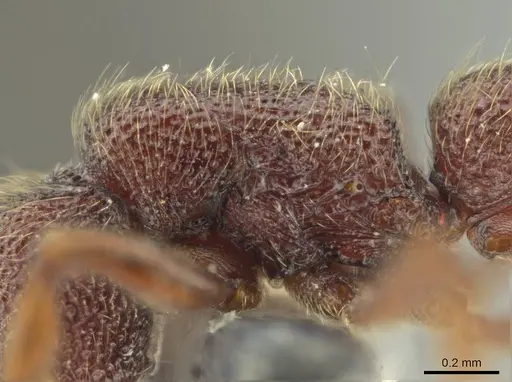
The cuticle has large, widely spaced punctae (dots) on both AIII and AIV, those on AIV are somewhat crescent-shaped and only cover the front third of the segment [1]. Standing hairs are long, abundant, and coarse, with no underlying fuzz. Queen measurements are not available, but they are slightly larger than workers [1].
Housing and Nest Setup
Because they naturally live in leaf litter and the upper soil layer, give them a setup that recreates the forest floor. Use a moist substrate mix (coco fiber and soil work well) that stays damp but doesn't become waterlogged. Provide plenty of hiding places: cork bark pieces, flat stones, or artificial leaves.
For a founding colony, a test tube setup can work if you keep the cotton moist and place the tube in a humid enclosure. These ants may do better in a small naturalistic terrarium where they can dig their own tunnels. Make sure the setup has good ventilation to prevent mold while keeping humidity high.
Escape prevention is critical, these are among the smallest ants, and even standard test tube cotton can be too loose. Use fine mesh (0.5 mm or smaller) on any openings, and consider using fluon on container rims. [1]
Feeding and Diet
As Dorylinae ants, Syscia benevidesae is likely predatory on small arthropods and probably raids the brood of other ant species. In captivity, offer small live prey such as springtails, fruit-fly larvae, small isopods, and other micro-arthropods. Their tiny size means they need appropriately sized food. They may accept protein sources readily but could be tricky to feed because they hide so much.
Sugar sources may or may not be accepted, some Dorylinae are strictly predatory, others take honeydew or sugar water. Offer a small drop of sugar water or honey occasionally and watch, but don't rely on carbohydrates as a primary food. Focus on providing a variety of small live prey.
Feed small amounts every 2-3 days, removing any uneaten prey after 24 hours to prevent mold. Adjust based on colony size and how much they eat.
Temperature and Humidity Requirements
Because this species comes from lowland tropical forests (sea level to ~800 m elevation), they need warm temperatures in the range 24-28 °C [1]. Keep conditions stable, avoid drafts and big swings. A heating mat on one side of the enclosure can give a gradient if room temperature is cooler.
Humidity should be high, like the damp forest floor they live in. Keep the substrate consistently moist but not waterlogged, it should feel damp to the touch. Allow some areas to dry slightly between mistings to create a gradient, but never let the setup dry out completely.
As a tropical species, they do not need any hibernation or winter diapause [1]. Maintain warm, humid conditions year-round.
Challenges and Advanced Care Notes
Syscia benevidesae is not a species for beginners. There is essentially no captive husbandry information available, so everything you do must be based on related Dorylinae and general ant-keeping principles. The ants are tiny, cryptic, and probably sensitive to environmental conditions.
The biggest challenges: giving them a natural diet of small arthropods, keeping humidity high without causing mold, and making sure they are actually feeding and thriving (they may stay hidden for long periods). A colony may seem to do nothing, but that could be normal behavior.
This species is best suited for experienced antkeepers who enjoy the challenge of keeping rare, poorly-documented ants and who can provide the consistent conditions these tropical ants require. Think of it as an expert-level species for special collection purposes rather than a display colony.
Frequently Asked Questions
How long does it take for Syscia benevidesae to produce first workers?
The egg-to-worker timeline is unknown for this species. Based on typical Dorylinae patterns and related leaf-litter specialists, expect roughly 6-10 weeks from egg to worker at optimal temperatures of 24-28 °C. However, this is only an estimate, no direct development data exists.
Can I keep Syscia benevidesae in a test tube?
Test tubes can work for founding colonies if you maintain high humidity by keeping the water reservoir moist and placing the tube in a humid enclosure. However, these tiny ants may escape through standard cotton, so use tightly packed cotton or fine mesh over the opening. A naturalistic setup with moist substrate may be more successful long-term.
Do Syscia benevidesae ants sting?
Dorylinae ants have functional stingers, but these tiny leaf-litter species are unlikely to sting handlers. Their small size means any sting would be negligible. They likely use their stinger on prey rather than for defense against large threats.
What do Syscia benevidesae eat?
They are likely predatory on small arthropods, typical of Dorylinae. Offer small live prey such as springtails, fruit-fly larvae, tiny isopods, and other micro-arthropods. Sugar sources may or may not be accepted, offer occasionally but do not rely on them.
Are Syscia benevidesae good for beginners?
No. This is an advanced-to-expert level species. There is no captive husbandry data available, they are extremely small (escape risk is very high), and they require specific conditions that must be inferred from limited data. They are best suited for experienced keepers interested in rare species.
How big do Syscia benevidesae colonies get?
Colony size is unknown but likely small, probably under 100 workers based on typical leaf-litter Dorylinae. Only dealate queens have been collected, so we don't know the normal colony size.
Do Syscia benevidesae need hibernation?
No. As a tropical lowland species from sea level to ~800 m elevation in Central and South America, they do not require hibernation or winter diapause. Maintain warm, humid conditions year-round.
Why are my Syscia benevidesae not moving?
This is likely normal behavior. These are cryptic leaf-litter ants that spend most of their time hidden in the substrate. They may have long periods of inactivity, especially during the day. Observe at night with a red light to see if they become more active. Ensure humidity is adequate and they are not too cold.
When should I move Syscia benevidesae to a formicarium?
Wait until the colony is established with at least 10-20 workers and you can confirm they are actively foraging and thriving. For this species, a naturalistic setup with moist substrate may be preferable to a traditional formicarium regardless of colony size.
Can I keep multiple queens together?
This is unknown. No data exists on colony founding behavior or whether multiple queens can be kept together. Given the lack of information, combining unrelated queens is not recommended.
Report an Issue
The current care sheet is based fully on literature. See inconsistencies, or something that's incorrect? Please , it will be resolved after review from an admin. Contributing to the blogs tab also helps providing information, to make us be able to further improve the caresheets. Thank you for your support!
References

This caresheet is licensed under CC BY-SA 4.0 .
Community Blogs
CASENT0601652
View on AntWeb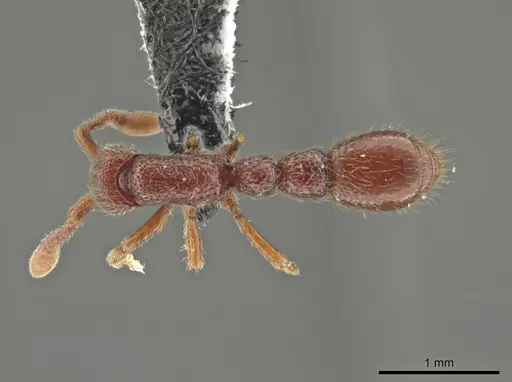
INBIOCRI001283223
View on AntWeb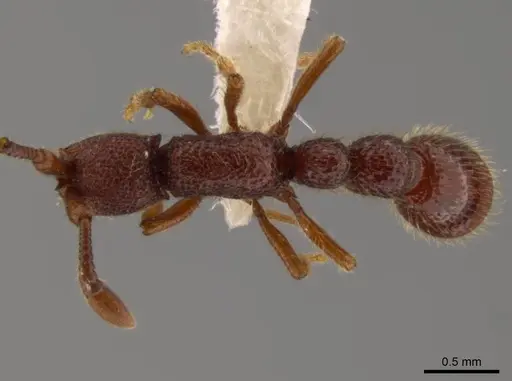
JTLC000014009
View on AntWeb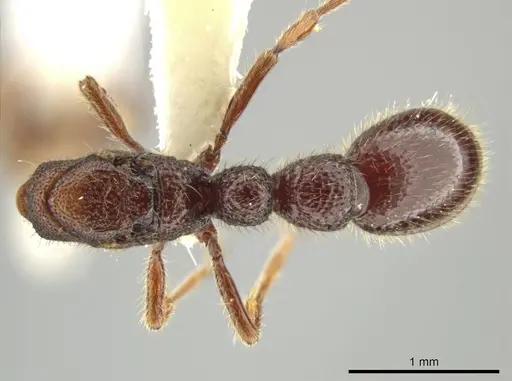
MCZ-ENT00511565
View on AntWeb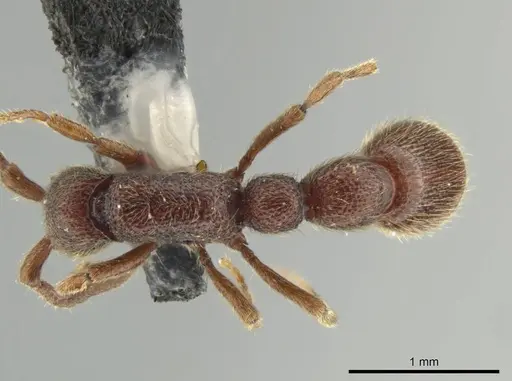
Literature
Loading distribution map...Loading products...