
Syllophopsis saudiensis
- Sci. Name
- Syllophopsis saudiensis
- Tribe
- Solenopsidini
- Subfamily
- Myrmicinae
- Author
- Aldawood, 2016
- Distribution
- Found in 1 countries
Introduction
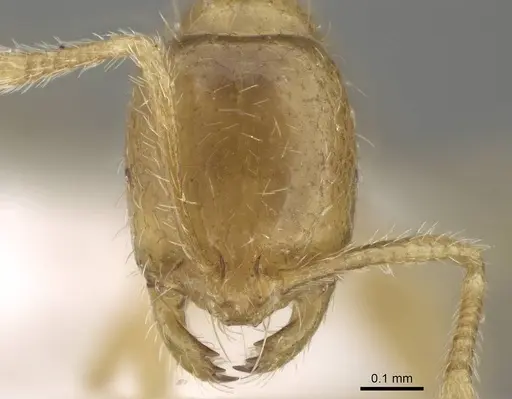
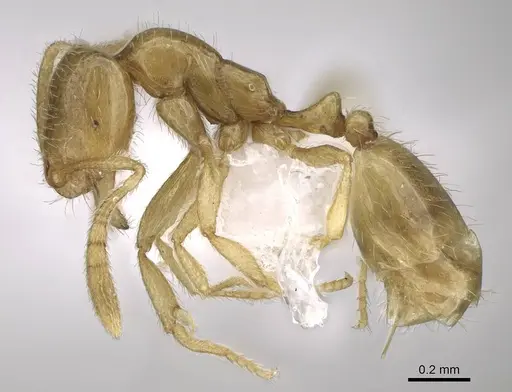
Syllophopsis saudiensis is a tiny ant from Saudi Arabia, measuring about 2.1mm in total length . Workers are dirty yellow with a brownish tint on the head and gaster, and the body is covered in abundant stiff hairs . They have 12-segmented antennae ending in a 3-segmented club, and extremely small eyes made of just a single light-sensitive unit (ommatidium) . These ants belong to the Myrmicinae subfamily and have a well-developed sting . The species was described in 2016 and is known only from the worker caste - queens have not been found yet. They live in loose soil and leaf litter under date palm trees in central and eastern Saudi Arabia, often alongside other tiny ant species like Monomorium exiguum and Tapinoma simrothi .
Quick Summary
- Difficulty: Hard
- Origin & Habitat: Native to Saudi Arabia: central (Riyadh Province, Al Majma'ah) and eastern (Al Qatif) regions. Found in loose soil under date palm trees (Phoenix dactylifera) with understory grasses. The soil was dry but rich in organic material [1]. Type localities have extensive date palm plantations.
- Colony Type: Unconfirmed, only the worker caste has been described. Information on queen number and social structure is not available [1].
- Size & Growth:
- Queen: Unknown, queen not yet described [1]
- Worker: ~2.1mm total length [1]
- Colony: Unknown, only two workers collected in the original description [1]
- Growth: Unknown
- Development: Unknown, no data available for this species [1] (Based on related tiny Solenopsidini ants, development might take 4-8 weeks at warm temperatures, but this is only a rough guess.)
- Antkeeping:
- Temperature: Suggested starting range 24-28°C, based on their origin in hot Saudi Arabia. Provide a temperature gradient so workers can move to their preferred spot. Avoid exceeding 35°C or dropping below 15°C. [1]
- Humidity: Found in dry but organic-rich soil. Keep the nest substrate slightly moist to moderately dry, not waterlogged. A small water tube for drinking is recommended. [1]
- Diapause: Unknown, their native range has mild winters. No specific recommendations can be made until more is known.
- Nesting: Soil-dwelling species. Use a naturalistic setup with fine sand/soil mix or a Y-tong/plaster nest with small, tight chambers. They prefer dark, undisturbed spaces scaled to their tiny size. [1]
- Behavior: These tiny ants forage in soil and leaf litter, so they likely stay hidden rather than roam openly. Their small size (about 2.1mm) makes escape prevention critical, they can slip through tiny gaps. They have a well-developed sting [1] but are not aggressive unless disturbed. Handle with care and avoid quick movements.
- Common Issues: tiny size means escapes are very likely without fine mesh barriers and tight-fitting lids, only known from two workers, captive colonies may be extremely difficult to establish from wild, queen unknown, so no established keeping protocols exist, dry habitat preference means overwatering can be fatal, limited data makes care recommendations uncertain, be prepared to experiment
Housing and Nest Setup
Syllophopsis saudiensis is a soil-dwelling species that prefers loose, dry but organic-rich substrate [1]. For captive care, use a naturalistic setup with a fine sand/soil mixture or a Y-tong/plaster nest with small, tight chambers scaled to their tiny 2mm size. They are not arboreal, avoid tall formicarium spaces. Keep the nest area dark and undisturbed, as they naturally forage in soil layers under vegetation. A small outworld for foraging works well, but ensure all connections are narrow to prevent escape. Use fluon on all edges and fine mesh for ventilation, these tiny ants can squeeze through gaps that seem impossible.
Feeding and Diet
There are no confirmed observations of what this species eats in the wild [1]. Based on related soil-foraging ants in the Solenopsidini tribe, they may accept small insects (like fruit flies or pinhead crickets) and sugary liquids (honey water or sugar water). Offer tiny portions two to three times per week and remove leftovers quickly to prevent mold. Treat this as a starting point, your colony may have different preferences.
Temperature and Seasonal Care
Since this ant comes from hot, dry Saudi Arabia, they likely do best at warm temperatures. Start with 24-28°C and provide a gradient so workers can pick their ideal spot. A heating cable on one side of the nest works well. There is no information about a natural winter diapause, their native range has mild winters, so you probably don't need to force a cold rest. If the colony becomes less active in cooler months, you can gradually lower the temperature to 15-18°C for two to three months, but this is optional and not backed by data. [1]
Understanding This Species
Syllophopsis saudiensis was only described in 2016,making it a very new species in the antkeeping world [1]. We know very little about its colony structure, queen biology, or captive care requirements. The original collection found just two workers in soil under date palms, coexisting with many other tiny ant species [1]. That means no proven keeping protocols exist. If you manage to keep a colony, carefully document your conditions, you could be adding to our scientific knowledge. The genus Syllophopsis belongs to the Solenopsidini tribe (the same group as Monomorium and Solenopsis), so some care ideas can be borrowed, but the species may have unique needs.
Escape Prevention
At just over 2mm in length, Syllophopsis saudiensis is extremely small and an excellent escape artist [1]. Use tight-fitting lids on all containers. Apply fluon or petroleum jelly to the upper inner edges of any outworld connections. Use fine mesh (at least 0.5mm) for any ventilation. When connecting tubes, use short, wide connectors rather than long narrow tubing that can be chewed or clogged. Check enclosures daily for the first few weeks and seal any gaps immediately. These tiny ants can squeeze through gaps that seem impossibly small.
Handling and Sting Risk
Syllophopsis saudiensis has a well-developed sting, typical of many Myrmicinae ants [1]. While their small size means the sting is less painful than larger ants, some people may still feel a localized irritation. Handle colonies gently and avoid disturbing them unnecessarily. When working with the nest, use gentle techniques and give workers time to retreat before moving materials. If stung, wash the area with soap and water. These ants are not aggressive when left alone but will sting if threatened or crushed.
Frequently Asked Questions
How long does it take for Syllophopsis saudiensis to develop from egg to worker?
The egg-to-worker timeline is unknown for this species [1]. Based on similar tiny Myrmicinae in the Solenopsidini tribe, it might take around 4-8 weeks at warm temperatures (around 26-28°C), but this is only a rough guess and may not be accurate.
What do Syllophopsis saudiensis ants eat?
Their natural diet is not documented [1]. Related soil-dwelling Solenopsidini typically accept small insects (like fruit flies, pinhead crickets) and sugary liquids. Offer tiny portions of protein prey two to three times per week and keep a sugar source available, but be ready to adjust based on your colony's response.
Can I keep multiple queens together?
The colony structure is unconfirmed, only workers have been found, and no queen has been described [1]. Do not attempt to combine unrelated queens until more is known about their natural social structure. Based on related Solenopsidini, single-queen colonies are likely, but this is not proven.
Are Syllophopsis saudiensis good for beginners?
No, this species is not recommended for beginners. It was only described in 2016,so no established keeping protocols exist [1]. Only two workers have ever been collected, making wild colonies nearly impossible to obtain. Their care requirements will require experimentation. Consider starting with a better-known species like Monomorium or Tetramorium.
What temperature do Syllophopsis saudiensis need?
Aim for 24-28°C based on their hot Saudi Arabian origin. Provide a temperature gradient in the nest so workers can self-regulate. A heating cable on one side of the nest can help. Avoid temperatures below 15°C or above 35°C. [1]
How big do Syllophopsis saudiensis colonies get?
Colony size is unknown, only two workers were collected in the original species description [1]. Based on related small soil-dwelling ants, colonies might be small (likely under a few hundred workers), but this is speculation. Do not expect large colonies.
Do Syllophopsis saudiensis need hibernation?
Diapause requirements are unconfirmed. Their native range in Saudi Arabia has mild winters, so full hibernation is probably not needed. Consider a mild winter rest period (15-18°C for two to three months) only if the colony shows reduced activity during cooler months, this is optional and experimental.
Why are my Syllophopsis saudiensis dying?
Without established protocols, death causes are speculative. Common problems for such a tiny species include: escape (they slip through tiny gaps), improper humidity (they prefer dry conditions), temperature stress, or the general difficulty of keeping a newly described species. Record your conditions and adjust slowly. If the colony came from the wild, parasites or disease might also be factors.
When should I move Syllophopsis saudiensis to a formicarium?
Wait until the colony has at least 10-20 workers and shows stable activity. For this soil-dwelling species, a Y-tong or plaster nest with small, tight chambers works well from the start. They prefer compact spaces, avoid large chambers. Move them only when the test tube or founding setup becomes visibly crowded.
What is the best nest type for Syllophopsis saudiensis?
Use a Y-tong or plaster nest with small, tight chambers scaled to their tiny 2mm size. They are soil-dwelling and prefer dark, undisturbed spaces. A naturalistic setup with a fine sand/soil substrate also works well. Avoid tall, open spaces and bright lighting, they naturally inhabit hidden soil layers. [1]
Report an Issue
The current care sheet is based fully on literature. See inconsistencies, or something that's incorrect? Please , it will be resolved after review from an admin. Contributing to the blogs tab also helps providing information, to make us be able to further improve the caresheets. Thank you for your support!
References

This caresheet is licensed under CC BY-SA 4.0 .
Community Blogs
CASENT0906341
View on AntWeb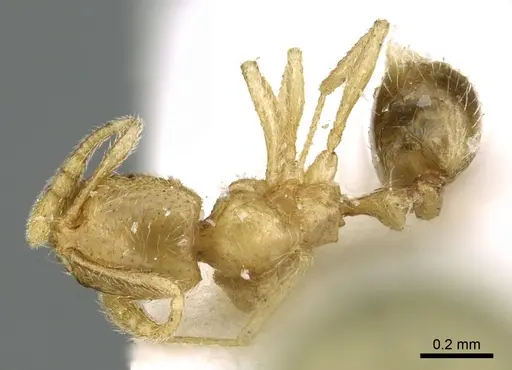
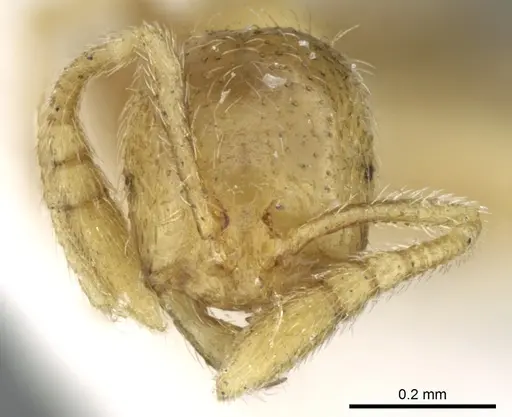
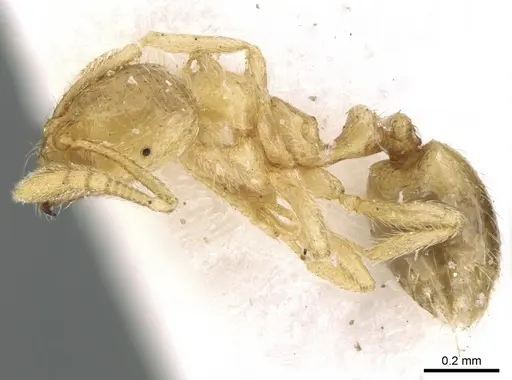
CASENT0919825
View on AntWeb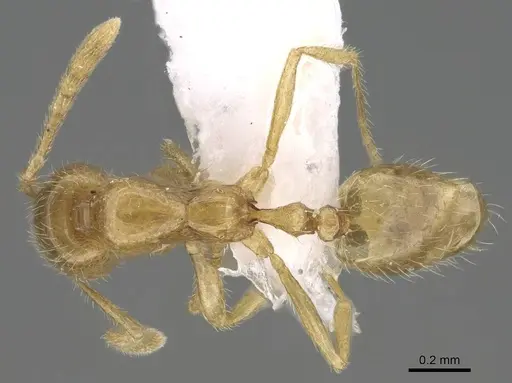
Literature
Loading distribution map...Loading products...