
Syllophopsis kondratieffi
- Sci. Name
- Syllophopsis kondratieffi
- Tribe
- Solenopsidini
- Subfamily
- Myrmicinae
- Author
- Sharaf & Aldawood, 2013
- Distribution
- Found in 1 countries
Introduction
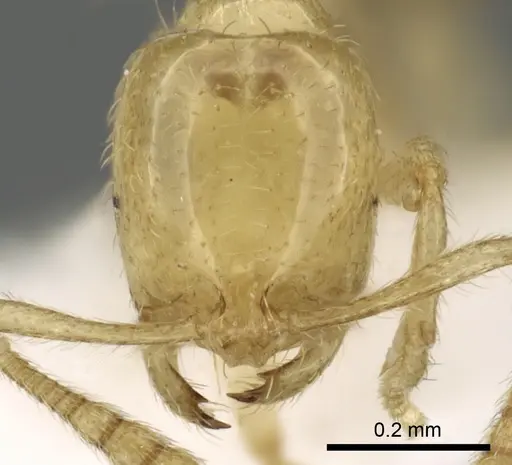
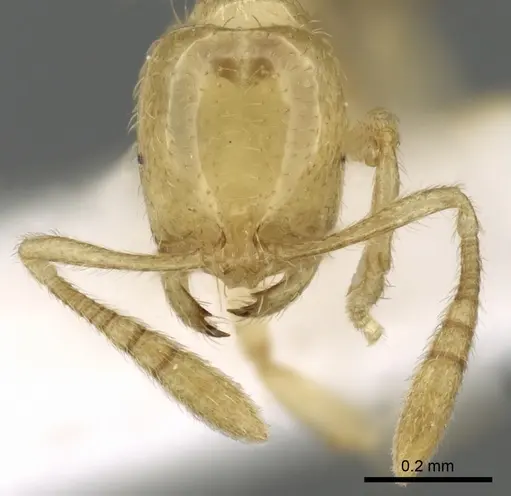
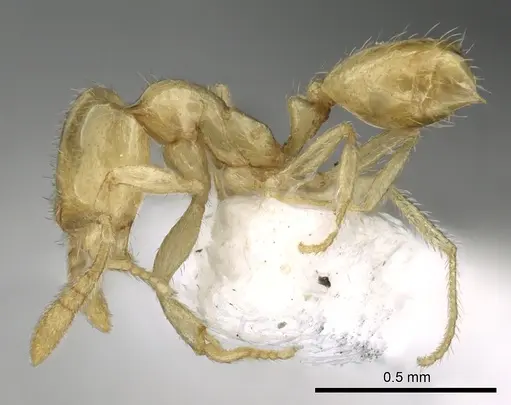
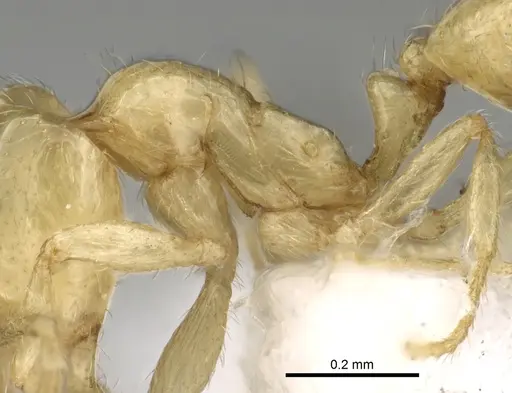
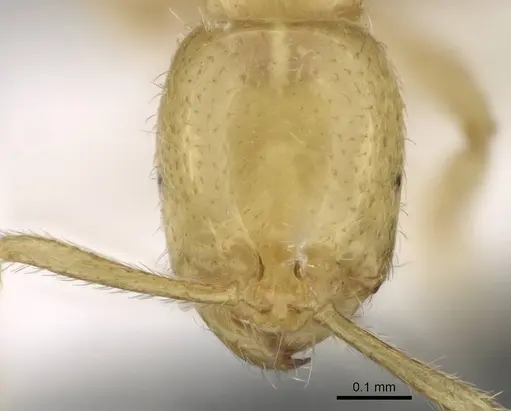
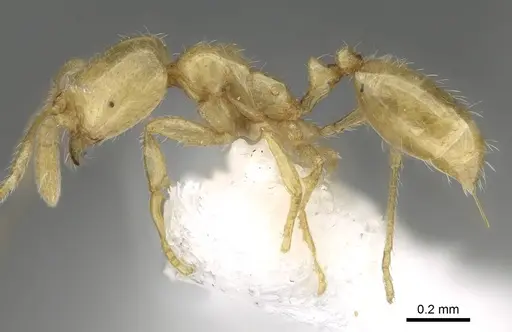
Syllophopsis kondratieffi is a tiny yellow ant native to southwestern Saudi Arabia. Workers measure 1.46–1.49 mm in total length, making them one of the smallest ants kept in captivity . They have a uniform pale yellow colour, a smooth shining body, and sparse fine hairs . Their eyes are minute, consisting of a single ommatidium, and they have 12‑segmented antennae ending in a 3‑segmented club . The propodeum meets the declivity at an obtuse angle of about 130° . Originally described as Monomorium kondratieffi in 2013,this species was later moved to the genus Syllophopsis based on phylogenetic work . In the wild, they nest in loose, moist sandy soil among the roots of Portulaca oleracea plants beneath date palms (Phoenix dactylifera) . They coexist with other ants such as Trichomyrmex destructor and Tetramorium species . The known distribution now includes several provinces in Saudi Arabia, suggesting the species may be more widespread .
Quick Summary
- Difficulty: Medium
- Origin & Habitat: Southwestern Saudi Arabia, in loose sandy soil with high moisture content among roots of Portulaca oleracea beneath Phoenix dactylifera (date palm) trees [1][2]. The area consists of agricultural valleys with abundant fresh water and extensive date palm plantations [2].
- Colony Type: Colony type is unconfirmed. Workers are monomorphic (all the same size), and the species appears to be single‑queen based on typical patterns in related Monomorium group ants, but this has not been directly documented [2].
- Size & Growth:
- Queen: Unknown – the queen has not been described in scientific literature
- Worker: 1.46–1.49 mm [1][2]
- Colony: Unknown – no colony size data are available
- Growth: Unknown – no development data available
- Development: Unknown – no direct data exist for this species. Based on related Monomorium species, expect 4–8 weeks at optimal temperature. (Development timeline is unconfirmed. Related Monomorium species typically develop from egg to worker in 4–8 weeks under warm conditions.)
- Antkeeping:
- Temperature: Keep at 24–28 °C, reflecting their origin in southwestern Saudi Arabia where temperatures are consistently warm. Use a heating cable on one side of the nest to create a gradient.
- Humidity: Keep the nest substrate consistently damp but not waterlogged. In the wild, they inhabit loose sandy soil with high moisture content among plant roots [1]. Allow the substrate to dry slightly between waterings but never let it become completely dry. A water reservoir helps maintain humidity.
- Diapause: Unknown – no specific data on overwintering requirements. Saudi Arabia has mild winters, so they likely experience reduced activity during cooler months but may not require true hibernation. Monitor colony behaviour and consider a cool period (15–18 °C) for 2–3 months if the colony becomes inactive.
- Nesting: This species naturally nests in loose, moist sandy soil among plant roots. In captivity, a naturalistic setup with sandy substrate works well, or a Y‑tong/plaster nest with moisture‑retaining material. The key is maintaining consistent moisture without waterlogging [1][2].
- Behavior: These ants are tiny and generally peaceful, but they belong to the subfamily Solenopsidini, which means they have a sting. In practice, the sting is too small to cause any noticeable effect on humans. They are not aggressive and are unlikely to bite. Workers are slow‑moving and forage individually or in small groups. They rely heavily on chemical signals rather than vision. Their tiny size (under 1.5 mm) makes escape prevention critical – they can squeeze through gaps invisible to the naked eye. Use fine mesh (0.5 mm or smaller) and fluon barriers.
- Common Issues: escape prevention is critical due to their extremely small size – use fine mesh barriers and tight‑fitting lids, wild‑caught colonies may carry parasites or diseases that can cause colony collapse, slow growth and tiny size mean colonies are vulnerable during founding and early stages, maintaining proper humidity without overwatering can be challenging with their moisture‑loving nature, limited published care information requires keepers to experiment with conditions
Housing and Nest Setup
For Syllophopsis kondratieffi, a naturalistic setup with sandy substrate works best because they naturally nest in loose, moist soil among plant roots [1]. A small container (5–10 cm wide) filled with a sand/soil mix that holds moisture well will mimic their natural habitat. Keep the substrate consistently damp but not waterlogged – squeeze out excess water so it feels moist but no water pools on top. You can also use a Y‑tong or plaster nest, but ensure the chambers stay moist. Because these ants are tiny, even small gaps in your setup can lead to escapes – use fine mesh (0.5 mm or smaller) on any ventilation holes and ensure lids fit tightly. A small outworld connected to the nest provides feeding space [2].
Feeding and Diet
Like other small Myrmicinae ants, Syllophopsis kondratieffi likely accepts a varied diet including small live prey, sugar water, and honey. In their natural habitat, they coexist with various ant species that forage on honeydew from aphids and small insects [1]. Offer small live prey such as fruit flies, pinhead crickets, or tiny mealworms – chop larger prey into pieces they can manage. Sugar water, honey, or diluted jam can serve as carbohydrate sources. Because they are so small, food items should be very small. Feed every 2–3 days and remove uneaten food to prevent mould. Observe what your colony accepts and adjust accordingly.
Temperature and Seasonal Care
Keep Syllophopsis kondratieffi at 24–28 °C, reflecting their origin in southwestern Saudi Arabia where temperatures are consistently warm. Place a heating cable on one side of the nest to create a temperature gradient they can choose from. Avoid temperatures below 20 °C for extended periods. During winter months in cooler climates, room temperature may be sufficient, but monitor colony activity. If they become less active, a slight reduction to 18–22 °C for 1–2 months may simulate their natural seasonal cycle, though true hibernation may not be required. Always ensure stable temperatures without major fluctuations. [1][2]
Handling and Colony Maintenance
Due to their extremely small size (under 1.5 mm), Syllophopsis kondratieffi requires careful handling and excellent escape prevention. When transferring colonies or cleaning the setup, work slowly and gently – sudden movements or vibrations can stress these tiny ants. Use a soft brush or pipette for moving workers rather than forceps. Always keep the nest covered when not actively working with the colony. Because they are so small, even brief escapes can result in colonies dispersing into your room. Monitor for mould if humidity is too high, and ensure ventilation is adequate to prevent stagnant air while maintaining moisture. Regular but gentle observation helps you understand your colony's needs and catch problems early. [1]
Growth and Development
Specific development data for Syllophopsis kondratieffi do not exist in scientific literature. Based on related Monomorium species, expect the first workers (nanitics) to emerge 4–8 weeks after the queen lays eggs, assuming optimal temperature (around 26 °C). Initial colonies will grow slowly due to the tiny size of the workers. Be patient during the founding stage – disturbing the nest frequently can cause the queen to abandon or eat her brood. Once workers emerge, growth typically accelerates but remains modest compared to larger ant species. The colony will likely stay small (dozens to perhaps a few hundred workers) given the tiny worker size.
Behaviour and Temperament
Syllophopsis kondratieffi is a peaceful, non‑aggressive species. Like all Solenopsidini, they possess a sting, but it is too small to cause any noticeable effect on humans – they present no danger to keepers. Workers are slow‑moving and tend to forage individually or in small groups rather than forming large raiding parties. Their tiny eyes (single ommatidium) suggest they rely more on chemical signals than vision for navigation [1][2]. The main behavioural concern is escape risk – their small size allows them to squeeze through gaps invisible to the naked eye. Provide a shallow water barrier or fluon around the outworld to prevent escapes. Overall, they are a peaceful, low‑maintenance species ideal for observation.
Frequently Asked Questions
How long does it take for Syllophopsis kondratieffi to produce first workers?
The exact timeline is unknown, but based on related Monomorium species, expect first workers (nanitics) to emerge in 4–8 weeks at optimal temperature (around 26 °C). This is an estimate – actual development time may vary based on temperature and colony health.
What do Syllophopsis kondratieffi ants eat?
They likely accept small live prey (fruit flies, tiny crickets), sugar water, honey, and other small protein sources. Offer a varied diet and remove uneaten food to prevent mould. Their tiny size means food items should be very small.
Can I keep Syllophopsis kondratieffi in a test tube?
A test tube can work for a founding colony, but their moisture‑loving nature may require more frequent rehydration than standard test tube setups provide. A naturalistic setup with moist sandy substrate is closer to their natural habitat and may lead to better success [1][2].
Are Syllophopsis kondratieffi good for beginners?
This species is best suited for intermediate keepers due to limited available care information and their tiny size requiring excellent escape prevention. If you're experienced with small ant species and can provide proper humidity and escape barriers, they can be rewarding. Beginners may struggle with their specific needs.
How big do Syllophopsis kondratieffi colonies get?
Colony size is unknown, but given their tiny worker size (1.46–1.49 mm), colonies will likely remain modest – probably under a few hundred workers. This is typical for very small ant species [1].
Do Syllophopsis kondratieffi need hibernation?
Hibernation requirements are unconfirmed. Their native habitat in Saudi Arabia has mild winters, so they likely don't require true hibernation. A slight cool period (18–22 °C) for 1–2 months during winter may be beneficial but is likely optional. Monitor your colony's activity level.
Why are my Syllophopsis kondratieffi escaping?
Their extremely small size (under 1.5 mm) means they can squeeze through gaps invisible to the naked eye. Use fine mesh (0.5 mm or smaller), apply fluon barriers, and ensure all connections are sealed. Check for gaps around tubing connections and lid edges regularly.
What temperature is best for Syllophopsis kondratieffi?
Keep them at 24–28 °C. A heating cable on one side of the nest creates a gradient they can choose from. Avoid temperatures below 20 °C for extended periods. This species is adapted to warm conditions in southwestern Saudi Arabia.
Can I keep multiple queens together?
Colony structure is unconfirmed for this species. Combining unrelated queens is not recommended since it hasn't been documented and could result in fighting. If you obtain a wild colony, it likely has a single queen based on typical Monomorium group patterns.
What humidity level do Syllophopsis kondratieffi need?
Keep the nest substrate consistently damp but not waterlogged. In the wild, they live in loose sandy soil with high moisture content among plant roots [1]. The substrate should feel damp to the touch. Allow slight drying between waterings but don't let it fully dry out.
Where is Syllophopsis kondratieffi native to?
They are native to southwestern Saudi Arabia, particularly in regions with date palm plantations. Known provinces include Al Baha, Makkah, Riyadh, Asir, and Jizan. They nest in loose, moist sandy soil beneath date palm trees among Portulaca oleracea roots [1][2].
Report an Issue
The current care sheet is based fully on literature. See inconsistencies, or something that's incorrect? Please , it will be resolved after review from an admin. Contributing to the blogs tab also helps providing information, to make us be able to further improve the caresheets. Thank you for your support!
References

This caresheet is licensed under CC BY-SA 4.0 .
Community Blogs
CASENT0249587
View on AntWeb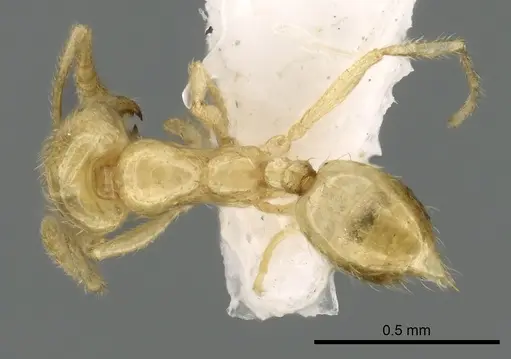
CASENT0919812
View on AntWeb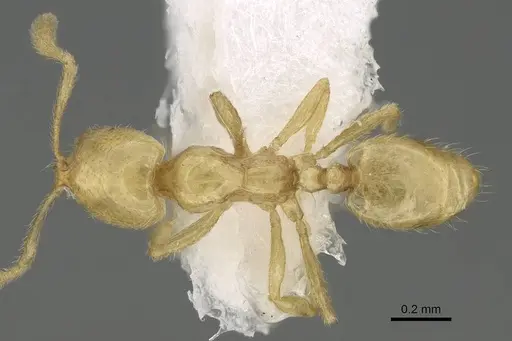
Literature
Loading distribution map...Loading products...