
Syllophopsis jonesi
- Sci. Name
- Syllophopsis jonesi
- Tribe
- Solenopsidini
- Subfamily
- Myrmicinae
- Author
- Arnold, 1952
- Distribution
- Found in 1 countries
Introduction
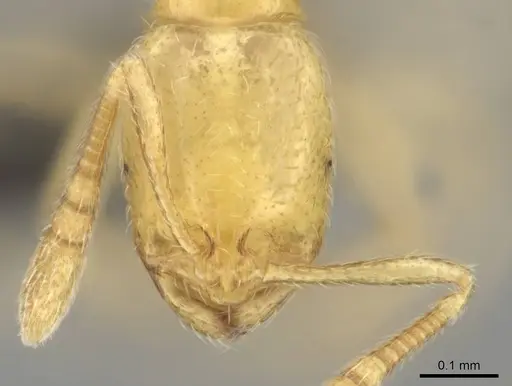
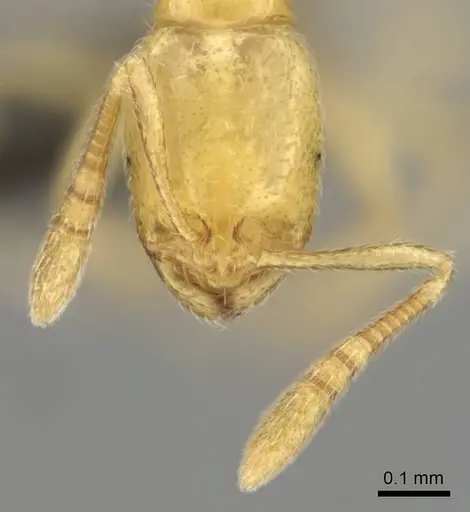
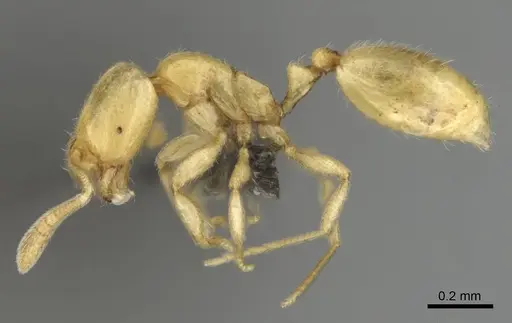
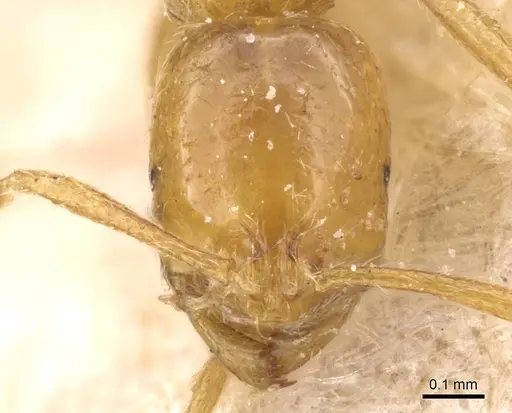
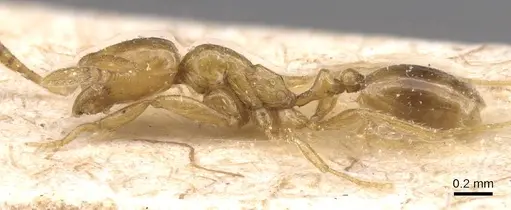
Syllophopsis jonesi is a tiny yellow ant from South Africa, known only from the Natal region . Workers measure just 2.2-2.3 mm in total length, making them one of the smallest ants you might keep . Their eyes are reduced to a single ommatidium (one lens), and their antennal scapes are longer than their head width . The body is uniformly yellow, with short standing hairs on the upper surface . This species lives in Bushveld and grassland habitats . Originally described as Monomorium jonesi, it is closely related to Syllophopsis thrascolepta from Ivory Coast . Despite being described over 70 years ago, almost nothing is known about its colony life, behavior, or captive care.
Quick Summary
- Difficulty: Medium
- Origin & Habitat: South Africa (Natal region), Bushveld and grassland [1]
- Colony Type: Unconfirmed, likely monogyne (single queen) based on typical patterns in the genus
- Size & Growth:
- Antkeeping:
- Temperature: Aim for 24-26°C. South African origin suggests they prefer warmth, but room temperature (20-22°C) may be tolerated. Avoid extended periods below 18°C or above 30°C.
- Humidity: Keep the nest substrate moderately moist, not waterlogged, typical for grassland species. A dry section should also be available.
- Diapause: Unknown. South African habitats have mild winters, so a strict diapause may not be necessary. If colony activity drops in winter, provide a slight temperature drop (15-18°C) for 2-3 months, otherwise, keep conditions stable.
- Nesting: Use test tubes for founding. For larger colonies, choose Y-tong (AAC), plaster, or 3D-printed nests with narrow chambers. Avoid acrylic nests, they are hard to seal against these tiny ants.
- Behavior: Behavior is undocumented. Based on related Monomorium and Syllophopsis species, expect a peaceful, non-aggressive temperament. Foraging likely occurs individually or in small groups. Due to their small size (2.2-2.3 mm), escape prevention is critical, use fine mesh (0.5 mm or smaller) or fluon on all barriers.
- Common Issues: tiny size requires extremely fine mesh to prevent escapes., lack of specific care data means keepers must experiment with conditions., wild-caught queens or colonies are hard to find because the species is rare in the hobby., slow or stalled colony growth may occur if conditions are not optimal.
Appearance and Identification
Workers of Syllophopsis jonesi are tiny, with a total length of 2.2-2.3 mm [1]. The body is uniformly yellow [1]. A distinctive feature is the eye, which consists of a single ommatidium (one lens), very different from the compound eyes of most ants [1]. The antennal scapes are longer than the head width (scape index over 100) [1]. The head is narrow, and there are short standing hairs on the dorsal surfaces [1]. These features help separate it from other small yellow myrmicine ants.
Natural History and Distribution
This species is endemic to South Africa, specifically known from the Natal region (Mfongosi area) [1][2]. It inhabits Bushveld and grassland ecosystems, warm, seasonally dry environments [1]. The species was first described in 1921 as Syllophopsis jonesi, but that name was already in use, so it was renamed Syllophopsis jonesi in 1952 and later moved to Syllophopsis [1]. Almost no ecological or behavioral research has been published, most available data comes from morphological descriptions of the two syntype workers [1].
Housing and Nesting
Because workers are only 2.2-2.3 mm long [1], standard meshes and barriers will not contain them. Use fine metal or plastic mesh with openings no larger than 0.5 mm, or apply fluon to the inside of the outworld walls. A test tube setup works well for a founding colony. As the colony grows, transfer them to a Y‑tong (AAC), plaster, or 3D‑printed formicarium with narrow chambers (2-3 mm height). Avoid acrylic nests, tiny ants can squeeze through poorly sealed joints. Keep the nest simple and well sealed, any gap is an escape route.
Feeding and Diet
No dietary studies exist for Syllophopsis jonesi, but related ants in the tribe Solenopsidini are generalist omnivores that hunt small invertebrates and collect sweet liquids. Offer a constant supply of sugar water or honey, plus small protein sources such as fruit flies (Drosophila), pinhead crickets, or pieces of mealworm. Remove uneaten protein within 24 hours to prevent mold. As with other Solenopsidini, you can also try offering tiny seeds, though acceptance is not guaranteed. Their South African grassland habitat [1] suggests a natural diet of small arthropods and honeydew.
Temperature and Seasonal Care
Syllophopsis jonesi comes from warm South African habitats [1], so aim for a nest temperature of 24-26°C. A heating cable on one side of the nest creates a useful gradient. Room temperature (20-22°C) is probably tolerable but will slow growth. Extended exposure below 18°C or above 30°C should be avoided. Diapause requirements are unknown, the mild winters in their home range may mean no strict cooling period is needed. If you want to try a rest period, cool them to 15-18°C for 2-3 months and watch for reduced activity, if the colony remains active at room temperature all year, you can skip hibernation.
Behavior and Temperament
No specific behavioral observations are recorded for this species. Based on related ant genera in the tribe Solenopsidini, they are probably peaceful and not aggressive toward humans or other ants kept in separate enclosures. Workers likely forage individually or in small groups rather than in large columns. Their tiny size and simple eyes suggest heavy reliance on chemical communication (pheromones). In captivity, expect calm, non‑confrontational ants that spend most of their time in the nest. Remember: because of their size, they can escape through any tiny gap, so always check barriers. [1]
Frequently Asked Questions
How long does it take for Syllophopsis jonesi to produce first workers?
The exact timeline is unknown for this species. Based on related small myrmicine ants, the egg‑to‑worker period is roughly 6-8 weeks at 24-26°C. Temperature, feeding, and queen health will affect development speed.
What do Syllophopsis jonesi ants eat?
No specific diet is documented. Like other ants in the tribe Solenopsidini, they are likely omnivorous. Offer sugar water or honey as a constant energy source, along with small protein items such as fruit flies, pinhead crickets, or tiny pieces of insect. You can also try offering small seeds. Remove any uneaten food after 24 hours to prevent mold. Their grassland habitat [1] suggests they naturally eat small arthropods and honeydew.
Can I keep Syllophopsis jonesi in a test tube?
Yes, a test tube setup is an excellent way to start a colony. Use a small diameter tube (15-20 mm) with a water reservoir at one end and a cotton plug. Their tiny size means you must seal the open end with fine mesh (air holes smaller than 0.5 mm) or fluon. Test tubes work until the colony outgrows them.
How big do Syllophopsis jonesi colonies get?
Colony size is not recorded. Based on related small Myrmicinae species, colonies probably reach a few hundred workers at most. The small worker size suggests they do not form huge colonies.
Are Syllophopsis jonesi good for beginners?
This species is not ideal for a complete beginner because almost nothing is known about its specific care requirements. If you have experience with other small myrmicines (like Monomorium pharaonis), you may succeed, but expect some trial and error. The biggest challenge is preventing escapes due to their tiny size.
Do Syllophopsis jonesi need hibernation?
Diapause needs are unknown. Their South African origin means they experience mild winters, so a strict hibernation period may not be required. If colony activity drops in winter, you can try cooling them to 15-18°C for 2-3 months. If the colony stays active year‑round at room temperature, it is safe to skip diapause.
Why are my Syllophopsis jonesi escaping?
Workers are only 2.2-2.3 mm long [1], so they can get through very tiny gaps. Check all entry points, tubing connections, lid edges, and especially the join between nest and outworld. Use fine mesh (0.5 mm or smaller) or apply a fluon barrier. Even a crack of 0.3 mm can be an exit.
Can I keep multiple queens together?
This has not been studied for Syllophopsis jonesi. Based on typical patterns in the genus, single‑queen colonies are the norm. It is not recommended to combine unrelated foundresses, as the outcome is unknown.
What temperature should I keep Syllophopsis jonesi at?
Aim for 24-26°C in the nest area. A small heat mat on one side can create a gradient. Room temperature (20-22°C) is acceptable but will slow development. Avoid temperatures below 18°C or above 30°C for more than a few hours.
Report an Issue
The current care sheet is based fully on literature. See inconsistencies, or something that's incorrect? Please , it will be resolved after review from an admin. Contributing to the blogs tab also helps providing information, to make us be able to further improve the caresheets. Thank you for your support!
References

This caresheet is licensed under CC BY-SA 4.0 .
Community Blogs
CASENT0256599
View on AntWeb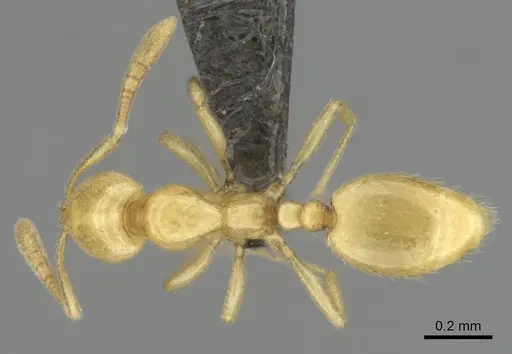
CASENT0913810
View on AntWeb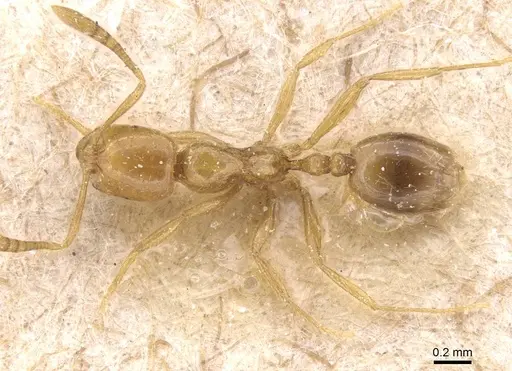
Literature
Loading distribution map...Loading products...