
Syllophopsis infusca
- Sci. Name
- Syllophopsis infusca
- Tribe
- Solenopsidini
- Subfamily
- Myrmicinae
- Author
- Heterick, 2006
- Distribution
- Found in 1 countries
Introduction
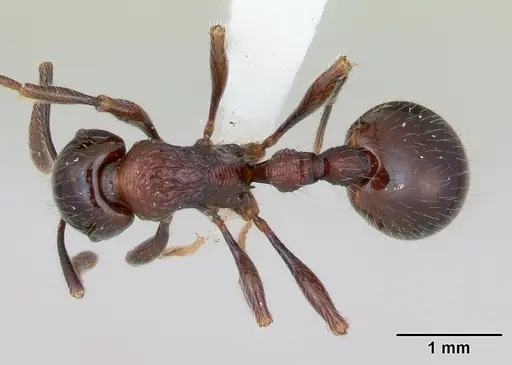
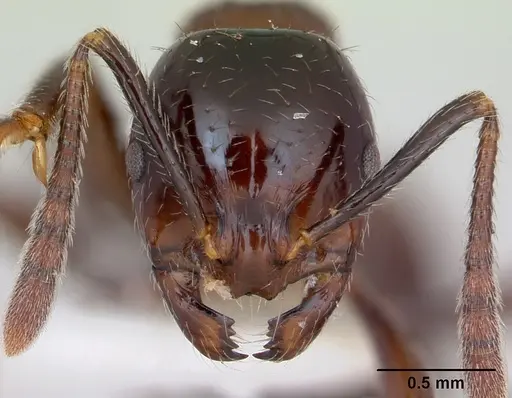
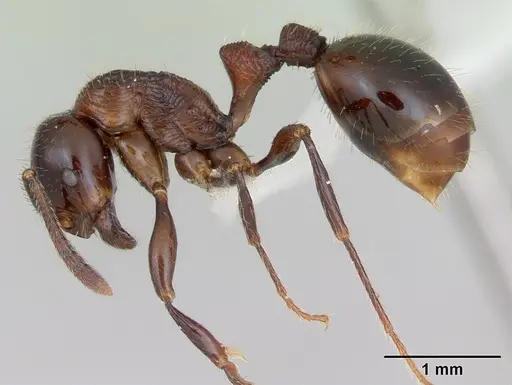
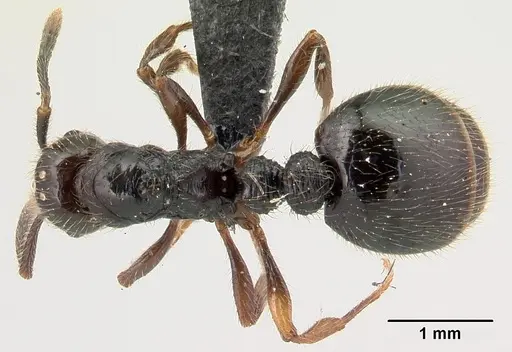
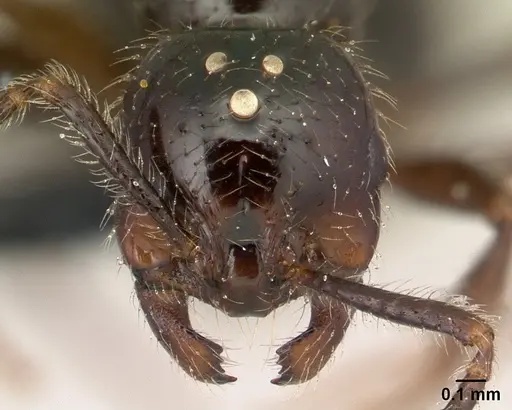
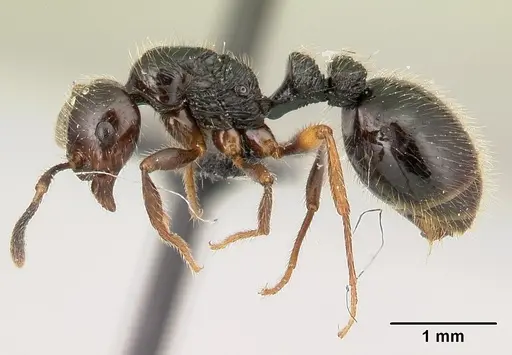
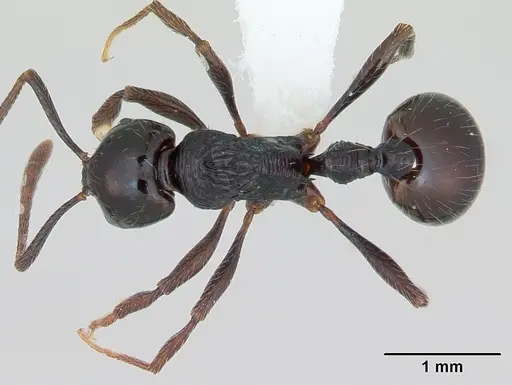
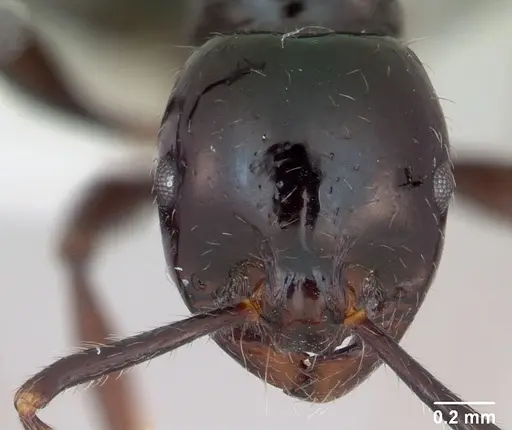
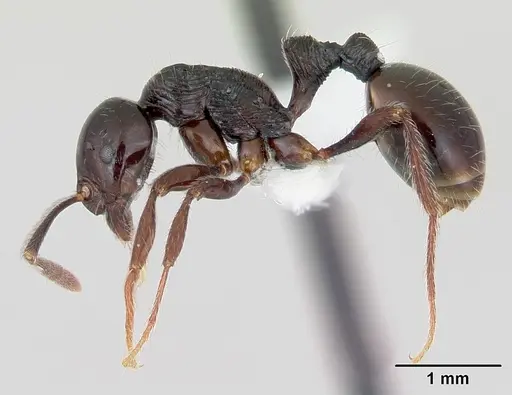
Syllophopsis infusca is a tiny myrmicine ant native to the rainforests of Madagascar. Workers are minute, with a total body length that has not been specifically documented in the literature, but they are among the smaller ants you might keep . They have a dark reddish- to yellowish-brown coloration,12 antennal segments with an undefined club, and five mandibular teeth. The species was originally described as Monomorium infuscum before being reclassified to Syllophopsis. These ants were collected from rotten wood and sifted leaf litter in lowland rainforest near Ambanizana in eastern Madagascar . This species remains poorly studied in captivity, with almost no documented care information available. What we know comes from a handful of wild specimens collected in the mid-1990s. The genus Syllophopsis is known for having ants that are not smooth and shiny - an exception to what the genus is typically known for . Given their tiny size and rainforest origin, these ants will require careful attention to escape prevention and humidity.
Quick Summary
- Difficulty: Unknown, likely Expert
- Origin & Habitat: Eastern Madagascar (Toamasina Province), lowland rainforest at around 425m elevation. Known only from a few sites near Ambanizana [1][3].
- Colony Type: Unconfirmed, colony structure has not been documented in scientific literature.
- Size & Growth:
- Queen: Undocumented, no queen specimens have been described in the scientific literature [1].
- Worker: Size data unavailable in terms of total length. Based on head measurements, they are very small ants, no complete body length is recorded in available sources.
- Colony: Unknown, only a few workers have ever been collected in the wild [1].
- Growth: Unknown
- Development: Unconfirmed, no development data exists for this species. Based on similar tiny Myrmicinae, estimate 6-10 weeks at optimal temperature, but this is a rough guess. (Development timeline is entirely unstudied. The estimate is based on genus-level patterns for small Myrmicinae ants.)
- Antkeeping:
- Temperature: Unknown for this species specifically. As a Madagascar rainforest species, aim for warm conditions around 24-28°C with stable temperatures. Avoid cold drafts.
- Humidity: High humidity is essential, these ants come from damp rainforest leaf litter. Keep nest substrate consistently moist but not waterlogged. Provide a gradient from damp to slightly drier areas.
- Diapause: Unknown, Madagascar has mild tropical temperatures year-round. Some form of seasonal slow-down may occur but has not been documented.
- Nesting: In the wild, they nest in rotten wood and leaf litter. For captivity, a small test tube setup or Y-tong nest with fine chambers would work well. The tiny worker size means chambers must be appropriately scaled.
- Behavior: Behavior is unstudied in captivity. Based on the subfamily Myrmicinae and tribe Solenopsidini, they likely possess a sting for defense and hunting, but this has not been confirmed for this species. Their tiny size means excellent escape prevention is critical, they can squeeze through remarkably small gaps. Temperament is unknown but related Solenopsidini species are typically non-aggressive towards humans.
- Common Issues: tiny size makes escape prevention critical, use fine mesh barriers and tight-fitting lids, no captive care information exists, you will be pioneering husbandry for this species, wild-caught colonies may have parasites that kill them in captivity, slow growth and small colony size make them vulnerable to mistakes, humidity control is challenging, too wet causes mold, too dry causes desiccation
Housing and Escape Prevention
Given the tiny size of these ants (workers are extremely small), escape prevention is your top priority. Use test tubes with cotton plugs that are well-packed, or small Y-tong nests with chambers appropriately scaled to their minute size. Standard formicarium chambers may be too large and can cause stress. Apply fluon or similar barriers to all edges and openings. Even small gaps that you wouldn't think twice about with larger ants will allow these tiny workers to escape. A magnifying glass helps when checking for escapes, they're easy to miss.
For nesting material, these ants naturally live in rotting wood and leaf litter, so a small piece of damp wood or cork in the setup mimics their natural environment. However, test tubes remain the most practical for founding colonies. If using a formicarium, choose one with very fine tunnels and chambers. [1]
Temperature and Humidity
As a Madagascar lowland rainforest species, these ants need warm and humid conditions. Aim for temperatures in the 24-28°C range, stable warmth is more important than exact numbers. A small heat mat on one side of the enclosure can create a gradient, but monitor carefully to avoid overheating such tiny ants.
Humidity should be high, think damp forest floor. Keep the nest substrate consistently moist but not sitting in water. A water tube with a cotton plug provides a constant moisture source. Mist occasionally but avoid standing water. Good ventilation helps prevent mold while maintaining humidity. The challenge is balancing moisture with airflow, too stagnant causes mold, too dry causes desiccation. [1]
Feeding and Diet
Diet has not been documented for this species, but based on related Myrmicinae and Solenopsidini, they are likely generalist scavengers and predators. Offer small live prey appropriate to their size, springtails are ideal, as are other micro-arthropods. Fruit flies may be accepted. Sugar sources like honey water or sugar water should be offered occasionally, though acceptance is uncertain.
Feed small amounts frequently rather than large meals. Uneaten prey can quickly mold in the humid conditions these ants need. Remove any uneaten prey within 24-48 hours. Given their tiny size and unknown exact diet, be prepared to experiment with different small prey items.
Colony Establishment
Establishing this species in captivity will be challenging since almost no one has kept them. If you acquire a queen (which has not been scientifically described), her founding method is unconfirmed, do not assume claustral or semi-claustral. Provide a small, humid test tube with a water reservoir and keep it undisturbed in darkness at around 26°C.
If you obtain a wild colony, watch for parasites, the few known specimens were collected from sifted leaf litter, which can harbor mites and other parasites. Quarantine and observe new colonies carefully before introducing them to any existing setups. Given how rare this species is, every colony is valuable. [1]
Growth and Patience
Expect very slow growth. With no documented development timeline for this species, you should plan for months or even a year before seeing significant colony growth. Tiny ants typically produce fewer workers at a time, and each generation takes longer than in larger species. Don't be tempted to overfeed or increase temperatures beyond recommended ranges, stability matters more than speed.
Document your observations carefully. Any captive husbandry records for this species would be scientifically valuable given how little is known. Track feeding acceptance, worker development time, and any behavioral observations. The antkeeping community knows almost nothing about keeping Syllophopsis infusca, so your experience could fill a significant knowledge gap.
Frequently Asked Questions
How do I care for Syllophopsis infusca ants?
Care is unestablished since this species has never been documented in captivity. Based on their tiny size and Madagascar rainforest origin, provide warm temperatures (24-28°C), high humidity, and small live prey like springtails. Escape prevention is critical due to their minute size. You will essentially be pioneering husbandry for this species.
What do Syllophopsis infusca eat?
Exact diet is unknown. Based on related Myrmicinae, they likely accept small live prey (springtails, micro-arthropods) and may occasionally drink sugar water. Offer a variety and remove uneaten food promptly to prevent mold in their humid environment.
How big do Syllophopsis infusca colonies get?
Unknown, only a few workers have ever been collected in the wild. The maximum colony size is unstudied. Based on similar tiny ants, colonies likely remain small (likely under 100 workers) even at maturity.
What temperature do Syllophopsis infusca need?
Not specifically documented, but as a Madagascar lowland rainforest species, aim for 24-28°C with stable warmth. Avoid temperatures below 20°C or above 32°C. A small heat gradient allows the ants to choose their preferred spot.
How long does it take for Syllophopsis infusca to develop from egg to worker?
Unconfirmed, no development data exists for this species. Based on similar tiny Myrmicinae, estimate 6-10 weeks at optimal temperature (around 26°C), but this is a rough guess. Expect significant variation and plan for patience.
Are Syllophopsis infusca good for beginners?
No. This species is not recommended for beginners. Almost no captive care information exists, they are extremely tiny (escape risk is very high), and any husbandry mistakes can easily kill small colonies. This is an expert-level species for antkeepers willing to document and share their findings.
Where is Syllophopsis infusca found?
Only known from eastern Madagascar, specifically near Ambanizana in Toamasina Province. They live in lowland rainforest at around 425m elevation, collected from rotten wood and sifted leaf litter [1].
Can I keep multiple Syllophopsis infusca queens together?
Unknown, colony structure has not been documented for this species. Combining unrelated queens is not recommended since we don't know their social structure. Based on related Monomorium, they likely form single-queen colonies, but this is unconfirmed.
What is the worker size of Syllophopsis infusca?
Workers are tiny, no total body length is recorded in literature, but they are among the smallest ants known. Their small size requires appropriately scaled housing and excellent escape prevention.
Report an Issue
The current care sheet is based fully on literature. See inconsistencies, or something that's incorrect? Please , it will be resolved after review from an admin. Contributing to the blogs tab also helps providing information, to make us be able to further improve the caresheets. Thank you for your support!
References

This caresheet is licensed under CC BY-SA 4.0 .
Community Blogs
Literature
Loading distribution map...Loading products...