
Syllophopsis gongromos
- Sci. Name
- Syllophopsis gongromos
- Tribe
- Solenopsidini
- Subfamily
- Myrmicinae
- Author
- Heterick, 2006
- Distribution
- Found in 1 countries
Introduction
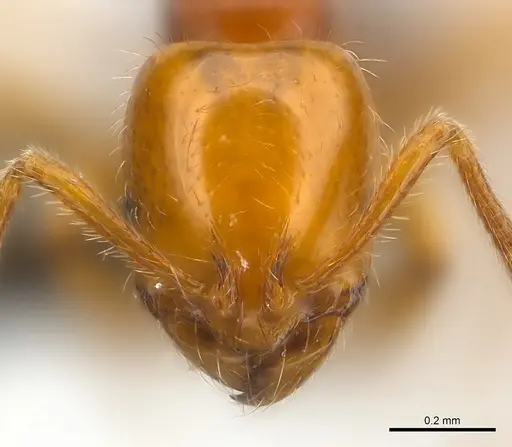
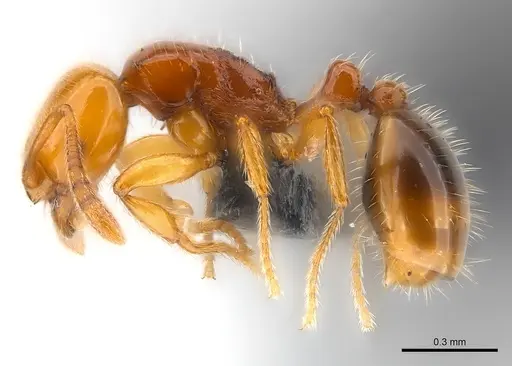
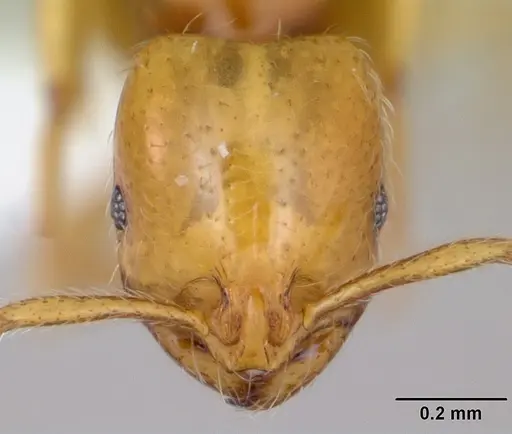
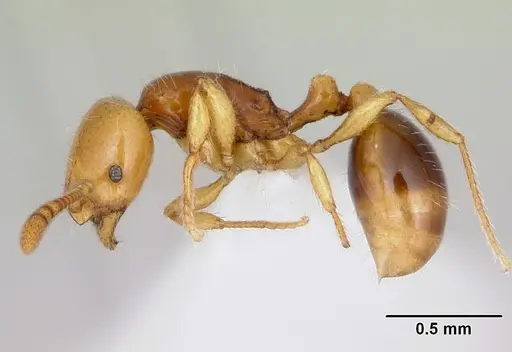
Syllophopsis gongromos is a tiny ant species endemic to Madagascar, known from just two locations in the Toamasina Province on the east coast . Workers are monomorphic (all the same size) and extremely small – head width is about 0.5 mm . They have a yellow head and appendages, an orange‑to‑red mesosoma (middle body section), and a yellowish‑brown gaster (abdomen) . Originally described as Monomorium gongromos, they were moved to the genus Syllophopsis in 2015 . These ants live in rainforest litter, collected from sifted leaf matter and rotten logs . What makes S. gongromos particularly interesting is its extremely limited distribution – only pristine rainforest sites in Madagascar. The workers are distinguished by small humeral tubercles (tiny bumps on the shoulders) and fine transverse striolae (grooves) on the propodeum . Their small eyes relative to their antennae are also typical of the genus .
Quick Summary
- Difficulty: Hard
- Origin & Habitat: Endemic to Madagascar, Toamasina Province, east coast. Found in rainforest litter and rotten logs [1][3].
- Colony Type: Unconfirmed – no data on queen number or colony structure in the wild. Workers are monomorphic (all the same size) [1].
- Size & Growth:
- Antkeeping:
- Temperature: Based on their native rainforest habitat, keep warm and stable, around 22‑26°C. Avoid temperatures below 20°C or above 30°C. A gentle temperature gradient may help ants self‑regulate [1].
- Humidity: High humidity is essential – aim for the feel of a damp rainforest floor. Keep the substrate consistently moist but not waterlogged. In test‑tube setups, ensure a good water reservoir. For formicariums, mist regularly and provide a moisture reservoir [1][3].
- Diapause: Unknown – no data. As a tropical species, they likely do not need a true diapause, but may slow down during cooler periods.
- Nesting: Start with a small test tube for founding (dark, humid). For established colonies, use a small Y‑tong (AAC) nest or plaster nest with very narrow galleries (scaled to their tiny size). Good moisture retention is important.
- Behavior: This is a shy, non‑aggressive species that forages quietly in the leaf litter. Workers are tiny and slow‑moving. Like other Solenopsidini, they have a sting, but they are far too small to affect humans. Their small size makes escape prevention critical – they can slip through tiny gaps. They likely feed on small arthropods and honeydew in the wild.
- Common Issues: escape prevention is critical due to their tiny head width of about 0.5 mm – they can squeeze through gaps that seem impossible, high humidity needs can lead to mold problems if ventilation is poor, slow growth and tiny size make them difficult to observe and easy to accidentally overfeed or flood, no captive breeding data exists – we don't know their exact founding or care requirements, wild‑caught colonies may have parasites or be stressed from collection, leading to failure
Housing and Nest Setup
Because of their tiny size, Syllophopsis gongromos needs very tight housing. For a founding attempt, a small test tube with a water reservoir sealed by a cotton plug works – it gives the queen a dark, humid chamber [1]. Keep the tube in a dark, quiet spot with stable temperatures.
Once workers emerge, you can move them to a small formicarium. Y‑tong (AAC) nests work well because they provide tight chambers that scale to the ants' size. A small plaster nest with narrow galleries (about 3‑5 mm wide) is also fine. Whatever you use, seal every joint and edge – these ants will exploit any gap. Place the nest in a location with stable temperatures and indirect light, they prefer dark conditions.
Feeding and Diet
In the wild, these ants are collected from rainforest litter, where they likely feed on small arthropods, honeydew, and other organic matter [3]. For captive care, offer a varied diet. Provide a constant sugar source (diluted honey or sugar water,1:4 with water). For protein, offer very small live prey – fruit flies, pinhead crickets, or small pieces of insect. You can also try commercially available ant jelly.
Feed small amounts every 2‑3 days, removing uneaten food after 24 hours to prevent mold. Because the workers are so tiny, even a fruit fly leg counts as a meal. Watch their activity to gauge how much they need – a well‑fed colony will have workers with fuller gasters.
Temperature and Humidity Control
Syllophopsis gongromos comes from the warm, humid rainforests of eastern Madagascar [1]. Keep temperatures between 22‑26°C – warm enough for brood development but not stressful. A heating cable on one side of the nest can create a gentle gradient, letting ants self‑regulate.
Humidity is critical. Keep the substrate consistently moist – think damp forest floor, not soggy. For test tubes, ensure the water reservoir is adequate but not so large that flooding is a risk. For formicariums, mist the nest area regularly and consider a moisture reservoir. Aim for a damp feel inside the nest. Poor humidity leads to failed broods, while too much moisture causes mold. A small digital hygrometer near the nest helps you monitor [1][3].
Handling and Observation
These ants are not for handling – they are far too small and delicate. Observation is the main joy. Watch for workers emerging to forage, tending brood, and responding to food. Their tiny size means you'll need good lighting and possibly a magnifying glass to see details like the propodeal sculpturing.
When working with the colony (feeding, moving, or cleaning), go slowly and gently. Avoid blowing on them or sudden movements. Use a soft‑bristled brush if you need to move them. Escape prevention is paramount – even a small gap will result in lost ants. Check all connections, lid seals, and barrier applications regularly. A thin line of fluon around the rim of any container helps prevent escapes. [1]
Colony Development and Expectations
Starting a colony of S. gongromos is a challenge because we have no direct data on their founding or development [1]. It is unknown whether the queen founds claustrally or semi‑claustrally. Do not assume she will seal herself in – just provide a dark, humid chamber and leave her undisturbed.
First workers may take anywhere from weeks to months – no one knows. The initial workers (nanitics) will be even smaller than normal. Expect very slow growth, these are tiny litter ants with presumably modest colony sizes. Do not disturb the founding chamber unnecessarily. Once workers start foraging, you can begin offering food. Be prepared for a long‑term commitment with no guaranteed success. Patience and stable conditions are your best tools.
Frequently Asked Questions
How long does it take for Syllophopsis gongromos to get first workers?
Unknown. No direct observations exist for this species. Development time could vary greatly. Keep conditions stable and be patient.
Can I keep Syllophopsis gongromos in a test tube?
Yes, a test tube works well for attempting to found a colony. Use a small tube with a water reservoir and cotton plug. Keep it dark and humid. Once workers are foraging, you can consider moving them to a small formicarium.
What temperature do Syllophopsis gongromos need?
Keep them warm, around 22‑26°C. This matches their native Madagascar rainforest habitat. Avoid temperatures below 20°C or above 30°C. A heating cable on one side of the nest can create a helpful gradient.
Are Syllophopsis gongromos good for beginners?
No. This species is best left to experienced keepers. Their tiny size, high humidity needs, escape risk, and lack of captive husbandry data make them very challenging. Common beginner species like Lasius niger or Camponotus are far easier.
How big do Syllophopsis gongromos colonies get?
Unknown. Based on their small size and limited distribution, colonies are probably modest – but no data exists. Expect maybe under 200 workers at most.
Do Syllophopsis gongromos need hibernation?
Probably not. They come from tropical Madagascar, so a true diapause is unlikely. However, they may show reduced activity during cooler periods. If kept at room temperature (20‑24°C), they should remain active year‑round.
Why are my Syllophopsis gongromos escaping?
Their tiny size (head width under 0.5 mm) means they can squeeze through almost any gap. Use tight‑fitting lids, fine mesh barriers, and fluon around all openings. Check seals regularly – these ants will find any weakness.
What do Syllophopsis gongromos eat?
They likely accept small live prey (fruit flies, pinhead crickets), sugar sources (honey water, sugar water), and tiny insect pieces. Feed small amounts every 2‑3 days, removing uneaten food after 24 hours to prevent mold.
Where is Syllophopsis gongromos found in the wild?
This species is endemic to Madagascar, known only from two sites in the Toamasina Province on the east coast. They live in rainforest litter, typically collected from sifted leaf litter and rotting wood [1][3].
Report an Issue
The current care sheet is based fully on literature. See inconsistencies, or something that's incorrect? Please , it will be resolved after review from an admin. Contributing to the blogs tab also helps providing information, to make us be able to further improve the caresheets. Thank you for your support!
References

This caresheet is licensed under CC BY-SA 4.0 .
Community Blogs
CASENT0070738
View on AntWeb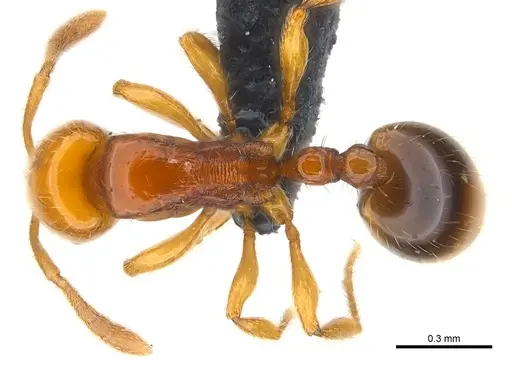
CASENT0173590
View on AntWeb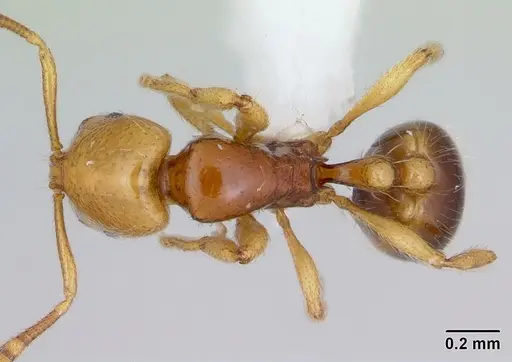
Literature
Loading distribution map...Loading products...